
The Gewandhaus is Leipzig’s celebrated concert hall on Augustusplatz, home to the Leipzig Gewandhaus Orchestra, widely regarded as the oldest bourgeois symphony orchestra in the world. The orchestra traces its roots to a concert society founded in 1743 and took the Gewandhaus name when it moved into a cloth merchants’ hall in 1781, beginning a tradition of orchestral performance in the city that continues today.
The current building, opened on October 8, 1981, is the third to carry the Gewandhaus name. It was built roughly 200 years after the orchestra first moved into its original 1781 hall, following the destruction of the ornate second Gewandhaus (opened 1884) in World War II bombing raids and its eventual demolition in 1968. Designed by Leipzig architect Rudolf Skoda with acoustics as a top priority, the modern hall carries forward a musical legacy shaped by conductors like Felix Mendelssohn.
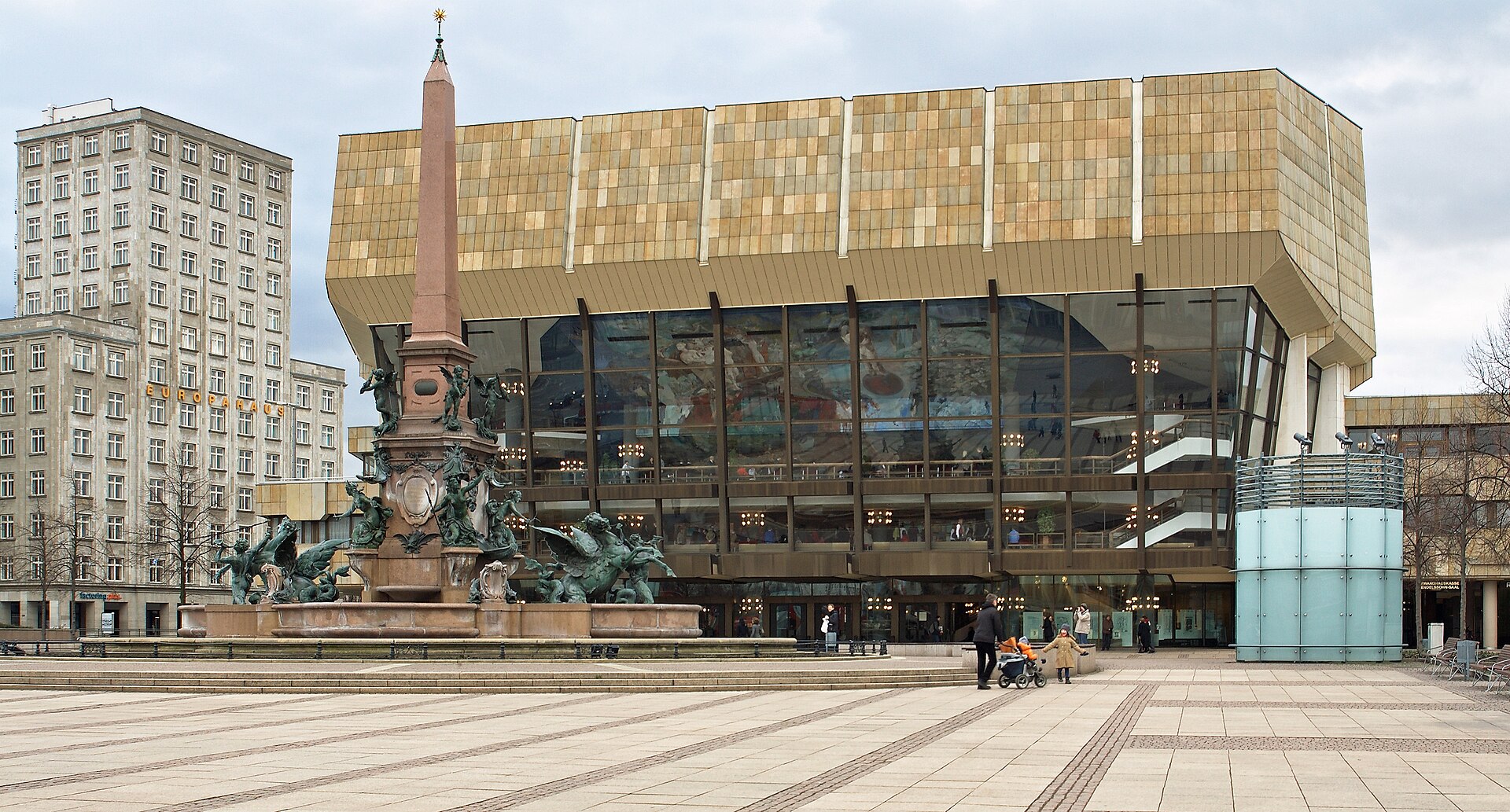
Stats at a Glance
- Location: Augustusplatz, Leipzig, Germany
- Type: Concert hall
- Opened: October 8, 1981 (current building; orchestra founded 1743)
- Capacity: About 1,900 (Großer Saal); about 498 (Mendelssohn Hall)
- Architect: Rudolf Skoda
- Famous for: Home of the Leipzig Gewandhaus Orchestra since 1781
A Legacy Shaped by Mendelssohn
In 1835, Felix Mendelssohn became the orchestra’s music director, holding the traditional title of Gewandhauskapellmeister until his death in 1847. His tenure brought sweeping reforms that shaped the orchestra’s playing culture, and the Gewandhaus stage hosted premieres of his own Scottish Symphony and Violin Concerto in E minor, along with the first performances of works by Robert Schumann and Franz Schubert’s ‘Great’ C major Symphony.
Later conductors including Arthur Nikisch, Kurt Masur, Herbert Blomstedt, and Riccardo Chailly carried the Gewandhaus tradition forward, cementing its reputation as one of the world’s most storied classical music institutions.
The Modern Hall and Its Organ
Kurt Masur laid the foundation stone for today’s Gewandhaus in 1977, and East German soldiers reportedly filled the unfinished hall during construction to help test its acoustics before the official 1981 opening. The Großer Saal houses a Schuke concert organ with 91 stops and 6,845 pipes, one of the largest concert hall organs in Germany, supplemented since 2018 by a smaller mobile organ built by Kristian Wegscheider for baroque repertoire.
During the Autumn of Nations in 1989, the Gewandhaus became a meeting point for political discussion during East Germany’s peaceful revolution, adding a chapter of civic history to its musical one.
Explore more: Explore more legendary music venues.
Water on your back and hidden zip pockets against your body. Built for long festival days in crowds.
Charges fast enough to top up your phone between the opener and the headliner.
Many venues let empty soft flasks through security. Refill inside and roll it up when it's empty.
Gewandhaus FAQs
Is the current Gewandhaus building the original one?
No. It’s the third Gewandhaus building. The original opened in 1781, the second in 1884 (destroyed in World War II and demolished in 1968), and the current hall opened in 1981.
What orchestra performs at the Gewandhaus?
The Leipzig Gewandhaus Orchestra, considered the world’s oldest bourgeois symphony orchestra, with roots tracing back to a concert society founded in 1743.
How many people can the Gewandhaus hold?
The main hall, the Großer Saal, seats about 1,900 people. A smaller chamber hall, the Mendelssohn Hall, seats about 498.
Get More from Gewandhaus
Log the coasters, stadiums, and venues you’ve experienced, rate Gewandhaus, and see what your friends thought. Get the ThrillZing app.
Photo: Ichwarsnur / CC BY-SA 4.0, via Wikimedia Commons.