
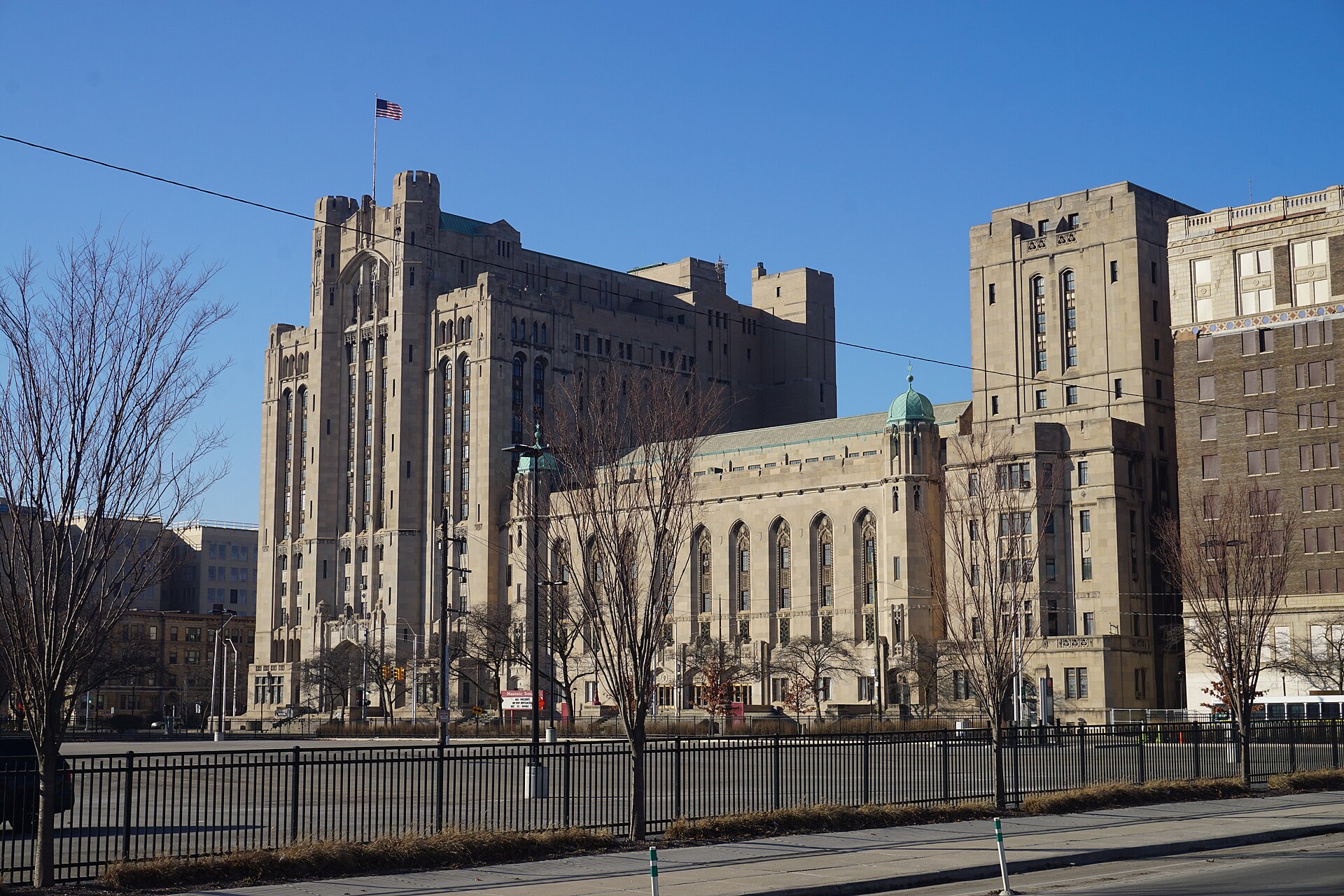
The Masonic Temple in Detroit is a 16-story Venetian Gothic landmark at 500 Temple Street in Midtown. It has hosted concerts since it opened on February 22, 1926. Its main auditorium, the Masonic Temple Theatre, is one of the largest theaters in the Detroit area, and the building has held the title of the world’s largest Masonic temple since the Chicago Masonic Temple was demolished in 1939.
If you searched for the Masonic Temple’s capacity or seating capacity, the short version is below. This page also breaks down every rental space in the complex, explains why published figures differ, and covers the practical side of a visit: tickets, parking, and what to expect.
Quick Answer
The main Masonic Temple Theatre in Detroit holds roughly 4,400 to 4,600 people in its seated setup. Wikipedia lists 4,635, and the venue’s own rental page lists 4,404. The exact number depends on how the floor, stage and sightlines are configured for each show. The building’s other spaces are smaller: the Drill Hall lists 1,144, the Fountain Ballroom 1,080, the Jack White Theatre about 1,500 to 1,700, the Crystal Ballroom 550, the Chapel 400, the Parlor Room 170, the Second Avenue Ballroom 150 and the Greek Ionic Room 135.
Masonic Temple Detroit Capacity by Room
The Masonic Temple is a complex of several performance and event spaces, so “the Masonic capacity” depends on which room your event is in. Here is how the spaces compare, using the figures published on the venue’s rental page and, where noted, by Wikipedia:
Masonic Temple Theatre (main auditorium): 4,404 on the venue’s rental page, and 4,635 on Wikipedia. This is the room used for most large touring concerts, comedy tours and Broadway-style productions. Its stage measures roughly 55 by 100 feet.
Jack White Theatre (formerly the Scottish Rite Cathedral or Cathedral Theatre): the venue’s rental page lists 1,513 seated, split across a main floor of 971, a balcony of 481 and 61 VIP box seats. Wikipedia lists 1,725. The room is named for Jack White, who helped pay the building’s back taxes in 2013.
Drill Hall: 1,144 on the venue’s rental page. Fountain Ballroom: 1,080. Crystal Ballroom: 550. The Chapel: 400. These are used for club-sized shows, private events and receptions.
Smaller event rooms: the Parlor Room is listed at 170, the Second Avenue Ballroom at 150, and the Greek Ionic Room at 135. These suit meetings, private dinners and small receptions.
Rental-page capacities are the venue’s published maximums for each room. The number that applies to your event can vary with the layout, so confirm it with the venue when booking.
Why You’ll See Different Numbers
Searching for the Masonic Temple’s seating capacity turns up 4,635, 4,404 and 4,335, and all of them appear on reputable pages. The gap comes from configuration. Seating charts change with the stage size, camera or sound platforms, and how many seats are held back for production, so the number of tickets on sale for a given date can be lower than the building’s maximum.
If you need the exact count for a specific event, such as booking a private event or judging how likely a show is to sell out, check that event’s seating chart on the ticketing page. For a general answer, “about 4,400 to 4,600 seats” is the safest one.
How the Masonic Temple Theatre Compares
At around 4,400 to 4,600 seats, the Masonic Temple Theatre is a step above a typical mid-size theater and well below an arena. That makes it a popular stop for artists who have outgrown clubs but want a more intimate room than an arena, with ornate architecture, a large stage and acoustics designed for orchestral performance.
It opened with a Detroit Symphony Orchestra concert conducted by Ossip Gabrilowitsch on George Washington’s birthday in 1926. Since then performers including Frank Sinatra, Judy Garland, Nina Simone, Ray Charles, Stevie Wonder and Prince have played there, along with rock acts like Bruce Springsteen, Queen and the Grateful Dead. More recent visitors include Lorde, Tyler, the Creator and Bad Bunny.
Inside the World’s Largest Masonic Temple
The complex has 1,037 rooms and cost roughly $6.5 million to build. Architect George D. Mason designed it in a Venetian Gothic style, with ornamentation inspired by the work of sculptor Corrado Parducci. Beyond the theaters and ballrooms, it houses Masonic lodge rooms and meeting spaces, which is why it is still considered a working Masonic building as well as a concert venue.
In 2013 the temple was facing foreclosure over back property taxes. Musician Jack White contributed $142,000 toward the debt, and the Cathedral Theatre was renamed the Jack White Theatre in his honor.
Planning Your Visit: Tickets and Parking
Tickets: For AEG Presents shows, the venue lists AXS as its only authorized online seller. Tickets are delivered to the AXS mobile app, and the barcode refreshes regularly, so screenshots typically don’t work. Prices vary by artist, section and demand: floor and lower-level seats generally cost more than upper balcony seats, and dynamic pricing or fees can change the total. Box office hours are limited, and in-person purchases carry a handling fee, so check before you go. If you pick up tickets at will call, bring the card you paid with and a photo ID.
Parking: The Masonic does not have its own on-site parking. Paid parking is available in the lot behind the building and in lots and garages nearby in Midtown, which fill up quickly on big-show nights. Arrive early, or reserve a spot in advance through a parking reservation service.
Address: 500 Temple Street, Detroit, MI 48201, in the Cass Park Historic District.
Rules and current details: Bag policies, age limits, doors times and accessibility arrangements can change and can differ between events. Check the official Masonic Temple Detroit website and the specific event page for the current rules before you go.
Photos
Detroit Masonic Temple capacity FAQs
How many people does the Masonic Temple in Detroit hold?
The main Masonic Temple Theatre holds roughly 4,400 to 4,600 people. The venue’s rental page lists 4,404 and Wikipedia lists 4,635. The exact number depends on the stage and seating configuration for each event.
What is the Masonic Temple Detroit seating capacity?
The main theater holds about 4,404 to 4,635 depending on the source and setup. The Jack White Theatre seats about 1,513 to 1,725. The venue’s rental page also lists the Drill Hall at 1,144, the Fountain Ballroom at 1,080, the Crystal Ballroom at 550, the Chapel at 400, the Parlor Room at 170, the Second Avenue Ballroom at 150 and the Greek Ionic Room at 135.
Why do different websites list different capacities for the Masonic Temple?
Published numbers vary between roughly 4,335 and 4,635 because seat counts change with staging, production needs and how the floor is set up. Some sites list a maximum capacity and others list the seated count for a typical show. The event’s own seating chart is the most accurate source for a specific date.
Is the Masonic Temple Theatre the same as the Detroit Masonic Temple?
The Masonic Temple Theatre is the main auditorium inside the Detroit Masonic Temple building. The complex also includes the Jack White Theatre, the Drill Hall, the Fountain Ballroom, the Crystal Ballroom, the Chapel, the Parlor Room, the Second Avenue Ballroom, the Greek Ionic Room and Masonic lodge spaces.
Where is the Masonic Temple in Detroit?
It is at 500 Temple Street, Detroit, MI 48201, in the Cass Park Historic District of Midtown Detroit.
Does the Masonic Temple Detroit have parking?
It has no on-site parking of its own, but paid parking is available in the lot behind the building and in nearby lots and garages. Arrive early on show nights because spaces fill up.
Where do I buy tickets for the Detroit Masonic Temple?
For AEG Presents shows, the venue says AXS is its only authorized online seller. Resale sites are unofficial and the venue has limited ability to help with problems on those tickets. The official Masonic Temple website links to current events.
When did the Detroit Masonic Temple open?
The Masonic Temple Theatre opened on February 22, 1926, with a Detroit Symphony Orchestra concert conducted by Ossip Gabrilowitsch.
Why is the Detroit Masonic Temple famous beyond music?
It has been the world’s largest Masonic temple since 1939, when the Chicago Masonic Temple was demolished. It has 1,037 rooms, including multiple theaters and ballrooms.
Get More from Detroit Masonic Temple capacity
Log the coasters, stadiums, and venues you’ve experienced, rate Detroit Masonic Temple capacity, and see what your friends thought. Get the ThrillZing app.
Want the day’s theme park news in your inbox? Subscribe to ThrillZing Daily — free.