
The Brooklyn Academy of Music, known to New Yorkers simply as BAM, traces its roots back to 1859, when it was chartered as a home for the Philharmonic Society of Brooklyn. Its first building in Brooklyn Heights opened in 1861 and quickly became a cultural anchor for the growing borough, hosting concerts, opera, and civic gatherings until a fire destroyed the structure in 1903.
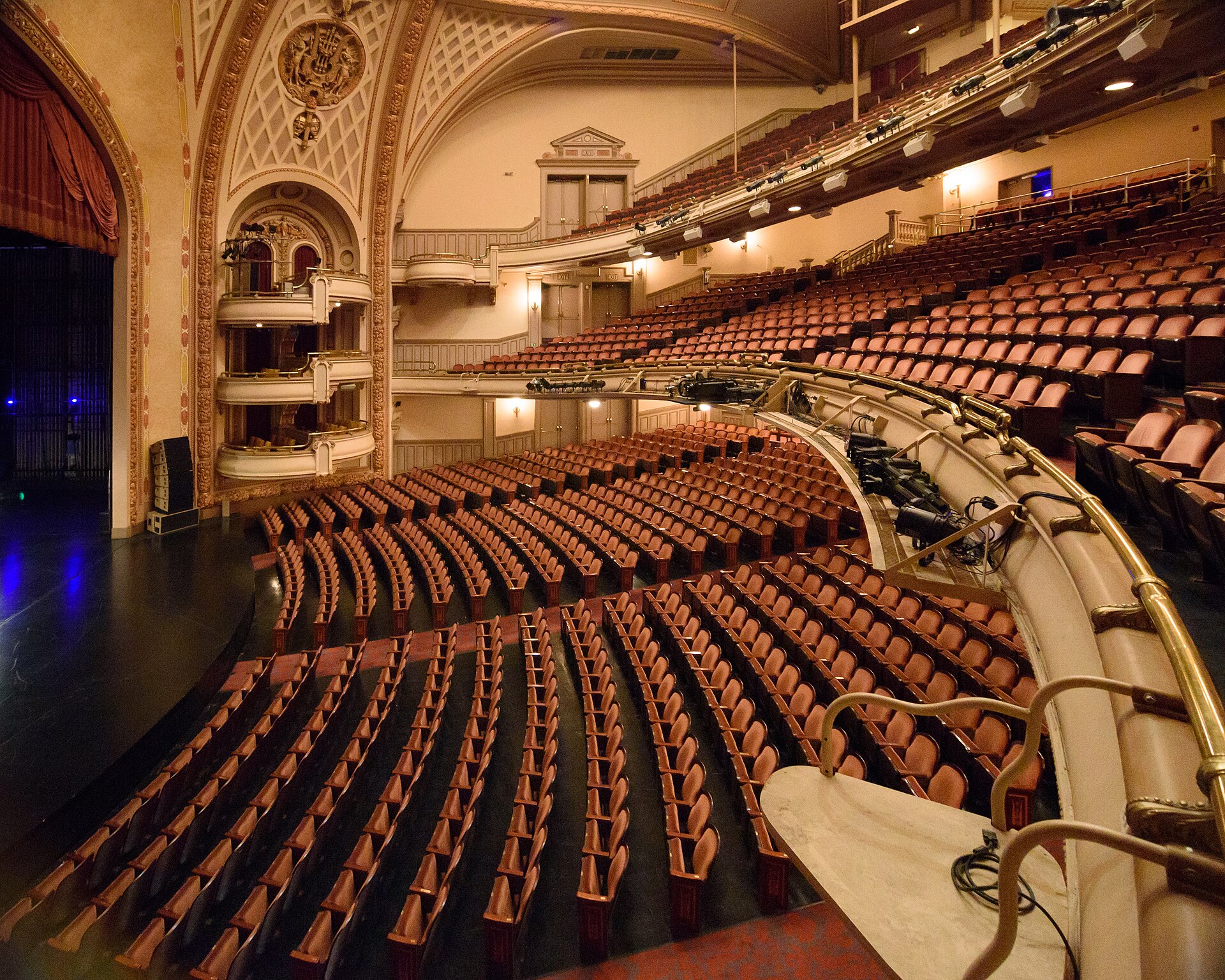
BAM rebuilt in Fort Greene, opening its current Peter Jay Sharp Building at 30 Lafayette Avenue in 1908. Designed by the architectural firm Herts & Tallant, the complex has since grown into a multi-venue hub for music, opera, dance, theater, and film, anchored by its landmark Howard Gilman Opera House.
Stats at a Glance
- Location: Fort Greene, Brooklyn, New York
- Type: Performing arts center
- Opened: 1861 (current building 1908)
- Capacity: About 3,500 across all venues
- Largest Hall: Howard Gilman Opera House, about 2,096 seats
- Famous For: Next Wave Festival, avant-garde music and opera
A Home for Music and Opera
At the heart of BAM’s current complex sits the Howard Gilman Opera House, a roughly 2,096-seat hall that has hosted touring opera companies, orchestras, and avant-garde musical premieres for over a century. The venue earned an unusual place in music history on December 11, 1920, when famed tenor Enrico Caruso suffered an on-stage throat hemorrhage during a performance of L’elisir d’amore, a dramatic moment that effectively marked the end of his performing career.
Beyond the Opera House, BAM’s campus includes the roughly 874-seat Harvey Theater and the smaller Lepercq and Fishman performance spaces, giving the institution flexibility to host everything from full orchestral performances to intimate experimental music nights.
The Next Wave Festival Legacy
Since 1983, BAM’s annual Next Wave Festival has made the venue a launching pad for progressive music, dance, and theater, bringing internationally acclaimed composers and performers to Brooklyn audiences. That reputation for championing bold, boundary-pushing work has made BAM a fixture on the itinerary of serious music fans visiting New York City, distinct from the city’s commercial Manhattan stages.
Explore more: Explore more iconic music venues.
Packs smaller than a water bottle — a real seat for lawn shows and festival sets.
Protects little ears at concerts, fireworks and loud race days.
Instant crowd energy for night shows, festivals and tailgates.
Brooklyn Academy of Music FAQs
When was the Brooklyn Academy of Music founded?
BAM was chartered in 1859 and presented its first performances in 1861 at its original Brooklyn Heights building, making it one of the oldest performing arts institutions in the United States.
What is the seating capacity of BAM?
Across its performance spaces, BAM seats about 3,500 people, with the Howard Gilman Opera House alone holding roughly 2,096 seats.
What is BAM best known for?
BAM is best known for its Next Wave Festival, launched in 1983, which showcases avant-garde music, opera, dance, and theater from artists around the world.
Get More from Brooklyn Academy of Music
Log the coasters, stadiums, and venues you’ve experienced, rate Brooklyn Academy of Music, and see what your friends thought. Get the ThrillZing app.
Photo: Ajay Suresh from New York, NY, USA / CC BY 2.0, via Wikimedia Commons.