
The Packers have played in Green Bay since 1919, but for 62 seasons they also played part of their home schedule in the Milwaukee area. That adds up to seven regular homes: three early fields in Green Bay, three Milwaukee-area stadiums and, since 1957, Lambeau Field.
Here is every home in order, with the years the Packers played there, what made each one matter and what stands on the site today. Stadiums we’ve written guides for link to the full guide.
Every Packers Stadium, 1919 to Today
- Green Bay
- 1919–1922
Hagemeister Park
The first home, a public park by the East River. At first there were no seats and admission was free; a fence and bleachers went up in 1920. A new East High School built on the park forced the move.
Today: Demolished in 1923; Green Bay East High School stands on the site, with a Packers Heritage Trail marker
- 1923–1924
Bellevue Park
A baseball park built in 1923 partly from Hagemeister's reused lumber. The Packers went 9–2–1 here, but it was built for baseball, sat far from town and had little parking.
Today: Demolished in 1928 for commercial development; a Packers Heritage Trail marker notes the site
- 1925–1956
City Stadium
A football stadium beside East High School that grew from about 5,000 seats to 25,000. The Packers won six NFL titles in their City Stadium years, but by the 1950s it was too small for the league.
Today: Still in use, in smaller form, as East High School's football stadium
- West Allis
- 1934–1951
Wisconsin State Fair Park
The Milwaukee-area home for a few games a year, after a single 1933 game at Borchert Field. It hosted the 1939 NFL Championship Game, a 27–0 Packers win over the Giants.
Today: Still the grounds of the Wisconsin State Fair
- Milwaukee
- 1952
Marquette Stadium
A one-season stopgap. County Stadium wasn't ready and State Fair Park had lost some bleachers, so the Packers played their three Milwaukee games of 1952 at Marquette University's stadium.
Today: Grandstand demolished in 1976; the site is now Quad Park, Marquette University High School's athletic fields
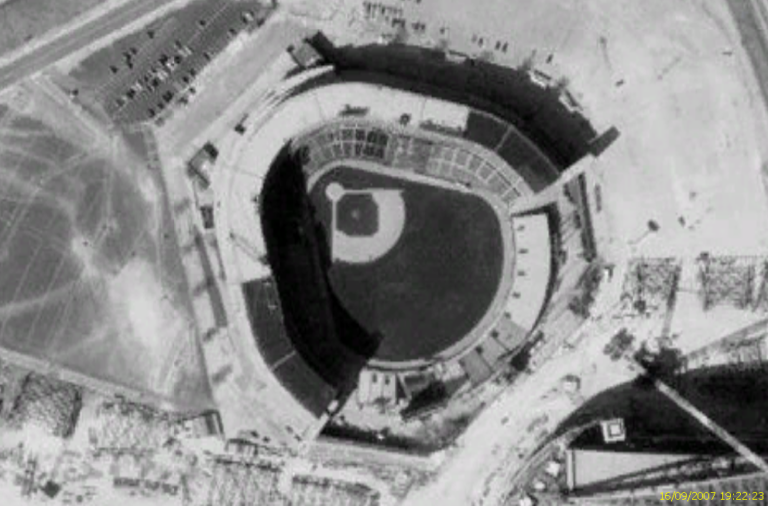 1953–1994
Two to four home games a year for 42 seasons, including the 1967 Western Conference title game. It was built partly to lure the Packers to Milwaukee full-time. The last Packers game here was in December 1994.
Today: Demolished in 2001; ballpark parking and Helfaer Field, a youth baseball park, cover the site
Stadium history →- Green Bay
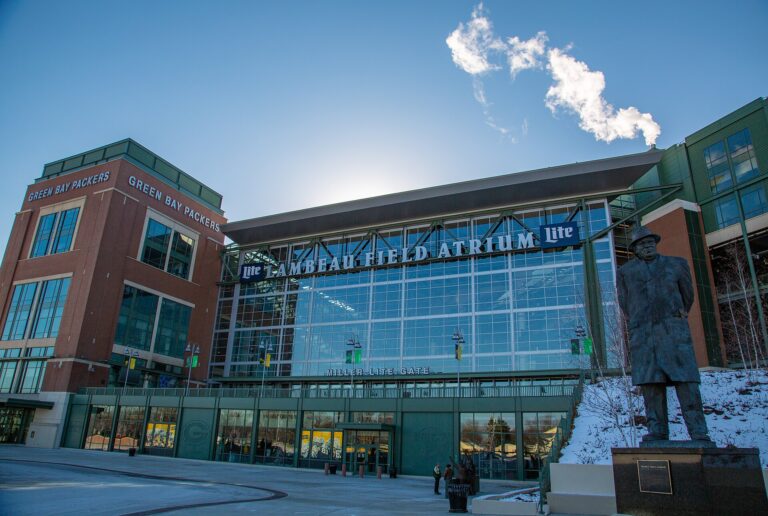
- 1957–presentCurrent home
Opened in 1957 as City Stadium and renamed for Curly Lambeau in 1965. Home of the 1967 Ice Bowl and the 2025 NFL Draft, it is the oldest continually operating NFL stadium.
Visiting guide →
Packers Stadium FAQ
Why did the Packers play home games in Milwaukee?
For money and fans. The Packers moved a 1933 game against the Giants to Borchert Field in Milwaukee, then played a few home games a year at Wisconsin State Fair Park (1934–1951), Marquette Stadium (1952) and Milwaukee County Stadium (1953–1994). Improvements at Lambeau and the Brewers’ plans for a new ballpark ended the arrangement after 1994.
How many stadiums have the Packers had?
Seven regular homes: Hagemeister Park, Bellevue Park, City Stadium and Lambeau Field in Green Bay, plus Wisconsin State Fair Park, Marquette Stadium and Milwaukee County Stadium in the Milwaukee area. Borchert Field hosted only one Packers game, in 1933.
Why was Lambeau Field built?
By the 1950s the old City Stadium, a 25,000-seat wooden stadium next to East High School, could not be expanded, and the NFL told the Packers to get a bigger stadium or move to Milwaukee full-time. Green Bay voters approved a bond, and the new City Stadium opened in 1957 as the first stadium built only for an NFL team. It was renamed Lambeau Field in 1965.
Is the old City Stadium still standing?
Yes, in smaller form. East High School still plays football there, and a 2002 renovation added a gate, a sign and memorials to its Packers history. Hagemeister Park and Bellevue Park are long gone, and Milwaukee County Stadium was demolished in 2001.
Where do the Packers play now?
At Lambeau Field in Green Bay, where they have played since 1957. It seats 81,441, making it the second-largest stadium in the NFL, and it is the oldest continually operating NFL stadium. It hosted the 2025 NFL Draft.