
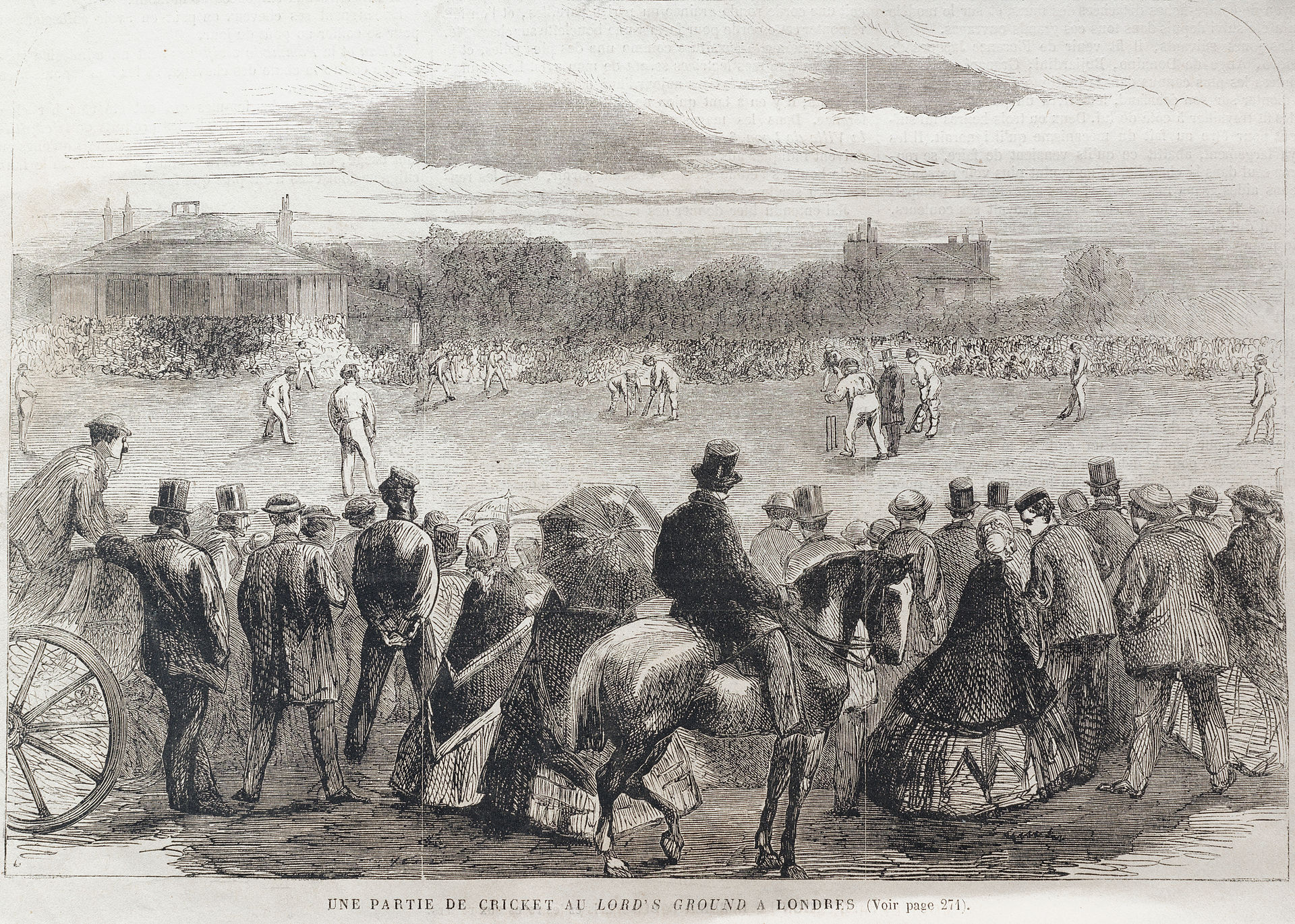
Lord’s Cricket Ground, located in St John’s Wood, London, is universally known as the Home of Cricket. Established by entrepreneur Thomas Lord in 1814 — his third ground, after earlier sites near Dorset Square and the Regent’s Canal — it has served as the headquarters of the Marylebone Cricket Club (MCC) ever since. The MCC, which owns the ground and has maintained the Laws of Cricket for over two centuries, made Lord’s the legislative and spiritual centre of the game worldwide.
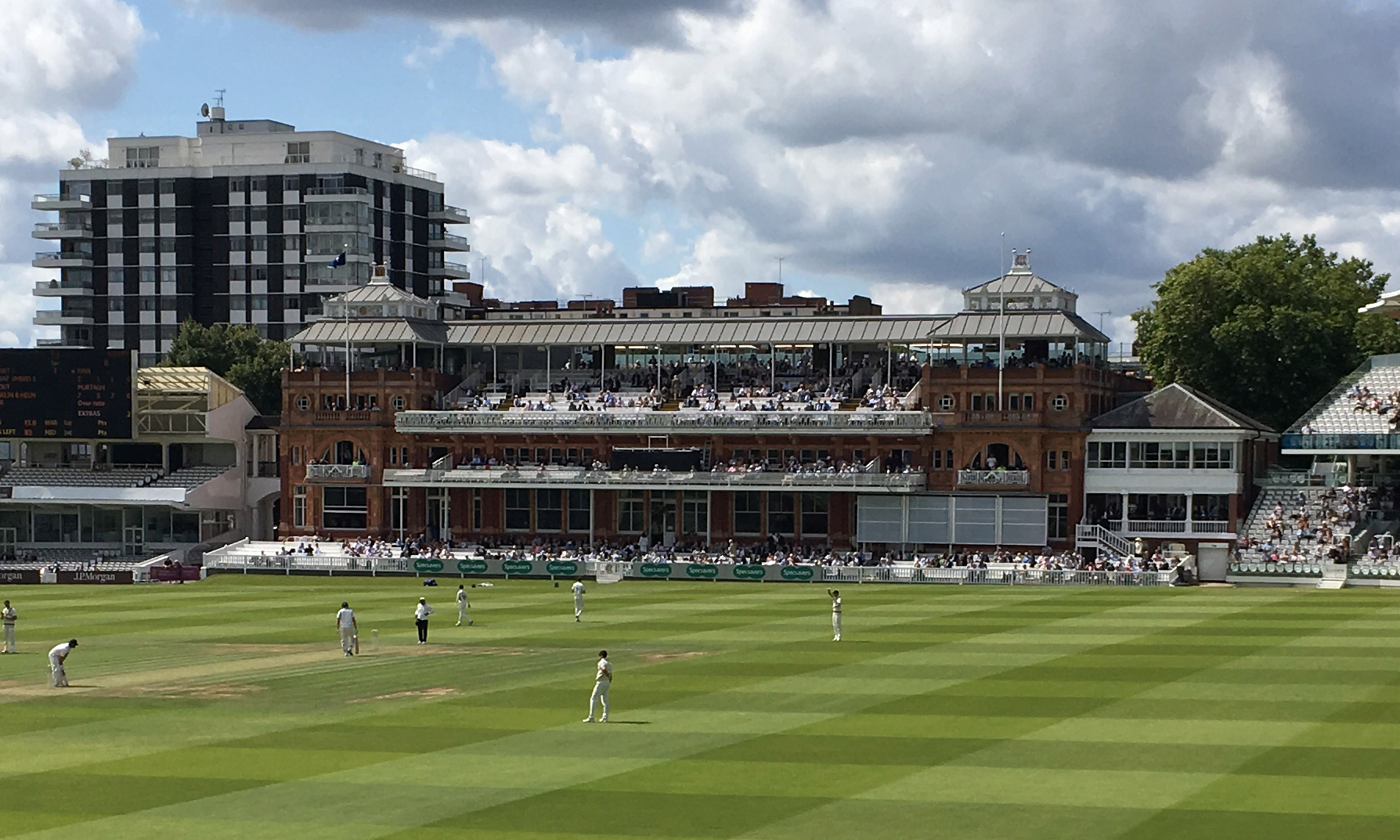
Holding 31,100 spectators, Lord’s pairs Victorian grandeur with bold modern design. The Grade II* listed Pavilion, completed in 1890 and designed by Thomas Verity, anchors the western boundary and contains the Long Room that players cross on their way to the field. At the Nursery End, the all-aluminum Media Centre, opened in 1999 and a RIBA Stirling Prize winner, cantilevered over the turf in striking contrast. A diagonal slope of around 8 feet 2 inches across the playing surface adds a tactical challenge unique to Lord’s.
Stats at a Glance
- Location: St John’s Wood, London, England
- Opened: 1814 (present site)
- Capacity: 31,100
- Home Teams: Marylebone Cricket Club (MCC); Middlesex CCC (since 1877)
- First Test Match: 21–23 July 1884, England vs Australia
- World Cup Finals Hosted: 1975, 1979, 1983, 1999, 2019
Architecture and Atmosphere
Few sporting venues carry such architectural contrast. The 1890 Pavilion’s red-brick facade, ornate terracotta detailing, and tiered members’ gallery have looked out over the ground for more than 130 years. Above the Grand Stand, the Father Time weathervane — a figure of death removing the bails — has become one of cricket’s most recognisable symbols.
The 1999 Media Centre changed the ground’s skyline overnight. Built as the world’s first all-aluminum semi-monocoque structure, it floats above the Nursery End like a spacecraft and won eight architectural awards including the RIBA Stirling Prize. Beneath the Pavilion, the world’s oldest sporting museum holds the original Ashes urn and artefacts spanning more than 200 years of cricket history.
Landmark Moments in Cricket History
Lord’s staged its first men’s Test match in July 1884, when England faced Australia in the Ashes, establishing a tradition unbroken for over a century. The ground hosted ICC Cricket World Cup finals in 1975, 1979, 1983, and 1999, cementing its place as the destination for the sport’s biggest occasions.
The 2019 World Cup final between England and New Zealand — tied at the end of regulation and again after a super over, with England winning on boundary count — is widely considered the greatest one-day international ever played. That extraordinary afternoon at Lord’s encapsulated everything that has made this ground cricket’s most cherished stage.
Explore more: Explore more iconic stadiums.
A see-through purse that looks like a purse. Works for most stadium, arena and concert bag policies.
Bleachers for three hours, but with back support. Folds flat and clips to the bench.
For upper-deck seats. Watch line play at the stadium, or the far side of the park from the top of a lift hill.
Lord’s Cricket Ground FAQs
Why is Lord’s called the Home of Cricket?
Lord’s earned the title because it is the long-standing headquarters of the Marylebone Cricket Club, the body that has maintained the Laws of Cricket since the 18th century. Its unbroken association with cricket’s governance, combined with hosting the sport’s most prestigious matches for over 200 years, gave it the designation.
What is the famous slope at Lord’s Cricket Ground?
The playing surface at Lord’s drops around 8 feet 2 inches (approximately 2.49 metres) diagonally from the Grandstand side to the Tavern side. The slope affects how the ball moves off the pitch and through the air, making it one of the most technically demanding venues for batters and bowlers alike.
Who owns and manages Lord’s Cricket Ground?
Lord’s is owned and managed by the Marylebone Cricket Club, a private members’ club. Middlesex County Cricket Club uses it for domestic county fixtures, and the England and Wales Cricket Board allocates international matches including home Test series for England.
Get More from Lord’s Cricket Ground
Log the coasters, stadiums, and venues you’ve experienced, rate Lord’s Cricket Ground, and see what your friends thought. Get the ThrillZing app.
Photo: Yorkspotter / CC BY-SA 4.0, via Wikimedia Commons.