
Japan National Stadium rose on the site of Tokyo’s old 1964 Olympic stadium, opening on December 21, 2019 after a dramatic mid-project redesign. The original plan by Zaha Hadid was scrapped over ballooning costs, and architect Kengo Kuma reworked the project around a lower-slung, wood-and-steel form meant to blend into the surrounding Meiji Jingu Gaien park district.
The stadium became the centerpiece venue of the pandemic-delayed 2020 Tokyo Summer Olympics, hosting the opening and closing ceremonies along with track and field competition, mostly in front of empty seats due to COVID-19 restrictions. It later served as the main venue for the 2025 World Athletics Championships and continues to host Japan’s national football and rugby teams.
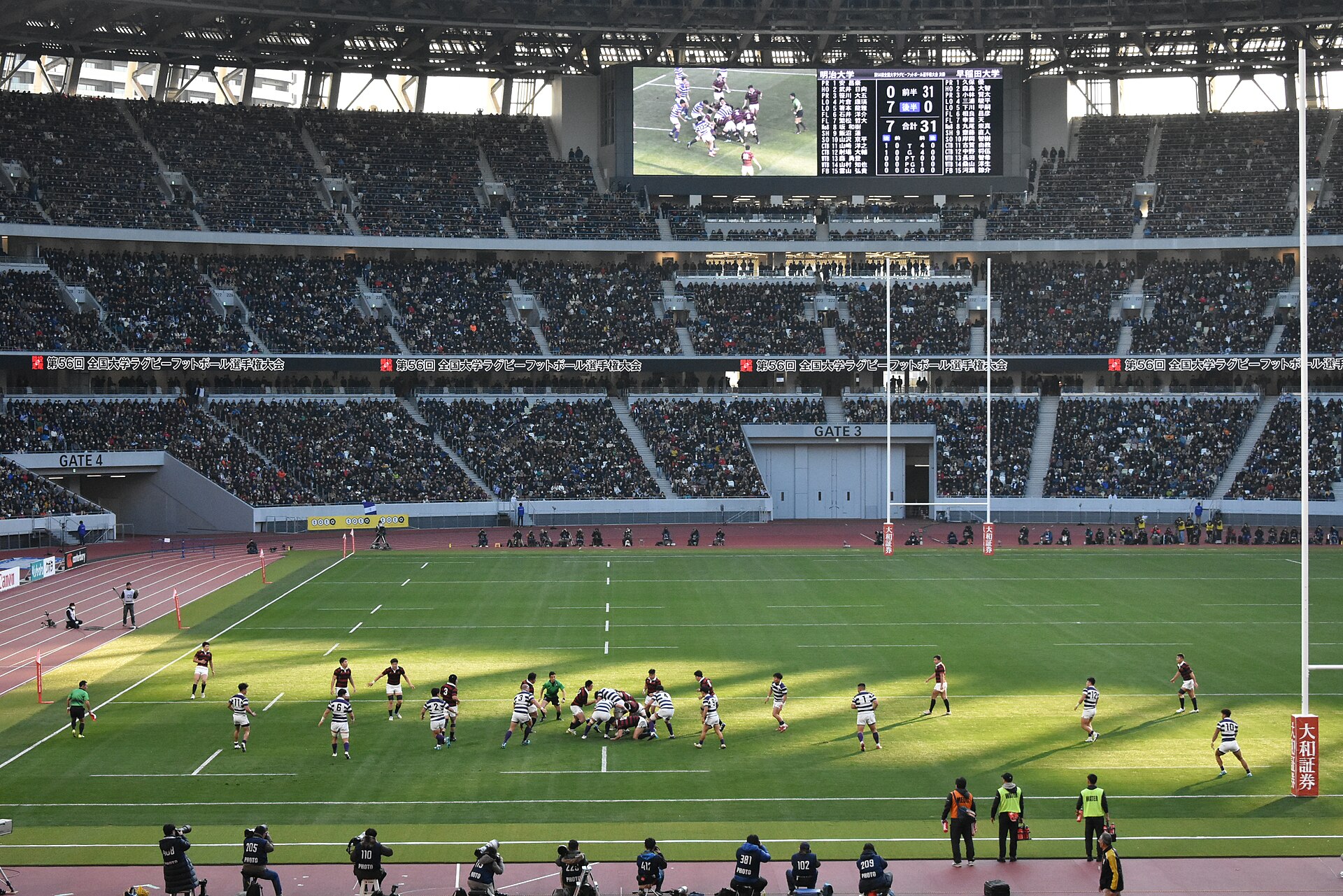
Stats at a Glance
- Team(s): Japan national football & rugby teams
- Location: Shinjuku, Tokyo, Japan
- Opened: December 21, 2019
- Capacity: About 68,000 (expandable to ~80,000)
- Architect: Kengo Kuma
- Notable fact: Roof lattice uses timber from all 47 Japanese prefectures
A Redesign Born from Controversy
Zaha Hadid’s original futuristic design won an international competition in 2012, but its projected $2 billion-plus cost sparked public backlash and led the Japanese government to scrap it in 2015 — after the old 1964 stadium had already been demolished. Kengo Kuma’s replacement design, chosen in a second competition, favored a quieter profile of stacked eaves and exposed wood meant to echo traditional Japanese architecture.
Construction ran from late 2016 to late 2019 at a cost of roughly $1.4 billion, still far less than the original scheme. The finished stadium wraps a five-tier steel bowl in latticed timber screens, with each tier’s wood reportedly sourced from a different one of Japan’s 47 prefectures as a symbol of national unity.
An Olympic Stage Played to Empty Seats
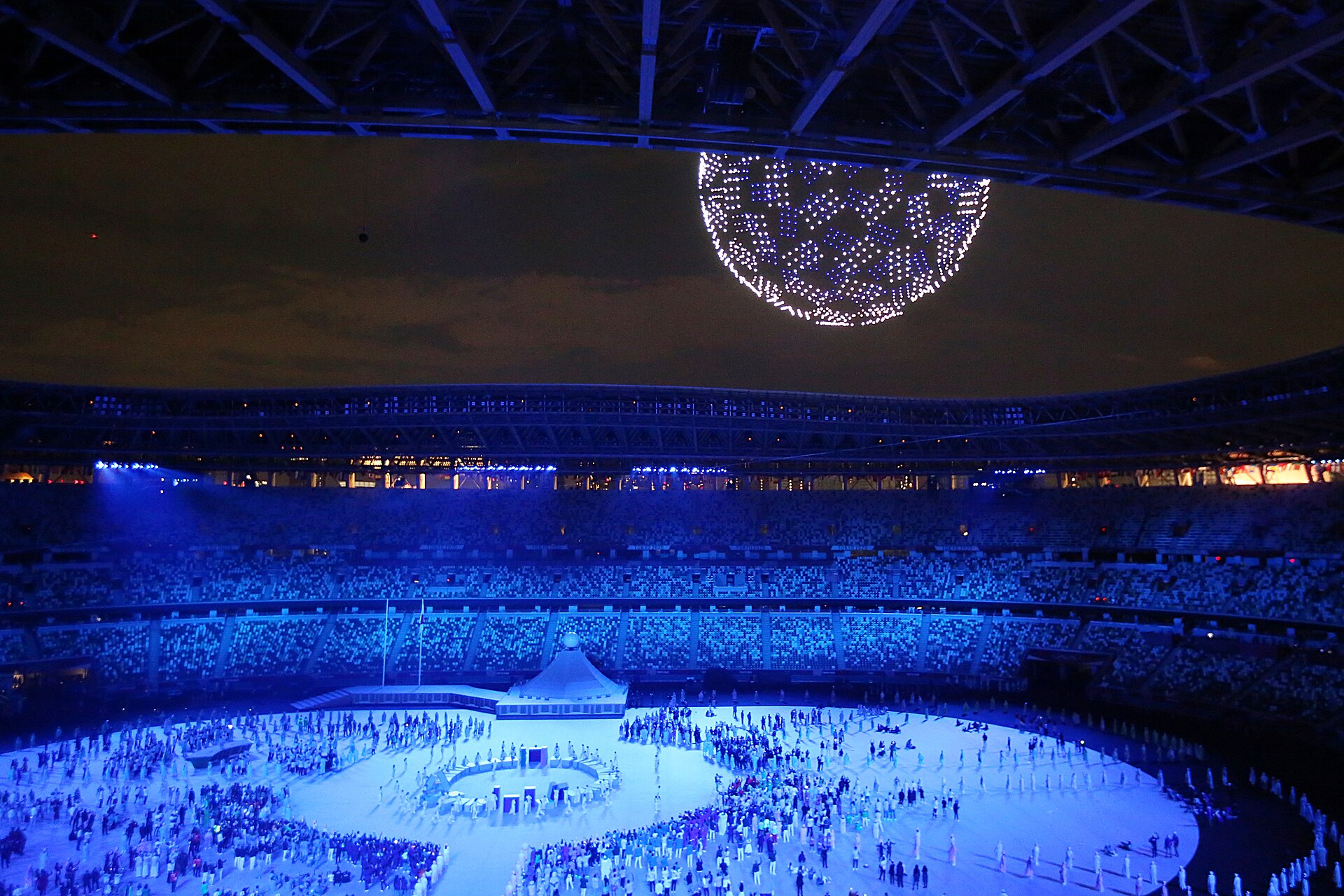
Japan National Stadium was built to headline the 2020 Tokyo Olympics, but the Games were postponed a year by the COVID-19 pandemic and ultimately held in 2021 largely without spectators. The stadium still delivered its signature moments, hosting the opening and closing ceremonies and all Olympic athletics events before a global television audience even as its 68,000 seats sat mostly empty.
Since the Olympics, the venue has returned to hosting Japan’s national football and rugby teams and major domestic finals, and it served as the primary stadium for the 2025 World Athletics Championships, cementing its role as Japan’s flagship sporting arena.
Explore more: Explore more of the world’s iconic stadiums.
Japan National Stadium FAQs
Who designed Japan National Stadium?
Architect Kengo Kuma designed the stadium that was built, after an earlier, more expensive design by Zaha Hadid was scrapped in 2015 following public cost concerns.
What is the seating capacity of Japan National Stadium?
The stadium holds about 68,000 spectators for regular events, with capacity expandable to roughly 80,000 using temporary seating for the largest occasions.
What major events has the stadium hosted?
It hosted the opening and closing ceremonies and athletics events of the 2020 Tokyo Olympics, plus the 2025 World Athletics Championships, and regularly hosts Japan’s national football and rugby matches.
Get More from Japan National Stadium
Log the coasters, stadiums, and venues you’ve experienced, rate Japan National Stadium, and see what your friends thought. Get the ThrillZing app.
Photo: Syced / CC0, via Wikimedia Commons.