
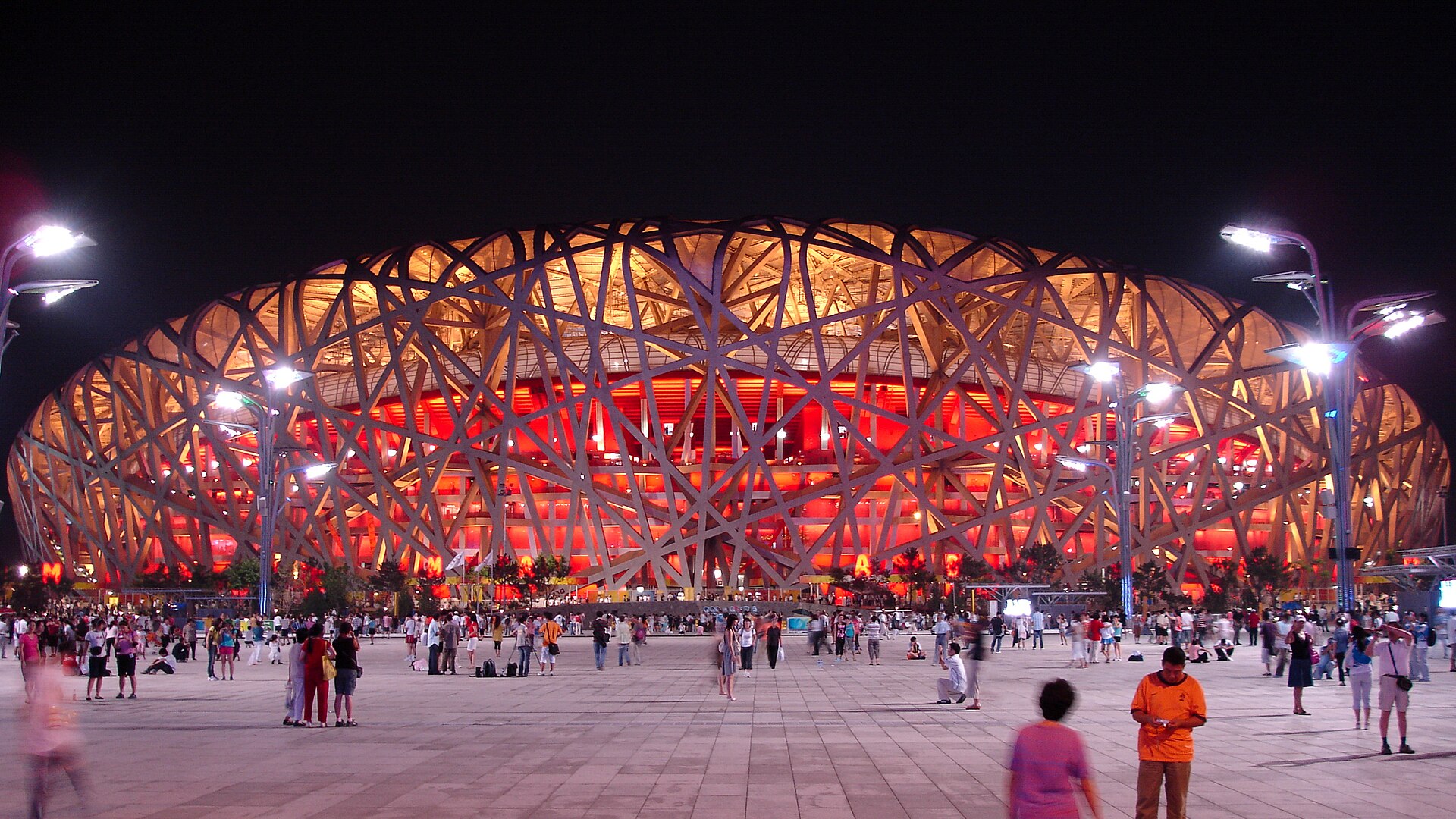
Beijing National Stadium, nicknamed the Bird’s Nest for its lattice of interlocking steel beams, opened on June 28, 2008, in Beijing’s Chaoyang District. Designed by Herzog & de Meuron with ArupSport and the China Architectural Design & Research Group, with artist Ai Weiwei serving as artistic consultant, the stadium became the centerpiece venue of the 2008 Summer Olympics.
Built between December 2003 and June 2008 at a cost of roughly CN¥2.3 billion, the stadium hosted the Olympic and Paralympic opening and closing ceremonies along with athletics and the men’s football final. Its most unusual distinction came in 2022, when Beijing became the first city to host the Winter Games, and the Bird’s Nest again staged the opening and closing ceremonies, making it the only stadium in history to have done so for both the Summer and Winter Olympics.
Stats at a Glance
- Location: Chaoyang, Beijing, China
- Opened: June 28, 2008
- Capacity: About 80,000 (originally 91,000 with temporary seating)
- Architects: Herzog & de Meuron, ArupSport, CADG
- Construction cost: About CN¥2.3 billion
- Notable fact: Only stadium to host both Summer and Winter Olympics ceremonies
An Olympic Icon Twice Over
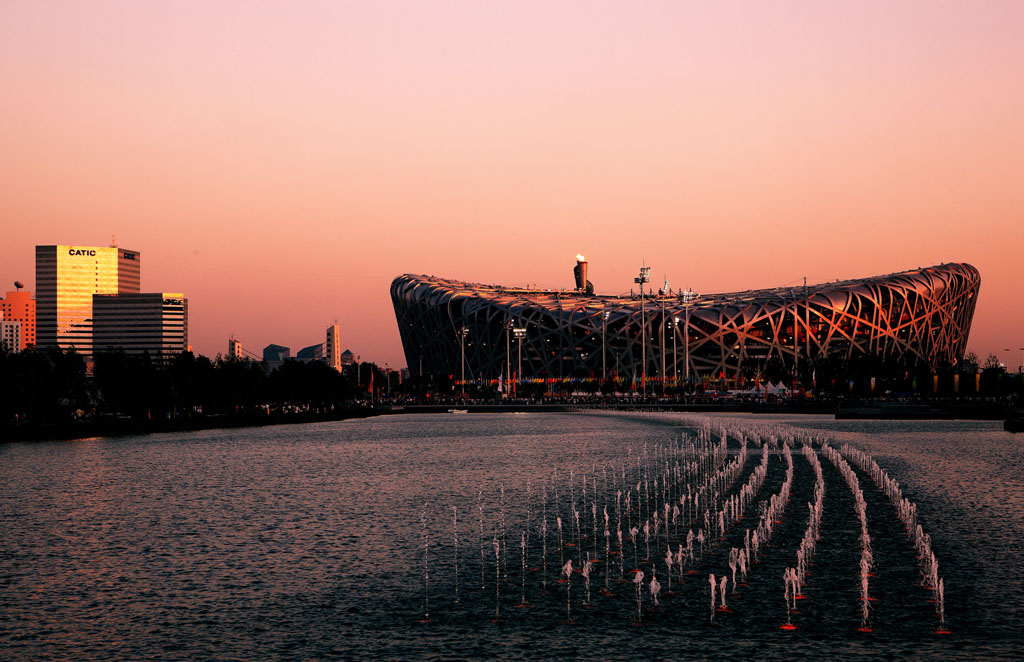
The Bird’s Nest’s design drew inspiration from Chinese ceramics, with its steel lattice exterior wrapping a bowl-shaped seating structure. An originally planned retractable roof was scrapped over structural and cost concerns, but the exposed steel framework became the building’s defining feature and one of the most recognizable stadium silhouettes in the world.
After the 2008 Games, about 11,000 temporary seats were removed, leaving a permanent capacity of around 80,000. The venue has since hosted China’s national football and basketball teams for select matches, along with concerts and other large-scale events, keeping the stadium active well beyond its Olympic debut.
A Return to the Global Stage
When Beijing was awarded the 2022 Winter Olympics, the Bird’s Nest was brought back into the international spotlight, once again hosting the opening and closing ceremonies. That achievement made it the only stadium ever to serve as the ceremonial home for both a Summer and a Winter Olympics, cementing its place in Olympic history.
Explore more: Explore more legendary stadiums.
Beijing National Stadium FAQs
Why is Beijing National Stadium called the Bird’s Nest?
Its exterior is made of interlocking steel beams that resemble a woven bird’s nest, giving the stadium its widely used nickname.
How many people can Beijing National Stadium hold?
The stadium currently seats about 80,000 people after roughly 11,000 temporary seats used for the 2008 Olympics were removed.
Has Beijing National Stadium hosted more than one Olympics?
Yes. It hosted the 2008 Summer Olympics ceremonies and the 2022 Winter Olympics ceremonies, making it the only stadium to host both.
Get More from Beijing National Stadium
Log the coasters, stadiums, and venues you’ve experienced, rate Beijing National Stadium, and see what your friends thought. Get the ThrillZing app.
Photo: CEphoto, Uwe Aranas / CC BY-SA 3.0, via Wikimedia Commons.