
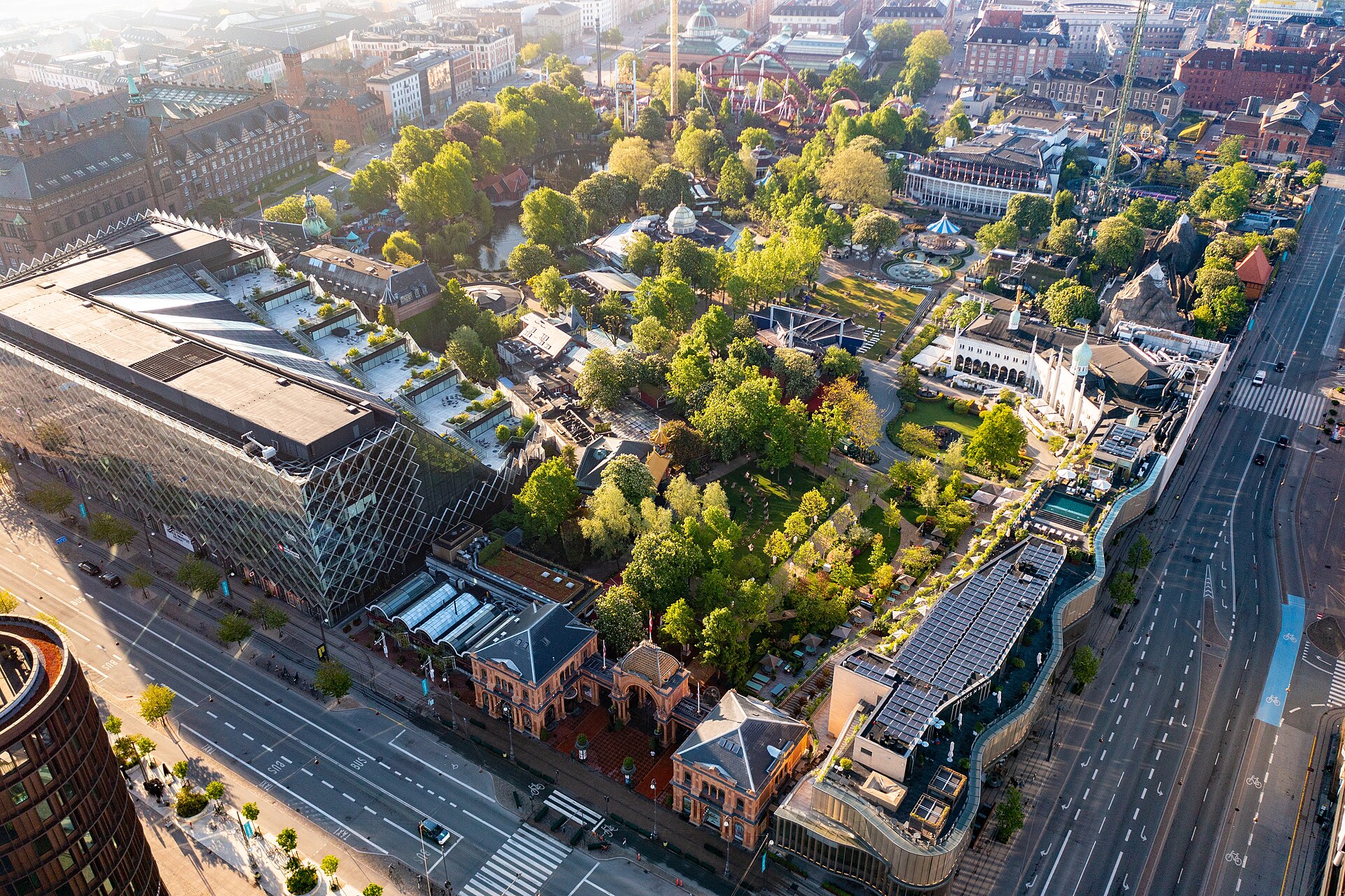
Rutschebanen is a wooden roller coaster at Tivoli Gardens in Copenhagen, Denmark, nicknamed Bjergbanen (the Mountain Coaster) for its scenery of painted hills and tunnels. Designed by Danish ride builder Valdemar Lebech with construction help from the L.A. Thompson Scenic Railway Company, it opened on June 12, 1914, and is regarded as the oldest operating roller coaster in Europe and among the oldest still running in the world.
The ride has endured far more than a century of wear and tear on its original wooden structure. On the night of June 24, 1944, saboteurs bombed sections of Tivoli Gardens during the German occupation, damaging Rutschebanen along with several other park buildings. Officials treated restoring the ride as a priority for public morale, and it reopened only about 25 days later, a rebuild still cited as one of the park’s defining wartime stories.
Stats at a Glance
- Park: Tivoli Gardens, Copenhagen, Denmark
- Designer: Valdemar Lebech, with L.A. Thompson Scenic Railway Company
- Opened: June 12, 1914
- Height: about 39 ft (12 m)
- Top speed: about 31-37 mph (50-60 km/h)
- Length: about 2,360 ft (720 m)
- Inversions: 0
The Ride Experience
Riders climb a lift hill before winding through a side-friction wooden circuit, a construction style in which the train is guided by wheels running against the sides of the rails rather than beneath them, one of the oldest coaster engineering methods still in use. An onboard brakeman rides with each train, manually controlling speed through the descents and turns, a tradition Rutschebanen has kept for more than a century and one that makes it one of only a handful of coasters worldwide still operated this way.
The layout winds through a landscape built to resemble a mountain range, complete with painted peaks, tunnels, and dips that give the ride its Bjergbanen nickname. American Coaster Enthusiasts have recognized Rutschebanen as a Coaster Classic, reflecting its significance as a nearly unchanged example of early 20th-century wooden coaster design.
Surviving War and a Century of Change
Tivoli Gardens opened in 1843, and Rutschebanen has been one of its headline attractions since 1914, ranking among the tallest and longest roller coasters in Europe when it debuted. The June 1944 bombing and rapid 25-day rebuild remain a defining chapter in the ride’s history, a testament to how central it was to the park even amid wartime occupation.
Safety bars were added to the trains in 1990, but the coaster still runs largely on its original wooden structure and side-friction track, giving visitors a rare chance to experience a roller coaster design essentially unchanged in form since the early 20th century.
Explore more: Explore more classic roller coasters.
Rutschebanen FAQs
Where is Rutschebanen located?
Rutschebanen is at Tivoli Gardens, a historic amusement park in central Copenhagen, Denmark.
When did Rutschebanen open?
It opened on June 12, 1914, designed by Valdemar Lebech with help from the L.A. Thompson Scenic Railway Company.
Was Rutschebanen really bombed during World War II?
Yes. Saboteurs bombed sections of Tivoli Gardens, including Rutschebanen, on the night of June 24, 1944, during the German occupation of Denmark. The park treated its restoration as a priority, and the coaster reopened about 25 days later.
Get More from Rutschebanen
Log the coasters, stadiums, and venues you’ve experienced, rate Rutschebanen, and see what your friends thought. Get the ThrillZing app.
Photo: European Commission / CC BY 4.0, via Wikimedia Commons.