
The Philadelphia Flyers have played on Broad Street in South Philadelphia since 1967, in two arenas: the Spectrum, home of their two Stanley Cup teams, and since 1996 the arena now called Xfinity Mobile Arena.
Here is every home in order, with the years the Flyers played there, what made each one matter and what stands on the site today.
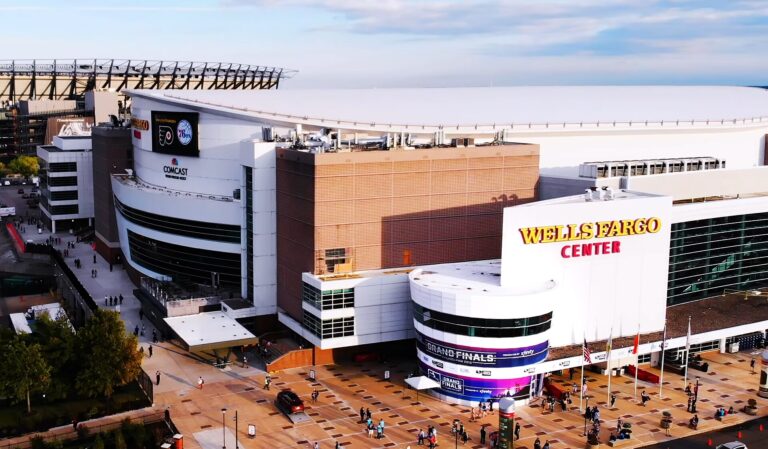
Every Flyers Arena, 1967 to Today
- Philadelphia
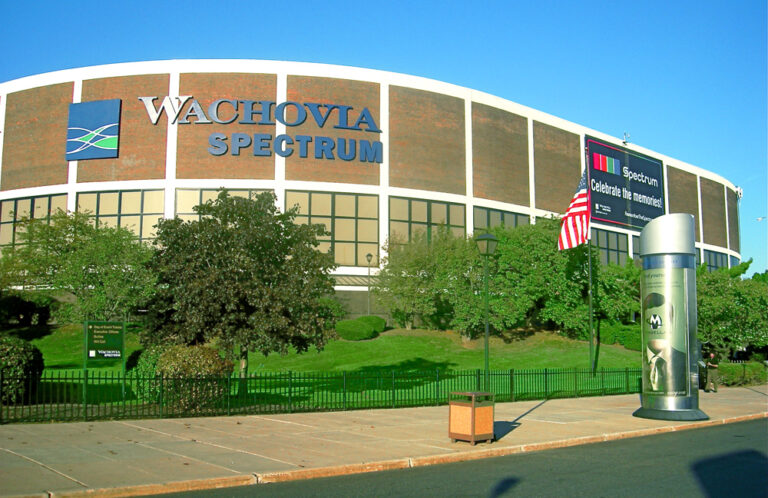 1967–1996
Opened in 1967 for the Flyers and 76ers. Wind tore part of the roof off in March 1968, sending most of the Flyers' remaining home games that season to Quebec City. Home of the 1974 and 1975 Stanley Cup teams.
Today: Demolished in 2010–11 to make way for a retail and entertainment complex
Stadium history →- 1996–presentCurrent home
Opened in August 1996 as the CoreStates Center, later First Union, Wachovia and Wells Fargo Center. Renamed in August 2025; a replacement arena is planned to open by 2030.
Visiting guide →
Flyers Arena FAQ
Where did the Flyers play before Xfinity Mobile Arena?
At the Spectrum, from 1967 to 1996. It was built for the expansion Flyers and the 76ers, and the Flyers won the Stanley Cup in 1974 and 1975 as its tenants.
How many arenas have the Flyers had?
Two: the Spectrum (1967–1996) and Xfinity Mobile Arena (1996–present). In March 1968, after wind tore part of the Spectrum’s roof off, the Flyers played most of their remaining home games that season at Le Colisée in Quebec City.
Is the Spectrum still standing?
No. The Spectrum kept hosting concerts and minor league hockey after the Flyers left, closed with four Pearl Jam shows in October 2009 and was demolished between November 2010 and May 2011.
What was Xfinity Mobile Arena called before?
It opened in 1996 as the CoreStates Center, then became the First Union Center, the Wachovia Center and, from 2010 to 2025, the Wells Fargo Center. The Xfinity Mobile Arena name became official on August 14, 2025.
Where do the Flyers play now?
At Xfinity Mobile Arena in the South Philadelphia Sports Complex, shared with the 76ers. It seats 19,173 for hockey, and a privately financed replacement arena is planned to open by 2030.