
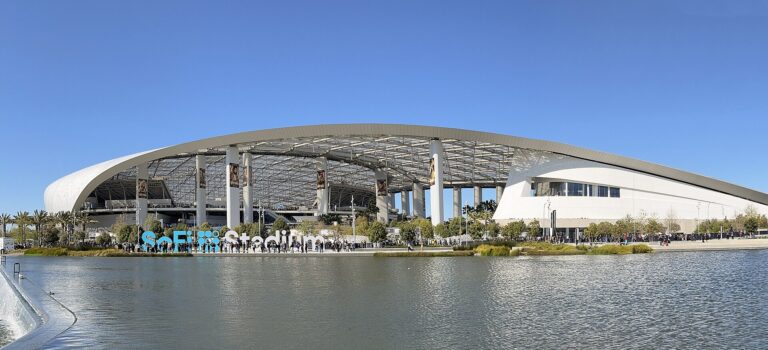
The Rams are the only NFL franchise to win championships for three different cities. Since their founding in Cleveland in 1936 they have called eight stadiums home: three in Cleveland, the Los Angeles Memorial Coliseum (twice), Anaheim Stadium, two in St. Louis and, since 2020, SoFi Stadium in Inglewood.
Here is every home in order, with the years the Rams played there, what made each one matter and what stands on the site today. Each stadium links to our full guide where we have one.
Every Rams Stadium, 1936 to Today
- Cleveland
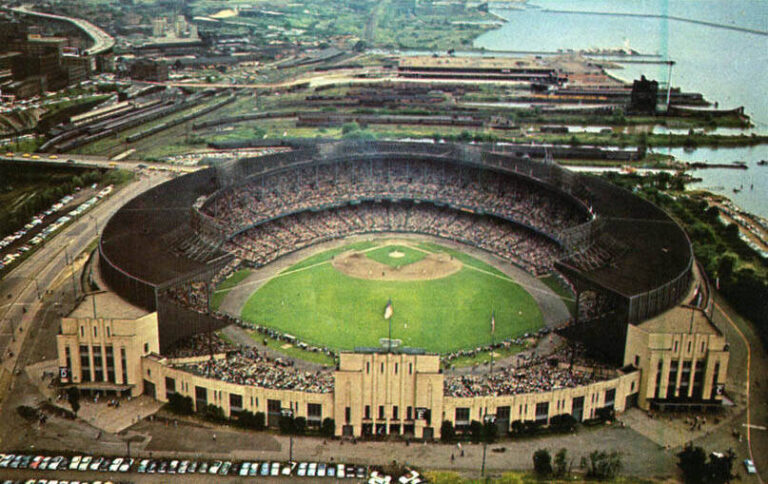 1936–1937
The first home, in 1936 as a team in the second American Football League; the Rams joined the NFL in 1937. Sources differ on how the 1937 home games were split between this lakefront stadium and League Park.
Stadium history →- East Cleveland
- 1938
Shaw Stadium
A high school stadium in East Cleveland. The Rams played three of their four 1938 home games here and earned the franchise's first home NFL win, over the Detroit Lions.
Today: Still in use as Shaw High School's stadium
- Cleveland
- 1939–1941
Back on the lakefront for three seasons. Rookie halfback Parker Hall was the league MVP in 1939, and Dan Reeves bought the team in 1941.
Today: Demolished in 1996–97; the Browns' current stadium was built on the site
Stadium history → 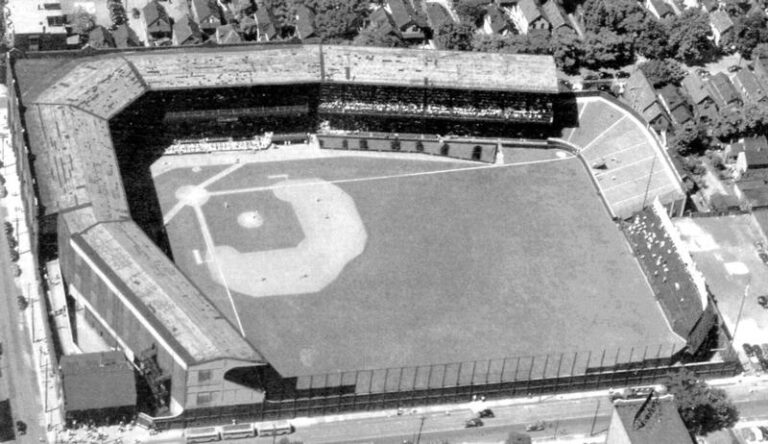 1942–1945
The Rams sat out 1943 during World War II, then won the 1945 NFL title. The championship game itself was played at Cleveland Stadium, and the team moved to Los Angeles the next month.
Today: Mostly demolished in 1951; the field is still used for baseball and the 1909 ticket office survives
Stadium history →- Los Angeles
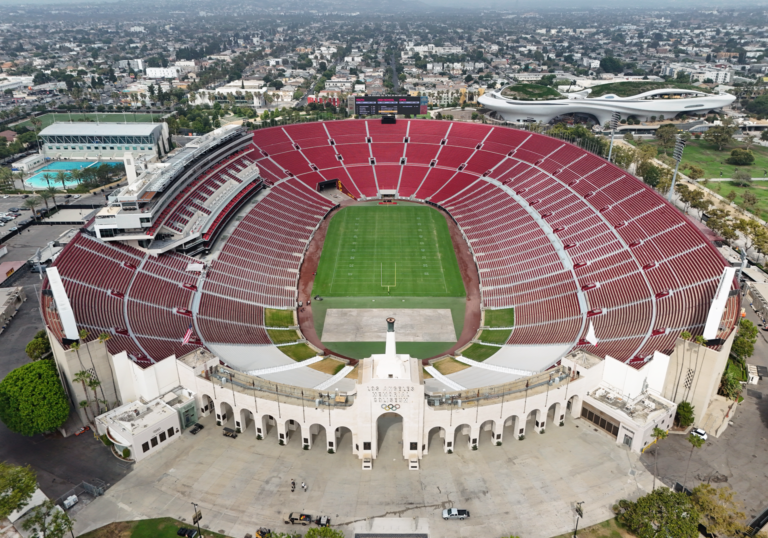 1946–1979
The first NFL team in Los Angeles; the Coliseum lease required the Rams to integrate, and they signed Kenny Washington and Woody Strode. They won the 1951 NFL title here, and a 1957 crowd of 102,368 stood as the NFL record until 2009.
Stadium history →- Anaheim
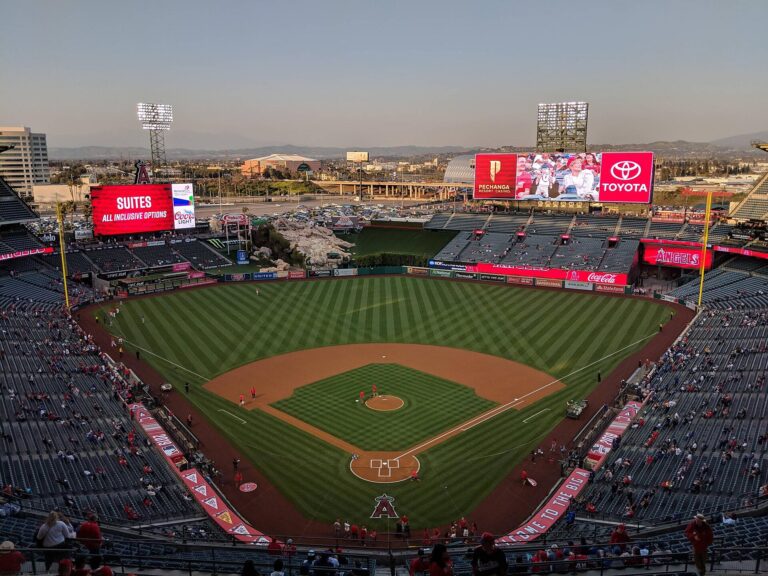 1980–1994
The Angels' ballpark was enclosed and expanded for football. The smaller stadium helped the Rams sell out and avoid TV blackouts, but poor sightlines and no deal for a new stadium led to the move to St. Louis.
Today: Still home of the Angels, now named Angel Stadium
Stadium history →- St. Louis
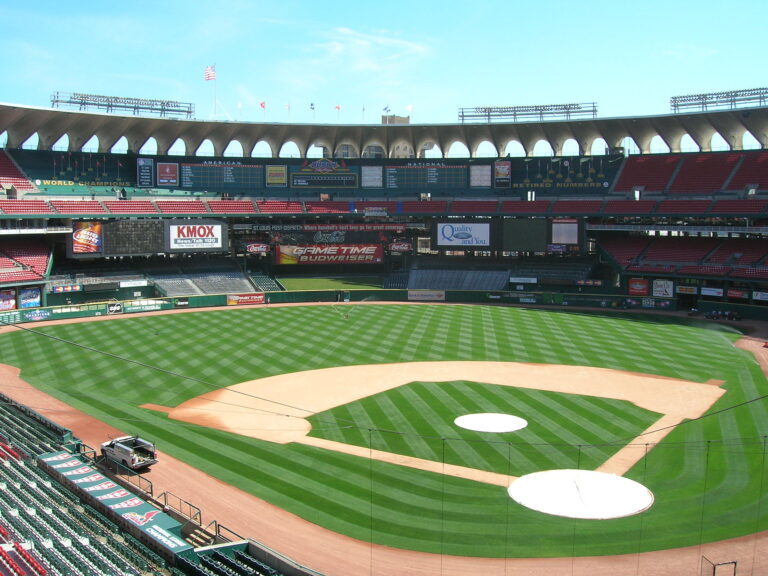 1995
A stopgap while the new dome downtown was finished. The Rams played four home games here in the first half of 1995, the last on October 22.
Today: Demolished in 2005; the current Busch Stadium covers part of the site
Stadium history →- 1995–2015
Edward Jones Dome
Opened in November 1995 as the Trans World Dome. The Rams won Super Bowl XXXIV after the 1999 season, then left for Los Angeles after the dome fell short of the lease's top-tier standard and talks on a fix broke down.
Today: Still standing as The Dome at America's Center, home of the UFL's St. Louis Battlehawks
- Los Angeles
- 2016–2019
The temporary home after the return to Los Angeles, while SoFi Stadium was built. The Rams hosted two playoff games here and played their last Coliseum game on December 29, 2019.
Today: Still home of USC football; Olympic stadium in 1932 and 1984, and again in 2028
Stadium history → - Inglewood
- 2020–presentCurrent home
Built by Rams owner Stan Kroenke's company on the former Hollywood Park racetrack site and shared with the Chargers. The first season was played without fans; the Rams won Super Bowl LVI here in February 2022.
Visiting guide →
Rams Stadium FAQ
Where did the Rams play before SoFi Stadium?
At the Los Angeles Memorial Coliseum, from 2016 through 2019, after their return from St. Louis. In St. Louis they played at the Edward Jones Dome (1995–2015), with the first half of 1995 at Busch Memorial Stadium. Before that came Anaheim Stadium (1980–1994), the Coliseum (1946–1979) and three stadiums in Cleveland (1936–1945).
How many stadiums have the Rams had?
Eight: Cleveland Municipal Stadium, Shaw Stadium, League Park, the Los Angeles Memorial Coliseum, Anaheim Stadium, Busch Memorial Stadium, the Edward Jones Dome and SoFi Stadium. Counting their returns to Cleveland Stadium and the Coliseum, that is ten stints in three cities.
Why did the Rams leave Los Angeles for St. Louis in 1995?
Anaheim Stadium was built for baseball, attendance had fallen and the team could not get a new or improved stadium in the Los Angeles area. NFL owners first voted the move down in March 1995, then approved it a month later when owner Georgia Frontiere threatened to sue.
Why did the Rams return to Los Angeles?
Their St. Louis lease required the dome to rank among the top tier of NFL stadiums, and the two sides never agreed on how to bring it up to that standard. Owner Stan Kroenke bought land in Inglewood, and on January 12, 2016, NFL owners voted 30–2 to let the Rams move back for the 2016 season.
Where do the Rams play now?
At SoFi Stadium in Inglewood, which they share with the Chargers. It opened in 2020, seats about 70,000, and the Rams won Super Bowl LVI there in February 2022.