
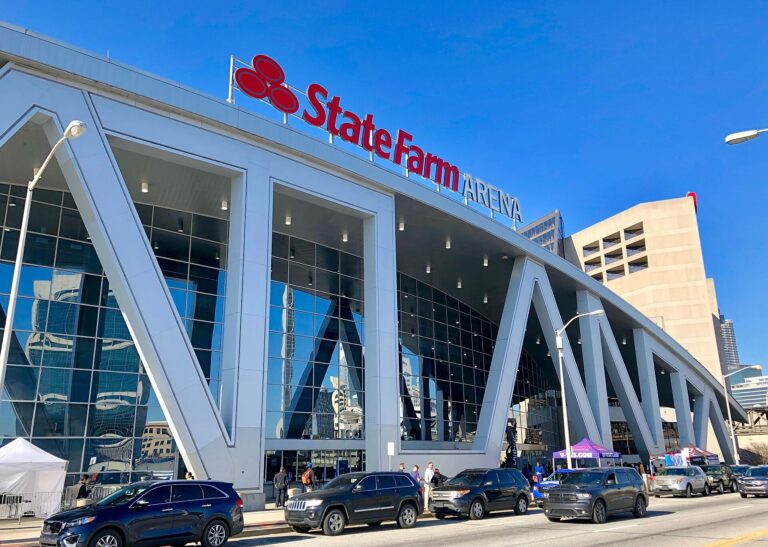
The Hawks have moved more than most NBA teams. The franchise began in 1946 as the Buffalo Bisons of the National Basketball League, then played in the Tri-Cities area of Illinois and Iowa, Milwaukee and St. Louis before reaching Atlanta in 1968. Along the way it has used nine different arenas, from a high school field house in Moline to State Farm Arena downtown.
Here is every home in order, with the years the Hawks played there, what made each one matter and what stands on the site today. Each arena with a ThrillZing guide links to it.
Every Hawks Arena, 1946 to Today
- Buffalo
 1946
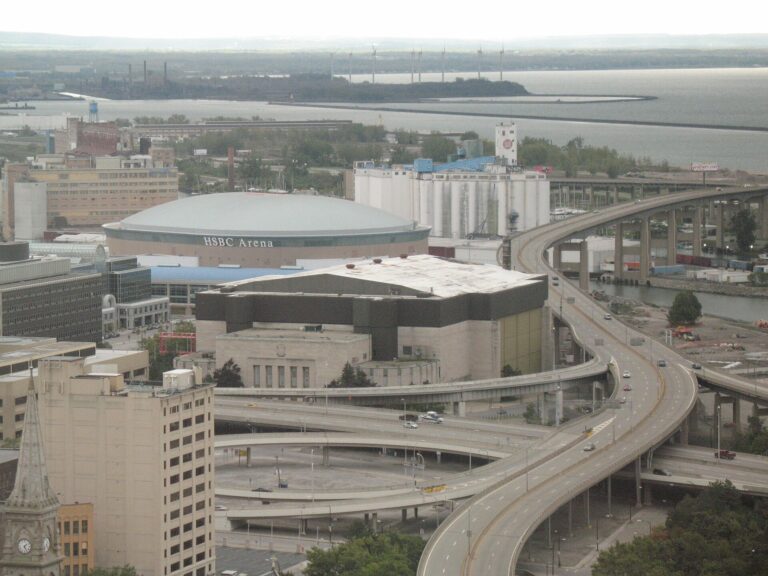
The first home, as the NBL's Buffalo Bisons. The team needed 3,600 fans a game to break even and rarely drew 1,000, so after 38 days and 13 games it moved to Moline, Illinois, announced on Christmas Day 1946.
Today: Closed in 1996 and demolished in 2009
Stadium history →- Moline
- 1946–1951
Wharton Field House
Home of the Tri-Cities Blackhawks, named for Moline, Rock Island and Davenport. They joined the NBA in the 1949 merger, but the area proved too small for an NBA team and the franchise moved to Milwaukee in 1951.
Today: Still standing, home of Moline High School's teams
- Milwaukee
- 1951–1955
Milwaukee Arena
Four seasons as the Milwaukee Hawks in an arena opened in 1950. They drafted Bob Pettit in 1954 but stayed among the league's worst teams and moved to St. Louis in 1955.
Today: Still in use as UW–Milwaukee Panther Arena, home of the AHL's Milwaukee Admirals
- St. Louis
- 1955–1968
Kiel Auditorium
Home of the St. Louis Hawks and the 1958 NBA title team led by Bob Pettit. Bigger games sometimes went to the larger St. Louis Arena; owner Ben Kerner wanted his own building, never got one and sold the team to Atlanta owners in 1968.
Today: Demolished in 1992; Enterprise Center, home of the NHL's Blues, stands on the site
- Atlanta
- 1968–1972
Alexander Memorial Coliseum
Georgia Tech's campus arena, a stopgap for the first four Atlanta seasons while the Omni was built. The Hawks won their first division title in Atlanta here in 1969–70.
Today: Rebuilt inside and reopened in 2012 as McCamish Pavilion; still Georgia Tech's basketball arena
 1972–1997
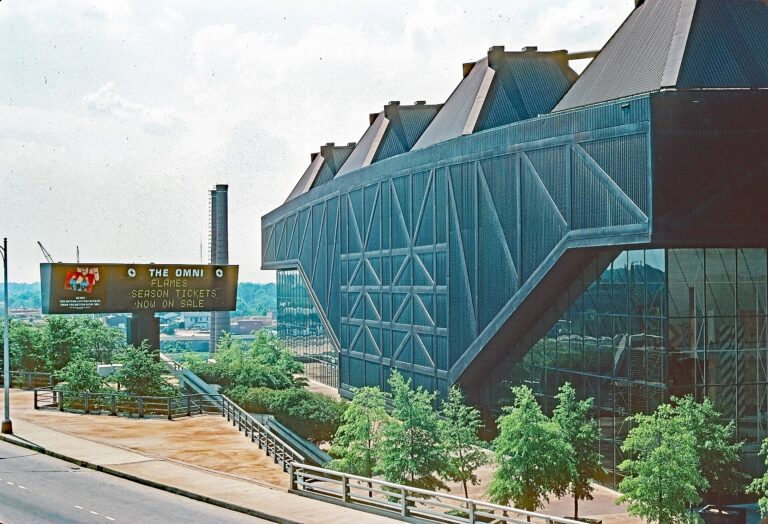
Built for the Hawks and the NHL's Flames as the first phase of the Omni complex. Its weathering steel never stopped rusting, and it was replaced after 25 years; the last game was a 1997 playoff loss to the Bulls.
Today: Demolished in 1997; State Farm Arena stands on the site, and the Omni's scoreboard hangs in its pavilion
Stadium history →- New Orleans
- 1984–1985
Lakefront Arena
With attendance sagging, the Hawks played 12 home games in New Orleans in 1984–85 and went 6–6. Larry Bird scored his career-high 60 points against them here in March 1985.
Today: Still in use, home of the LSU New Orleans Privateers basketball teams
- Atlanta
- 1997–1999
Georgia Dome
The Falcons' domed stadium held most Hawks home games while their new arena went up on the Omni site. A March 1998 game against Michael Jordan's Bulls drew 62,046, then an NBA single-game record.
Today: Demolished in 2017
- 1997–1999
Alexander Memorial Coliseum
Back at Georgia Tech for two seasons, splitting home games with the Georgia Dome. The Hawks used the campus arena once more for preseason games in October 2017, during work on their downtown arena.
Today: Rebuilt inside and reopened in 2012 as McCamish Pavilion; still Georgia Tech's basketball arena
- 1999–presentCurrent home
Opened in 1999 as Philips Arena on the Omni's site, and also home to the NHL's Thrashers until 2011. It was renamed State Farm Arena in 2018 after a renovation that reworked the seating.
Visiting guide →
Hawks Arena FAQ
Where did the Hawks play before Atlanta?
In St. Louis, at Kiel Auditorium, from 1955 to 1968, with some bigger games at the St. Louis Arena. Before that they were the Milwaukee Hawks at the Milwaukee Arena (1951–1955), the Tri-Cities Blackhawks at Wharton Field House in Moline, Illinois (1946–1951), and, for 13 games in late 1946, the Buffalo Bisons at Buffalo Memorial Auditorium.
How many arenas have the Hawks had?
Nine: Buffalo Memorial Auditorium, Wharton Field House, the Milwaukee Arena, Kiel Auditorium, Alexander Memorial Coliseum, the Omni, New Orleans’ Lakefront Arena (12 games in 1984–85), the Georgia Dome and State Farm Arena. Counting the return to Georgia Tech’s coliseum from 1997 to 1999, that is ten stints.
Why did the Hawks leave St. Louis?
Owner Ben Kerner had outgrown Kiel Auditorium, which seated about 10,000 and was showing its age. He did not want to be the city’s tenant at the St. Louis Arena and could not get the building of his own he wanted, so in 1968 he sold the team to Tom Cousins and former Georgia governor Carl Sanders, who moved it to Atlanta.
Is the Omni still standing?
No. The Omni opened in 1972, but its weathering steel kept rusting, and it was demolished in 1997. Philips Arena, now State Farm Arena, was built on the same site, and the Omni’s scoreboard hangs in the new arena’s pavilion. The Georgia Dome was demolished in 2017.
Where do the Hawks play now?
At State Farm Arena in downtown Atlanta, their home since it opened as Philips Arena in 1999. It took the State Farm name in 2018 and seats about 17,600 for basketball.