
The Philadelphia Zoo holds the distinction of being America’s first zoo, chartered by the Zoological Society of Philadelphia in 1859 and finally opening its gates on July 1, 1874, after the Civil War delayed construction. More than 3,000 visitors turned out on opening day to see roughly 1,000 animals along the west bank of the Schuylkill River, launching a tradition that continues today on the zoo’s 42-acre campus in the city’s Centennial District.
Over its 150-year history, Philadelphia Zoo has racked up a string of firsts, including the first orangutan and chimpanzee births in a U.S. zoo, the first zoo research laboratory in the country, and the first children’s zoo in North America. Today it houses around 1,300 animals representing more than 300 species and draws over a million visitors annually, many of whom come specifically to walk beneath its elevated Zoo360 mesh trails.

Stats at a Glance
- Location: Philadelphia, Pennsylvania
- Opened: July 1, 1874
- Size: 42 acres
- Animals: About 1,300 animals
- Species: Over 300 species
- Annual Visitors: About 1.2-1.3 million
- Famous For: America’s first zoo
A Foundation Full of Firsts
Long before it opened, the Zoological Society of Philadelphia was chartered in March 1859, making it the first zoo organization established in the United States, though the Civil War pushed the actual opening back 15 years. Once it opened in 1874, the zoo kept setting precedents: it built the first zoo research facility in the country, the Penrose Research Laboratory, in 1901, and celebrated the first orangutan and chimpanzee births in any American zoo in 1928.
The zoo also opened North America’s first children’s zoo in 1938, a model later copied by zoos across the country. Decades later, Philadelphia Zoo staff led the Guam Bird Rescue Project in the 1980s, helping save critically endangered Guam kingfishers and rails from extinction in the wild through captive breeding programs.
Zoo360 and the Modern Visitor Experience
Rather than expand its footprint on a tight urban site, Philadelphia Zoo built upward and outward with Zoo360, a network of elevated mesh trails that let animals like orangutans, lemurs, and big cats roam above and alongside visitor pathways between habitats. The system gives animals more room to roam without requiring more land, a solution suited to the zoo’s compact 42-acre campus.
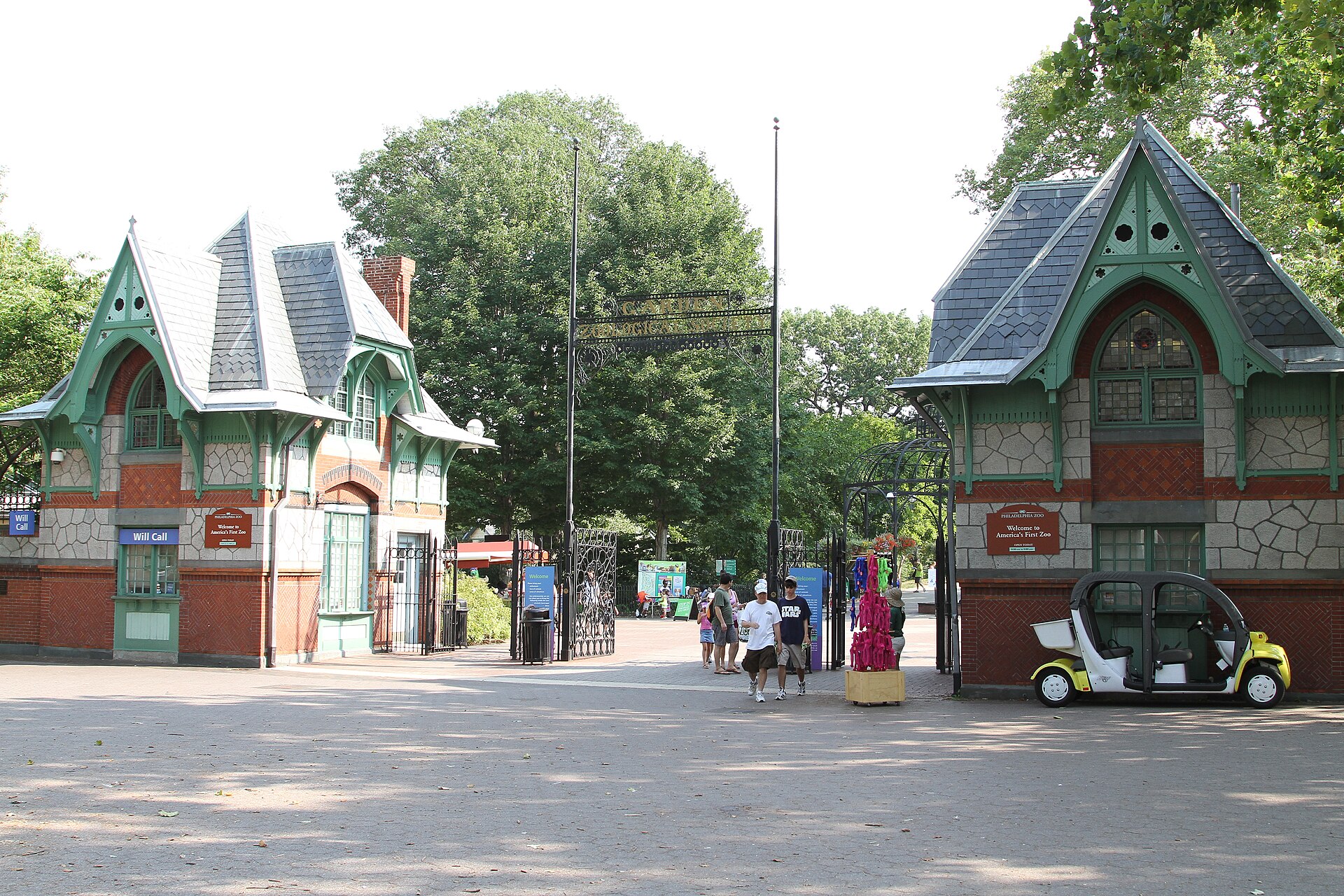
The zoo pairs its historic architecture, including Victorian-era buildings still in use, with newer additions like the LEED-certified KidZooU children’s zoo and seasonal light displays such as Luminature, blending its 19th-century roots with contemporary conservation-focused exhibits.
Explore more: Explore more Zoos & Aquariums.
Holiday lights 2026: LumiNature: Philly Zoo's Holiday Light Spectacular returns for the 2026 holiday season. Dates, ticket prices and tips are in our LumiNature: Philly Zoo's Holiday Light Spectacular 2026 guide.
Cheap insurance for splash zones, water rides and surprise showers.
Rubber-armored for small hands, so kids can find the snow leopard before the adults do.
A field guide that keeps the animal spotting going on the drive home and at home.


Philadelphia Zoo FAQs
Is Philadelphia Zoo really America’s first zoo?
Yes. The Zoological Society of Philadelphia was chartered in 1859, the first such charter in the U.S., though the zoo itself didn’t open to the public until July 1, 1874, due to Civil War delays.
How big is Philadelphia Zoo?
The zoo covers about 42 acres along the Schuylkill River in Philadelphia’s Centennial District and houses roughly 1,300 animals from more than 300 species.
What is Zoo360 at Philadelphia Zoo?
Zoo360 is a network of elevated mesh trails that allow animals such as orangutans and lemurs to travel above and between exhibits, giving them more space to explore within the zoo’s limited urban footprint.
Get More from Philadelphia Zoo
Log the coasters, stadiums, and venues you’ve experienced, rate Philadelphia Zoo, and see what your friends thought. Get the ThrillZing app.
Photo: Derek Ramsey / CC BY-SA 2.5, via Wikimedia Commons.