
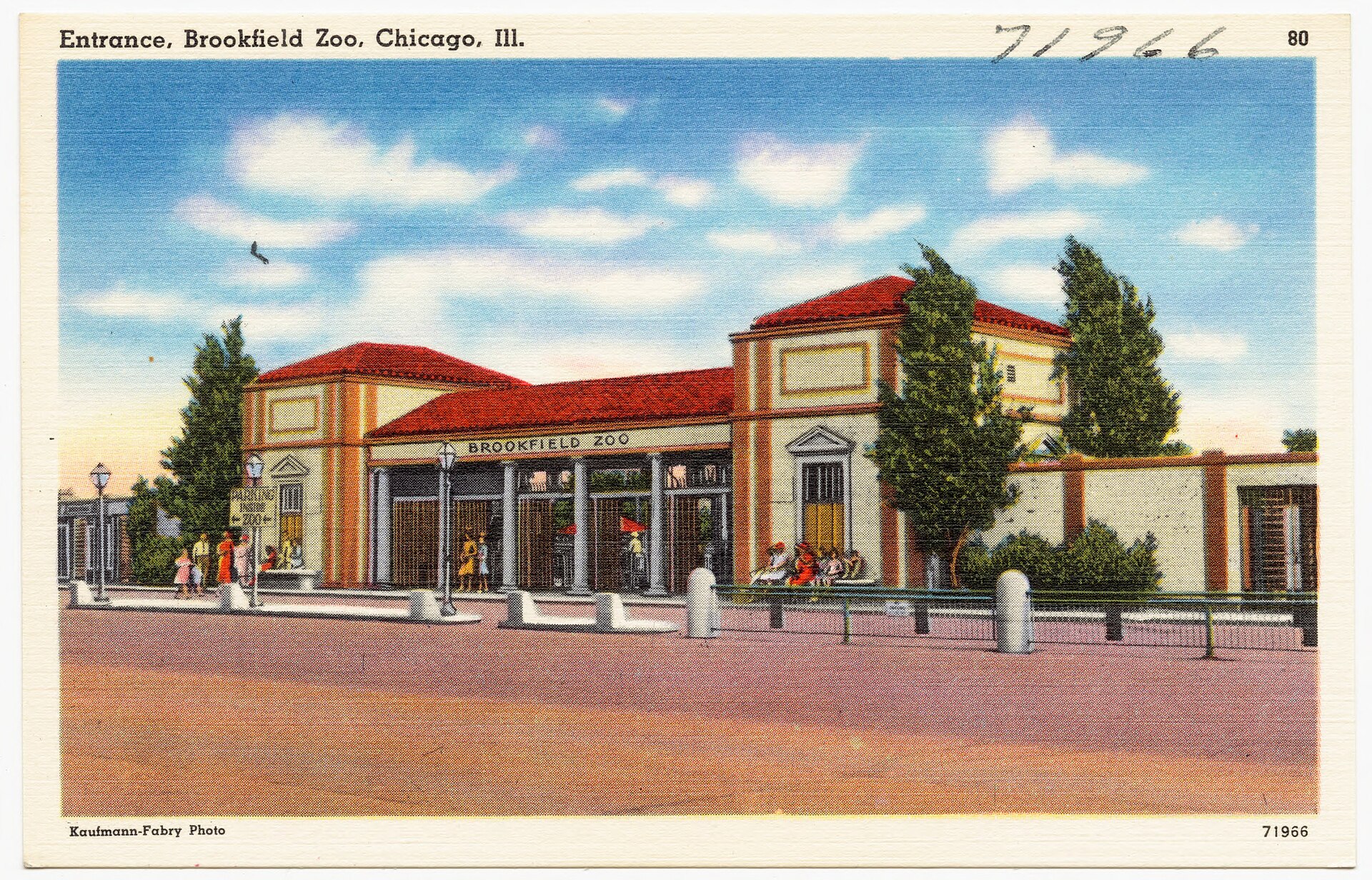
Brookfield Zoo opened on July 1, 1934, in Brookfield, Illinois, just outside Chicago, and quickly became known for reshaping how American zoos presented animals. Rather than lining up cages, the zoo used moats, ditches, and naturalistic barriers to separate visitors from wildlife, an approach that influenced zoo design across the country.
Owned by the Forest Preserve District of Cook County and operated by the Chicago Zoological Society, the zoo rebranded as Brookfield Zoo Chicago in 2024. Today it spans roughly 235 acres and is home to around 500 species, ranging from the indoor rainforest of Tropic World to dolphins housed in one of the nation’s first fully indoor dolphinariums.
Stats at a Glance
- Location: Brookfield, Illinois
- Opened: July 1, 1934
- Size: About 235 acres
- Species: About 500 species (roughly 2,400+ animals)
- Annual visitors: About 2 million
- Famous for: Cageless, moat-based habitat design and Tropic World indoor rainforest
A Different Approach to Zoo Design
When Brookfield Zoo opened in 1934, it broke from the barred-cage tradition common at the time by using moats, dry ditches, and naturalistic terrain to separate animals from visitors. The design let guests view animals in more open settings and became a model referenced by other zoos as the field moved away from cramped, caged enclosures.
The zoo also built a reputation for firsts, including operating one of the first fully indoor bottlenose dolphin exhibits in the United States, opened in 1960, and later becoming one of the earliest American zoos to exhibit giant pandas.
Habitats and Conservation Work
Signature exhibits include Tropic World, an indoor multi-continent rainforest habitat developed in the 1980s, along with living collections spanning primates, big cats, marine mammals, and a wide range of birds and reptiles across the property’s roughly 235 acres.
As an AZA-accredited institution managed by the Chicago Zoological Society, Brookfield Zoo also participates in species survival and conservation programs, and in 2023 received a $40 million donation described as one of the largest private gifts ever given to a zoo.
Explore more: Explore more Zoos & Aquariums.
Holiday lights 2026: Holiday Magic returns for the 2026 holiday season. Dates, ticket prices and tips are in our Holiday Magic 2026 guide.
A stick means no greasy hands. Reapply quickly between the penguins and the giraffes.
Let them photograph their own favorite animals — and keep your phone in your pocket.
Hauls kids, coolers and souvenirs across a big zoo or park, folds flat for the trunk.


Brookfield Zoo FAQs
When did Brookfield Zoo open?
Brookfield Zoo opened to the public on July 1, 1934, in Brookfield, Illinois.
Who operates Brookfield Zoo?
The zoo is owned by the Forest Preserve District of Cook County and managed by the Chicago Zoological Society; it was renamed Brookfield Zoo Chicago in 2024.
How many animals live at Brookfield Zoo?
The zoo houses roughly 500 species and more than 2,000 individual animals across its approximately 235-acre grounds.
Get More from Brookfield Zoo
Log the coasters, stadiums, and venues you’ve experienced, rate Brookfield Zoo, and see what your friends thought. Get the ThrillZing app.
Photo: Derek Taylor / CC BY-SA 2.5, via Wikimedia Commons.