
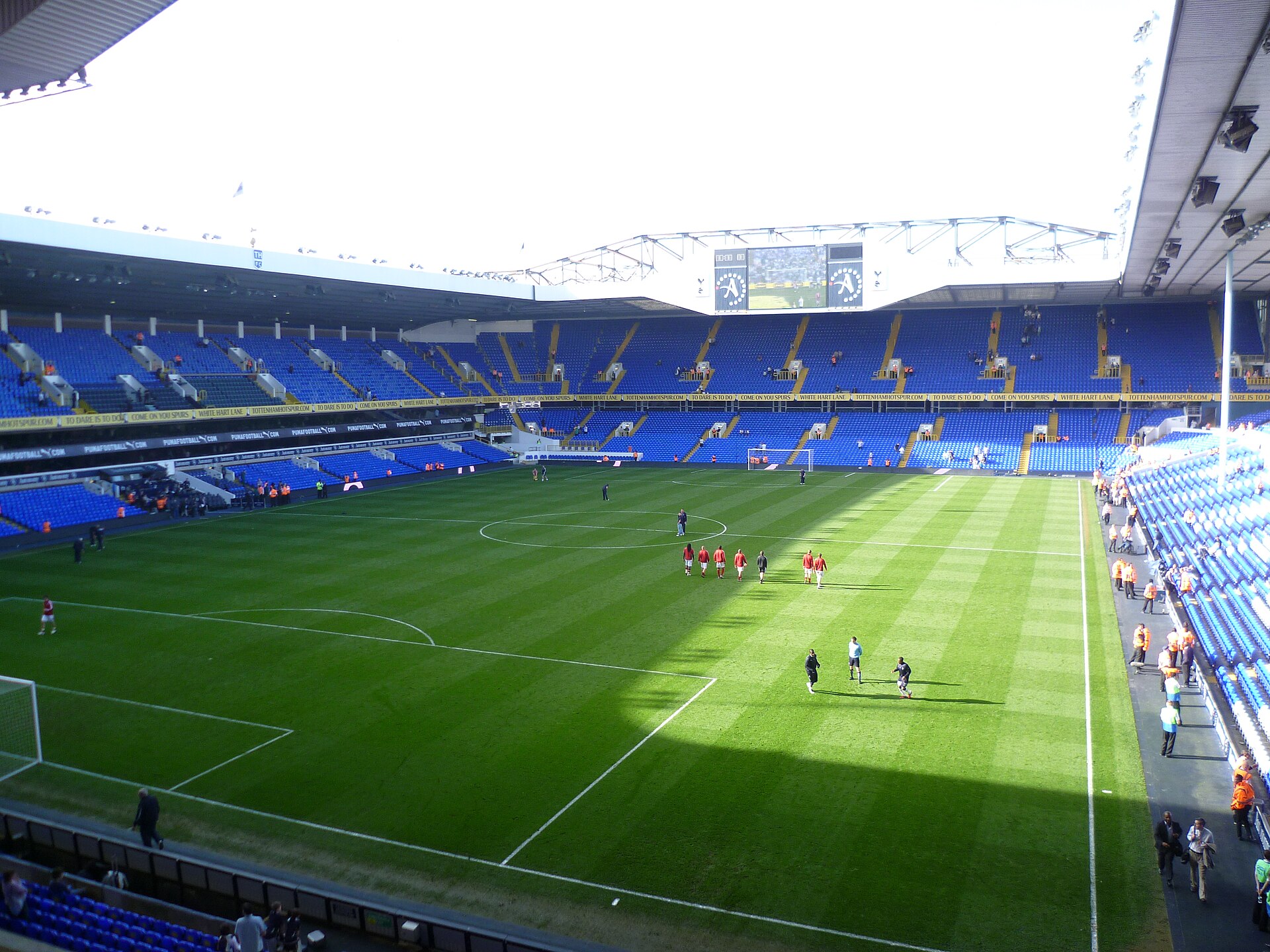
White Hart Lane was the cherished home of Tottenham Hotspur Football Club for 118 years, from its opening on 4 September 1899 until its final match on 14 May 2017. Located in Tottenham, North London, the ground grew from a modest venue on a former nursery site into one of English football’s most atmospheric stadiums, famed for its fervent supporters and intimidating noise.
Over more than a century, the Lane hosted 2,533 competitive matches, witnessing title triumphs, European nights, and FA Cup battles that became part of Spurs folklore. The stadium was demolished in the summer of 2017 to make way for the new Tottenham Hotspur Stadium, which opened on virtually the same footprint in 2019 and ensured the club remained rooted in the Tottenham community.
Stats at a Glance
- Team: Tottenham Hotspur F.C.
- Location: Tottenham, North London (N17)
- Opened: 4 September 1899
- Closed: 14 May 2017
- Demolished: Summer 2017
- Final Capacity: 36,284 (all-seater)
- Record Attendance: 75,038 vs. Sunderland, FA Cup (March 1938)
- Competitive Matches Hosted: 2,533
A Century of Football History
White Hart Lane took shape on land previously used as a nursery by Charrington’s Brewery, and the club’s most transformative early redevelopment came in 1909 when celebrated stadium architect Archibald Leitch designed the West Stand, lending the ground much of its defining character. Subsequent decades brought further expansions; by the early 1950s the terraces could accommodate close to 80,000 spectators, with the all-time record set in March 1938 when 75,038 fans packed in for an FA Cup tie against Sunderland.
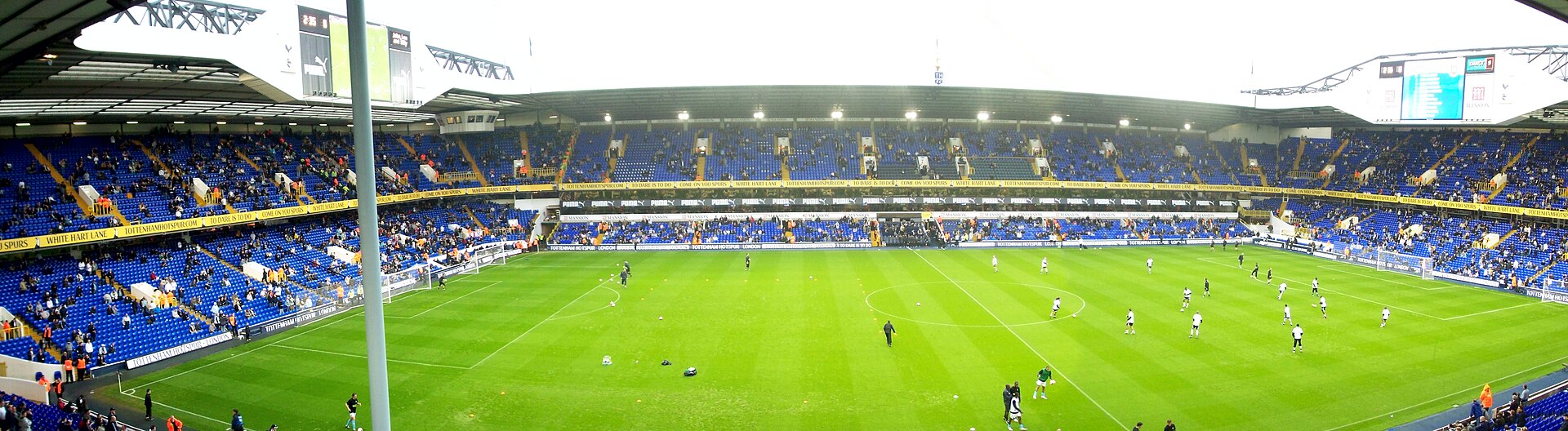
As English football converted to all-seater stadiums following the Taylor Report in the early 1990s, White Hart Lane’s final capacity settled at 36,284. Though smaller than many rival grounds, the Lane became renowned for generating one of the loudest, most hostile atmospheres in the top flight, particularly from the famous Shelf Side terrace that gave opposing teams a genuine test of nerve.
Legacy and Final Days
White Hart Lane served as a multi-sport venue across its long life. It hosted Olympic football preliminaries during the 1948 London Games, international boxing — including the tragic 1991 super-middleweight title fight between Michael Watson and Chris Eubank — and American football when the London Monarchs used it in 1995 and 1996.
The stadium’s final competitive fixture on 14 May 2017 ended in a 2–1 Premier League victory over Manchester United, followed by an emotional farewell ceremony. Demolition proceeded that summer, and the new Tottenham Hotspur Stadium opened in April 2019 with a capacity of around 62,850, cementing the club’s future on the same storied ground in north London.
Explore more: Explore more iconic stadiums.
For upper-deck seats. Watch line play at the stadium, or the far side of the park from the top of a lift hill.
Sherpa-lined and windproof, with a waterproof back for wet bleachers. Folds into its own pouch.
For late-season football, outdoor hockey and October park nights. Shake, pocket, and stay warm for hours.
White Hart Lane FAQs
When did White Hart Lane close?
White Hart Lane held its final match on 14 May 2017 — a 2–1 Premier League win for Tottenham Hotspur over Manchester United — before being demolished during the summer of 2017.
What was the capacity of White Hart Lane?
The stadium’s final all-seater capacity was 36,284. At its terraced peak in the early 1950s it could hold close to 80,000, and the record attendance of 75,038 was set for a 1938 FA Cup tie against Sunderland.
What replaced White Hart Lane?
The new Tottenham Hotspur Stadium was built on almost the exact same site and opened in April 2019. With a capacity of around 62,850, it is one of the largest and most modern football grounds in England.
Get More from White Hart Lane
Log the coasters, stadiums, and venues you’ve experienced, rate White Hart Lane, and see what your friends thought. Get the ThrillZing app.
Photo: Forthevline / CC BY-SA 3.0, via Wikimedia Commons.