
🏛 Historic Stadium
Texas Stadium stood in Irving, Texas, as the home of the NFL’s Dallas Cowboys for 37 seasons, opening on October 24, 1971. Built at a cost of $35 million, the stadium seated 65,675 fans and quickly became one of professional football’s most recognized venues. Its distinctive partial roof—covering the stands but leaving the playing field open to the elements—set it apart from every other stadium in the league.
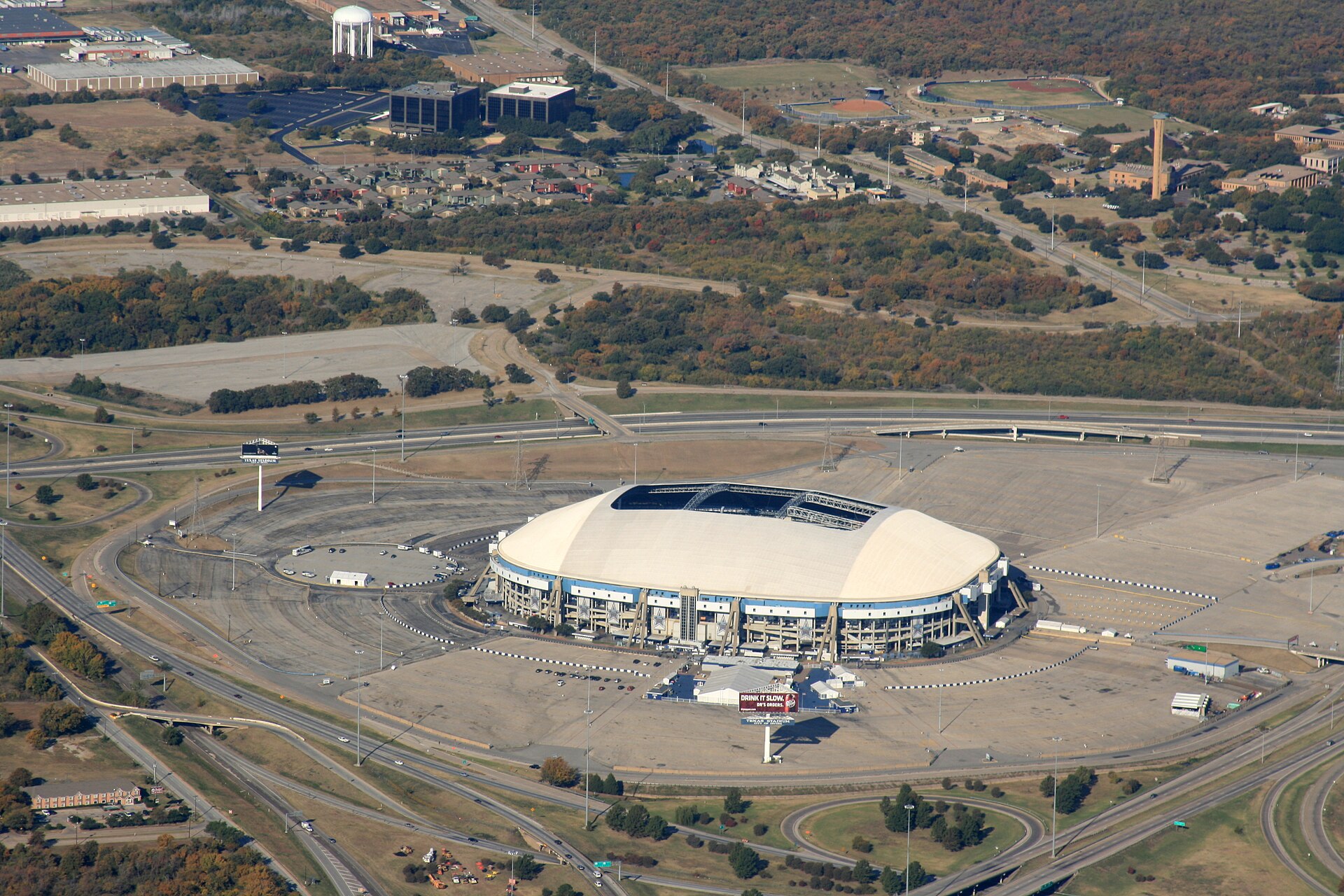
During the Cowboys’ tenure at Texas Stadium, the franchise won five Super Bowls and eight NFC championships, cementing the team’s reputation as ‘America’s Team.’ The stadium hosted legendary players including Roger Staubach, Tony Dorsett, Troy Aikman, and Emmitt Smith, and its blue seats witnessed some of the most memorable moments in NFL history. After 37 seasons, the Cowboys left for the new AT&T Stadium in Arlington for the 2009 season, and Texas Stadium was demolished by controlled implosion on April 11, 2010.
Stats at a Glance
- Team: Dallas Cowboys (NFL)
- Location: Irving, Texas
- Opened: October 24, 1971
- Closed: December 20, 2008
- Demolished: April 11, 2010
- Capacity: 65,675
- Construction Cost: $35 million (1971)
- Luxury Suites: 381
The Hole in the Roof
Texas Stadium’s most famous feature was its partial roof—a design born of compromise. Plans for the NFL’s first fully retractable roof were abandoned when engineers determined the structure could not support the mechanism. The resulting canopy covered the seating areas but left a large oval opening above the field, exposing players to the Texas sky while keeping fans sheltered. This accident of architecture became the stadium’s defining characteristic, inspiring Cowboys linebacker D.D. Lewis’s often-quoted line: ‘Texas Stadium has a hole in its roof so God can watch His favorite team play.’ When AT&T Stadium opened in 2009, designers paid tribute by incorporating a transparent roof panel above the field as a direct nod to the famous opening.
A Legacy Larger Than Football
Beyond Cowboys games, Texas Stadium hosted the 1973 Pro Bowl, numerous NFC Championship Games, high school football playoffs, major concerts, and religious gatherings over nearly four decades. Its 381 luxury suites were among the first in the NFL, pioneering a premium-seating business model that reshaped professional sports venues nationwide. The Cowboys won 213 of 313 games played there, and the stadium’s final contest on December 20, 2008, marked the end of an era. On April 11, 2010, a controlled implosion brought the structure down in roughly 25 seconds, drawing large crowds who gathered to watch Irving’s most iconic landmark disappear from the skyline.
Explore more: Explore more iconic stadiums.
Sized to the NFL's 12x6x12 clear-bag rule. Fits snacks, a jacket and a rally towel.
A see-through purse that looks like a purse. Works for most stadium, arena and concert bag policies.
Bleachers for three hours, but with back support. Folds flat and clips to the bench.


Texas Stadium FAQs
Why did Texas Stadium have a hole in its roof?
The partial roof resulted from abandoned plans to build the NFL’s first retractable roof. Engineers could not design a mechanism strong enough to retract the canopy, so the structure was left open above the playing field. The uncovered oval became the stadium’s signature feature and inspired the famous quip that God could watch His favorite team through the opening.
When was Texas Stadium demolished?
Texas Stadium was demolished on April 11, 2010, by a controlled implosion that brought the structure down in about 25 seconds. It had hosted its final Dallas Cowboys game on December 20, 2008, before the team relocated to AT&T Stadium in Arlington for the 2009 season.
How many Super Bowls did the Cowboys win while playing at Texas Stadium?
The Dallas Cowboys won five Super Bowls during their 37 seasons at Texas Stadium—Super Bowls VI, XII, XXVII, XXVIII, and XXX—along with eight NFC championship titles, making it one of the most trophy-laden home venues in NFL history.
Get More from Texas Stadium
Log the coasters, stadiums, and venues you’ve experienced, rate Texas Stadium, and see what your friends thought. Get the ThrillZing app.