
Etihad Stadium — officially the City of Manchester Stadium — opened on 25 July 2002 as the centrepiece of the Commonwealth Games held in Manchester, England. Designed by the engineering firm Arup at a cost of around £112 million, the ground was converted into a football arena the following year and became Manchester City’s home from August 2003, replacing the club’s long-standing Maine Road ground.
The stadium was renamed Etihad Stadium in July 2011 under a ten-year shirt and stadium sponsorship deal with Etihad Airways. Over the following decade it grew into one of England’s most modern top-flight venues, hosting the 2008 UEFA Cup Final, England international football and rugby fixtures, and major concerts. A £300 million redevelopment of the North Stand — renamed the Pep Guardiola Stand — was approved in April 2023 and added more than 7,000 seats, lifting total capacity to just over 61,000 for the 2025–26 season.
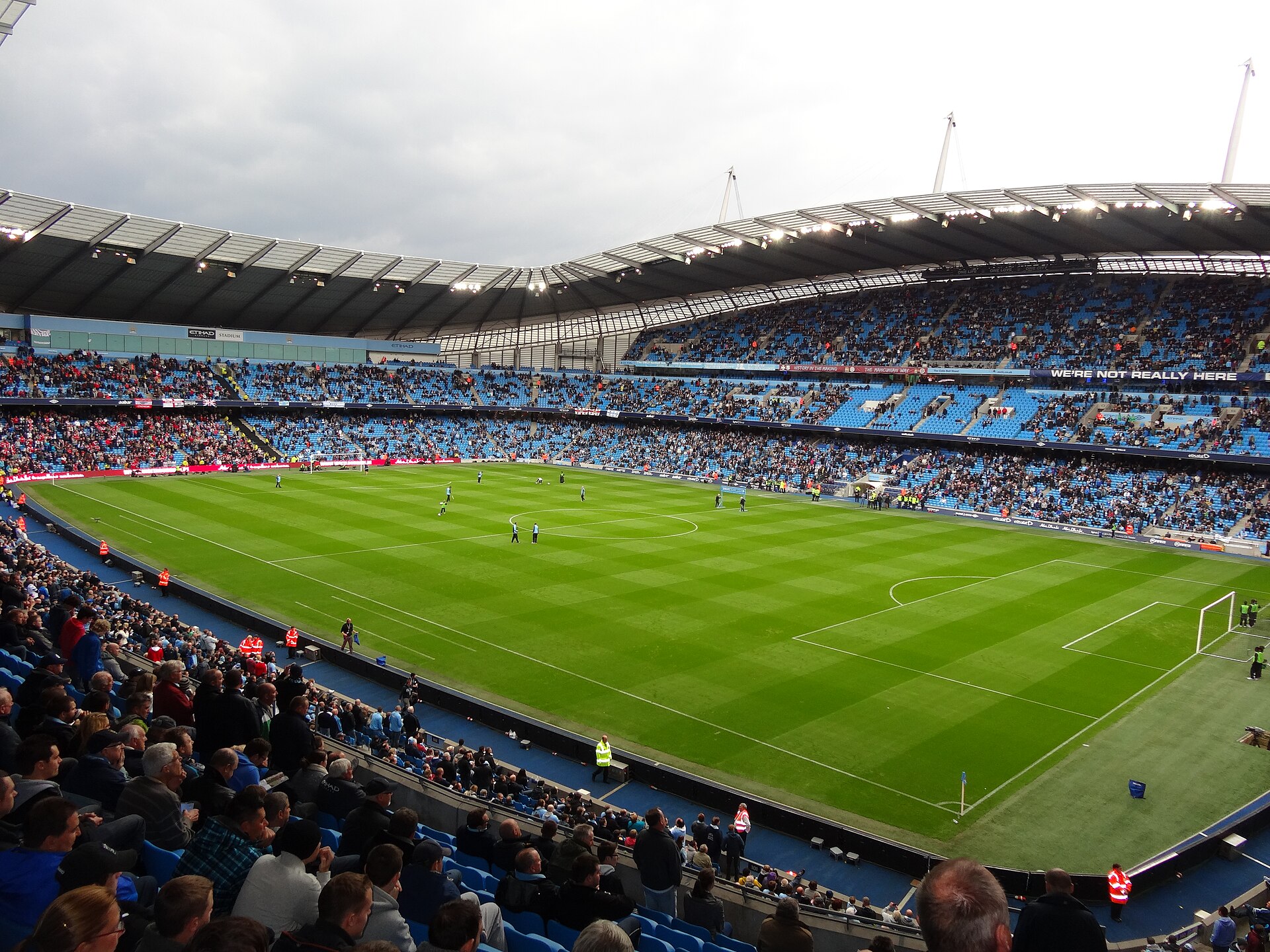
Stats at a Glance
- Team: Manchester City F.C. (Premier League)
- Location: Ashton New Road, Manchester, England
- Opened: 25 July 2002 (Commonwealth Games); 10 August 2003 (football)
- Current Capacity: 61,038
- England Ranking: 5th-largest football stadium in England
- Naming Rights: Etihad Airways (since July 2011)
- Notable Events: 2002 Commonwealth Games, 2008 UEFA Cup Final, 2015 Rugby World Cup, UEFA Euro 2028 (scheduled)
From Athletics Track to Football Cathedral
The stadium was first proposed as an athletics arena during Manchester’s unsuccessful bid for the 2000 Summer Olympics. When the city was awarded the 2002 Commonwealth Games instead, the design was finalised with a temporary capacity of around 38,000 for the athletics programme. After the Games concluded, the running track was removed, the south end was fully enclosed, and KSS Design Group oversaw the interior fitout for football use — all at a combined conversion cost of roughly £42 million split between Manchester City and the city council.
The result was a bowl-shaped all-seater ground with an unobstructed sightline from every seat, an attribute that set it apart from older English grounds. Manchester City moved in for the 2003–04 Premier League season, and the stadium quickly became a symbol of the club’s ambitions well before the Abu Dhabi United Group takeover in 2008 accelerated those plans.
Expansion and the Pep Guardiola Stand
The most significant structural change since opening came with the North Stand redevelopment, approved in April 2023 and completed in time for City’s final home match of the 2025–26 season against Aston Villa — which drew a Premier League attendance record of 60,332 for the ground. The expanded tier, subsequently named the Pep Guardiola Stand in honour of the manager who led the club to an unprecedented run of domestic and European trophies, added over 7,000 general admission seats.
Beyond seating, the project included a rooftop walk experience, a new City Square fan zone for around 3,000 supporters, an enlarged club shop and museum, commercial office space, and one of the largest hotels in Manchester. The hotel and wider public realm works were scheduled for completion by the end of 2026, cementing the Etihad Campus as a year-round destination rather than a matchday-only venue.
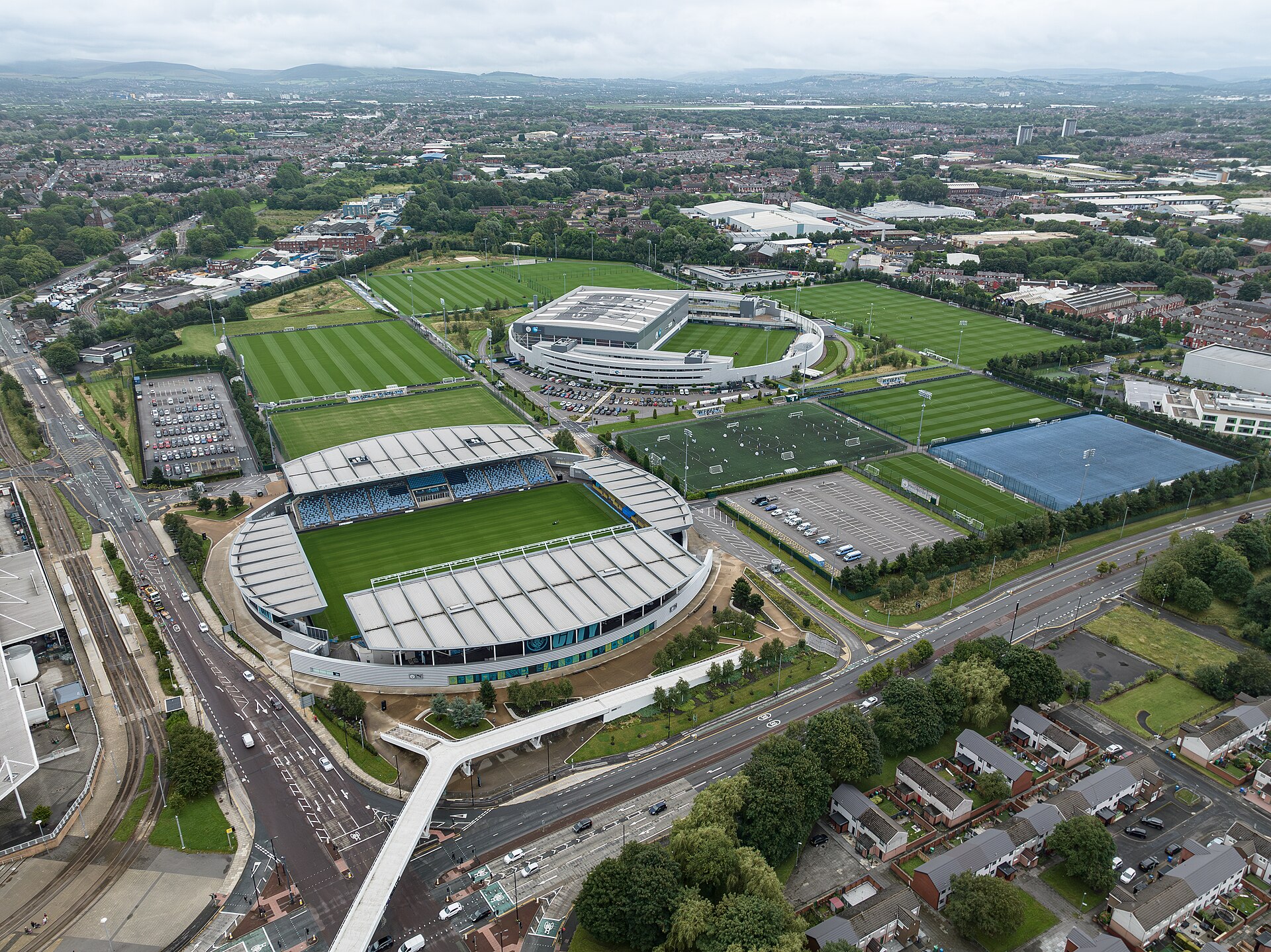
Explore more: Stadiums hub.
Keeps chili hot from the tailgate to the fourth quarter.
Team-color face paint in a twist-up stick — no brushes, no mess in the car.
Sized to the NFL's 12x6x12 clear-bag rule. Fits snacks, a jacket and a rally towel.
Etihad Stadium FAQs
What is the official name of Etihad Stadium?
The venue’s official legal name is City of Manchester Stadium. It has been known as Etihad Stadium since July 2011 under a commercial naming-rights agreement with Etihad Airways.
How many fans can Etihad Stadium hold?
As of the 2025–26 season the stadium holds 61,038 seats for domestic football matches, making it the fifth-largest football ground in England, following the North Stand expansion that added over 7,000 seats.
What major events has Etihad Stadium hosted besides football?
The stadium hosted the 2002 Commonwealth Games athletics programme, the 2008 UEFA Cup Final, matches during the 2015 Rugby World Cup, England international football and rugby union fixtures, and large-scale concerts. It is also scheduled to host games at UEFA Euro 2028.
Get More from Etihad Stadium
Log the coasters, stadiums, and venues you’ve experienced, rate Etihad Stadium, and see what your friends thought. Get the ThrillZing app.
Photo: Arne Müseler, cropped by Blackcat / CC BY-SA 3.0 de, via Wikimedia Commons.