
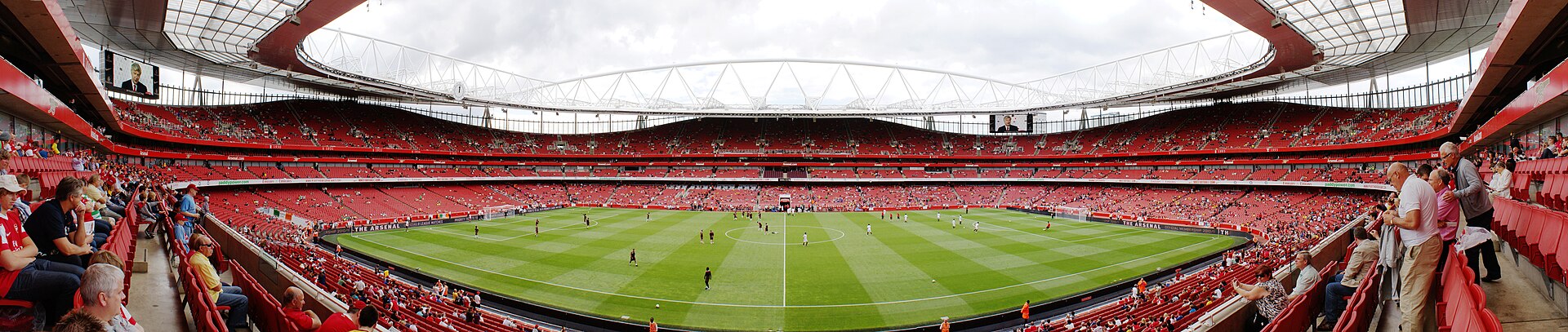
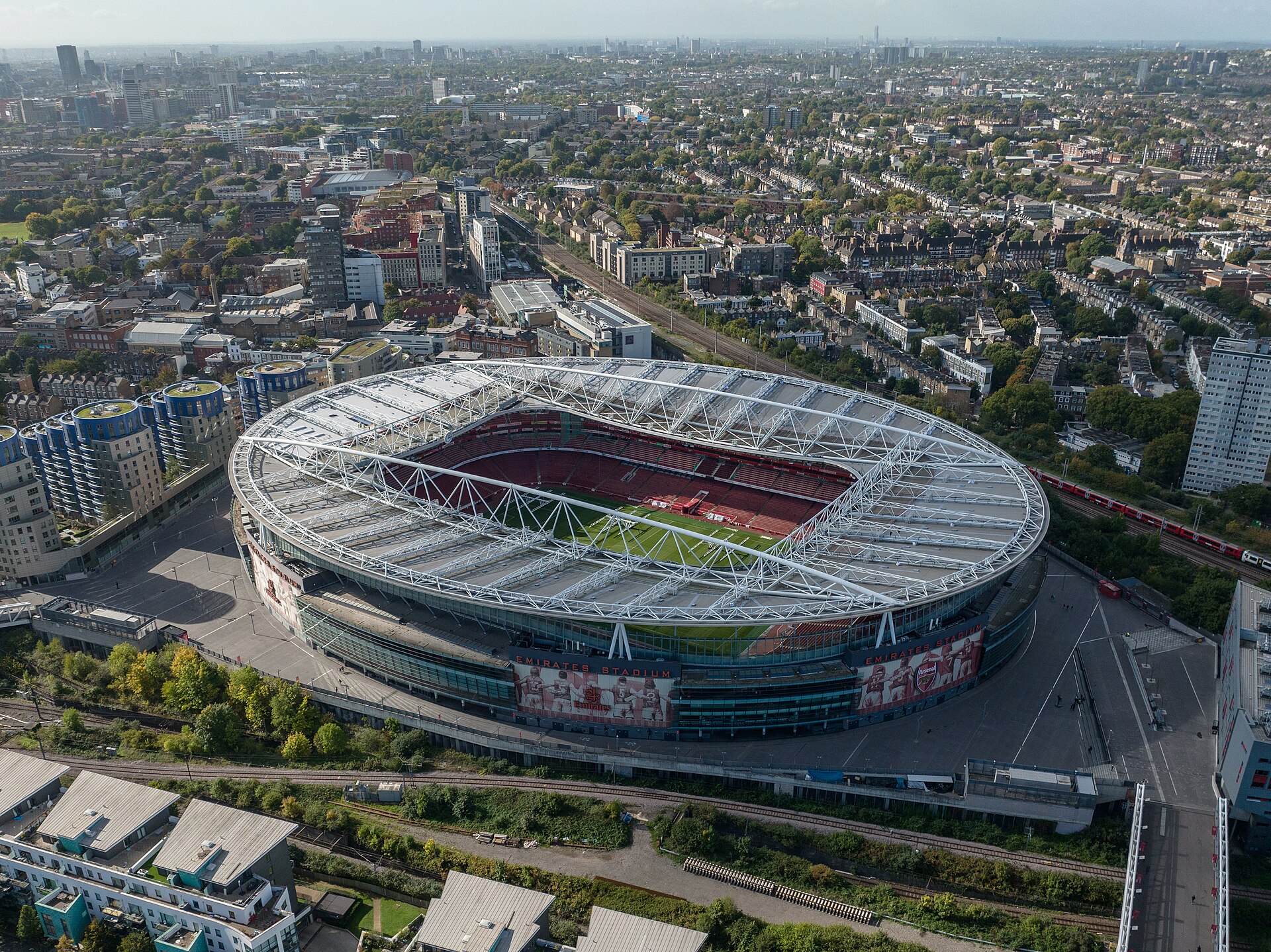
Emirates Stadium is a purpose-built football ground located in Holloway, north London, and has served as the home of Arsenal Football Club since it opened on 22 July 2006. Designed by architects Populous (then known as HOK Sport) at a cost of around £390 million, the four-tiered bowl replaced the club’s beloved but capacity-constrained Highbury Stadium, which held just 38,419 seats.
Seating 60,704 spectators, Emirates Stadium is one of the largest football stadiums in England. Its immaculate playing surface — a 105 by 68 metre pitch — earned it the affectionate nickname ‘the Carpet’ among supporters and pundits alike. The venue was officially opened by Prince Philip, Duke of Edinburgh on 26 October 2006, and has since hosted Premier League matches, UEFA Champions League nights, and international fixtures.


Stats at a Glance
- Team(s): Arsenal F.C. (2006–present); Arsenal Women (2024–present)
- Location: Holloway, London, England (N7 7AJ)
- Opened: 22 July 2006
- Capacity: 60,704 (seated)
- Construction Cost: £390 million
- Architect: Populous (formerly HOK Sport)
- Record Attendance: 60,383 vs. Wolverhampton Wanderers, 2 November 2019
- Pitch Dimensions: 105 × 68 metres (115 × 74 yards)
Design and Atmosphere
Emirates Stadium was conceived as a modern successor to Highbury, which Arsenal had outgrown after being refused planning permission to expand it. The new ground sits just a few hundred metres from its predecessor in the London Borough of Islington, beside the East Coast Main Line. Its translucent polycarbonate roof panels allow natural light to flood the bowl while protecting fans from the elements, and the continuous canopy helps trap crowd noise, creating an intense atmosphere on European nights.
Beginning in 2009, the club undertook an ‘Arsenalisation’ project that adorned the concourses with large murals celebrating 32 Arsenal legends, giving the stadium a stronger sense of identity and history. Bronze statues of Herbert Chapman and Thierry Henry stand outside the ground, welcoming supporters on matchday.
Memorable Moments
The stadium’s first competitive fixture on 19 August 2006 ended 1–1 against Aston Villa in the Premier League. Villa defender Olof Mellberg broke the deadlock before Gilberto Silva equalised for Arsenal six minutes from time. On European soil, the ground witnessed its biggest win when Arsenal dismantled Slavia Prague 7–0 in the UEFA Champions League on 23 October 2007.
The record individual scoring tally at the stadium belongs to Dutch striker Robin van Persie, who netted 64 times in north London before departing in 2012. Arsenal Women moved to Emirates Stadium as their primary home in 2024, extending the ground’s role in top-flight English football beyond the men’s game.
Explore more: Stadiums hub.
For upper-deck seats. Watch line play at the stadium, or the far side of the park from the top of a lift hill.
Sherpa-lined and windproof, with a waterproof back for wet bleachers. Folds into its own pouch.
For late-season football, outdoor hockey and October park nights. Shake, pocket, and stay warm for hours.


Emirates Stadium FAQs
When did Emirates Stadium open?
Emirates Stadium opened on 22 July 2006 with a friendly match between Arsenal and Ajax, which Arsenal won 2–1. The first competitive match was played on 19 August 2006 against Aston Villa in the Premier League, ending 1–1.
What is the seating capacity of Emirates Stadium?
Emirates Stadium has a seated capacity of 60,704, making it one of the largest football grounds in England and the second-largest in the Premier League behind Manchester United’s Old Trafford.
Why is Emirates Stadium called ‘the Carpet’?
The playing surface at Emirates Stadium is maintained to such a high standard that fans and media nicknamed it ‘the Carpet,’ a reference to the smooth, fast-paced pitch that Arsenal’s passing teams have traditionally thrived on.
Get More from Emirates Stadium
Log the coasters, stadiums, and venues you’ve experienced, rate Emirates Stadium, and see what your friends thought. Get the ThrillZing app.
Photo: Ed g2s / CC BY-SA 3.0, via Wikimedia Commons.