
Daytona International Speedway opened on February 22, 1959, in Daytona Beach, Florida, built by NASCAR founder Bill France Sr. after beach racing on the sand became too crowded and unpredictable to sustain. Nicknamed the ‘World Center of Racing,’ the 2.5-mile tri-oval quickly became the sport’s most storied venue, hosting the season-opening Daytona 500 every year since its debut.
Beyond stock cars, the speedway’s steep 31-degree banked turns have tested drivers in the Rolex 24 at Daytona endurance race, the Coke Zero Sugar 400, and motorcycle racing at the Daytona 200. A $400 million ‘Daytona Rising’ renovation completed in 2016 transformed the frontstretch into a modern stadium with wider seats, escalators, and expansive concourses, cementing its status as one of motorsports’ great cathedrals.
Stats at a Glance
- Location: Daytona Beach, Florida
- Opened: February 22, 1959
- Owner/Operator: NASCAR
- Capacity: about 101,500 permanent seats
- Track Length: 2.5-mile tri-oval
- Banking: 31° in turns, 18° at start/finish
- Notable Fact: Home of the Daytona 500 since 1959
The Race Day Experience
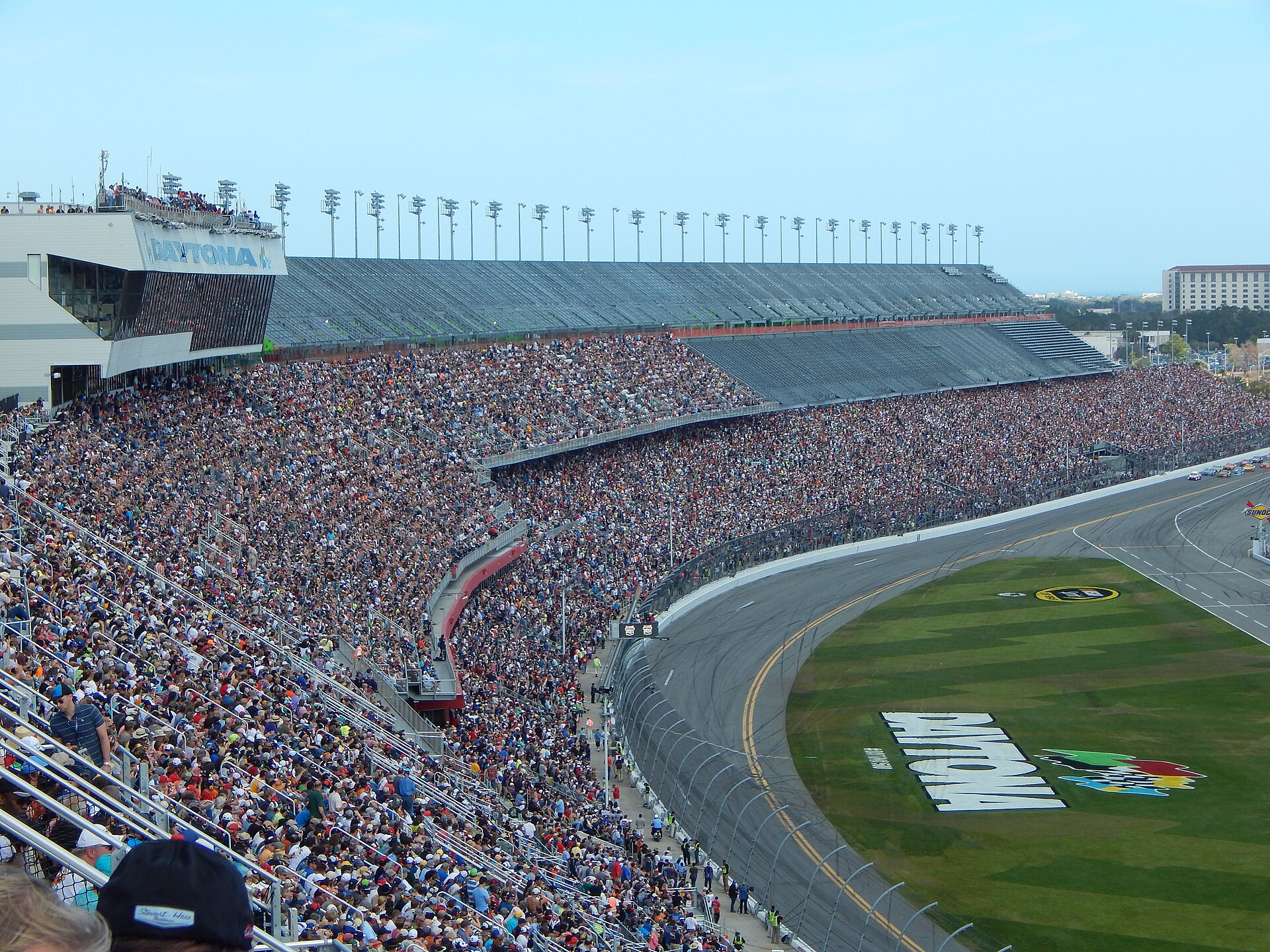
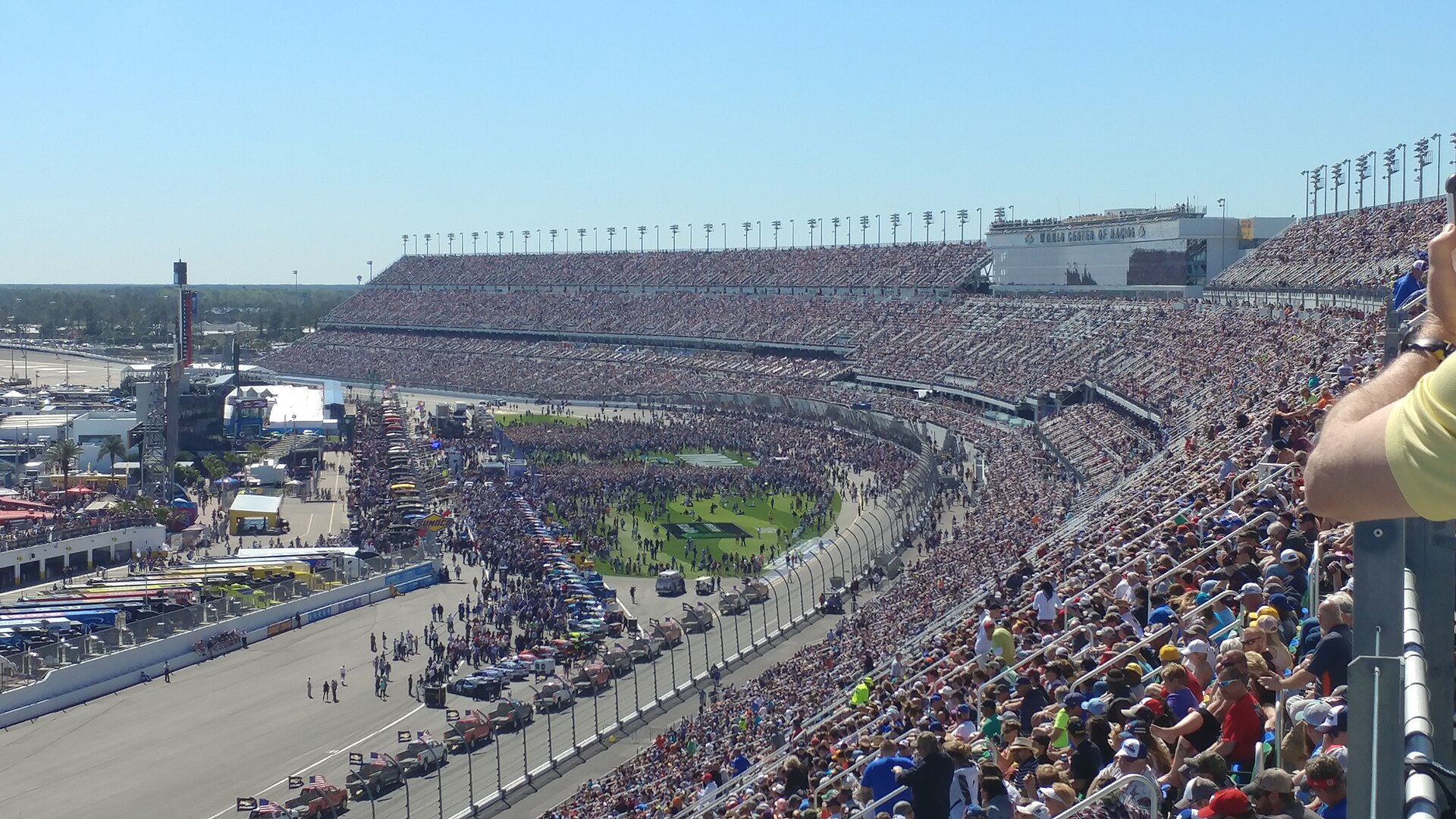
Fans at Daytona International Speedway feel the roar of 40-car fields sweeping through steep 31-degree banked turns at speeds exceeding 200 mph. The tri-oval layout, considered revolutionary when it opened, was designed to give spectators clear sightlines across the entire track rather than just the straightaways.
The Daytona Rising renovation reshaped the frontstretch into a five-story, football-stadium-style facility with wider seats, 40 escalators, and 17 elevators, while retaining the speedway’s classic high-banked character on the rest of the oval.
A Motorsports Landmark
Since its first Daytona 500 in 1959, the speedway has served as NASCAR’s most prestigious stage, opening each new Cup Series season. It also hosts the Rolex 24 at Daytona sports car endurance race and the Daytona 200 motorcycle race, giving the venue a packed calendar across multiple racing disciplines.
Lit for night racing since 1998, Daytona International Speedway has been billed as the world’s largest single-lit outdoor sports facility, allowing events like the Coke Zero Sugar 400 to run after dark.
Explore more: Explore more legendary stadiums.
Sherpa-lined and windproof, with a waterproof back for wet bleachers. Folds into its own pouch.
For late-season football, outdoor hockey and October park nights. Shake, pocket, and stay warm for hours.
12 x 10.5 x 6 in. — built to the common stadium clear-bag size. Check your venue's rules.


Daytona International Speedway FAQs
When did Daytona International Speedway open?
The speedway opened on February 22, 1959, built by NASCAR founder Bill France Sr.
What is the seating capacity of Daytona International Speedway?
The speedway holds about 101,500 permanent seats following the Daytona Rising renovation completed in 2016, with the ability to expand further for major events.
What events are held at Daytona International Speedway?
It hosts the Daytona 500, Coke Zero Sugar 400, Rolex 24 at Daytona endurance race, and the Daytona 200 motorcycle race, among other events.
Get More from Daytona International Speedway
Log the coasters, stadiums, and venues you’ve experienced, rate Daytona International Speedway, and see what your friends thought. Get the ThrillZing app.
Photo: Jeff / CC BY-SA 2.0, via Wikimedia Commons.