
The Circuit de Monaco is a street circuit that winds through the public roads of Monte Carlo and La Condamine in the Principality of Monaco, hugging the harbor as it climbs, dives, and tunnels through one of the most glamorous cities on earth. First run in 1929, it is the oldest and most storied venue on the modern Formula 1 calendar, and its layout has stayed remarkably close to the original despite nearly a century of racing.
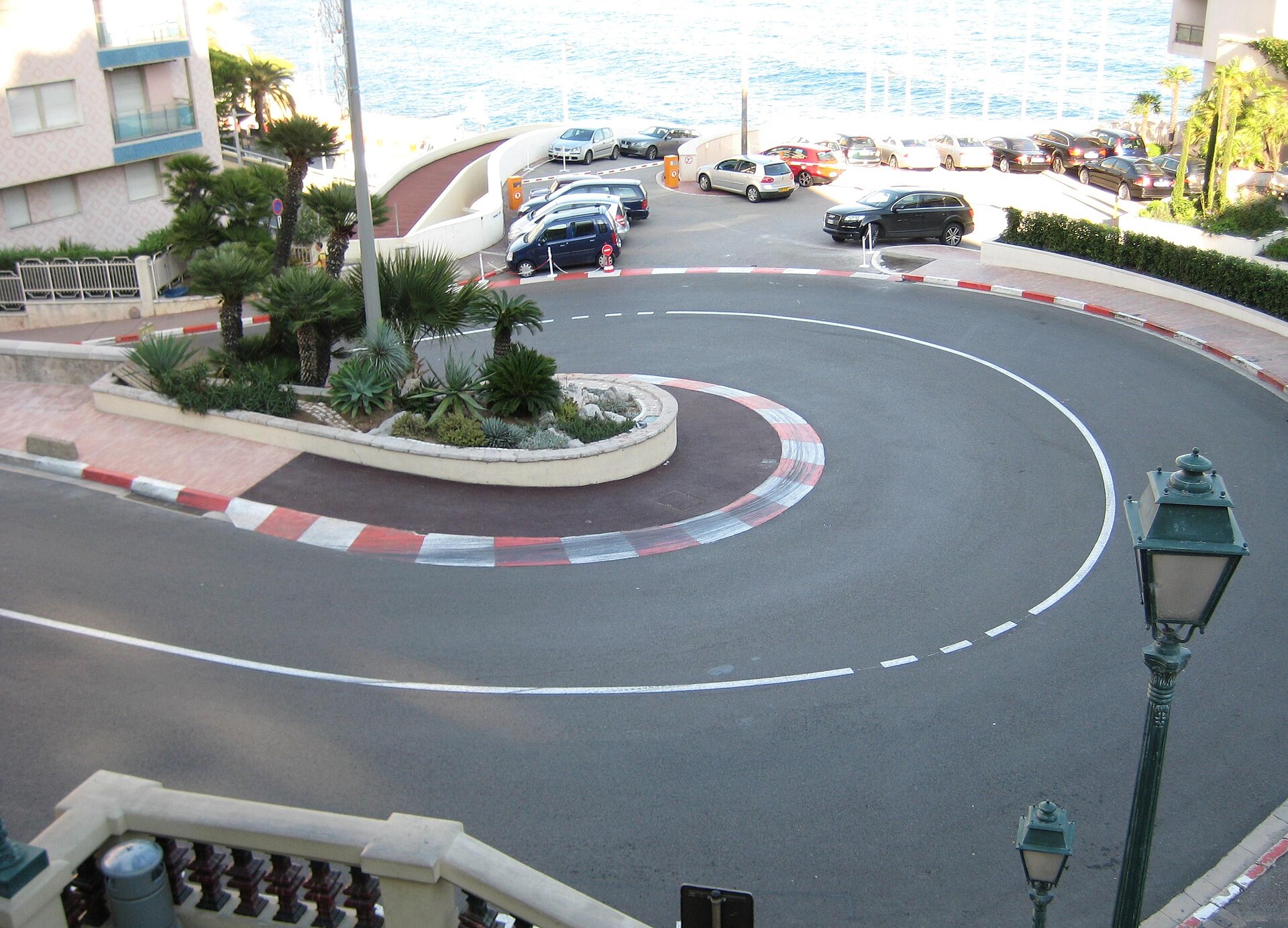
Unlike purpose-built stadium circuits, Monaco is stitched together each spring from ordinary city streets, closed off and lined with barriers and grandstands for race week. Its 3.337 km (2.074 mile) lap packs 19 corners into an incredibly tight footprint, including the crawling Fairmont Hairpin and a famous tunnel beneath the Fairmont Hotel where cars reach roughly 260 km/h (160 mph) before braking hard into the harborfront chicane.
Stats at a Glance
- Event: Monaco Grand Prix (Formula 1)
- Location: Monte Carlo / La Condamine, Monaco
- Opened: April 14, 1929
- Capacity: About 37,000 (approx. 22,000 grandstand seats)
- Track length: 3.337 km (2.074 mi)
- Turns: 19
- Notable fact: Home to both F1’s slowest corner (Fairmont Hairpin, ~48 km/h) and one of its fastest sections (tunnel, ~260 km/h)
The Ride Experience
For drivers, Monaco is widely regarded as the ultimate test of precision rather than raw car performance, since the barrier-lined streets leave almost no room for error. The lap runs uphill from the start/finish line past Casino Square, plunges down to the Fairmont Hairpin, and sweeps along the harbor before diving into the tunnel and out onto the start-finish straight, with only a single DRS zone available for overtaking.
Because the circuit is built from public roads, it doubles as a functioning city street for 361 days a year before being transformed with barriers, catch fencing, and temporary grandstands for the Grand Prix weekend, a logistical effort that has become as much a part of Monaco’s identity as the racing itself.
History and Legacy
The circuit hosted its first race in 1929, won by William Grover-Williams, and became a round of the inaugural Formula 1 World Championship in 1950. It has remained on the calendar almost continuously since, valued by organizers and fans for its history even as modern F1 cars have grown too wide for the track to offer much wheel-to-wheel racing.
Beyond Formula 1, the same streets host the Monaco ePrix for Formula E and the Historic Grand Prix of Monaco, while only a handful of local Monégasque drivers, most recently Charles Leclerc in 2024, have ever won on home soil.
Explore more: Browse more legendary stadiums and venues.
For upper-deck seats. Watch line play at the stadium, or the far side of the park from the top of a lift hill.
Sherpa-lined and windproof, with a waterproof back for wet bleachers. Folds into its own pouch.
For late-season football, outdoor hockey and October park nights. Shake, pocket, and stay warm for hours.
Circuit de Monaco FAQs
How long is the Circuit de Monaco?
One lap measures 3.337 kilometers (2.074 miles), making it the shortest circuit on the Formula 1 calendar.
How many spectators can the Circuit de Monaco hold?
About 37,000, including roughly 22,000 grandstand seats, the smallest capacity of any race on the F1 calendar.
When did racing at Monaco begin?
The circuit hosted its first Grand Prix on April 14, 1929, and it joined the Formula 1 World Championship in 1950.
Get More from Circuit de Monaco
Log the coasters, stadiums, and venues you’ve experienced, rate Circuit de Monaco, and see what your friends thought. Get the ThrillZing app.
Photo: Mario30095 / CC BY-SA 3.0, via Wikimedia Commons.