The Racer is the wooden racing roller coaster that opened Kings Island itself on April 29, 1972 — and more than five decades later, its twin Blue and Red trains are still launching side by side across Coney Mall for a photo-finish sprint to the station.
This guide covers every number riders search for (height, speed, drop, track length), the real story of how a retired designer’s comeback ride helped save wooden coasters nationwide, and the practical details — height rules, Fast Lane access, and where to find official tickets and hours — you need to plan a ride.
Quick Answer
The Racer is an 88-foot-tall wooden racing coaster at Kings Island, opened April 29, 1972, and designed by John C. Allen. It reaches about 53 mph, runs roughly 3,415 feet of track per side, lasts about two minutes, and requires riders to be at least 48 inches tall. Its Blue and Red trains launch at the same time and race down parallel tracks that split after the first drop and reunite at the finish line.
Stats at a Glance
Park: Kings Island, Mason, Ohio. Manufacturer: Philadelphia Toboggan Coasters. Designer: John C. Allen. Opened: April 29, 1972. Height: about 88 feet. First drop: 82 feet at a 45-degree angle. Top speed: about 53 mph. Track length: about 3,415 feet per side. Duration: roughly 2 minutes. Height requirement: 48 inches. Inversions: 0. Trains: four trains, each with five cars seating two across, for 30 riders per train. Hourly capacity: about 2,640 riders.
History & Design: How The Racer Sparked a Roller Coaster Renaissance
By the late 1960s John C. Allen had retired from coaster design and the amusement industry was in a decades-long slump, with almost no new wooden coasters being built anywhere in the country. The Wachs family, who wanted to recreate the success of their former Cincinnati park, convinced Allen to come out of retirement to design a signature attraction for their new Kings Island park. Construction began in 1970, test runs happened in September 1971, and The Racer opened as the centerpiece of the park’s April 29, 1972 debut.
Allen’s design broke from earlier side-by-side racing coasters by splitting the two tracks apart into separate structures shortly after the first drop, letting Blue and Red trains race independently while covering nearly identical distances before rejoining for a photo-finish ending. The ride was an immediate sensation, and its popularity is widely credited with reigniting national interest in wooden coasters just as the industry was shifting toward steel — a shift enthusiasts now call the second golden age of roller coasters. A 1973 episode of The Brady Bunch, ‘The Cincinnati Kids,’ filmed on the ride and broadcast the excitement to millions of households, and in 2007 the American Coaster Enthusiasts honored The Racer with a Coaster Landmark Award.
The Ride Experience: Blue vs. Red
Each train drops about 82 feet at a 45-degree angle right out of the station before working through a string of airtime-filled hills over the roughly two-minute layout. Because both tracks split into separate structures early on, Blue and Red trains genuinely race rather than simply running parallel to one another, and the margin at the finish line usually comes down to how well each crew loads and dispatches rather than any real speed difference between the sides.
Riders looking for the most authentic racing experience often try to time a ride with a full train on the opposite track, since an empty or lightly loaded neighboring train removes the visual drama of the two cars battling it out. Neither track is meaningfully faster in terms of layout — the outcome is almost always decided by dispatch timing, not engineering.
The Backwards-Track Era and Later Renovations
From May 1982 until 2008, the right-hand track was reversed to run backwards, making The Racer the first racing coaster in the world to operate in opposite directions on its two sides. Cedar Fair restored forward running on both tracks in 2008 and assigned the now-familiar Blue and Red color scheme to each side.
The ride has continued to receive structural updates: Great Coasters International retracked sections of the back turns in 2019, and in 2021 The Gravity Group rebuilt about 500 feet of track from the first drop through the fourth airtime hill to smooth out the ride, while the park also restored the original entrance sign and train-side logos. The Racer was repainted for the park’s 50th anniversary in 2021-2022, keeping the classic white-and-color scheme intact.
Height Requirement, Fast Lane & Who Can Ride
Riders must be at least 48 inches tall to ride The Racer, a standard mid-level height requirement for a family wooden coaster with no inversions. There’s no listed maximum height, and riders board in the order they arrive in the queue, seated two across per row. Kings Island discontinued dedicated single-rider lines park-wide once its paid Fast Lane skip-the-line system became the standard way to cut wait times, so The Racer’s Fast Lane access is the main option for shortening a long standby line during busy periods.
Because it has no inversions, gentler airtime than the park’s steel hypercoasters, and a moderate 53 mph top speed, The Racer is commonly recommended as a good ‘first big coaster’ for kids who have cleared the height requirement but aren’t ready for Orion, Diamondback, or The Beast.
The Racer’s Ridership Records
The Racer isn’t just historically important — it’s also the single most-ridden attraction in Kings Island’s history. In 1976, four years after opening, it set a single-season park record of 3,681,338 rides, a mark that stood out even during the park’s early boom years. On August 1, 2014, The Racer became the first ride in Kings Island’s then-42-year history to surpass 100 million lifetime rides, and it remains the park’s all-time ridership leader, well ahead of every coaster added since.
Where The Racer Is and Planning Your Visit
The Racer sits in Kings Island’s Coney Mall section, an area themed after the historic Coney Island amusement park in Cincinnati that the Wachs family previously operated. It’s centrally located and easy to reach from the park’s main entrance plaza.
Kings Island’s operating calendar changes by season: the park typically opens on weekends in spring, moves to daily operation around Memorial Day weekend, scales back to Friday-through-Sunday operation in late summer and fall, and hosts separate Halloween Haunt and WinterFest event schedules. General admission, parking, and season pass pricing are tiered and change from year to year, so check the official Kings Island website for the current calendar, ticket prices, parking rates, and Fast Lane options before you go.
The Racer Photo Archive: 2000–2006
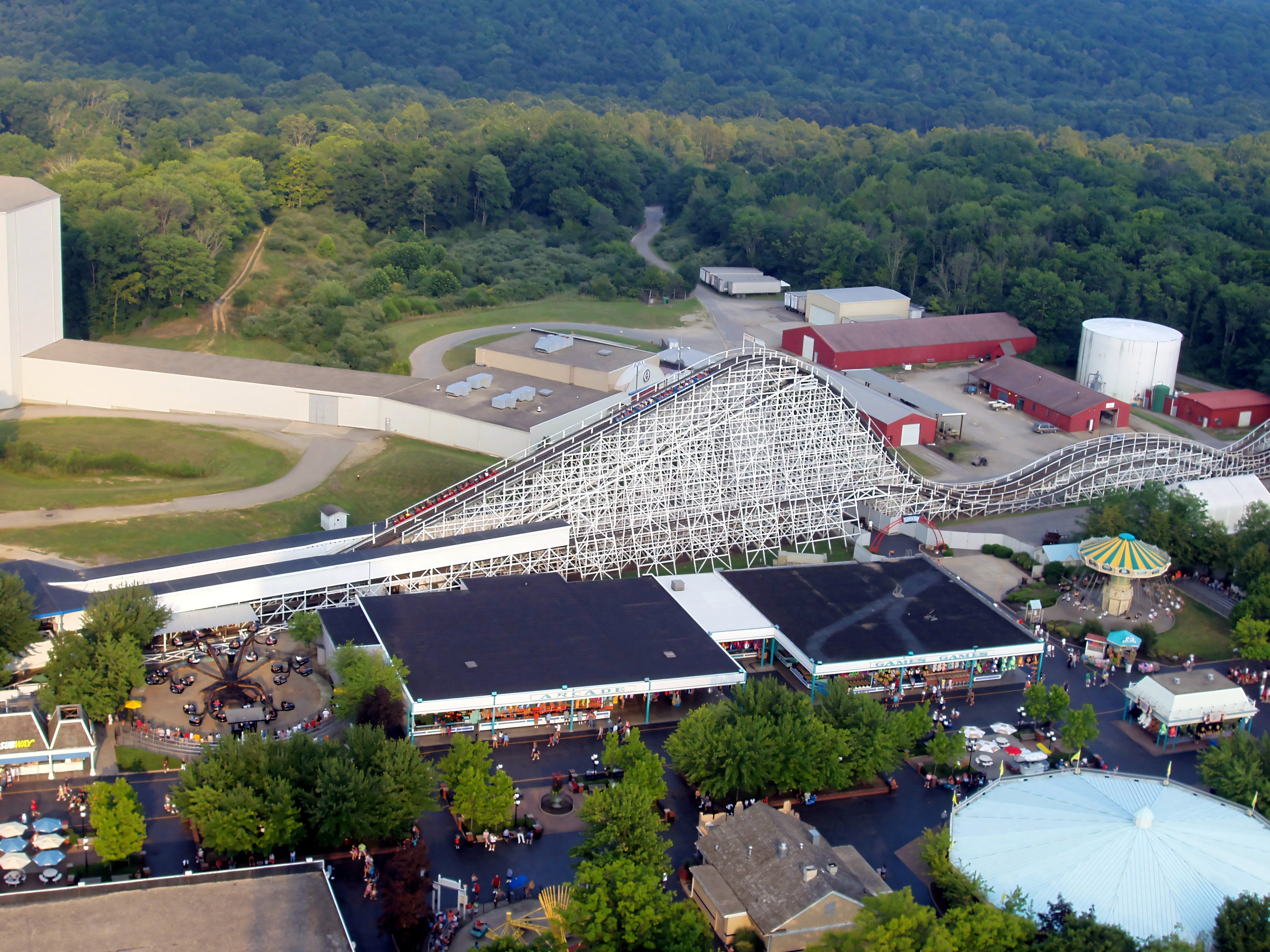
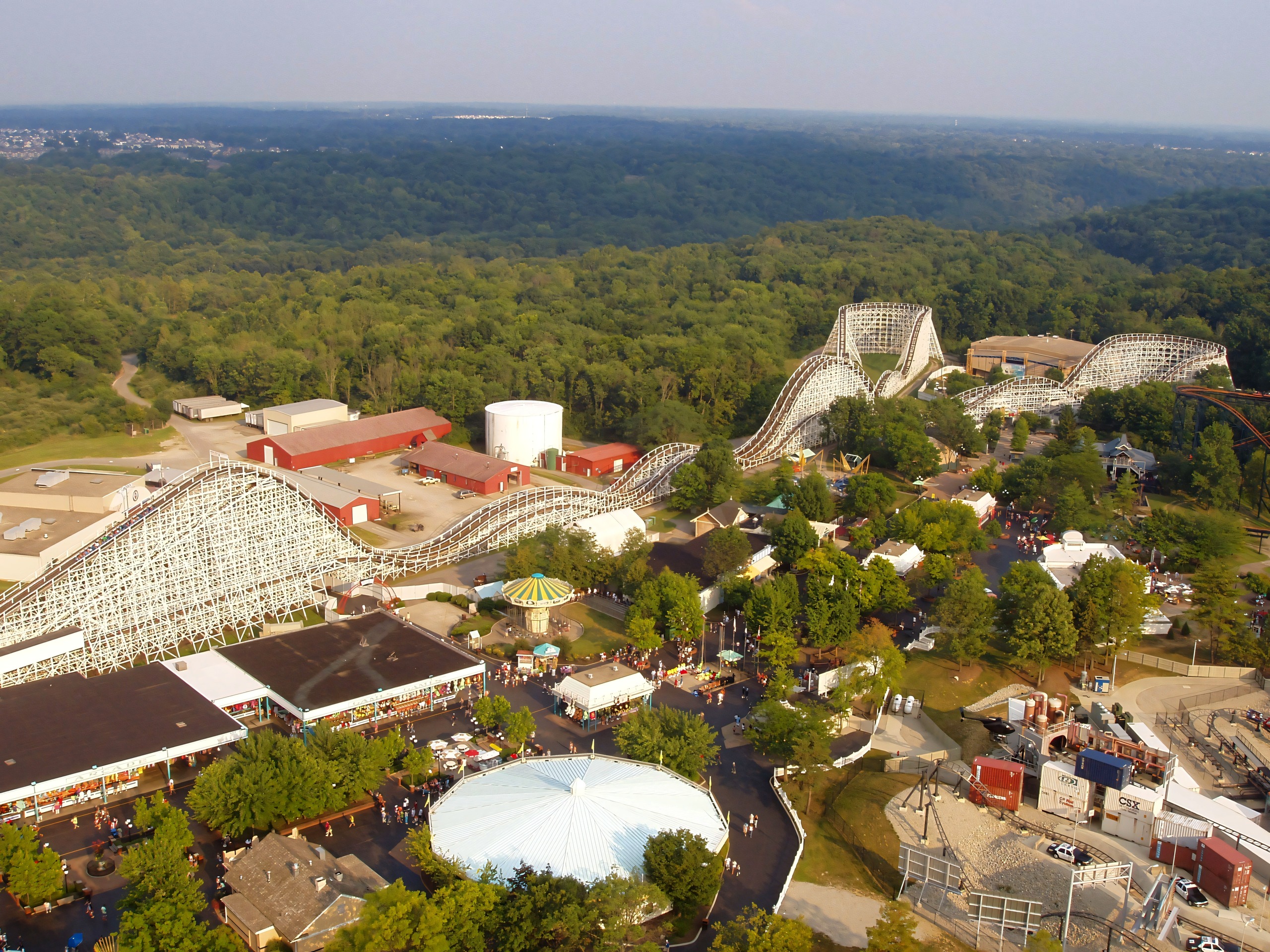
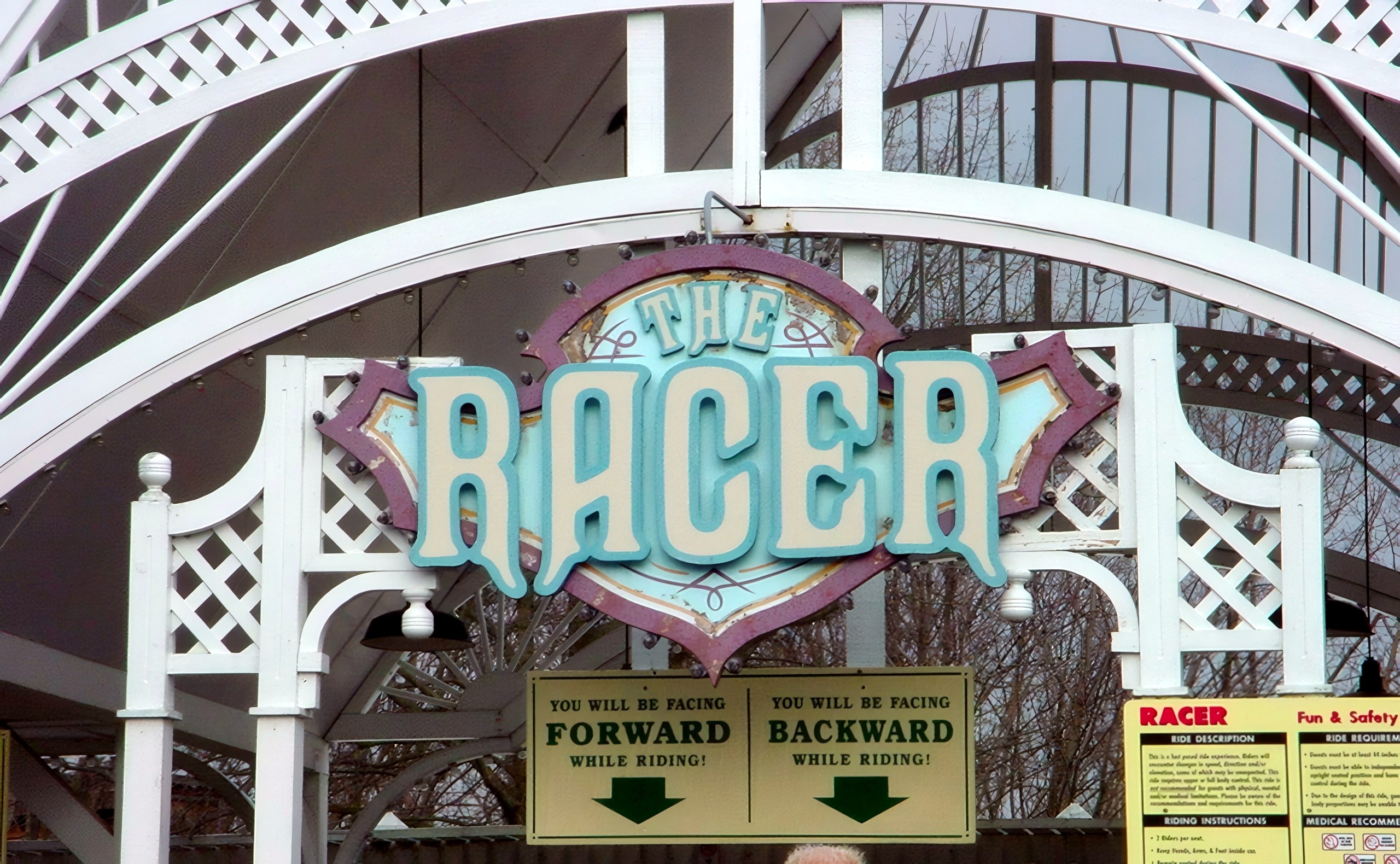
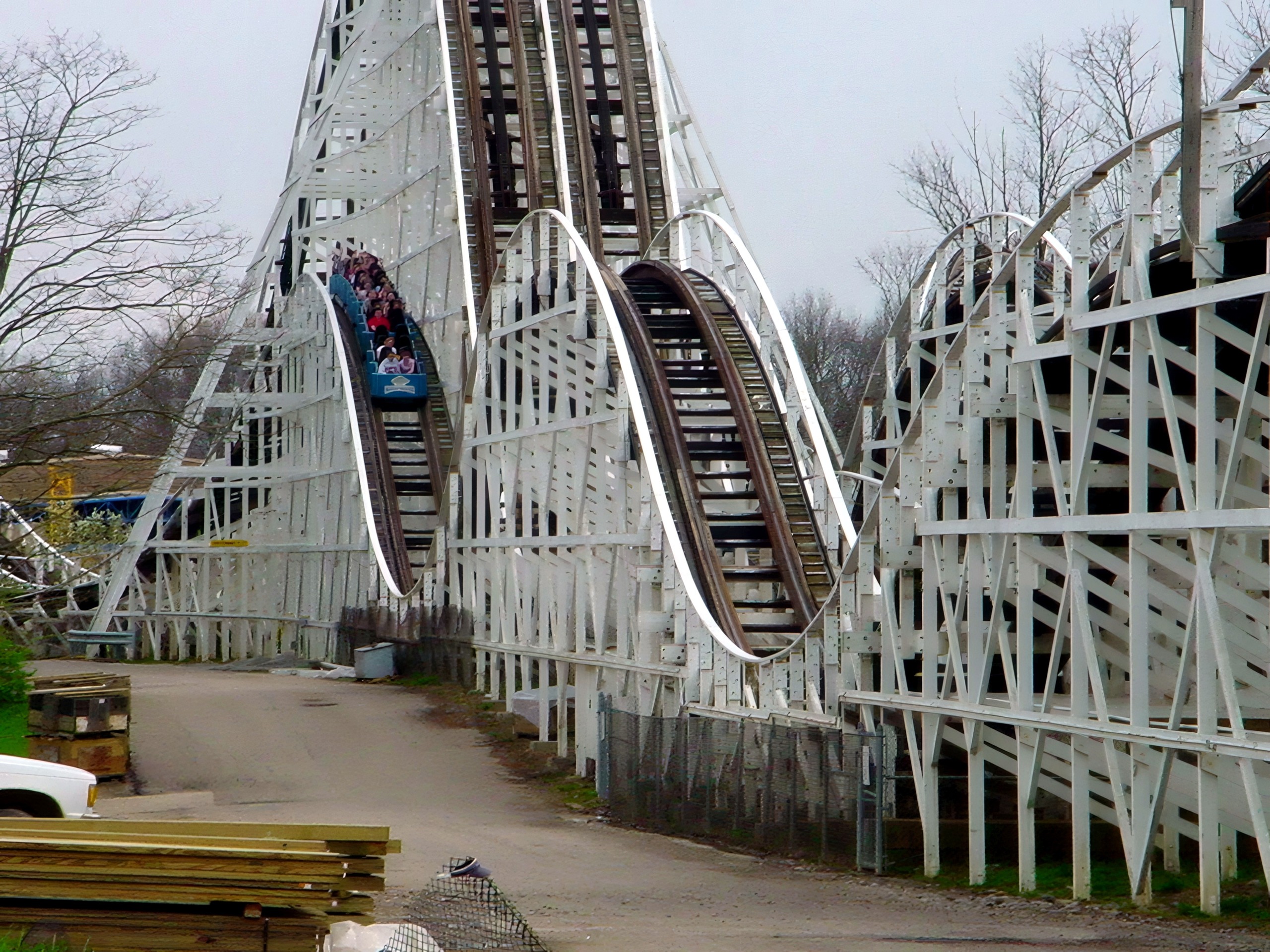
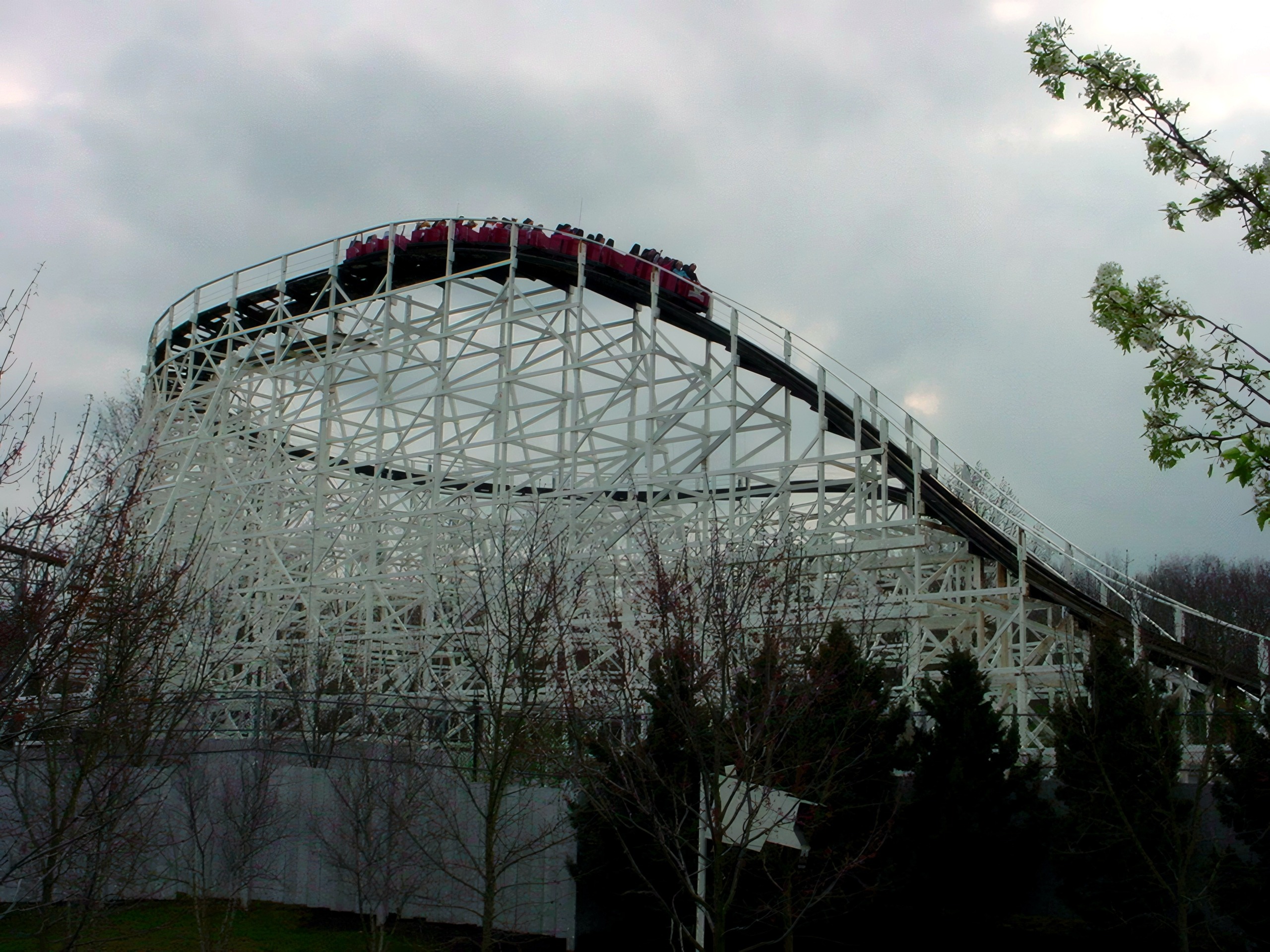
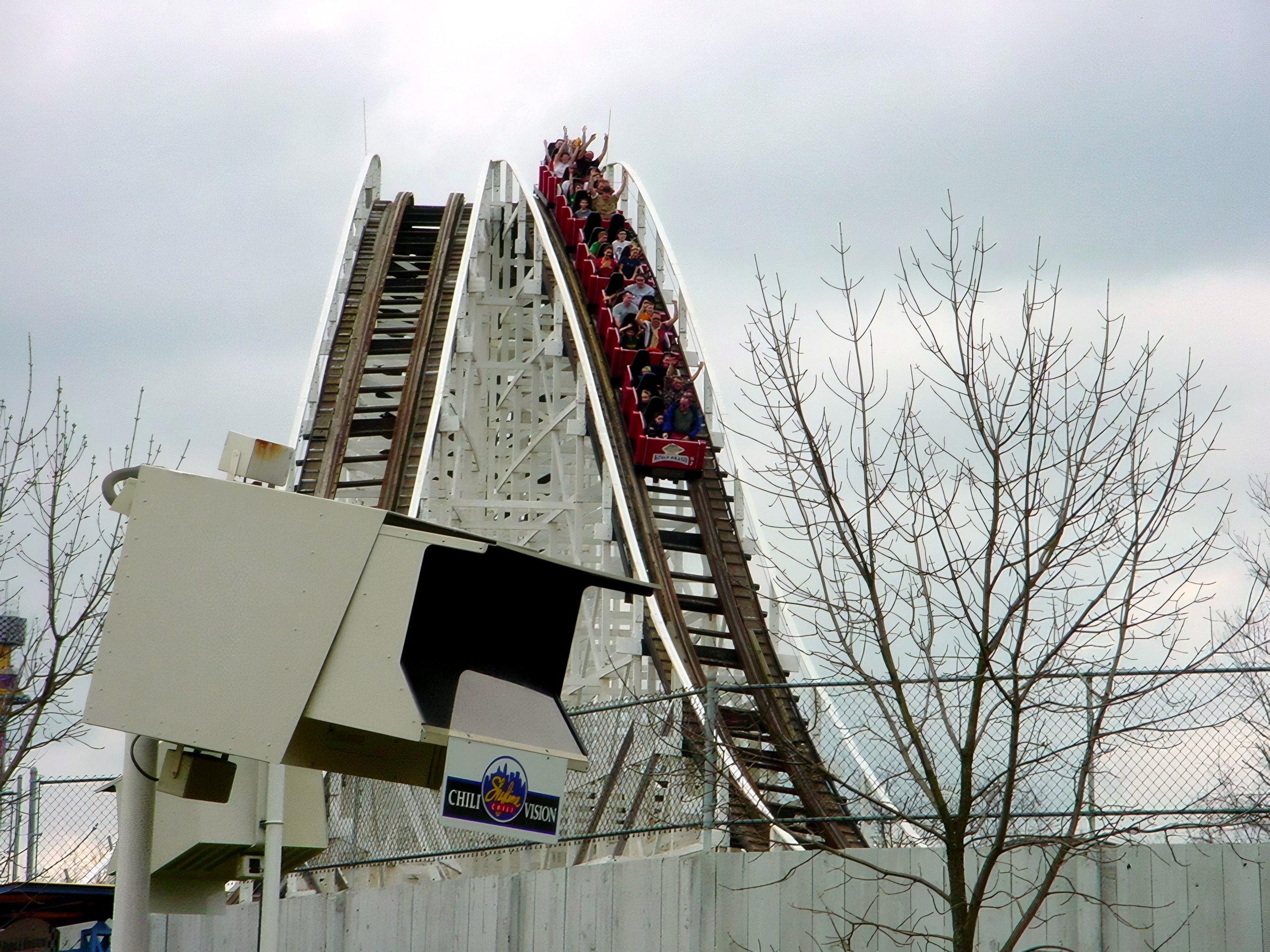
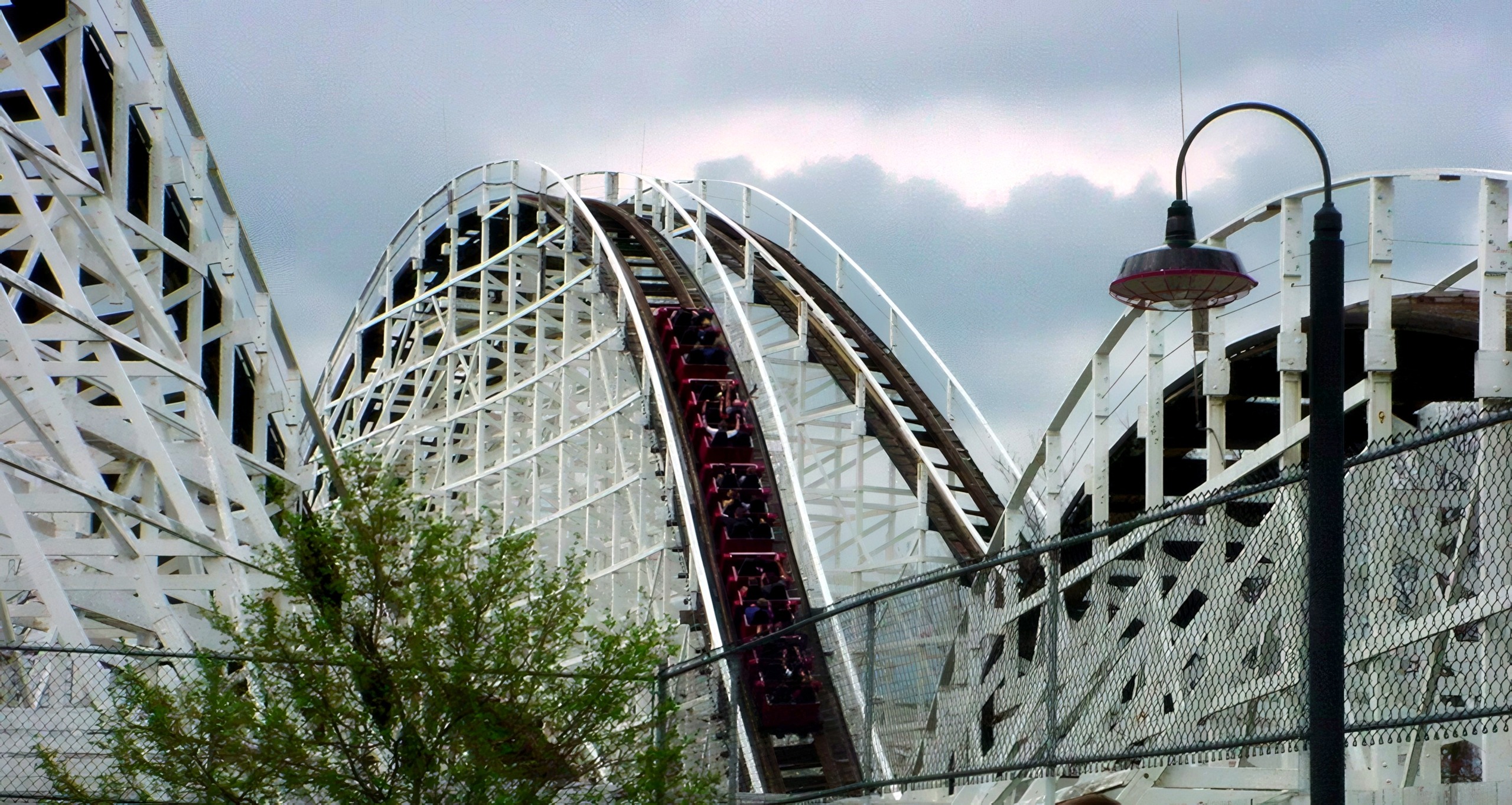
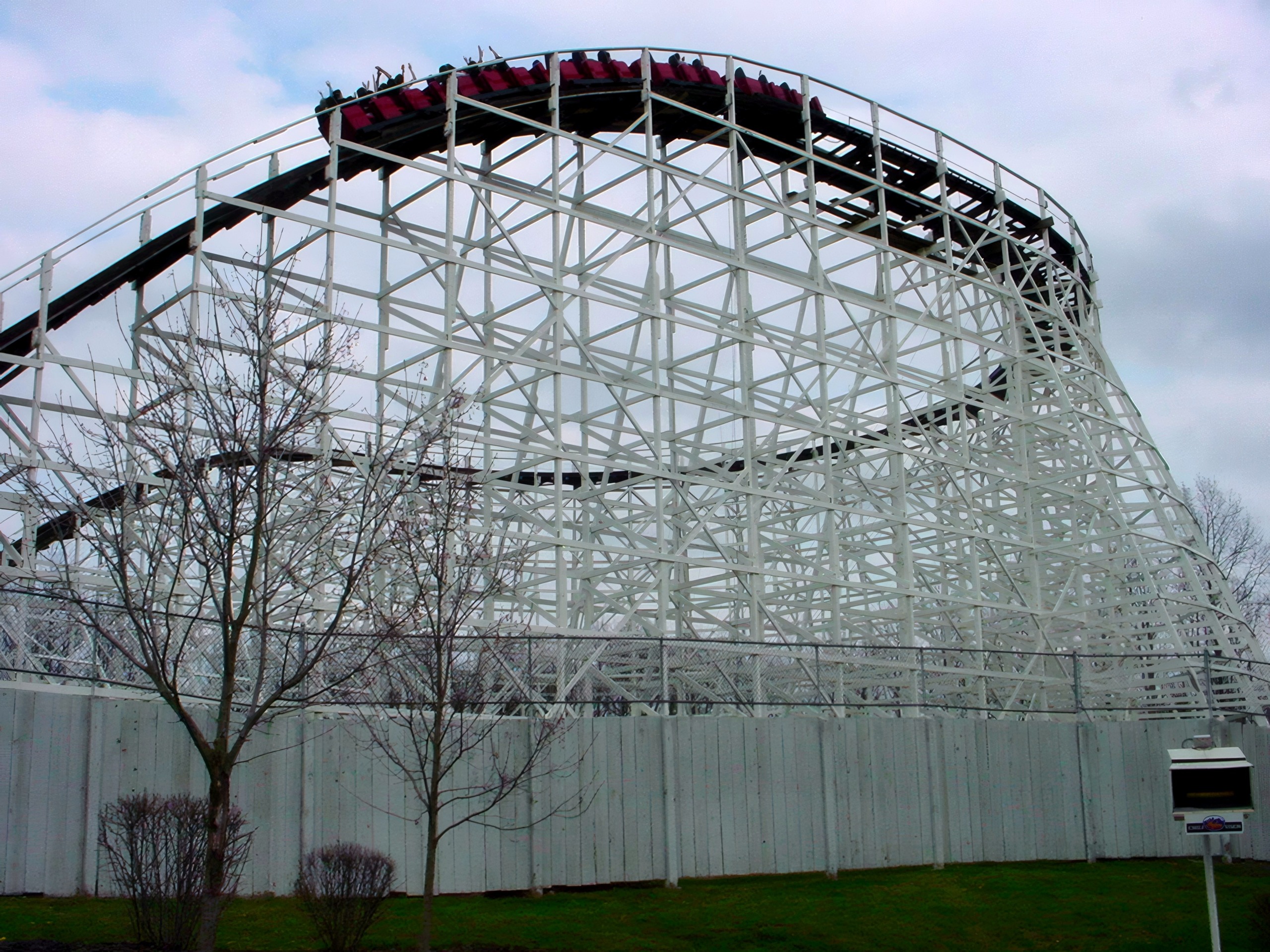
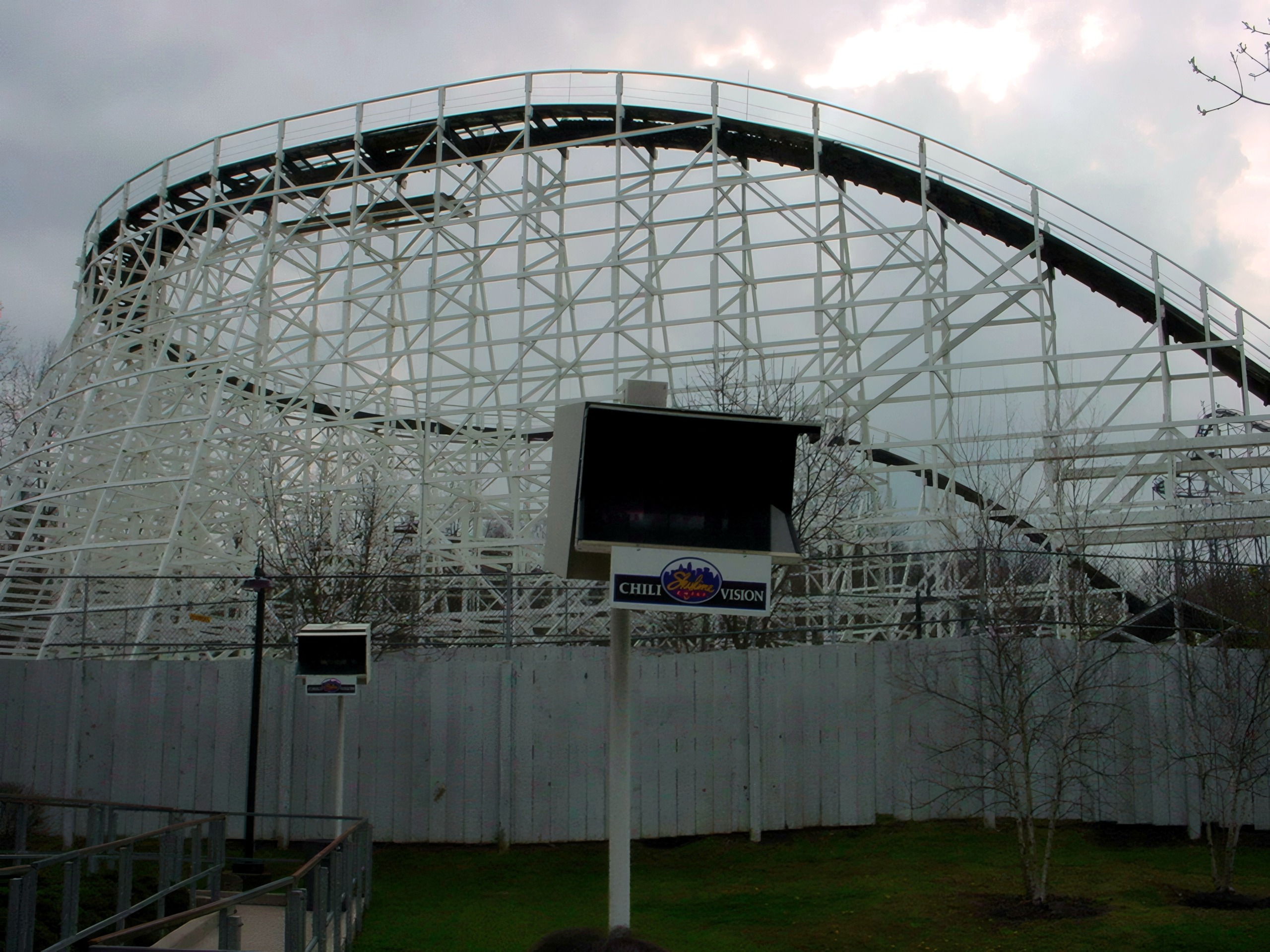
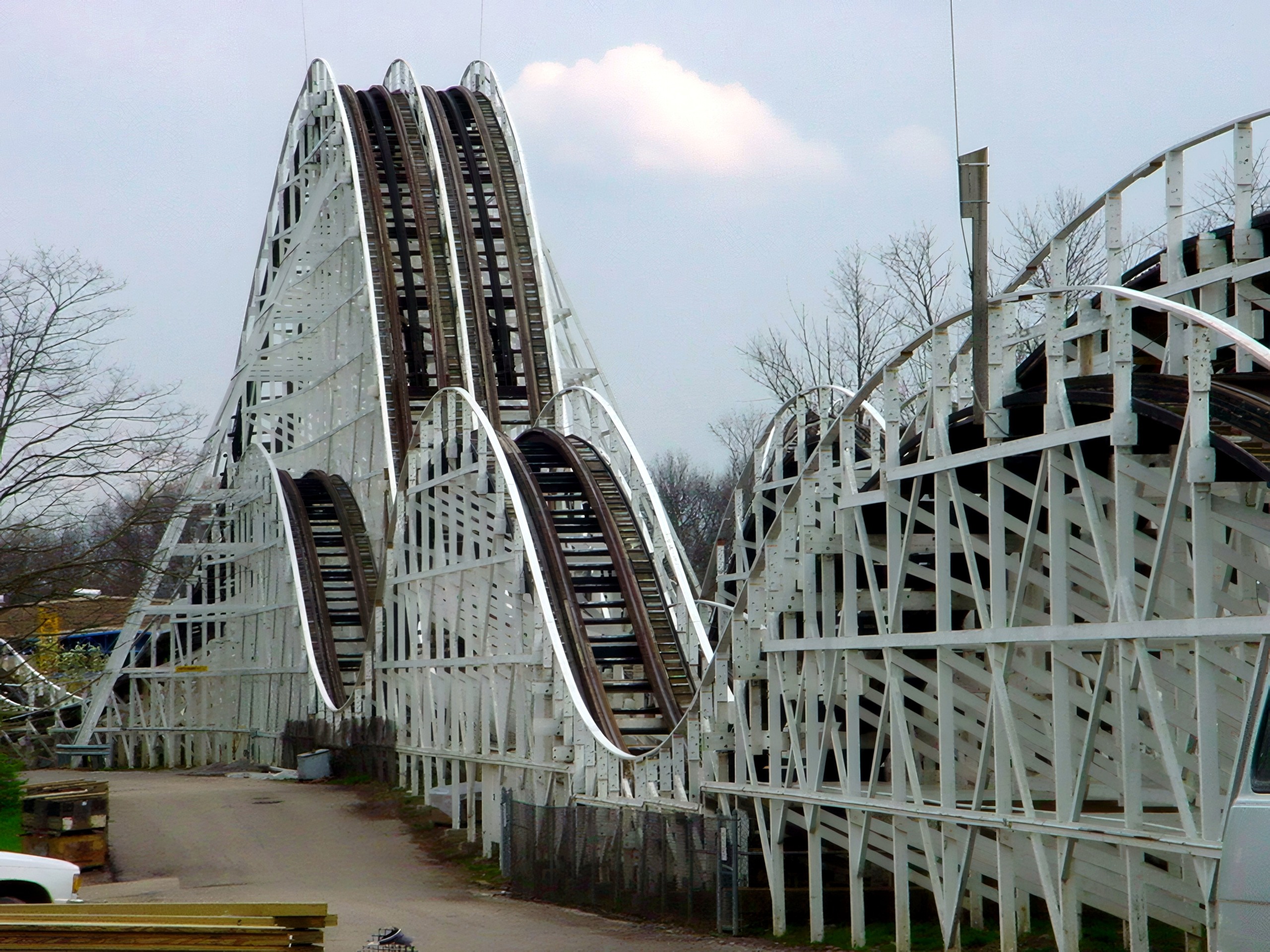
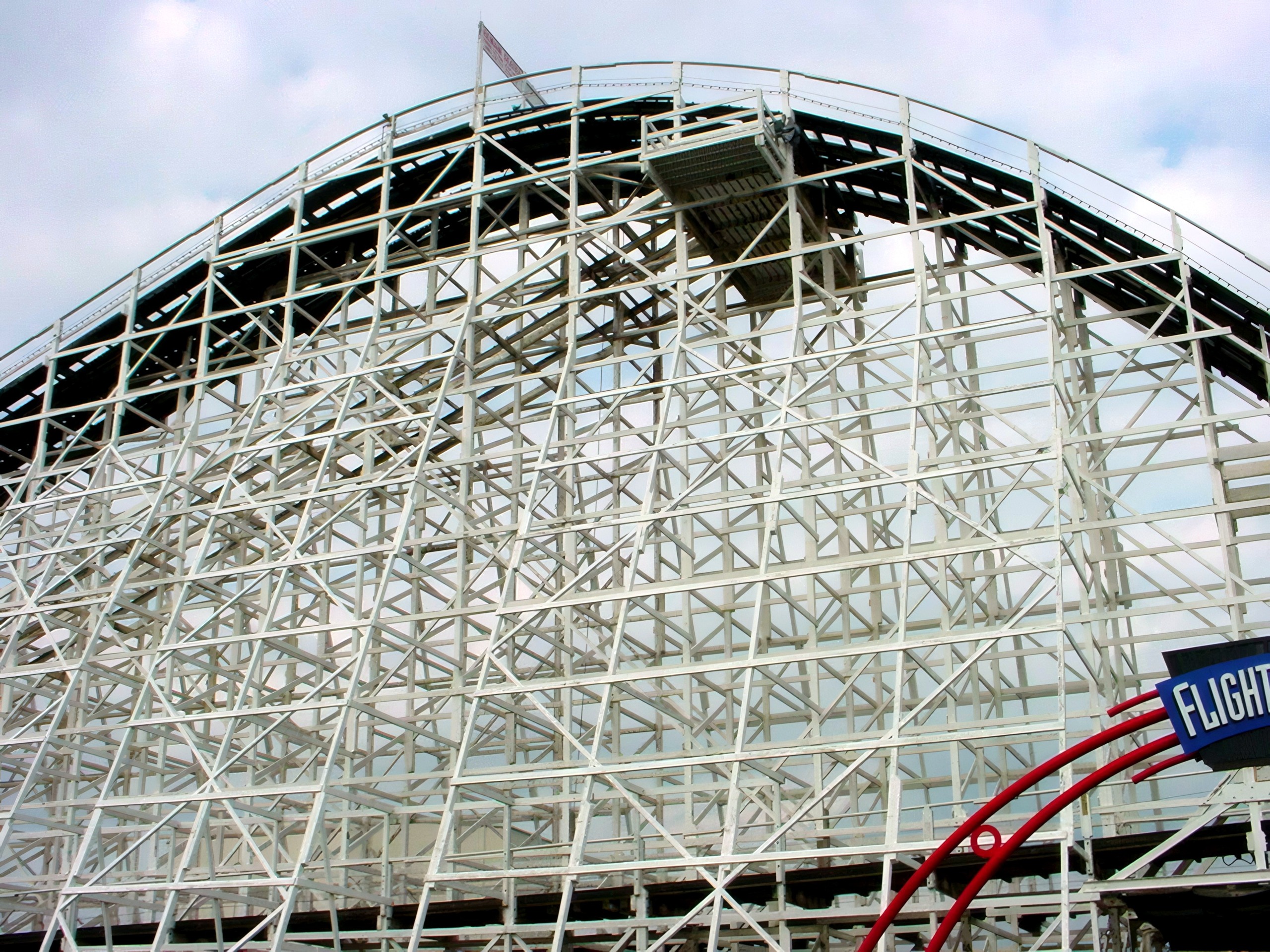
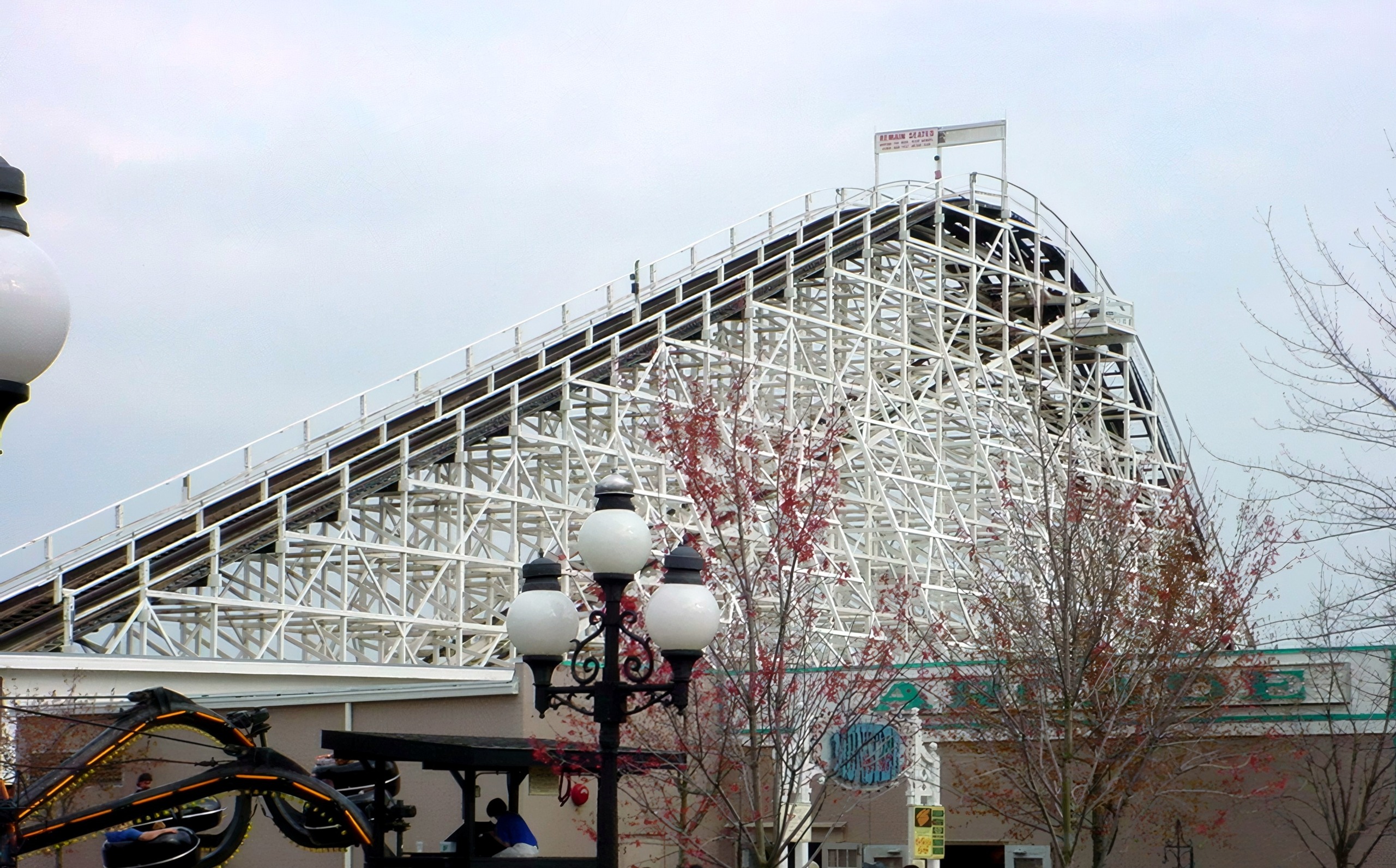
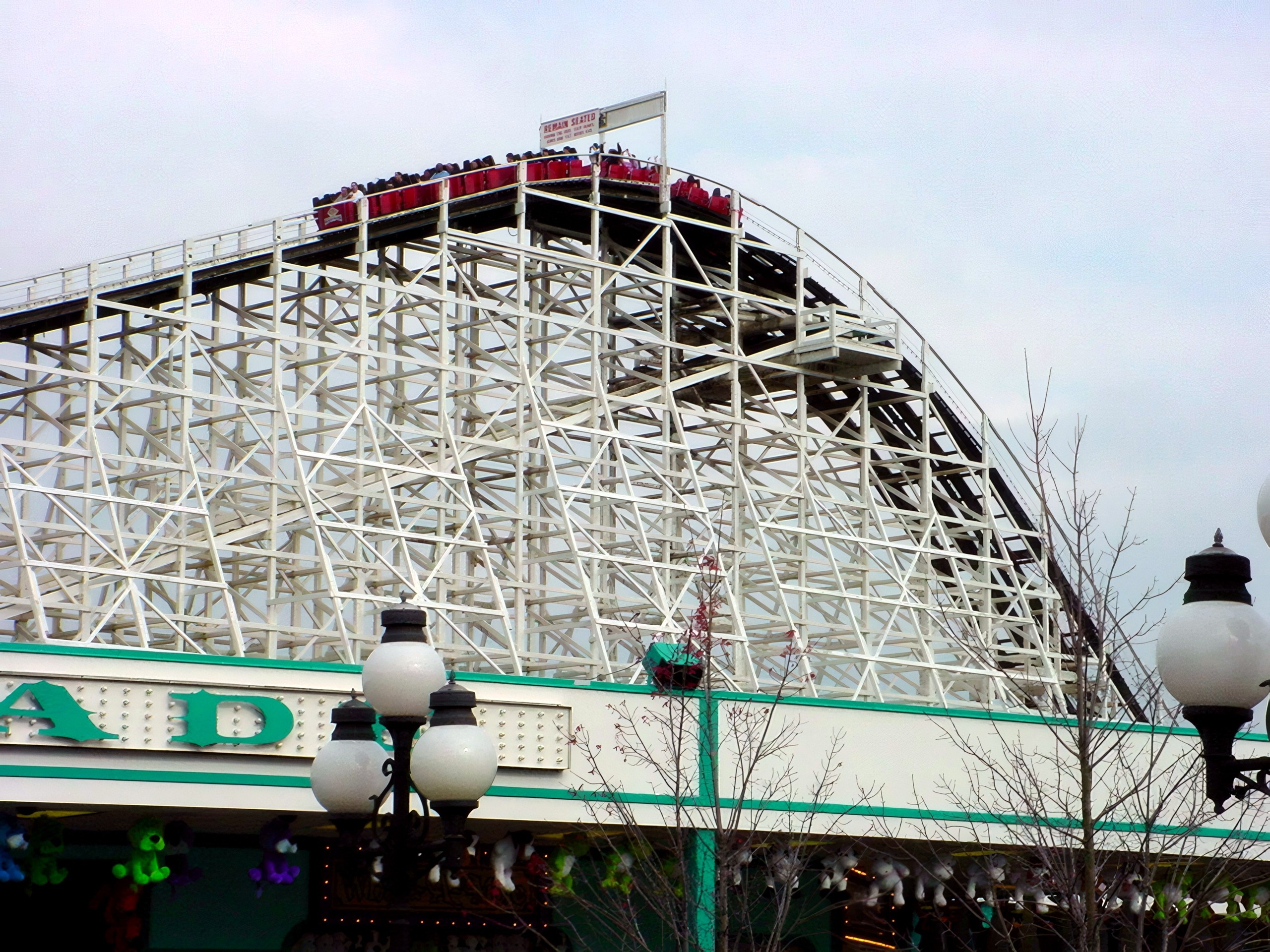
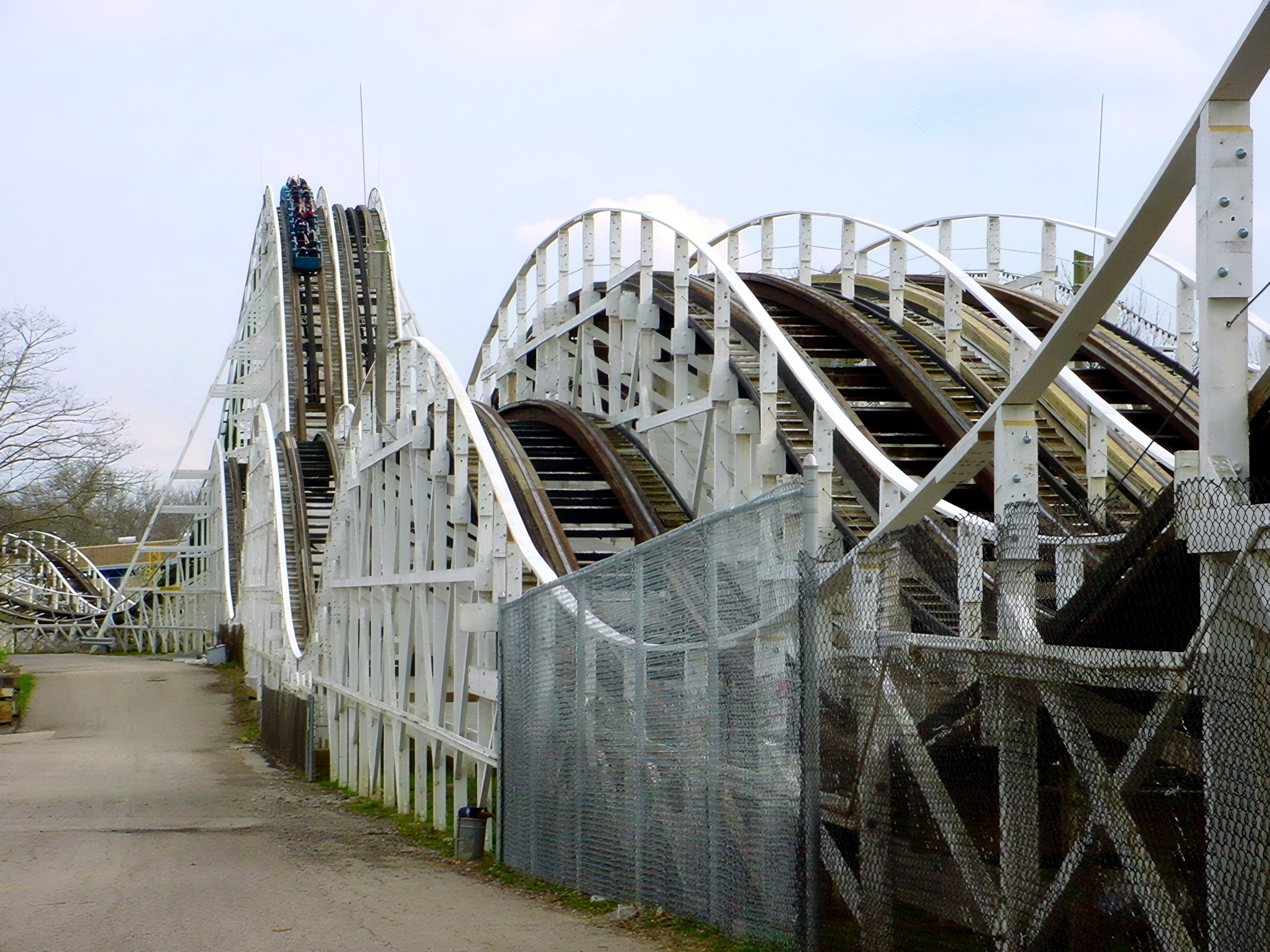
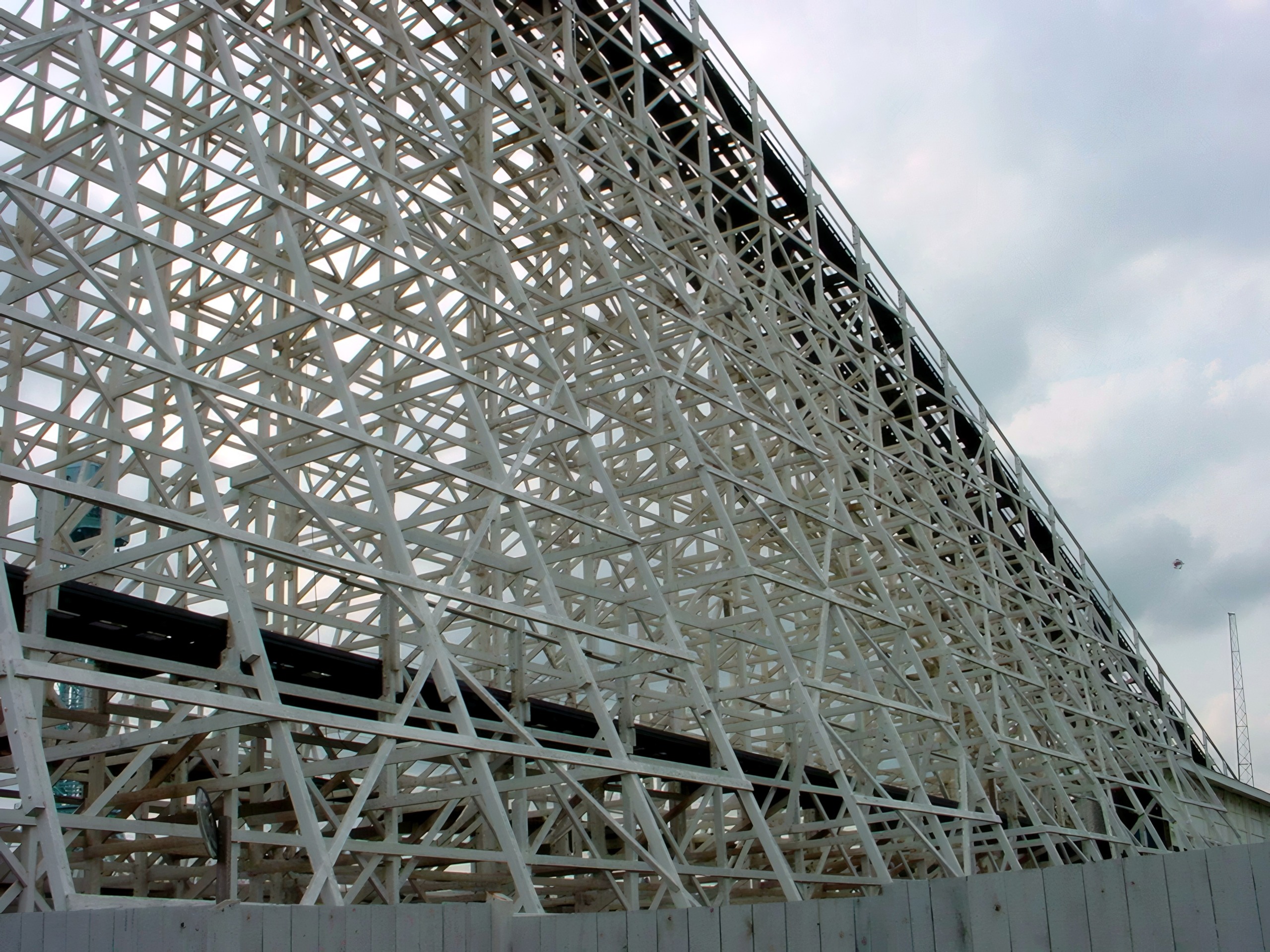
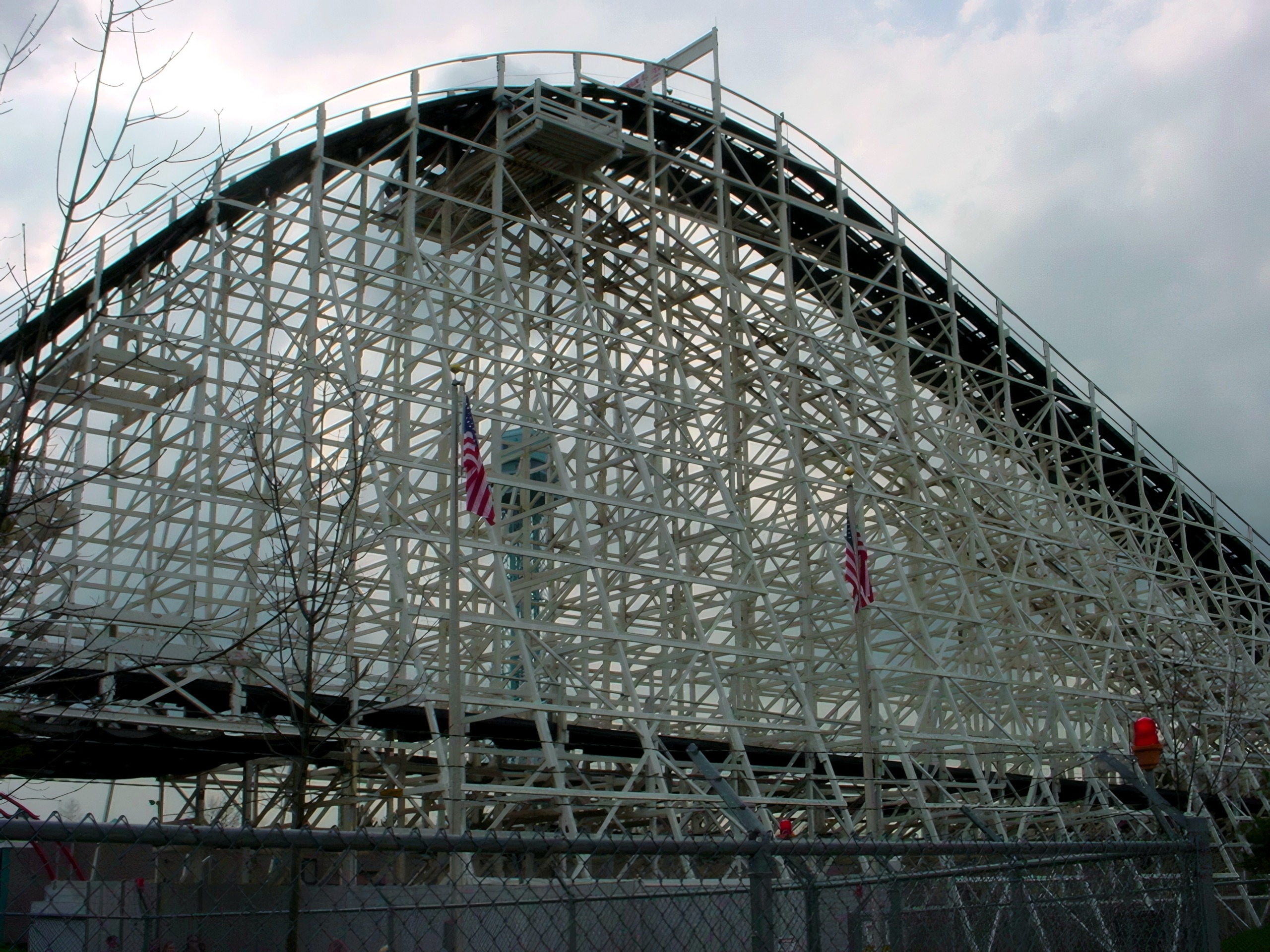
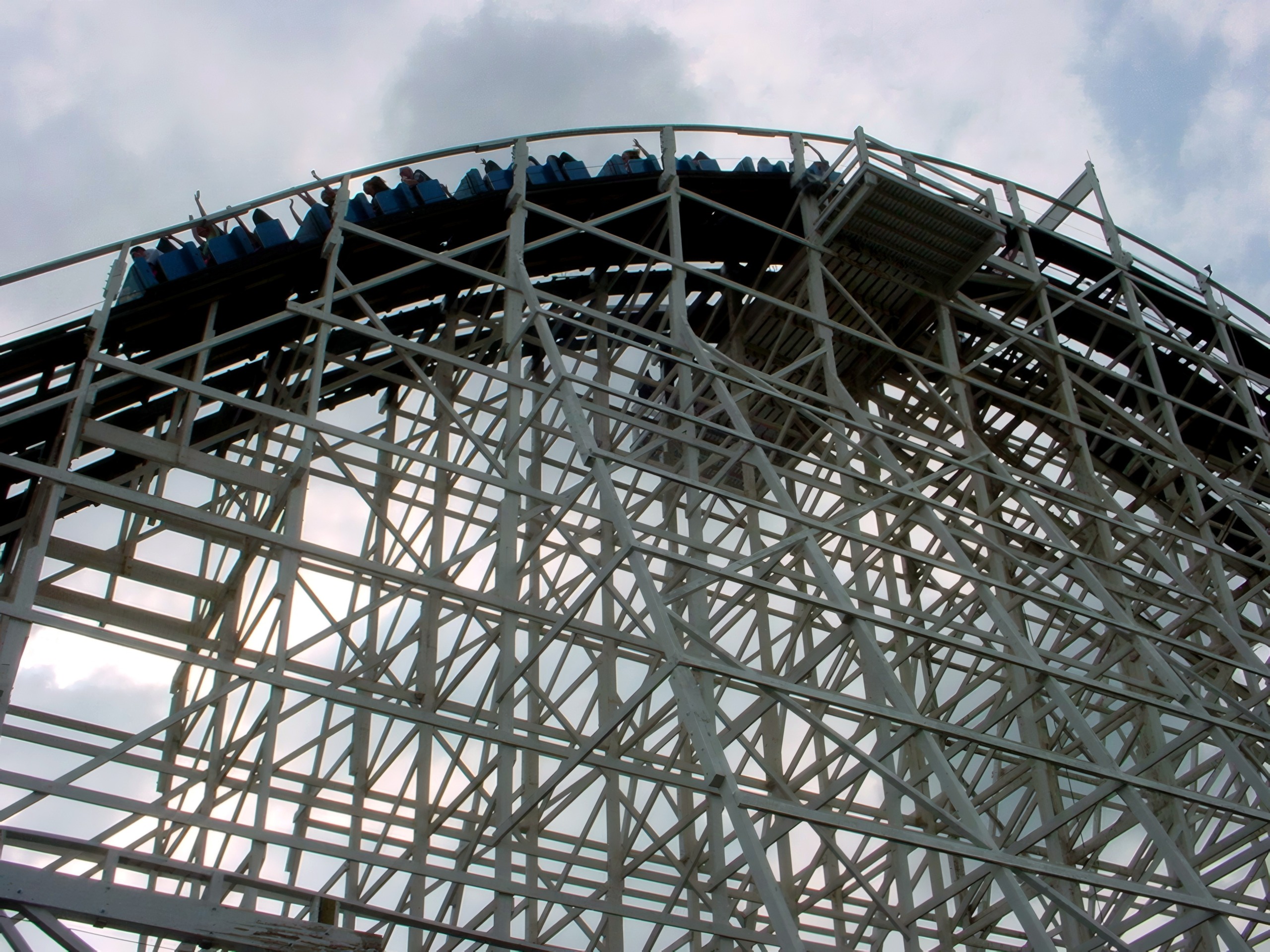
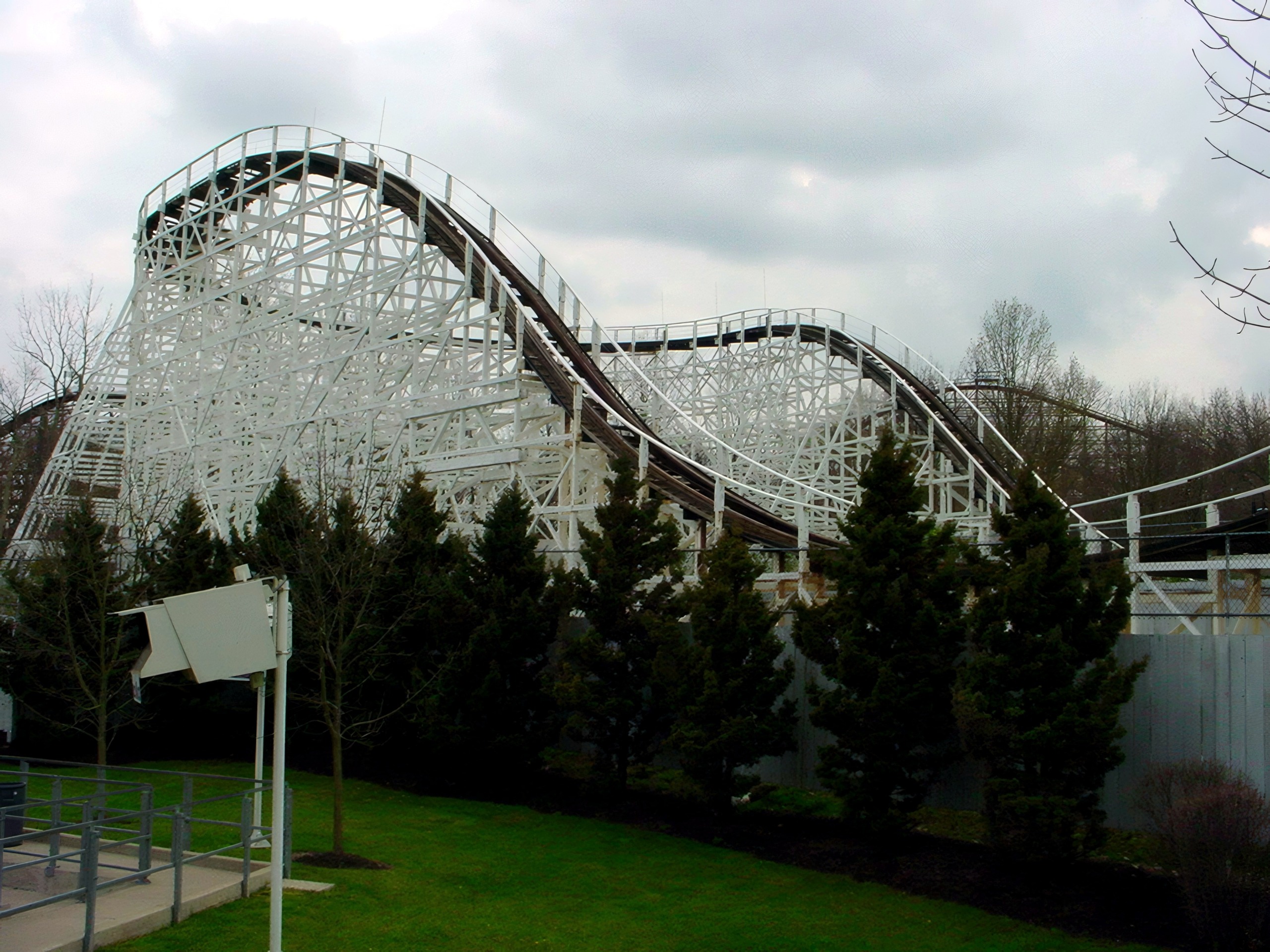
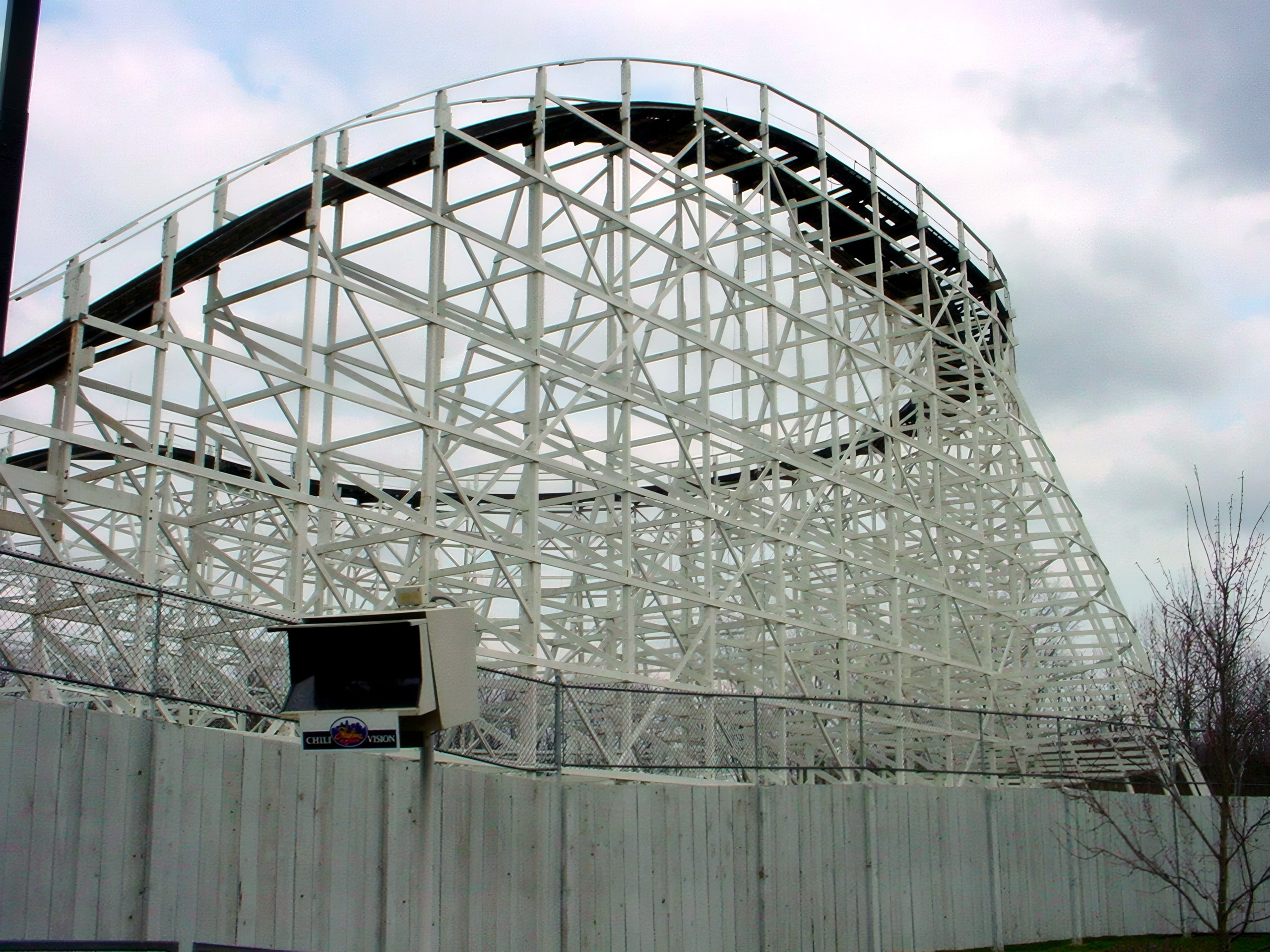
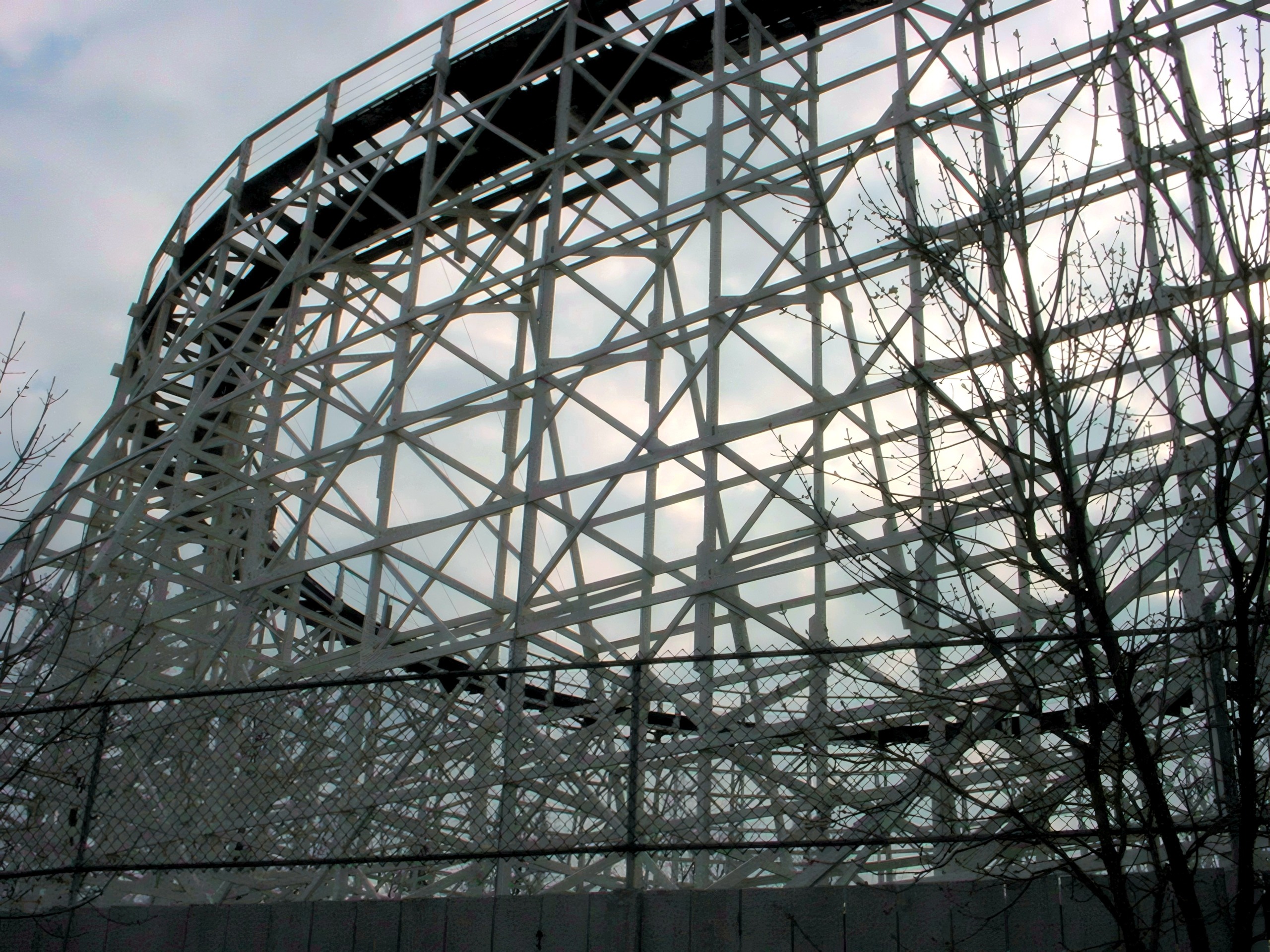
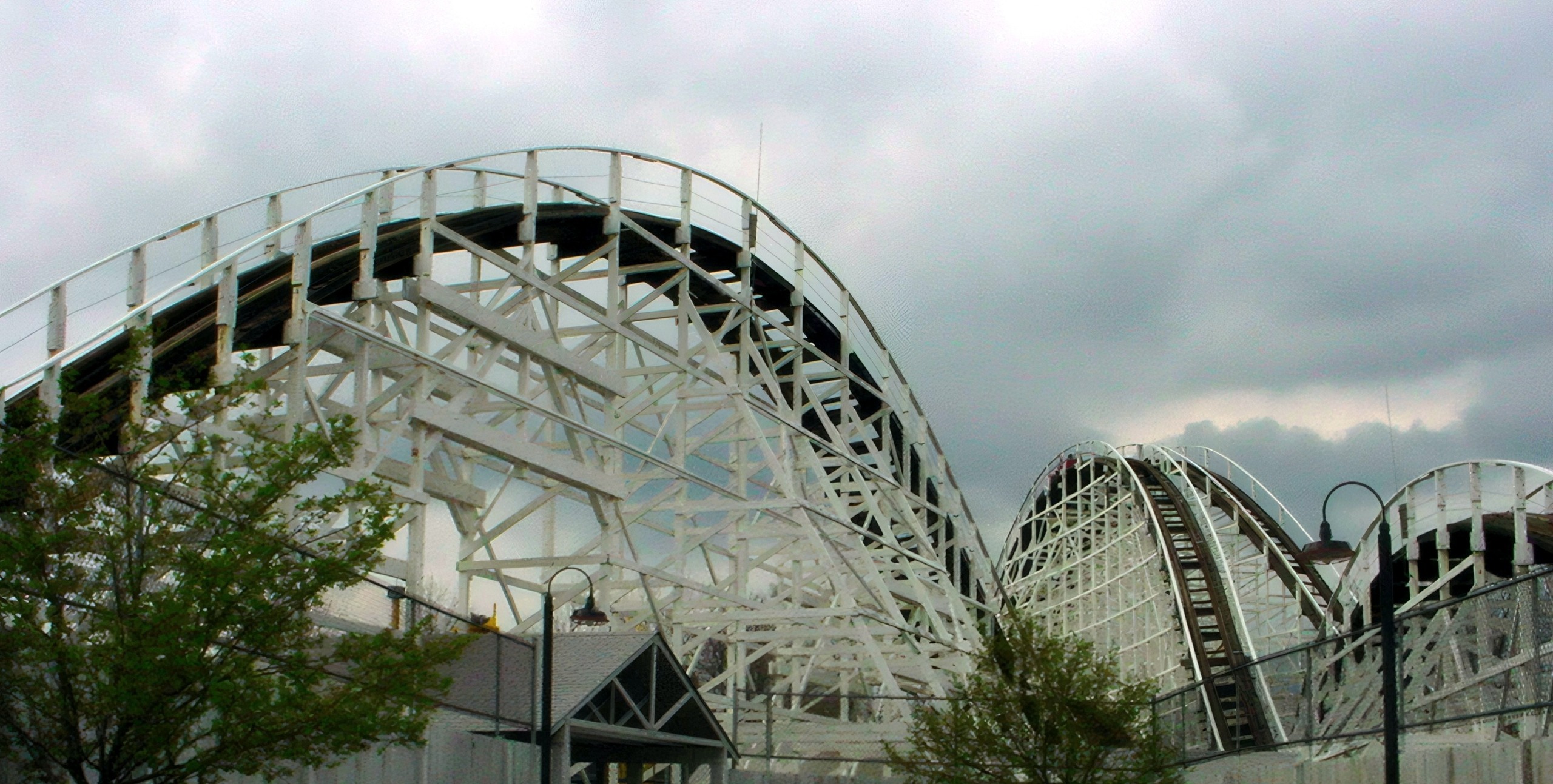
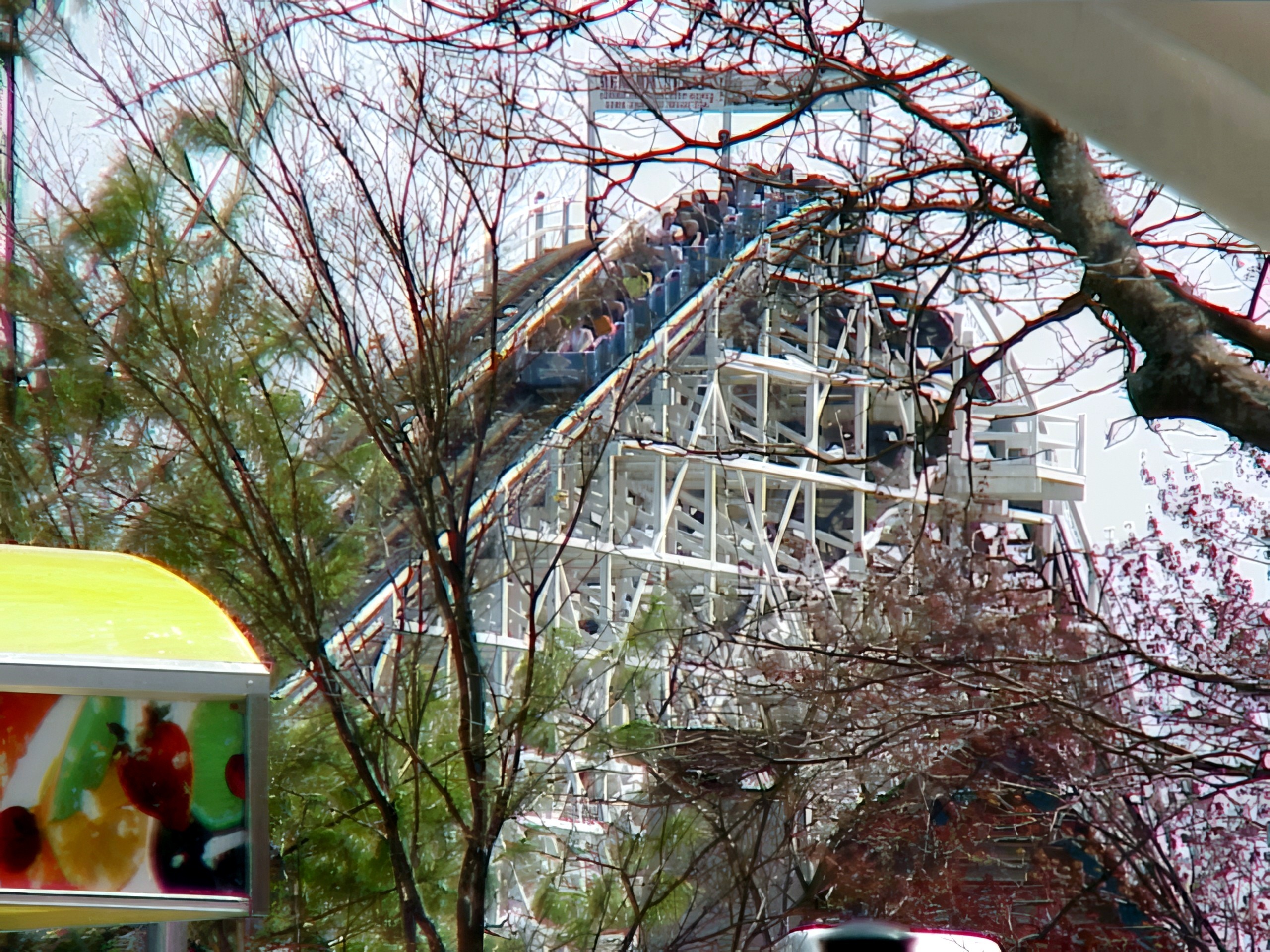
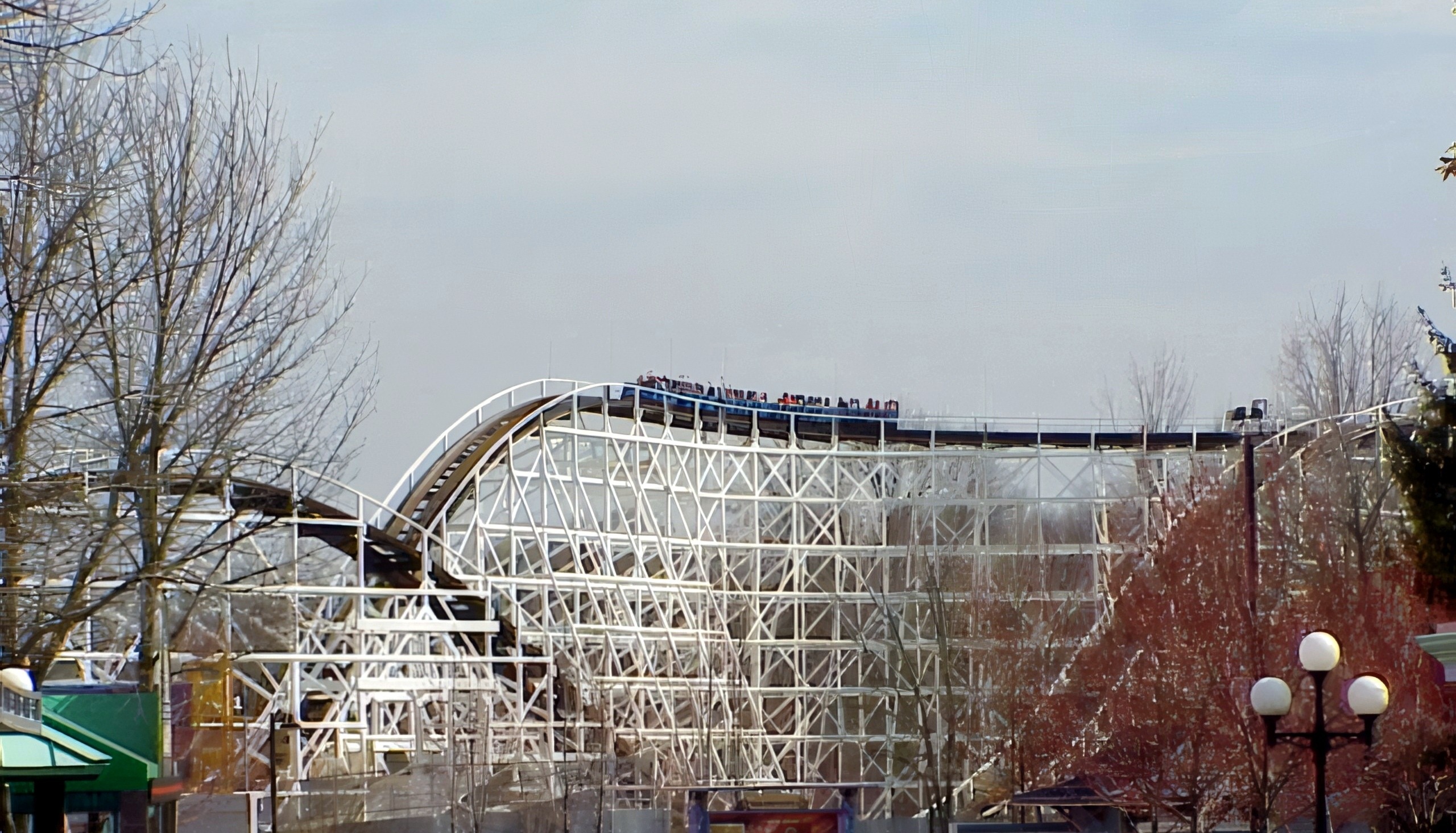
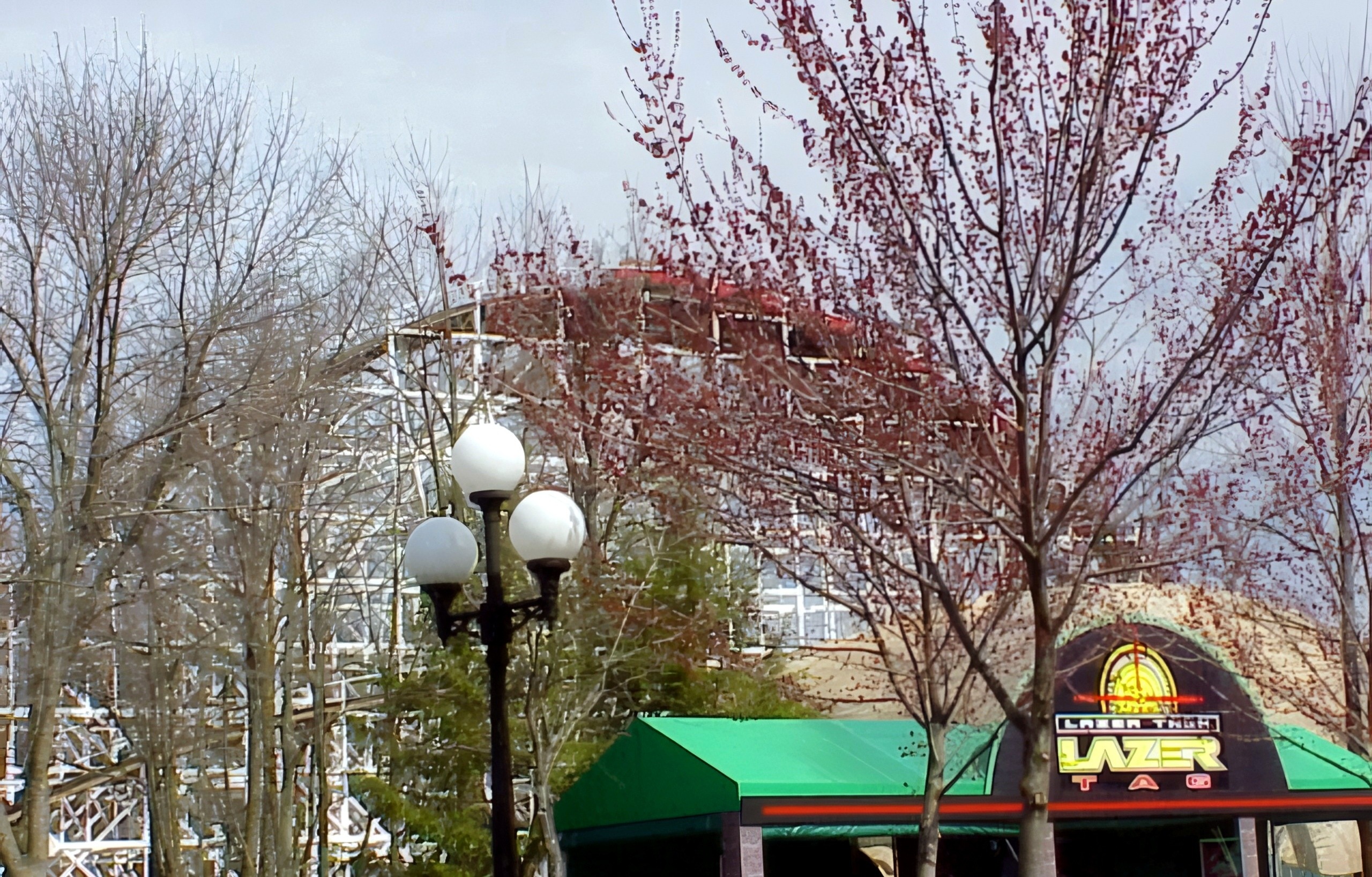
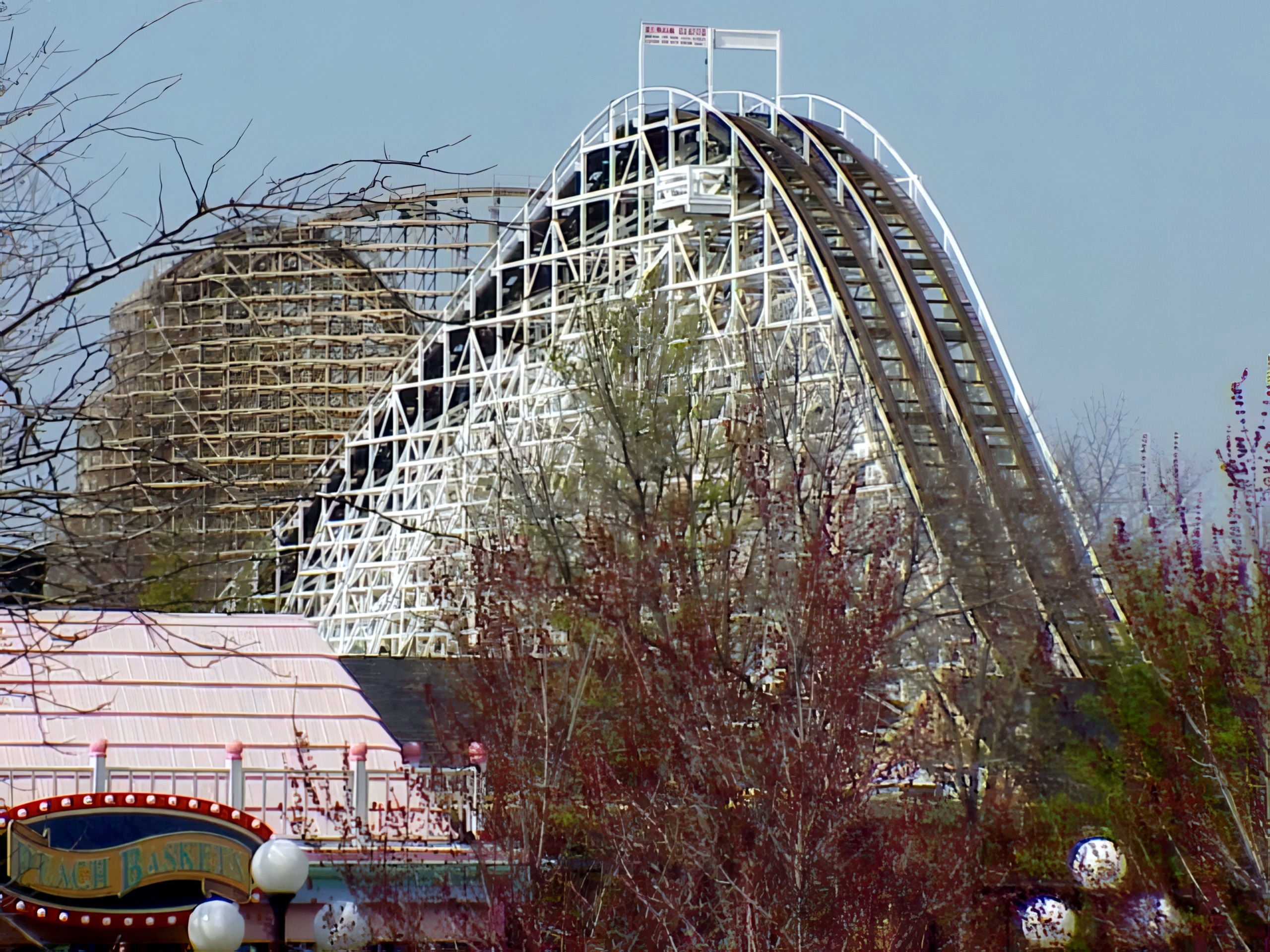
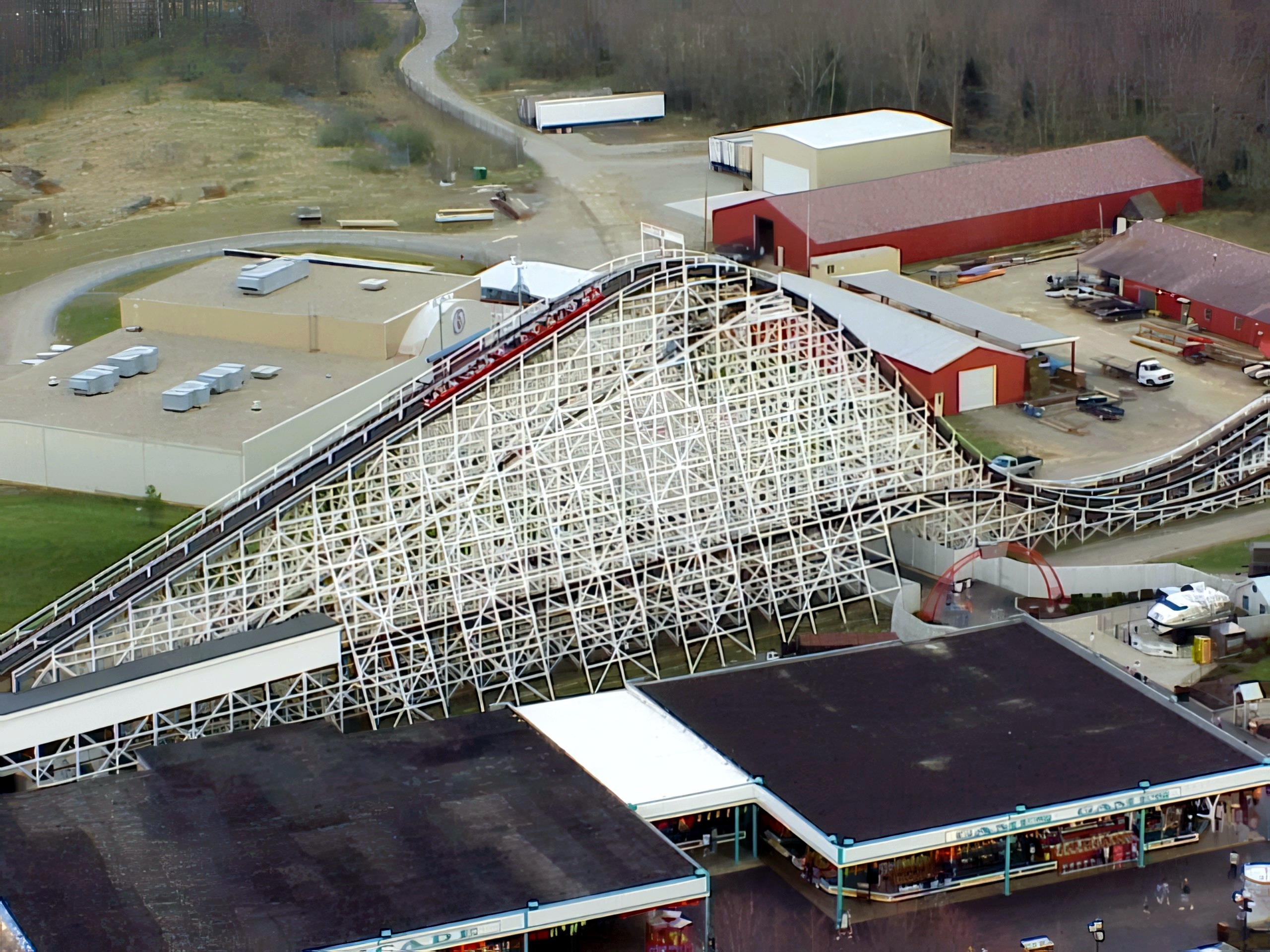
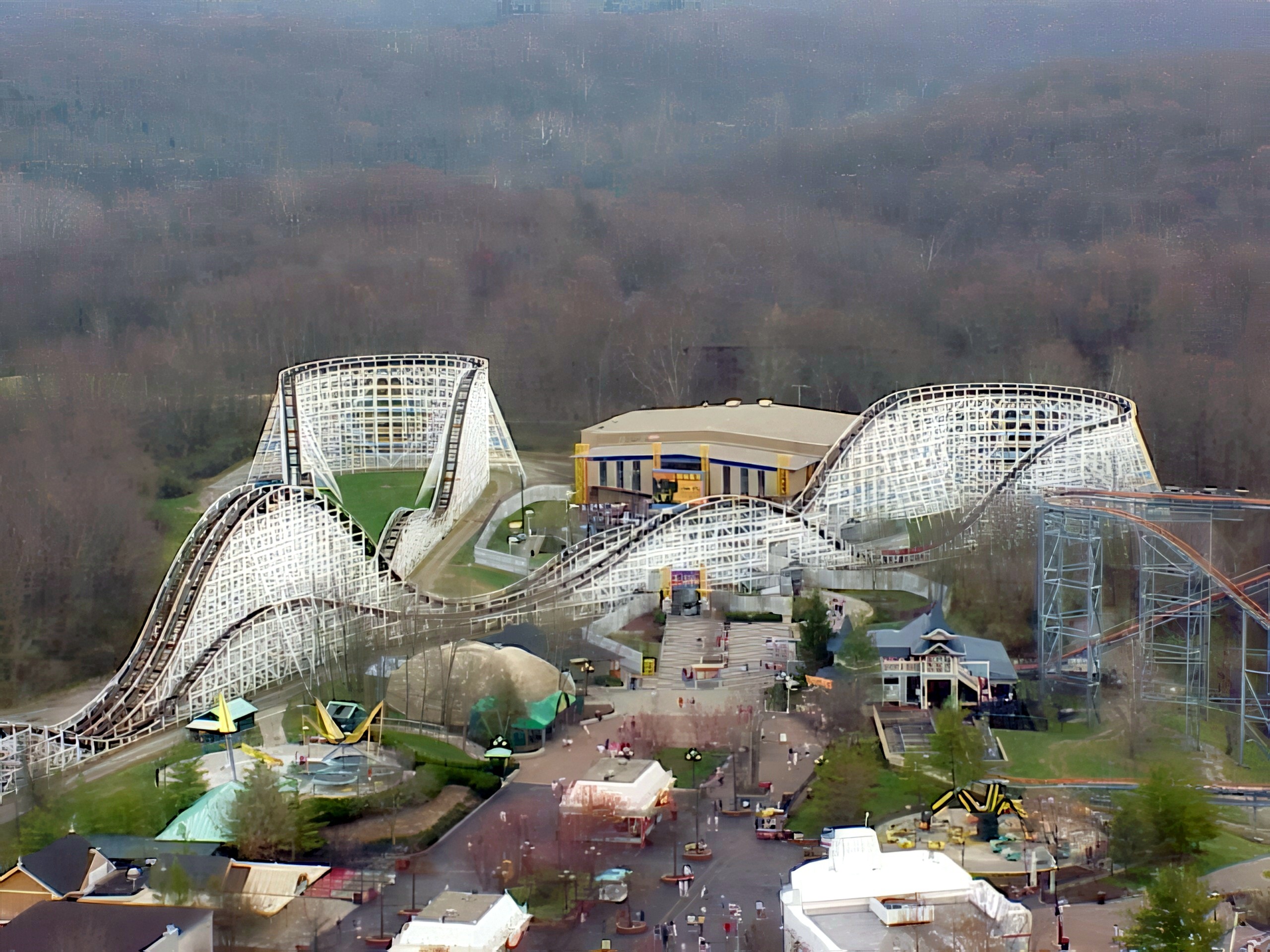
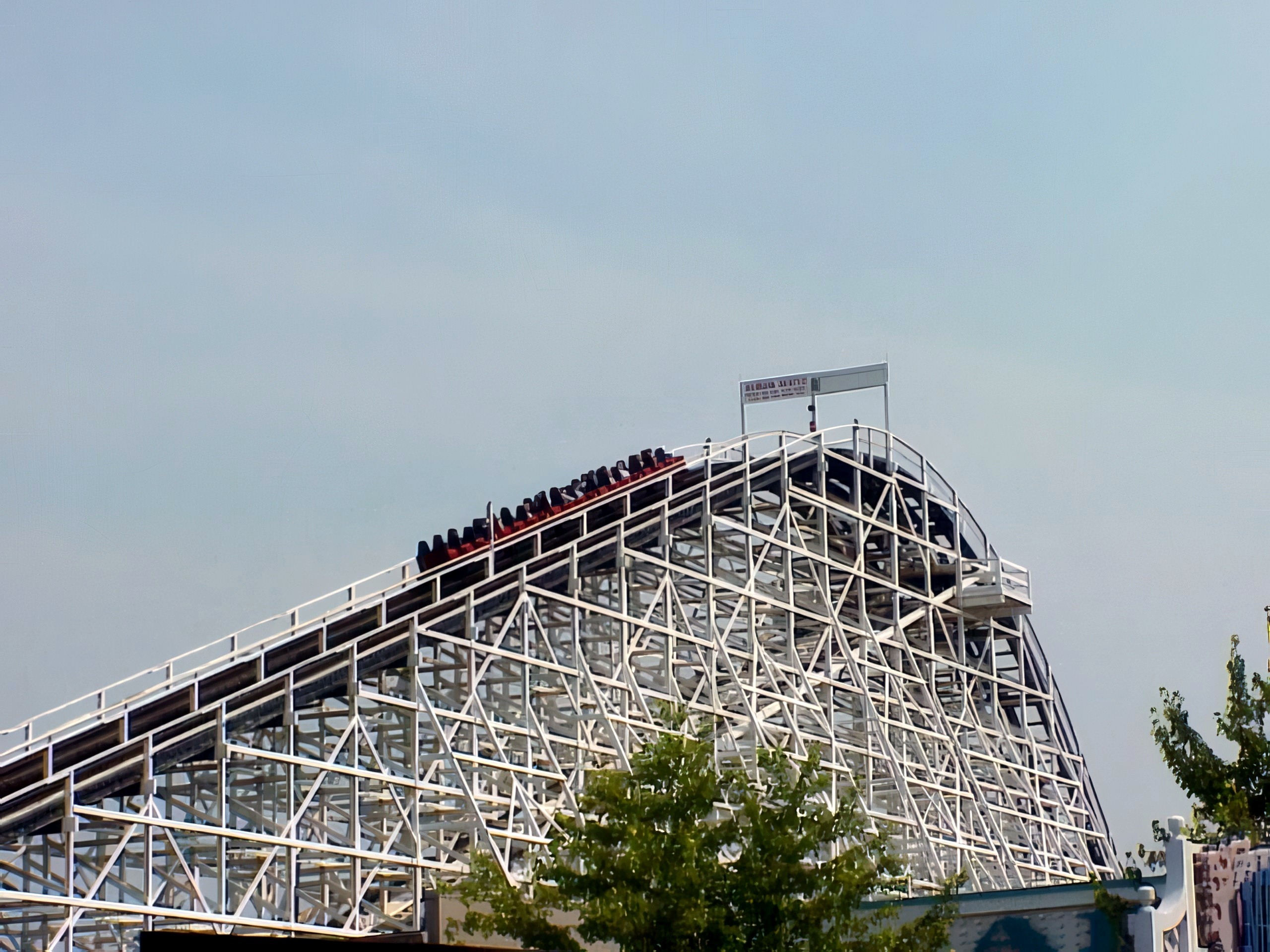
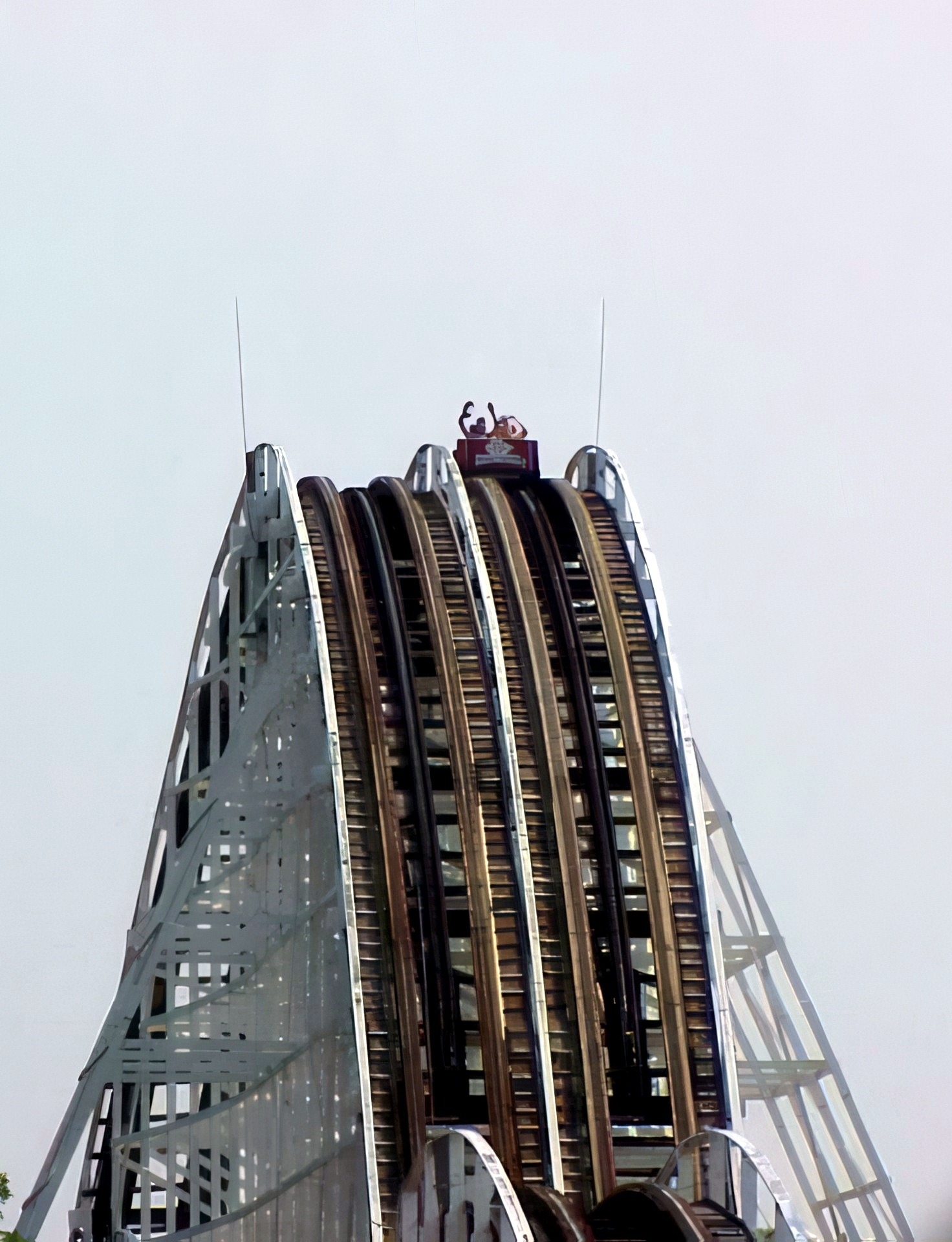
These are original ThrillZing photos of The Racer taken at Paramount’s Kings Island on August 15, 2000, April 7, 2001, April 13, 2002, and in August 2006, restored and upscaled from the original camera files. They show the 1972 twin-track racing coaster in its Paramount years: the entrance archway, both trains cresting the lift hills, riders with their hands up over the crest, the hills and turnaround from the midway, the layout from the Eiffel Tower, and the lift hill at sunset. All photos are free to reuse under a CC BY 4.0 license with credit to ThrillZing and a link to this page.
Jump to: 2006 · 2002 · 2001 · 2000
2006 · 2 photos
August 2006
2002 · 23 photos
April 2002
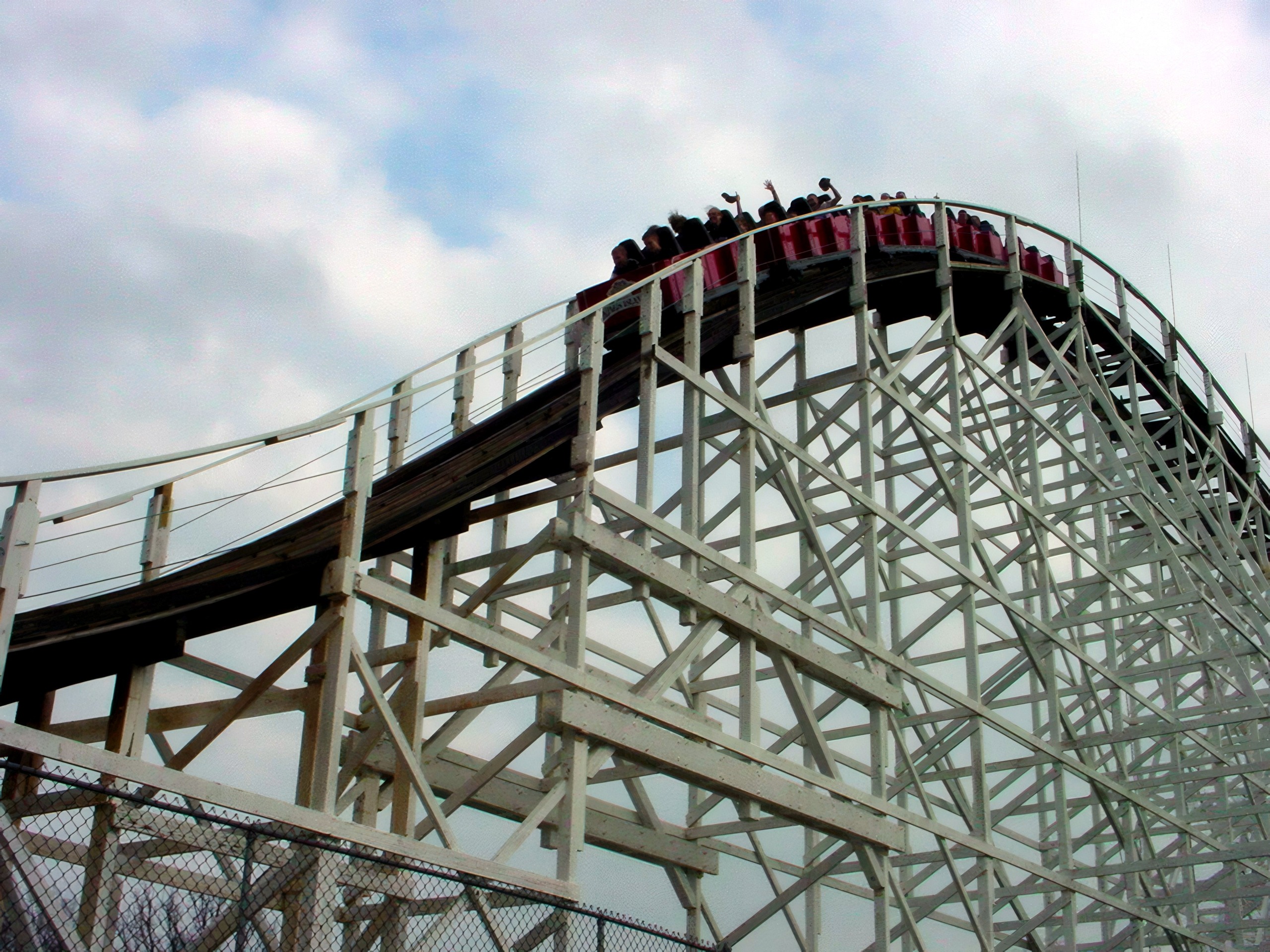
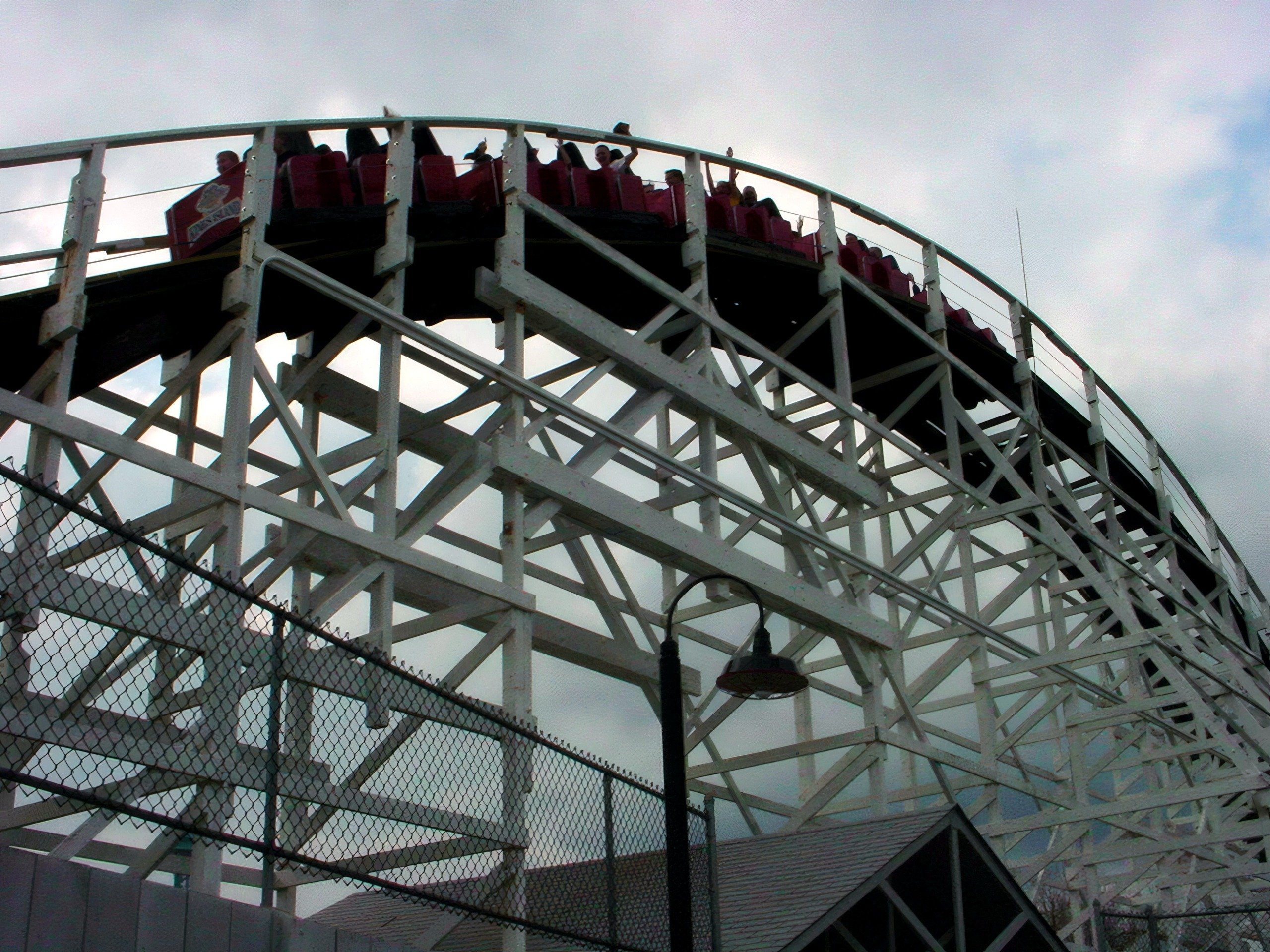
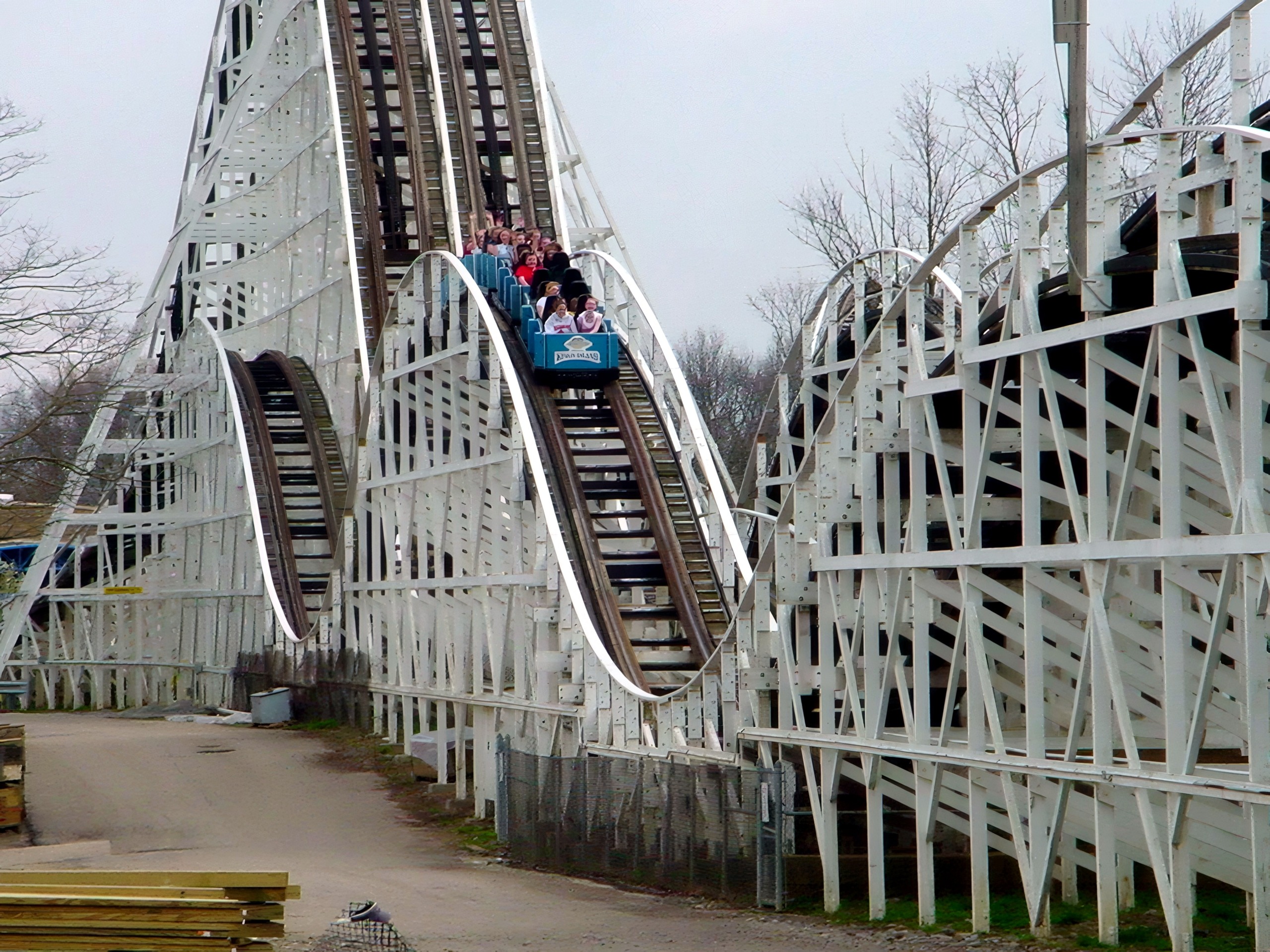
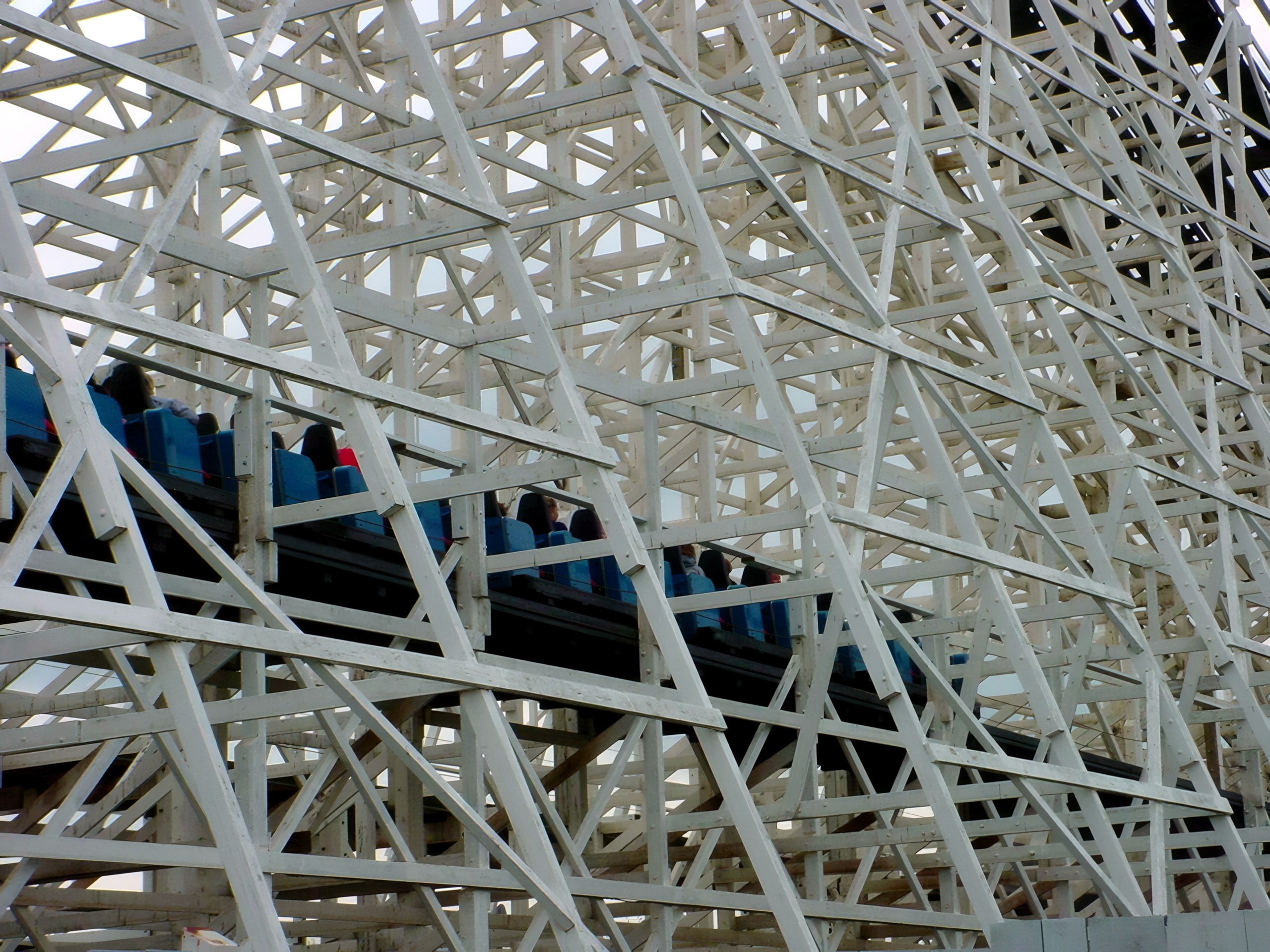
2001 · 8 photos
April 2001
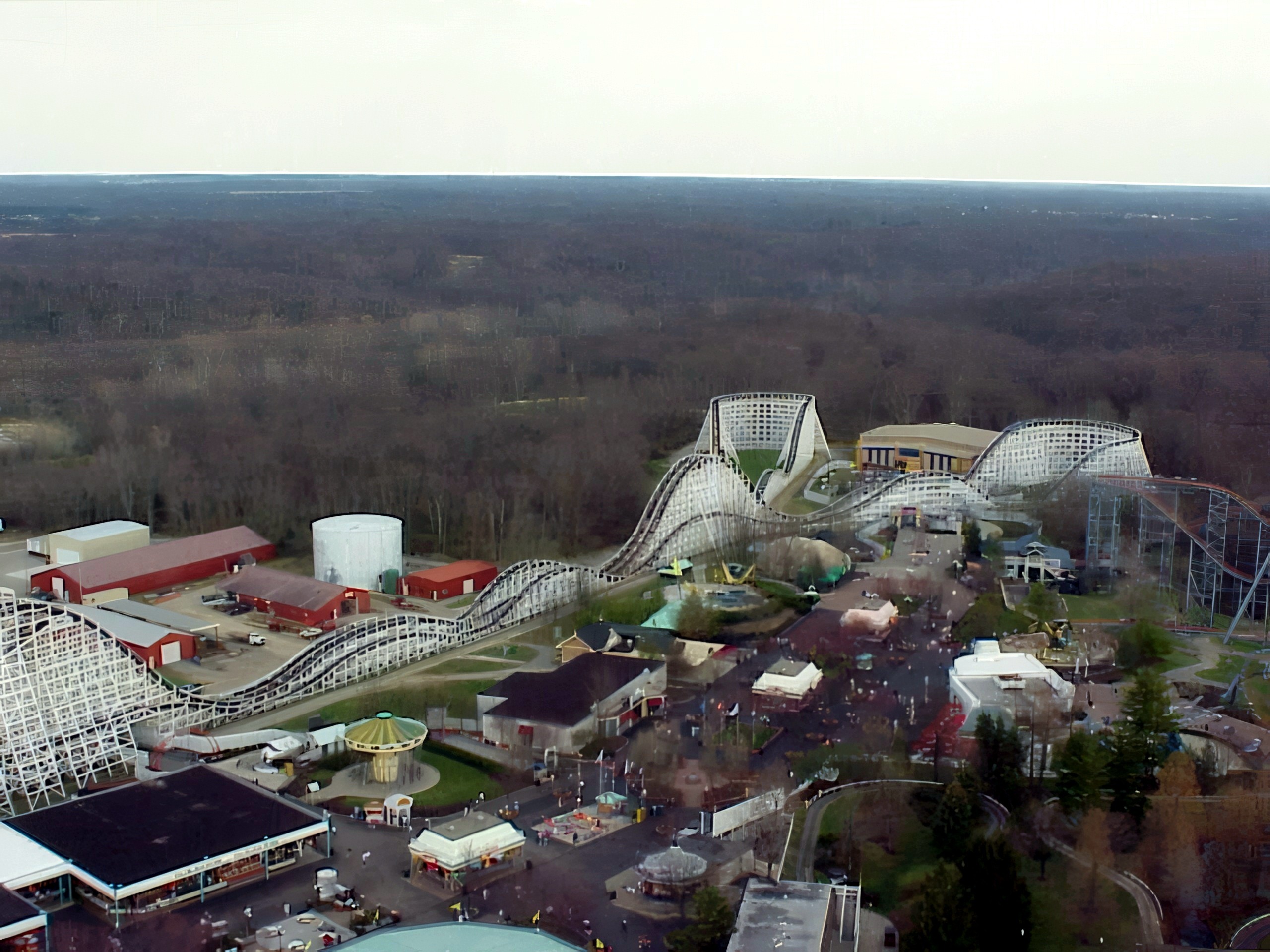
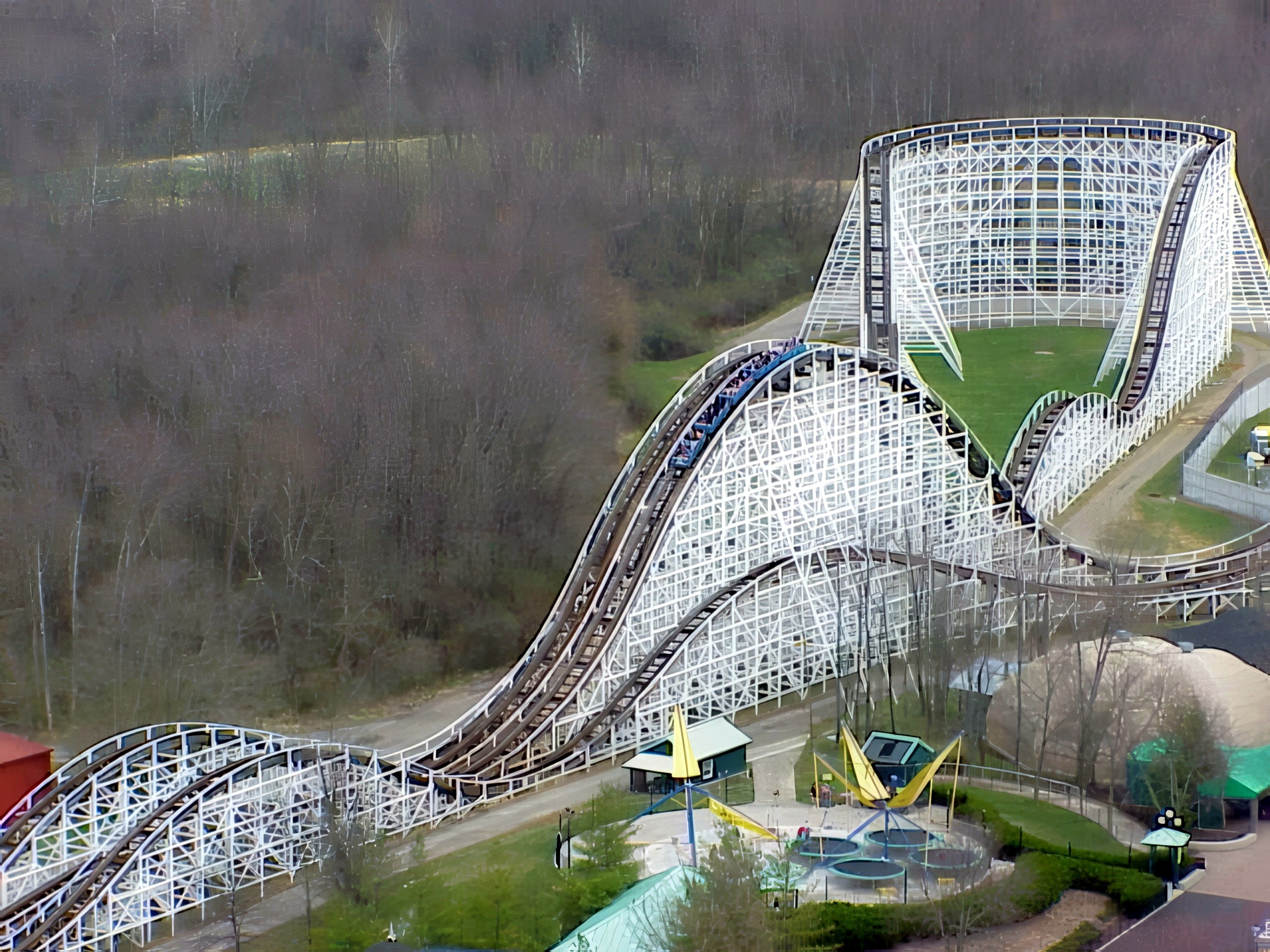
2000 · 4 photos
August 2000
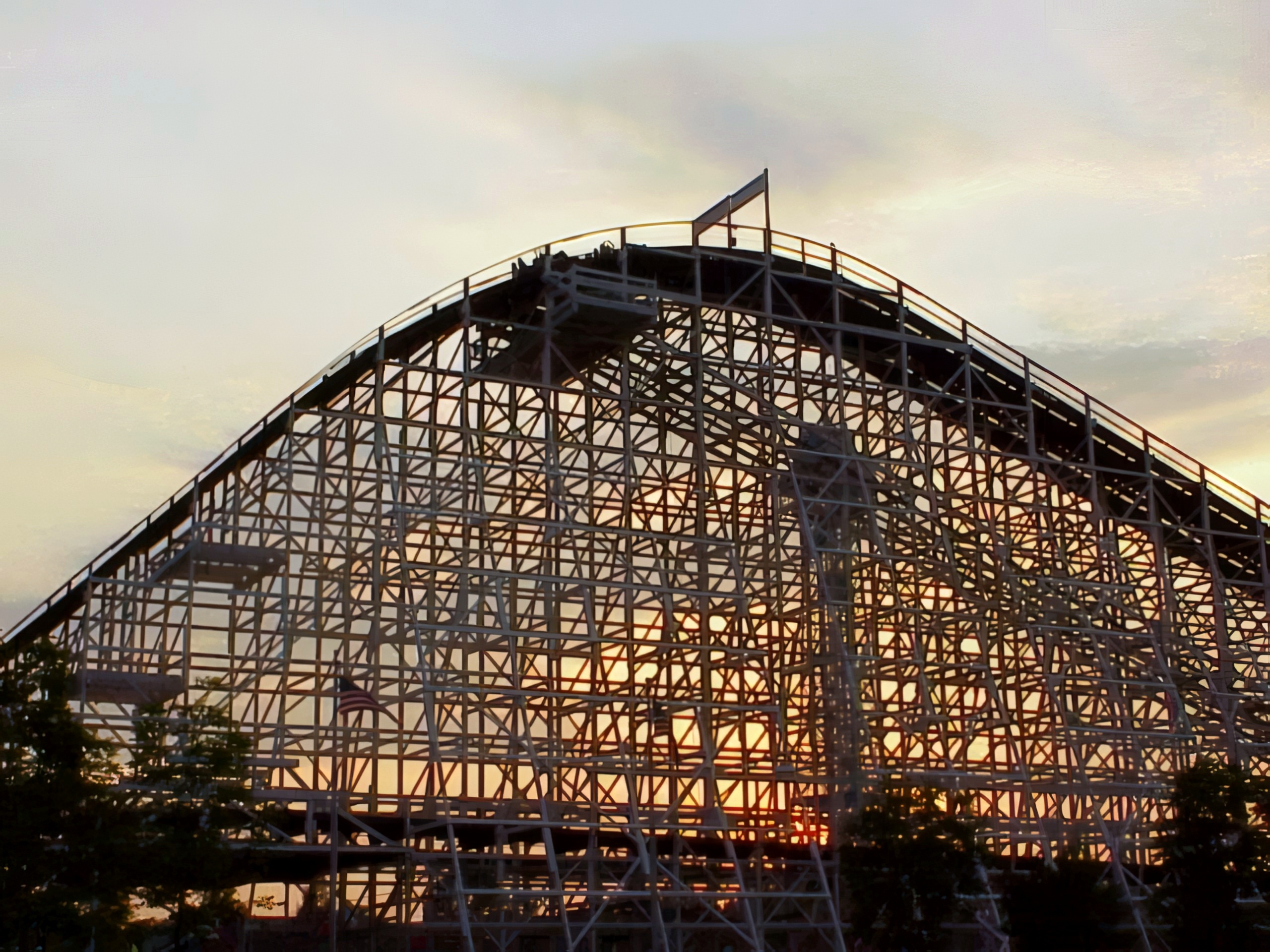
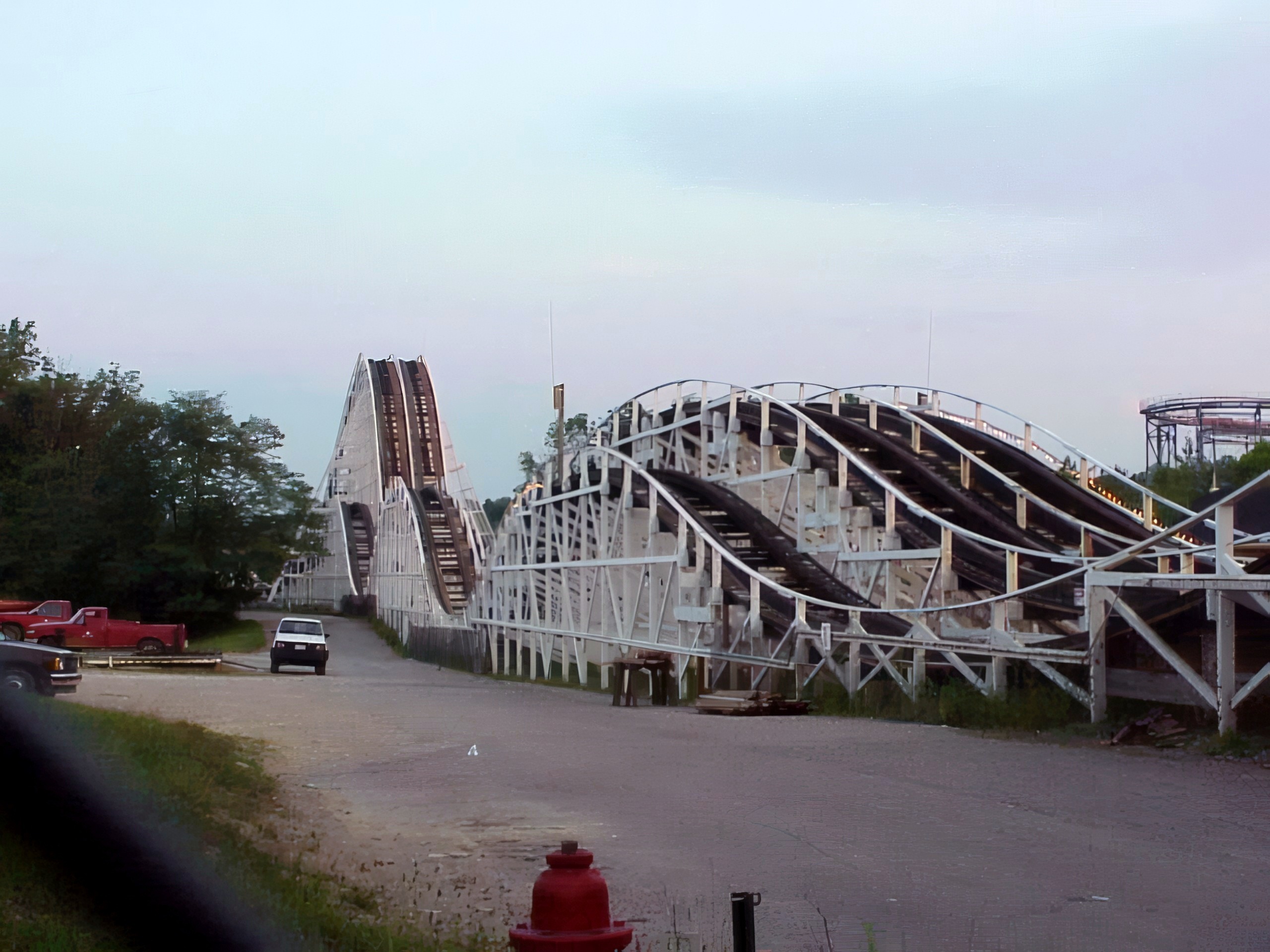
Park apps, mobile ordering and photos kill a battery by 3 p.m. This one snaps on magnetically, so there's no cable to snag on a restraint.
Ride with your glasses on and keep them. Many parks allow glasses on rides if they're strapped, so check the ride rules first.
Small enough to ride with on most coasters, big enough for a phone, card and keys. Two zippers mean nothing falls out upside down.


The Racer at Kings Island FAQs
Who designed The Racer at Kings Island?
John C. Allen, a retired coaster architect who came out of retirement for the project, designed The Racer. It was built by Philadelphia Toboggan Coasters and opened with the park on April 29, 1972.
How fast does The Racer go?
The Racer reaches a top speed of about 53 mph during its 82-foot opening drop and roughly two-minute layout.
What is the height requirement for The Racer?
Riders must be at least 48 inches tall. There is no posted maximum height.
Did The Racer’s tracks always run in the same direction?
No. From May 1982 to 2008, the right-hand track ran backwards, making The Racer the first racing coaster in the world to operate in opposite directions. Both sides have run forward again since 2008.
How long is The Racer’s track?
Each side measures about 3,415 feet, with a ride lasting roughly two minutes.
Where is The Racer located at Kings Island?
The Racer is in the Coney Mall section of the park, near the main entrance plaza.
Is Blue or Red faster on The Racer?
Neither track is objectively faster — the layouts are nearly identical. Who wins usually comes down to how quickly each train is loaded and dispatched, not the track itself.
Does The Racer have a Fast Lane or single-rider line?
The Racer offers Fast Lane access for a shorter wait. Kings Island does not currently run a dedicated single-rider line for this ride.
How many rides has The Racer given overall?
The Racer passed 100 million lifetime rides on August 1, 2014, making it the first attraction in Kings Island history to hit that mark, and it remains the park’s most-ridden ride.
Get More from The Racer at Kings Island
Log the coasters, stadiums, and venues you’ve experienced, rate The Racer at Kings Island, and see what your friends thought. Get the ThrillZing app.
Want the day’s theme park news in your inbox? Subscribe to ThrillZing Daily — free.