
In an era of 400-foot steel giants and launch coasters built to break records, a 78-foot wooden coaster from 1947 was voted the best in the world seven years running. Phoenix at Knoebels Amusement Resort in Elysburg, Pennsylvania topped the Golden Ticket Awards’ Best Wooden Coaster category every year from 2018 through 2025, and finished second to The Voyage in 2026 — a run that seems impossible until you ride it.
The secret isn’t raw stats. Phoenix tops out at 45 mph, a number any modern family coaster can match, and its 78-foot height is modest by today’s standards. What makes it dominate is fit and forces: a faithfully preserved 1947 Philadelphia Toboggan Coasters layout paired with a buzz-bar restraint that barely holds you in the train. This guide covers exactly how tall and fast Phoenix really is, who can (and can’t) ride it — including what happens if you’re a bigger rider — and when to show up if you want the shortest possible line.
Quick Answer
Phoenix at Knoebels is a 78-foot-tall wooden out-and-back coaster with a top speed of 45 mph, originally built in 1947 and rebuilt board-by-board at Knoebels Amusement Resort in Elysburg, Pennsylvania in 1985. Riders must be at least 42 inches tall to ride, and the single-position buzz-bar lap restraint — not a ratcheting bar or shoulder harness — is what actually determines who can ride, regardless of height. It’s the most decorated wooden coaster on Earth, having won Amusement Today’s Golden Ticket Award for Best Wooden Coaster in the world for seven consecutive years through 2025 (it finished second to The Voyage in 2026), prized above all for its sustained ejector airtime.
Stats at a Glance
Park: Knoebels Amusement Resort, Elysburg, Pennsylvania | Type: Wooden, double out-and-back (figure-8 layout) | Height: 78 ft (24 m) | Drop: 72 ft (22 m) | Track Length: 3,200 ft (980 m) | Top Speed: 45 mph (72 km/h) | Ride Duration: 2 minutes | Minimum Height to Ride: 42 in (107 cm) | Trains: Two PTC trains (yellow and orange), 24 riders each | Restraints: Buzz-bar single-position lap bar, no seatbelt | Designer: Herbert Paul Schmeck for Philadelphia Toboggan Coasters | Originally built: 1947 as The Rocket | Opened at Knoebels: June 15, 1985 | ACE Coaster Landmark: designated 2005
How Fast Is Phoenix, Really?
Phoenix’s top speed is 45 mph, reached on the 72-foot first drop right after the lift hill. On paper, that’s slower than most modern steel coasters, and even slower than Knoebels’ own Twister next door. But speed alone doesn’t explain why Phoenix feels the way it does.
What makes it feel faster is pacing: Schmeck’s original 1947 layout packs airtime hill after airtime hill into a tight footprint, so the coaster never coasts long enough for the speed to feel ordinary. Combined with a buzz-bar restraint that lets riders lift out of their seat rather than get pinned into it, 45 mph on Phoenix produces forces that feel far more intense than the number suggests — which is exactly why enthusiasts who’ve ridden 70-plus mph steel hypercoasters still rank Phoenix at or near the top.
How Tall Do You Have to Be to Ride Phoenix?
The minimum height requirement to ride Phoenix at Knoebels is 42 inches (107 cm), measured and checked at the ride entrance like any other coaster at the park. Because Knoebels is a pay-as-you-go park rather than a single-gate ticketed park, height checks happen right at the ride line rather than at park entry, so it’s worth confirming a child’s height before waiting in the queue.
Phoenix has no published weight limit the way some modern rides do — Knoebels’ rule is simpler and blunter: if the buzz bar locks down snugly over your lap, you ride; if it doesn’t, you don’t. Because it’s a single-position bar rather than a ratcheting restraint, there’s less forgiveness for a tight fit than on newer coasters, so larger or taller adults should be aware the check happens at the train, not before. Knoebels’ official rider-safety guidance also asks anyone with heart, back, or neck conditions, or who is pregnant, to sit this one out — the same sustained airtime that makes Phoenix famous is exactly the kind of force those conditions warn against. Guests with a valid IBCCES accessibility card can access Phoenix and other rides through the exit gate with one companion, though the 42-inch height and restraint-fit rules still apply to everyone. Full policy details are on Knoebels’ official rider safety page.
From San Antonio to Pennsylvania: The Resurrection Story
Phoenix didn’t begin life in Pennsylvania. It opened in 1947 as The Rocket at Playland Park in San Antonio, Texas — designed by Herbert Paul Schmeck and built by Philadelphia Toboggan Coasters, one of the most respected names in wooden coaster history. At its debut, The Rocket was promoted as one of the largest coasters in the world, with 3,200 feet of track and a 78-foot lift hill.
The Rocket ran for more than three decades until Playland Park closed in 1980. Rather than let this piece of coaster history be demolished, Knoebels Amusement Resort — a family-run park in central Pennsylvania — purchased the ride in 1984. Because no original blueprints existed, workers numbered and cataloged every wooden board on-site before disassembly, loaded the entire structure onto 34 trucks, and rebuilt it board by board in Pennsylvania. The restored coaster reopened on June 15, 1985, rechristened Phoenix, and was later named an ACE Coaster Landmark in 2005 in recognition of its historical significance.
The Ride Experience: Two Minutes of Airtime
Phoenix’s layout is a double out-and-back, which from above traces a figure-8 across its footprint. After the lift hill, the 72-foot first drop sets the rhythm, and what follows is a nearly unbroken sequence of airtime hills, sweeping turnarounds, and direction changes across two full straightaways. A dark tunnel cuts off your senses midway through, just long enough to reset expectations before the second half launches into a double-up element and a rapid-fire finale of bunny hops.
The back row is a pilgrimage for enthusiasts — the whip and ejector forces from the rear are noticeably stronger than anywhere else on the train. A night ride raises the experience further: with the tunnel blacking out completely and the airtime hills barely visible ahead, Phoenix after dark is a different animal, which is exactly why the park’s annual enthusiast event centers on exclusive late-night laps.
Why Buzz Bars Change Everything
Most modern roller coasters use ratcheting lap bars or over-the-shoulder restraints that lock progressively tighter as the ride runs. Buzz bars work differently: a single-position bar drops down and stays exactly where it’s set, holding riders securely at the hips without pinning the torso or shoulders. That’s what allows Phoenix’s airtime to register as true float — riders lift several inches out of the seat on the hardest hills, held in only by the bar across their lap, instead of being pressed back down by a heavier harness.
It’s also why the ride feels more intense than its 45 mph top speed suggests: the forces are given room to happen rather than absorbed by the restraint. That single design choice, largely unchanged since 1947, is the biggest reason Phoenix keeps beating coasters that are taller, faster, and decades newer.
Phoenix vs. Twister: Which Knoebels Wooden Coaster Should You Ride First?
Knoebels runs two acclaimed wooden coasters side by side, and first-time visitors often ask which to prioritize. On paper, Twister wins the stats: it stands roughly 101.5 feet tall, reaches about 51 mph, and adds a signature high-speed helix that Phoenix doesn’t attempt. Phoenix counters with pedigree and pacing — its 1947 Schmeck layout was built purely around airtime, hill after hill, while Twister leans harder into raw speed and a dramatic drop through the ride’s structure.
Most enthusiasts and Golden Ticket voters still rank Phoenix above Twister, and the awards history backs that up — Phoenix, not the taller and faster Twister, is the one that won Best Wooden Coaster in the world seven straight times from 2018 through 2025. If you only have time for one ride before the lines build, ride Phoenix first; if you love both styles, riding Twister right after gives you an immediate, useful contrast in what wooden-coaster intensity can mean.
Best Time to Ride Phoenix (Wait Times & Night Rides)
Knoebels has free admission and charges per ride, so Phoenix’s line moves with the crowd rather than a fixed ticketed schedule — weekday mornings and early afternoons are consistently the lightest, while weekend afternoons draw the longest waits. Because there’s no single-gate rush at opening, arriving close to when rides start running for the day is usually the best way to get an early lap with a short line.
The single busiest weekend of the year for Phoenix specifically is Knoebels’ annual Phoenix Phall Phun Phest each October, when the park runs exclusive late-night sessions on the coaster for enthusiasts. Even outside that event, timing a ride for after sunset is worth it: the tunnel goes fully dark and the airtime hills are barely visible ahead, making Phoenix noticeably more intense at night, and evening lines are often shorter than midday ones once the afternoon crowd thins out. Current operating hours and event dates are always confirmed on Knoebels’ official site.
Phoenix Photo Archive: July 2003
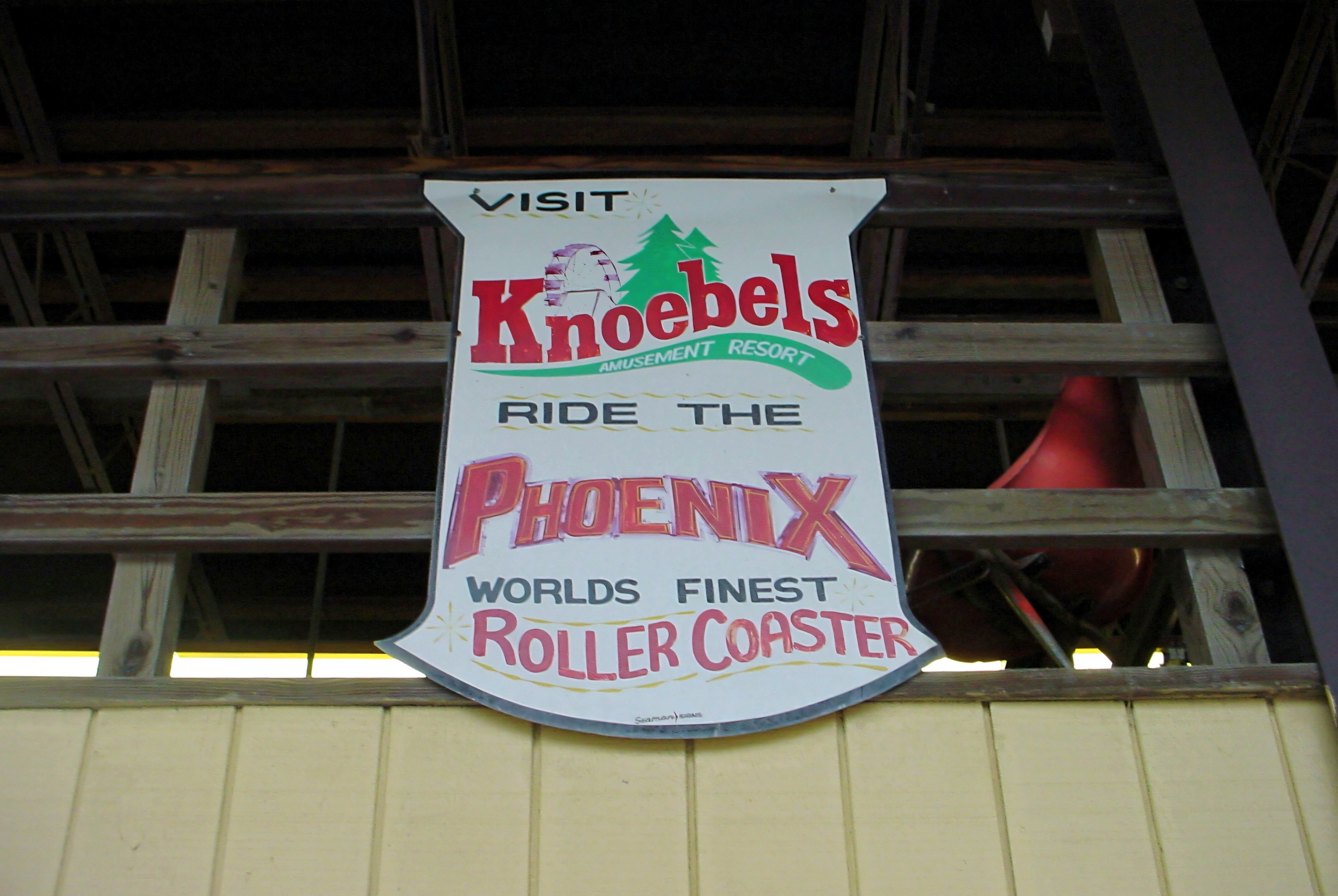
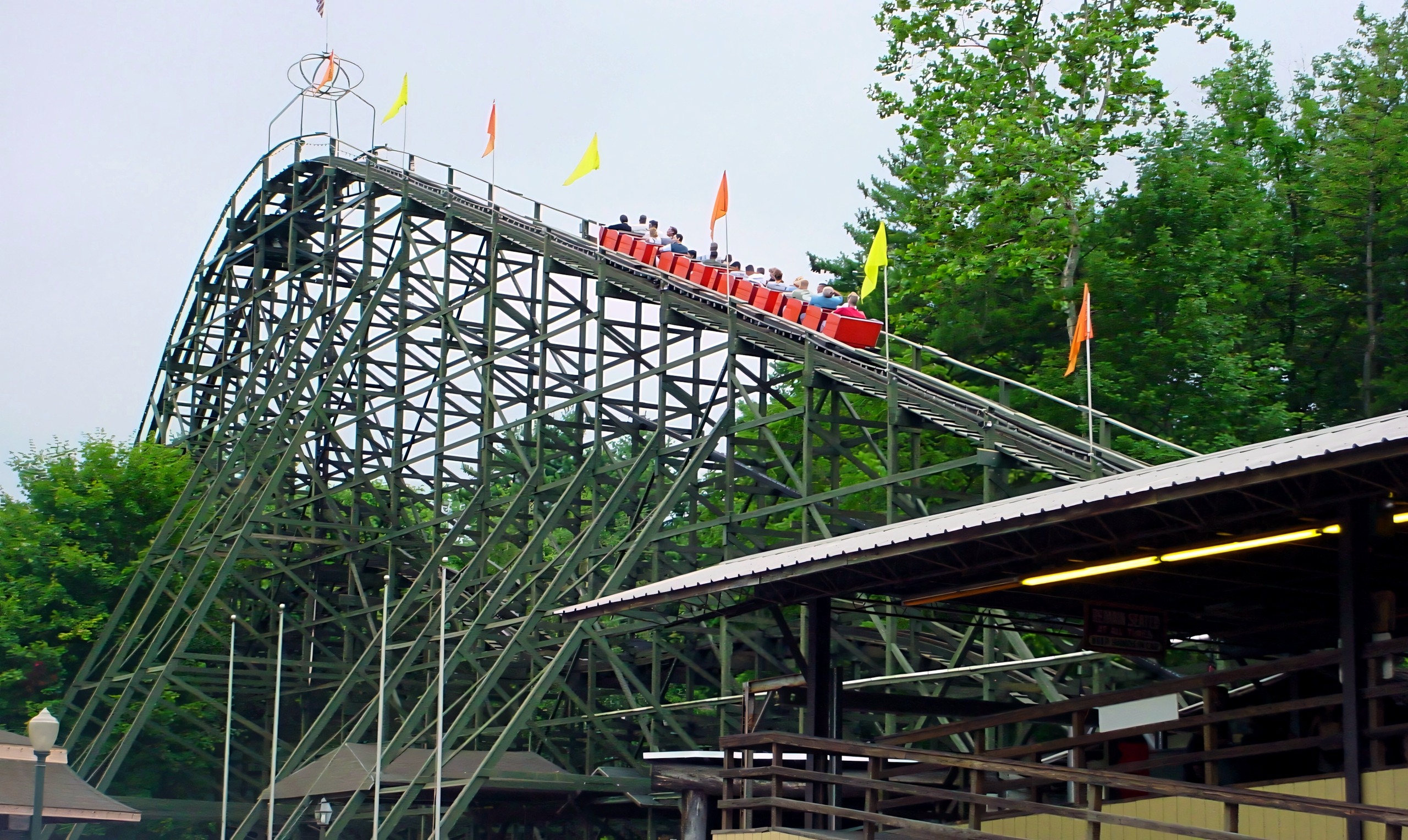
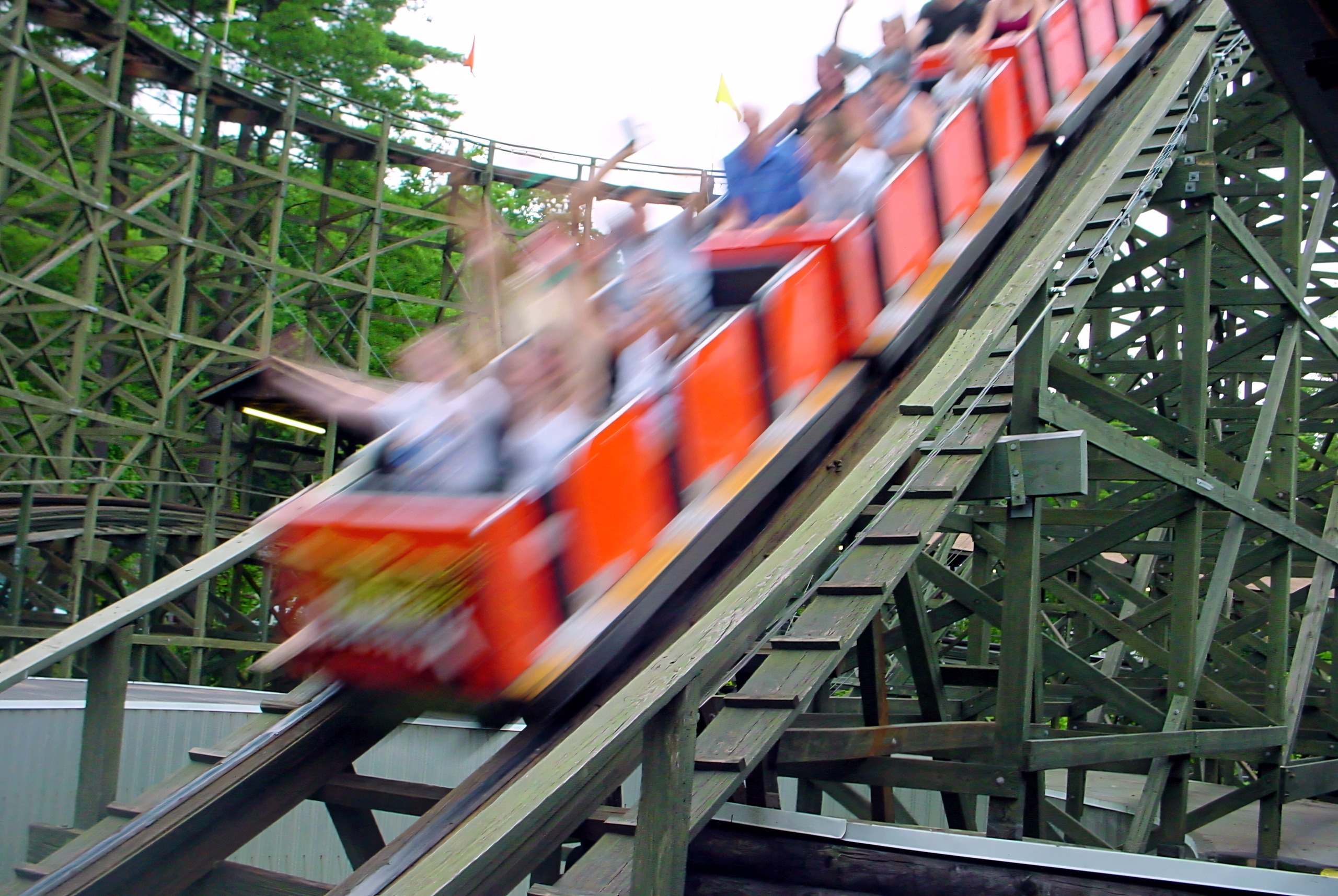
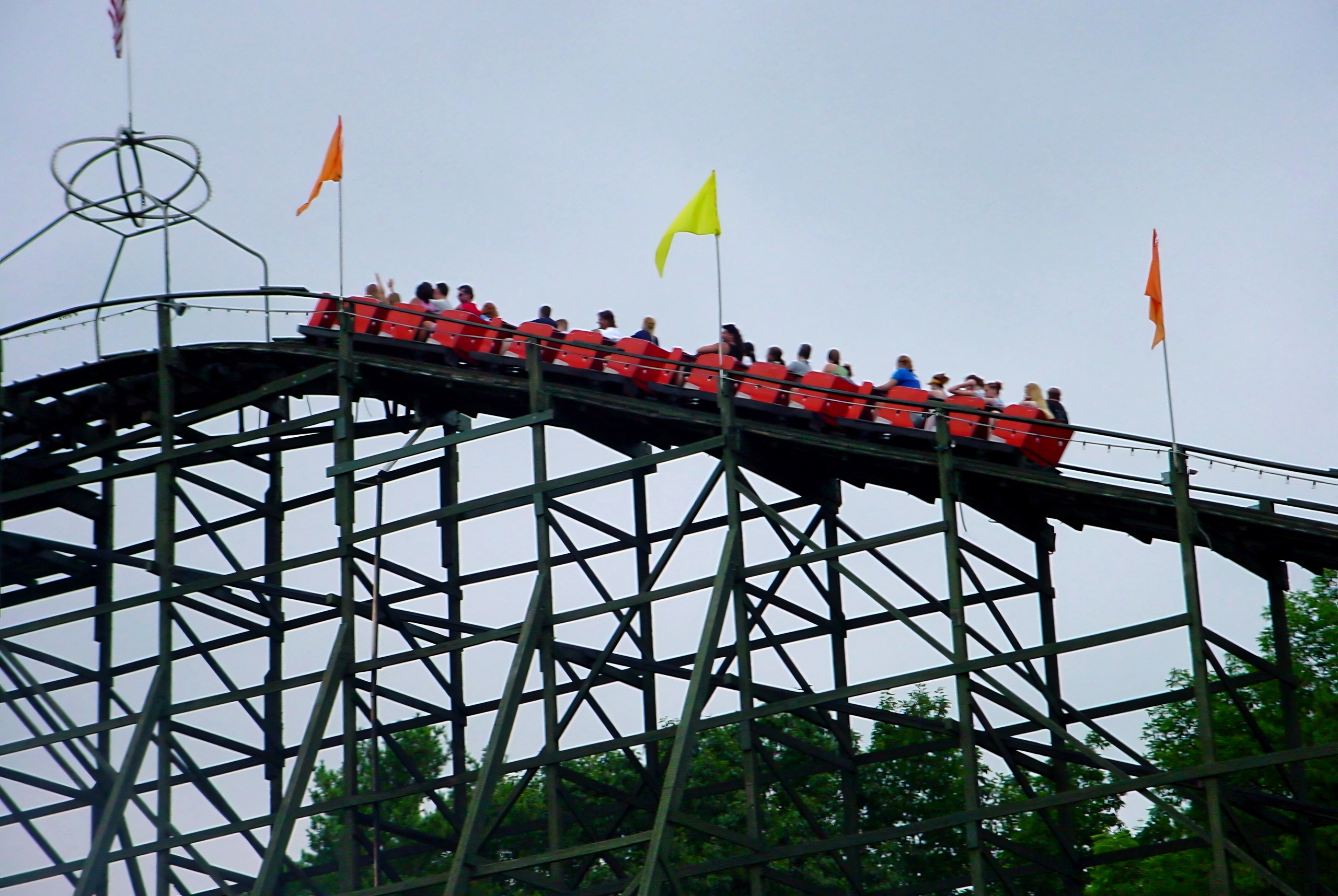
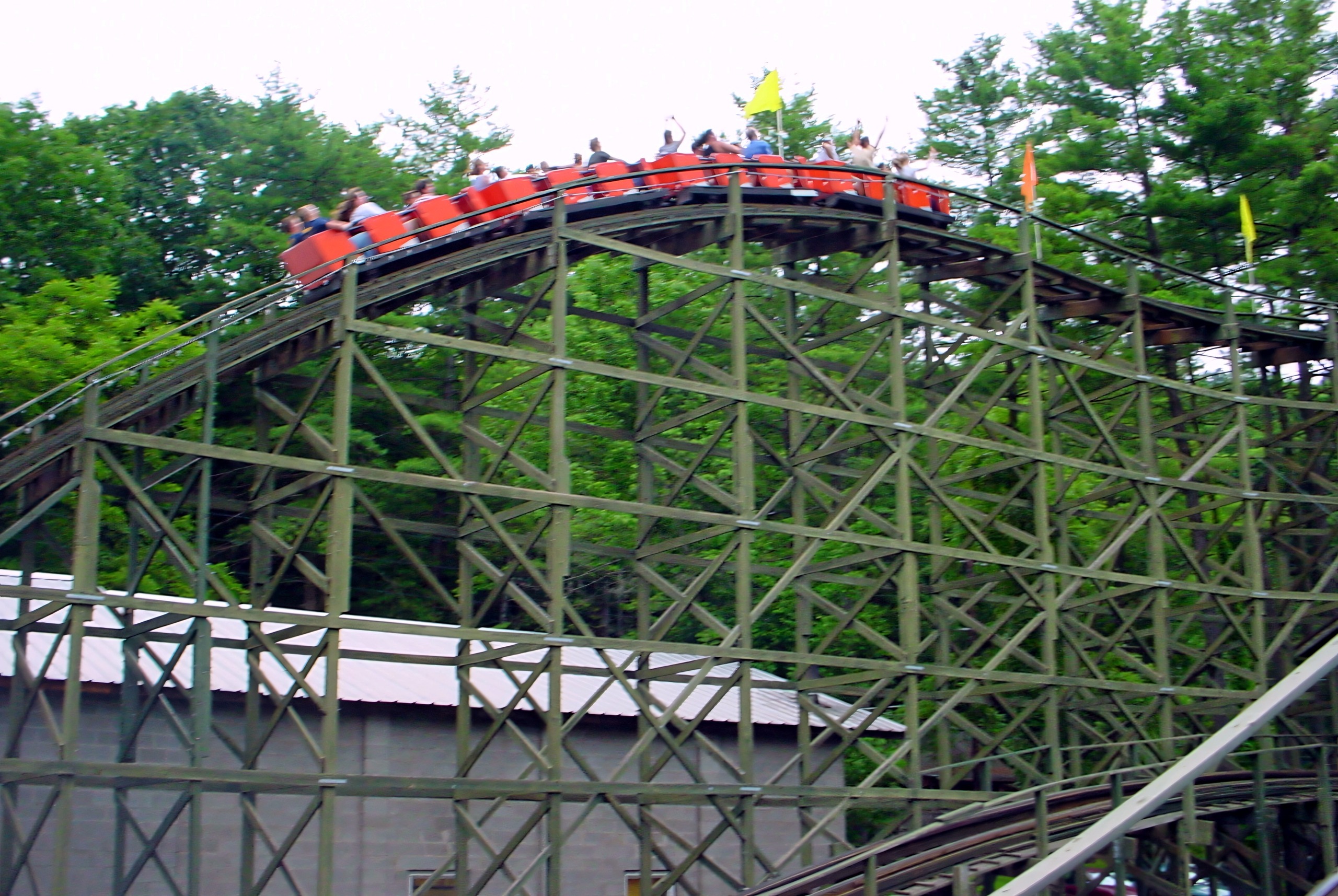
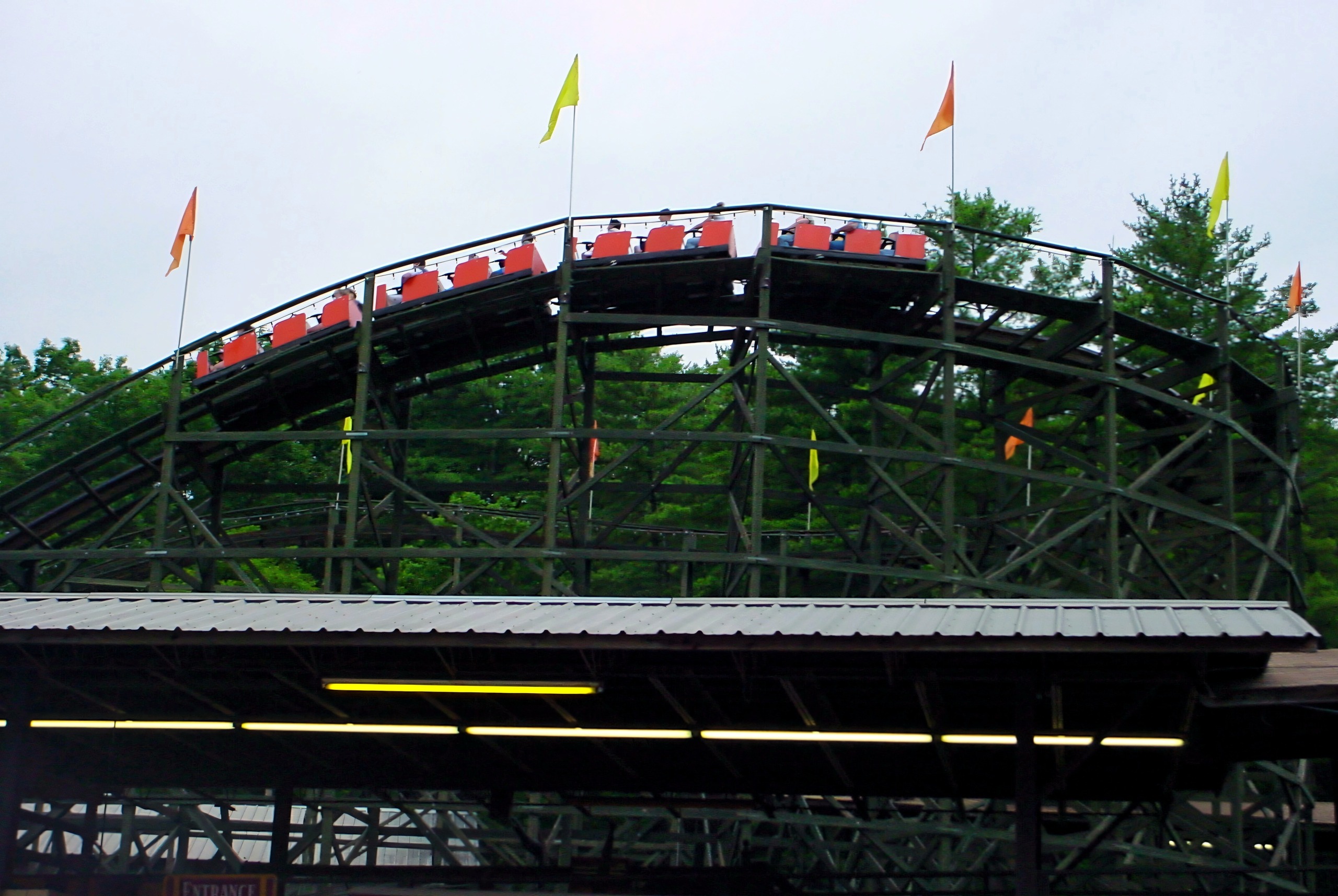
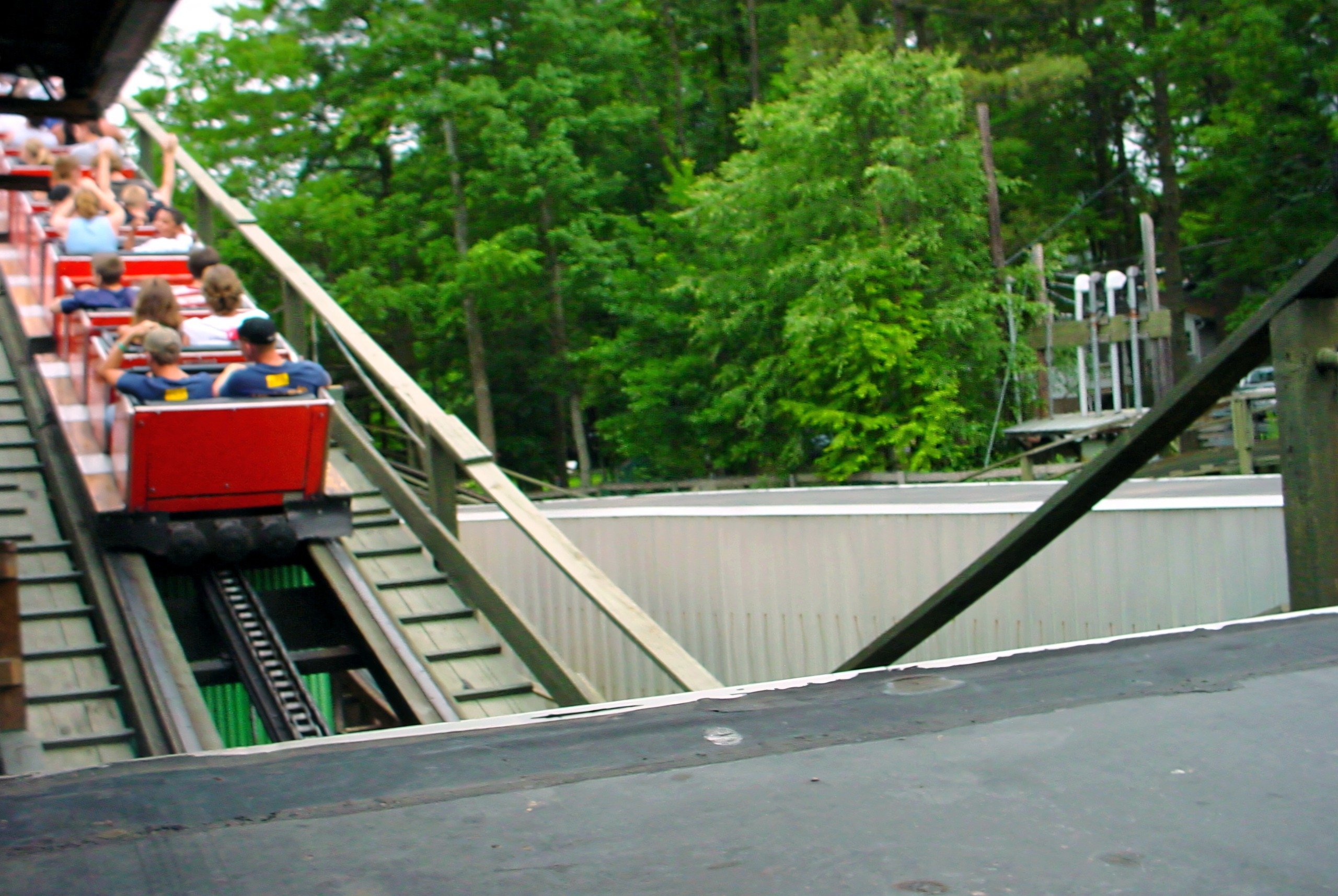
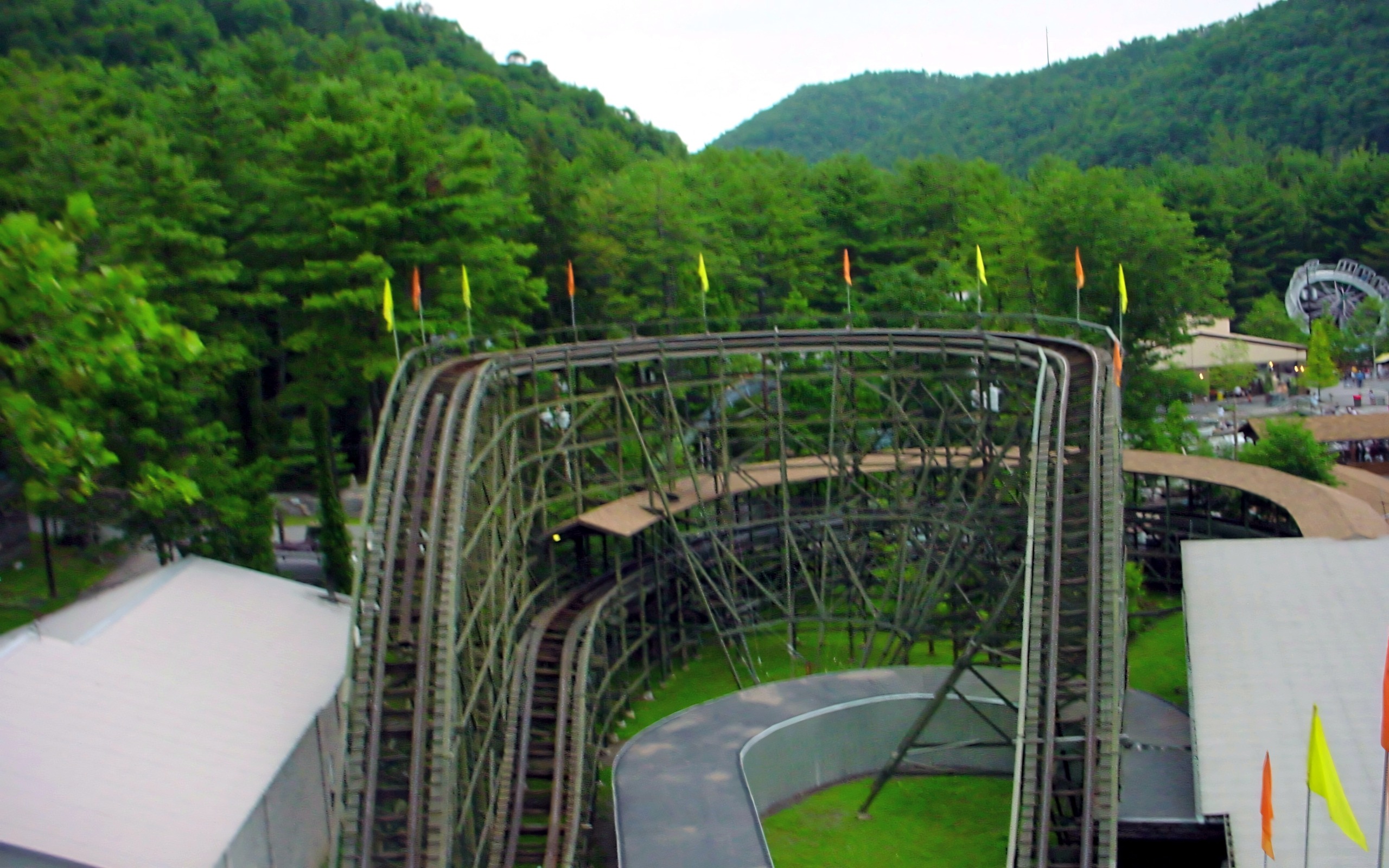
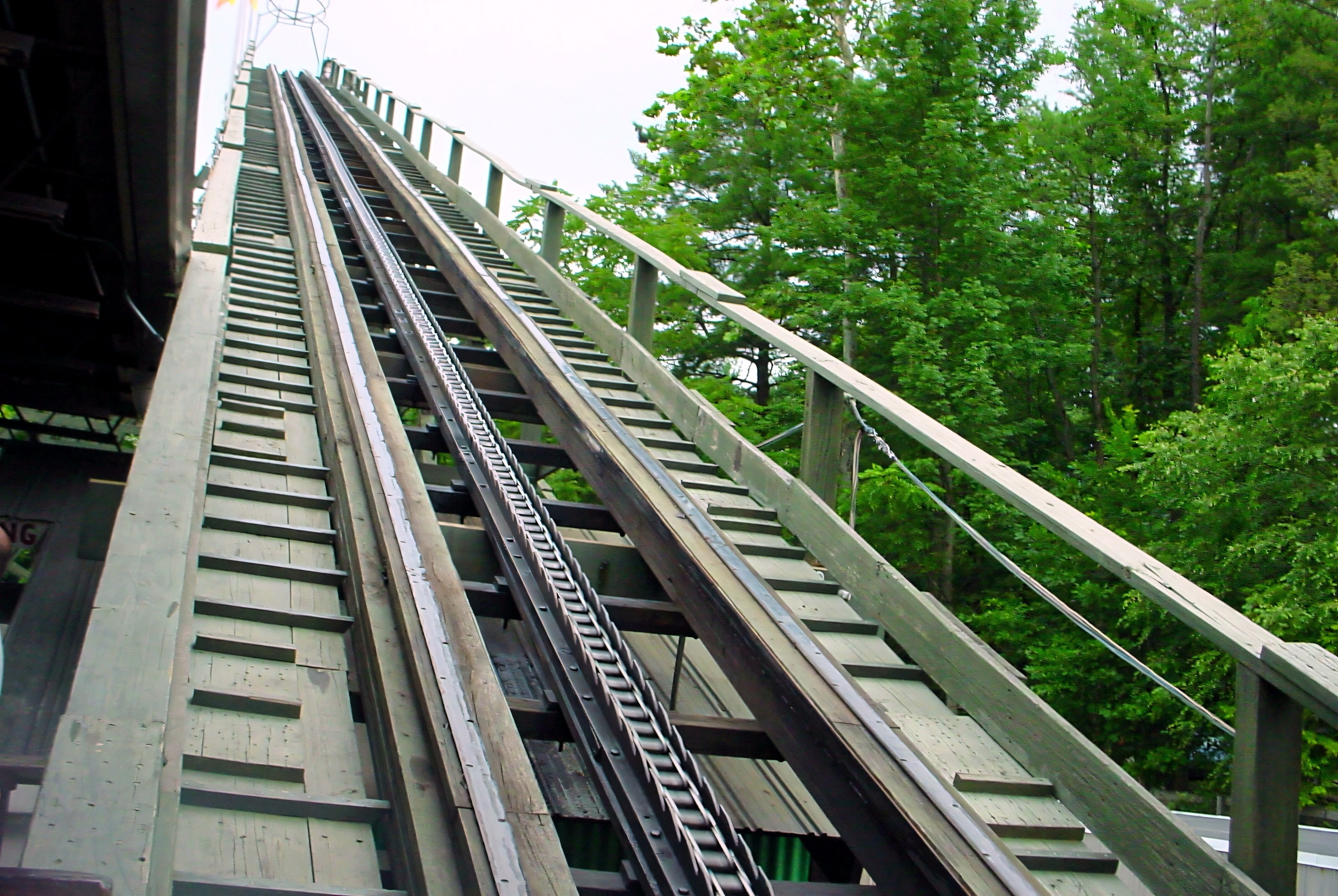
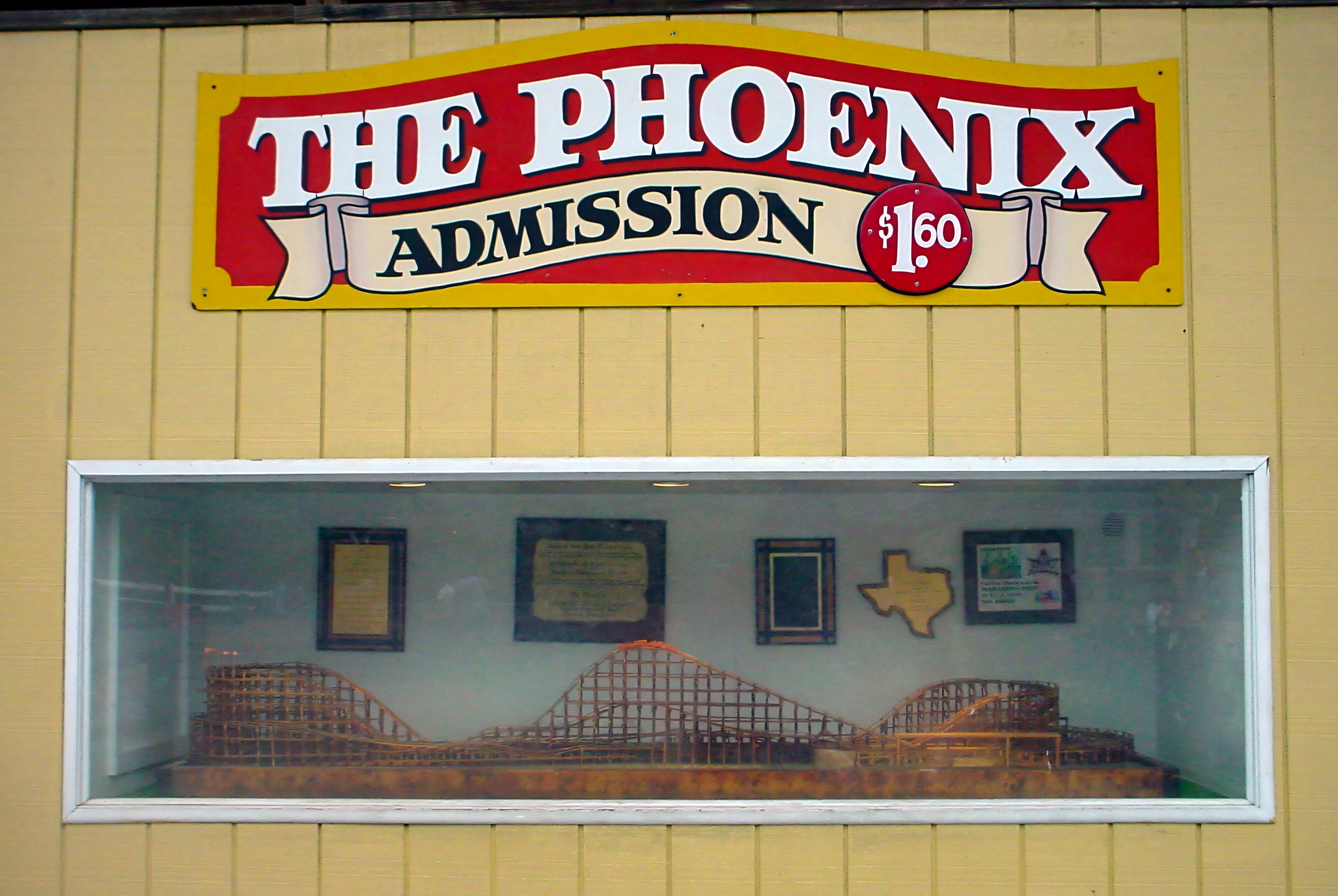
These are original ThrillZing photos of the Phoenix taken at Knoebels on July 31, 2003, restored and upscaled from the original camera files. They show the relocated 1947 wooden coaster’s flag-lined lift hill, its red trains cresting the hills, riders with their hands up, the turnaround from the top of the lift, and the park’s ‘world’s finest roller coaster’ signs. All photos are free to reuse under a CC BY 4.0 license with credit to ThrillZing and a link to this page.
Park apps, mobile ordering and photos kill a battery by 3 p.m. This one snaps on magnetically, so there's no cable to snag on a restraint.
Ride with your glasses on and keep them. Many parks allow glasses on rides if they're strapped, so check the ride rules first.
Small enough to ride with on most coasters, big enough for a phone, card and keys. Two zippers mean nothing falls out upside down.


Phoenix at Knoebels FAQs
How tall do you have to be to ride Phoenix at Knoebels?
Riders must be at least 42 inches (107 cm) tall, checked at the ride entrance. There’s no maximum height, but the buzz-bar restraint has to lock securely over your lap for anyone to ride, regardless of height.
How fast does Phoenix go?
Phoenix reaches a top speed of 45 mph on its 72-foot first drop, right after the lift hill.
How old is the Phoenix roller coaster?
Phoenix was originally built in 1947 as The Rocket at Playland Park in San Antonio, Texas, then relocated and rebuilt board-by-board at Knoebels, reopening under its current name on June 15, 1985.
Can bigger or taller adults ride Phoenix comfortably?
There’s no published weight limit, but Phoenix’s single-position buzz bar has less give than a modern ratcheting restraint, so fit is the real test — if the bar locks down securely at the ride, you ride; if it doesn’t, you don’t.
Is Phoenix more intense than it looks?
Yes — its 45 mph top speed undersells the ride. Because the buzz bar holds only at the hips, riders get sustained ejector airtime on nearly every hill, which most enthusiasts rate as more forceful than many faster modern steel coasters.
Is Phoenix or Twister the better wooden coaster at Knoebels?
Twister is taller and faster on paper, but Phoenix is the one that won Best Wooden Coaster in the world at the Golden Ticket Awards every year from 2018 through 2025, prized for its airtime-focused 1947 layout.
What’s the best time to ride Phoenix with a short wait?
Weekday mornings and early evenings after the afternoon crowd thins out are typically the lightest; the single busiest weekend is Knoebels’ October Phoenix Phall Phun Phest.
Get More from Phoenix at Knoebels
Log the coasters, stadiums, and venues you’ve experienced, rate Phoenix at Knoebels, and see what your friends thought. Get the ThrillZing app.
Want the day’s theme park news in your inbox? Subscribe to ThrillZing Daily — free.