
Manta at SeaWorld Orlando is the ride that makes you forget you’re on a roller coaster at all. Instead of sitting, you’re flipped forward into a face-down, arms-out flying position before the train dives 113 feet, threads four inversions, and skims low over a lagoon that splashes the crowd watching from the bridge above.
Since opening in May 2009, Manta has stayed one of SeaWorld Orlando’s defining attractions — not the tallest or fastest ride in the park anymore, but still the one most people remember first. This guide covers every practical question worth knowing before you ride: exact stats, how scary it really is, which seat to pick, how the line and Quick Queue work, what you can and can’t bring on board, and how this version stacks up against the very different Manta at SeaWorld San Diego.
Quick Answer
Manta is a Bolliger & Mabillard flying coaster at SeaWorld Orlando that stands 140 feet tall, drops 113 feet, and reaches 56 mph across 3,359 feet of track. It has four inversions, runs about two and a half minutes, and requires riders to be at least 54 inches tall. The intensity comes from the face-down flying position and inversions rather than raw speed — it’s thrilling but more manageable than the park’s biggest hypercoaster, Mako.
How Tall Is Manta? Height, Drop & Layout
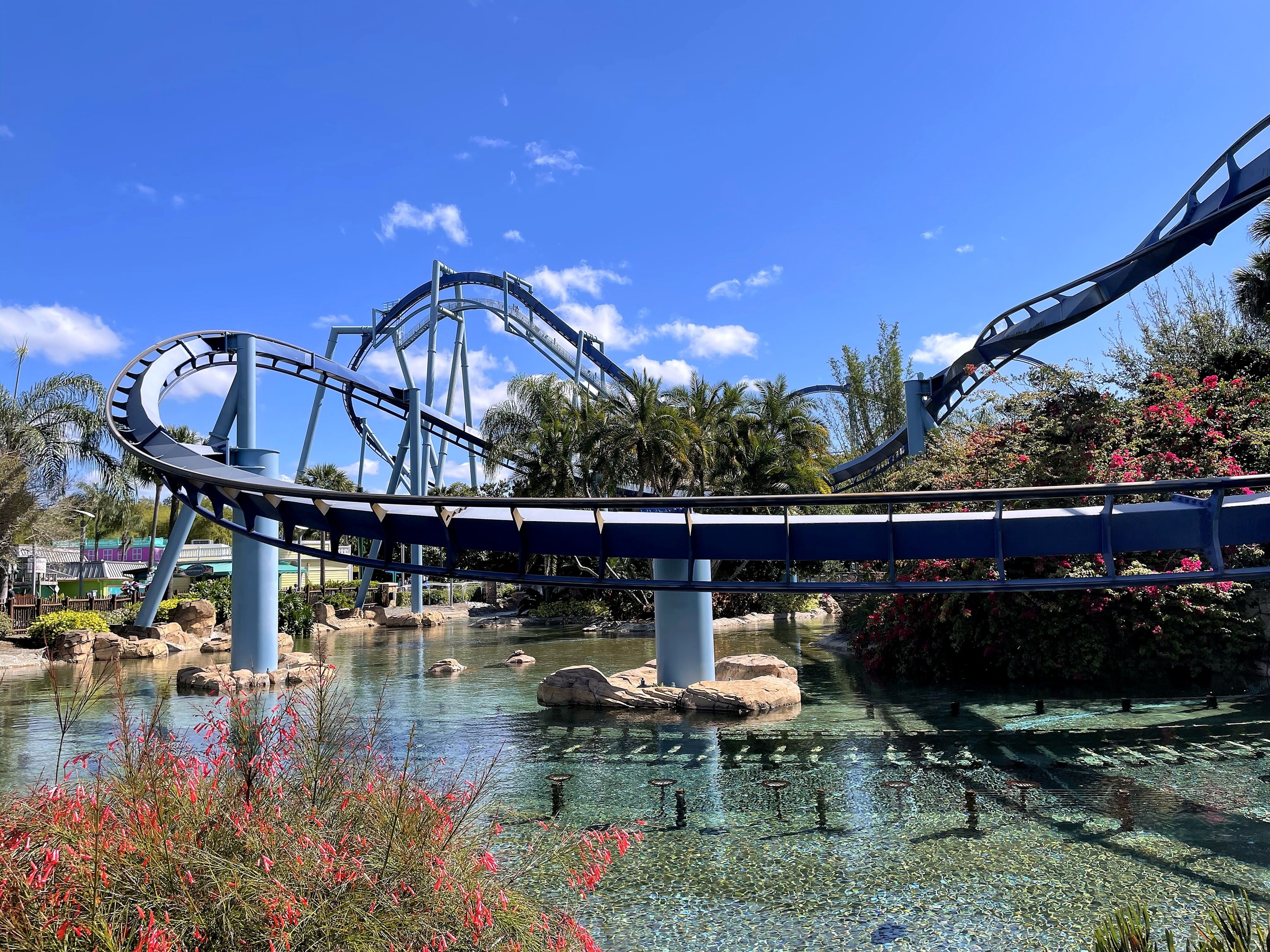
Manta’s lift hill climbs to 140 feet before the flying train rolls over the top and tips riders face-down into the ride’s signature 113-foot drop. From there the layout keeps unfolding: banked turns low over SeaWorld’s ray and aquarium habitat, a sweeping pass over a lagoon that sprays onlookers on the bridge, and a final run through all four inversions before the brake run. The full circuit covers 3,359 feet of steel track, making Manta one of the longer flying coasters anywhere in the world.
Bolliger & Mabillard built Manta at a reported cost of around $50 million. It was SeaWorld Orlando’s tallest and fastest coaster when it opened in 2009, but it lost both titles in 2016 to Mako, a B&M hypercoaster that stands 200 feet tall and hits 73 mph.
How Long Is the Manta Ride?
From launch to final brake run, Manta’s ride time runs about two minutes and 36 seconds — long for a roller coaster, thanks to the extended layout, four inversions, and the slow, dramatic low pass over the lagoon near the end.
That runtime doesn’t include the queue, which winds through a real aquarium habitat stocked with rays and other sea life, with a Plexiglas viewing window into the exhibit partway through. It’s worth lingering over even if you’re only there for the coaster, especially since the standby line can run long on busy afternoons.
Does Manta Go Upside Down? Inversions Explained
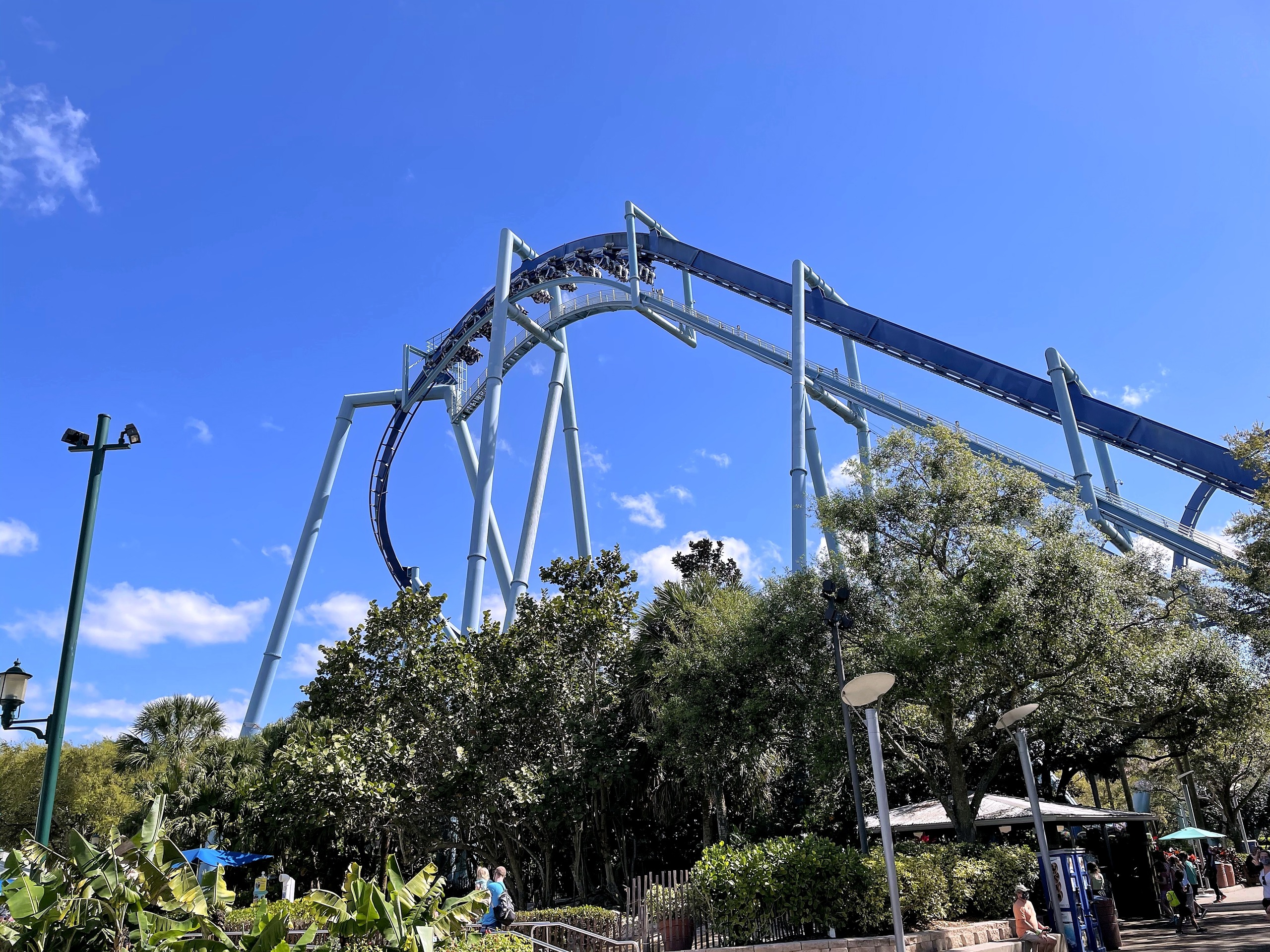
Yes — Manta has four inversions: a pretzel loop, two inline twists, and a corkscrew, all experienced while riders are locked face-down in the flying position rather than seated. The pretzel loop comes first and is the ride’s signature moment, a massive sustained inversion that presses riders into the restraints while the ground rushes past inches from their face.
The two inline twists follow in quick succession, and the corkscrew closes out the inversions before the train banks into its final turns. Because they happen in the prone position, these elements feel noticeably more intense than the same moves would on a seated coaster — there’s no seat beneath you and no floor in front of you, just the harness and open air.
Manta’s Top Speed
Manta reaches a top speed of 56 mph, hit during the descent from the 113-foot drop and carried through the pretzel loop. That’s noticeably slower than Mako’s 73 mph, but Manta doesn’t rely on raw speed for its intensity — the prone flying position, four inversions, and low-to-the-ground turns over water make it feel faster than the number on paper suggests.
Manta Height Requirement
Riders must be at least 54 inches (4 feet 6 inches) tall to ride Manta, with no maximum height limit. The requirement is enforced at the boarding gate, not just at the queue entrance, because the flying restraint system needs enough clearance to lock riders securely in the face-down position.
Guests using wheelchairs can enter through the main ride entrance rather than a separate accessible queue, and team members at the loading platform can answer specific questions about restraint fit before you commit to the wait.
Is Manta Scary? Fear Factor & Intensity
Manta feels more intense than its stats suggest, mainly because of the flying position — you’re locked belly-down with nothing visibly beneath you, which amplifies the sense of height and speed well beyond what 140 feet and 56 mph imply on paper. First-timers often describe the initial drop and pretzel loop as the most disorienting moment, since there’s no floor or seat back to anchor against.
That said, most Orlando ride guides rank Manta as more moderate than SeaWorld Orlando’s most extreme thrill rides — it doesn’t have Mako’s raw speed or the ejector-air moments of some launch coasters. If you’ve ridden a seated inverted or looping coaster comfortably, Manta’s main adjustment is the face-down position itself rather than the drop or inversions being unusually forceful. Riders prone to motion sensitivity may want to watch a cycle from the queue before boarding.
Best Seat on Manta: Front Row vs. Back Row
Because every rider is locked into the flying position with arms and legs extended, no row on Manta has the obstructed sightlines a seated coaster’s middle rows might. The front row gives the clearest, most unobstructed view through the drop, the lagoon swoop, and the inversions, which makes it the most requested row for first-timers who want the full visual experience.
The back row whips through the same turns with a slightly sharper sense of speed and more pronounced whip on the inline twists, since it trails the rest of the train through each element. Middle rows split the difference — a bit less visual drama than the front, a bit less snap than the back. Either end of the train is worth the short extra wait if the standby line lets you choose.
Single Rider Line & Quick Queue
Manta doesn’t have a dedicated single-rider line, so solo riders go through the same standby queue as everyone else (team members may occasionally pull single riders to fill a row, but it isn’t a guaranteed option the way it is at some other parks). For a guaranteed shortcut, Manta is included in SeaWorld Orlando’s paid Quick Queue program, which lets you bypass most of the standby wait on participating rides park-wide.
Standby waits are typically shortest right at park open or in the last hour or two before close, and longest in the early-to-mid afternoon when the queue’s aquarium habitat views become more of a wait than a bonus.
Lockers & Loose Articles: What You Can Bring
Like most SeaWorld Orlando coasters, Manta requires loose articles — bags, hats, phones, sunglasses, loose jewelry — to be secured before boarding. You can hand items to a non-rider, tuck small items in a zipped pocket, or use the lockers and open-basket cubbies near the ride entrance. Lockers are the safer bet for anything you don’t want to risk; the open baskets work but aren’t secured against anyone else touching them.
Glasses with a strap are generally fine to keep on; loose sunglasses, GoPros, and phones held in hand are not permitted once the restraint locks.
Manta Orlando vs. Manta San Diego: What’s the Difference?
Despite sharing a name and ray theme, the two Mantas are almost entirely different rides. SeaWorld Orlando’s Manta is a Bolliger & Mabillard flying coaster: 140 feet tall, 113-foot drop, 56 mph, four inversions, and a face-down riding position across 3,359 feet of track.
SeaWorld San Diego’s Manta, which opened in 2012, is a Mack Rides launched coaster with riders seated normally — no flying restraint and no inversions. It tops out at 43 mph with a 54-foot drop, has a 48-inch height requirement, and launches riders twice through a tunnel lined with projected ray imagery. It’s built as a family-friendly thrill ride rather than a high-intensity coaster, so if you’ve ridden San Diego’s version, expect Orlando’s Manta to feel like a completely different, considerably more intense ride.
Planning Your Visit
Manta is included with standard SeaWorld Orlando admission — no separate ticket is needed, though Quick Queue access to skip most of the standby line is sold as an add-on. Park hours shift seasonally and by date, typically opening around 9–10 a.m. with closing times that vary throughout the year, so it’s worth checking the day you plan to visit rather than assuming a fixed schedule.
For current hours, ticket pricing, and parking information, the official SeaWorld Orlando site is the most reliable source, since promotions and seasonal calendars change often.
Manta Photo Archive: March 2021
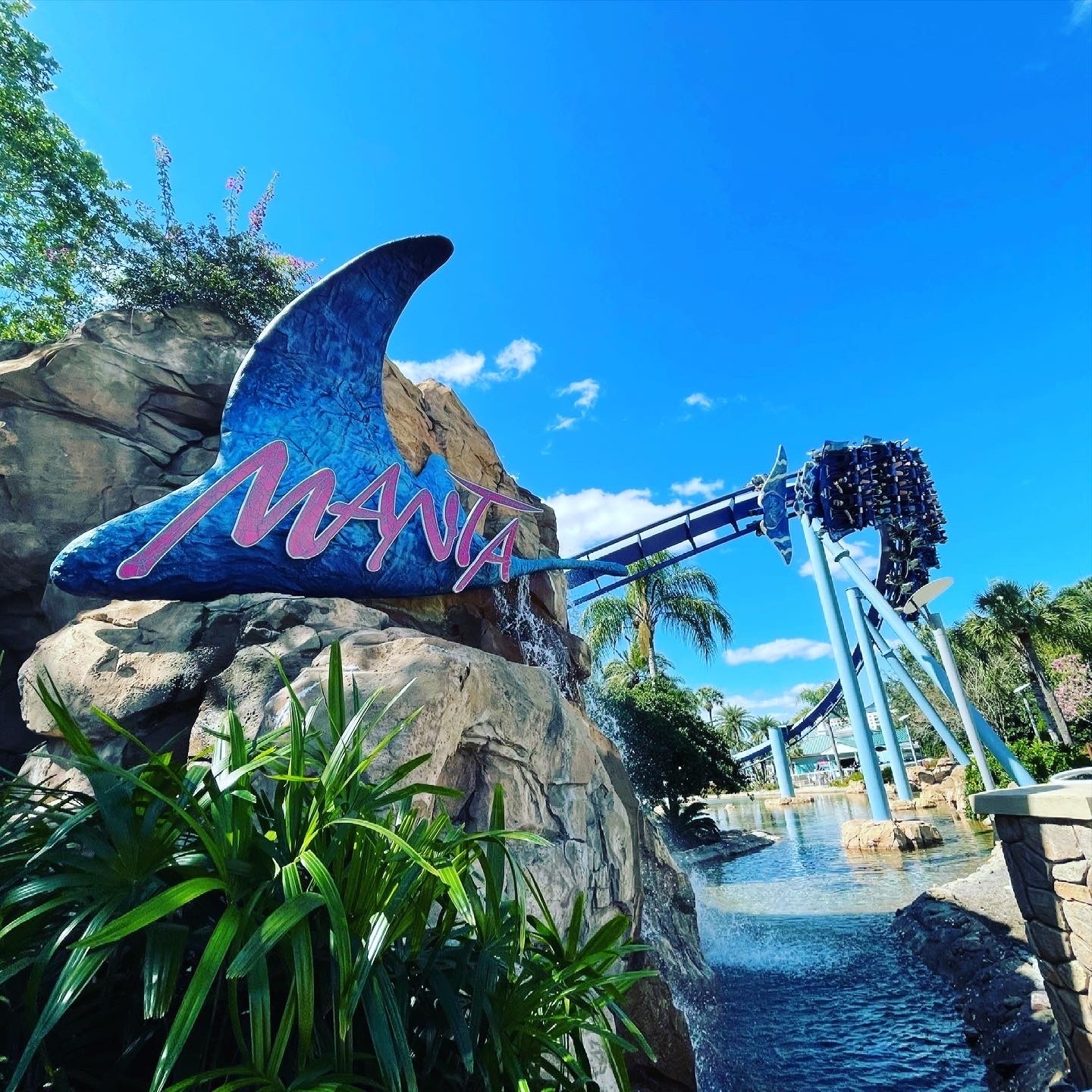
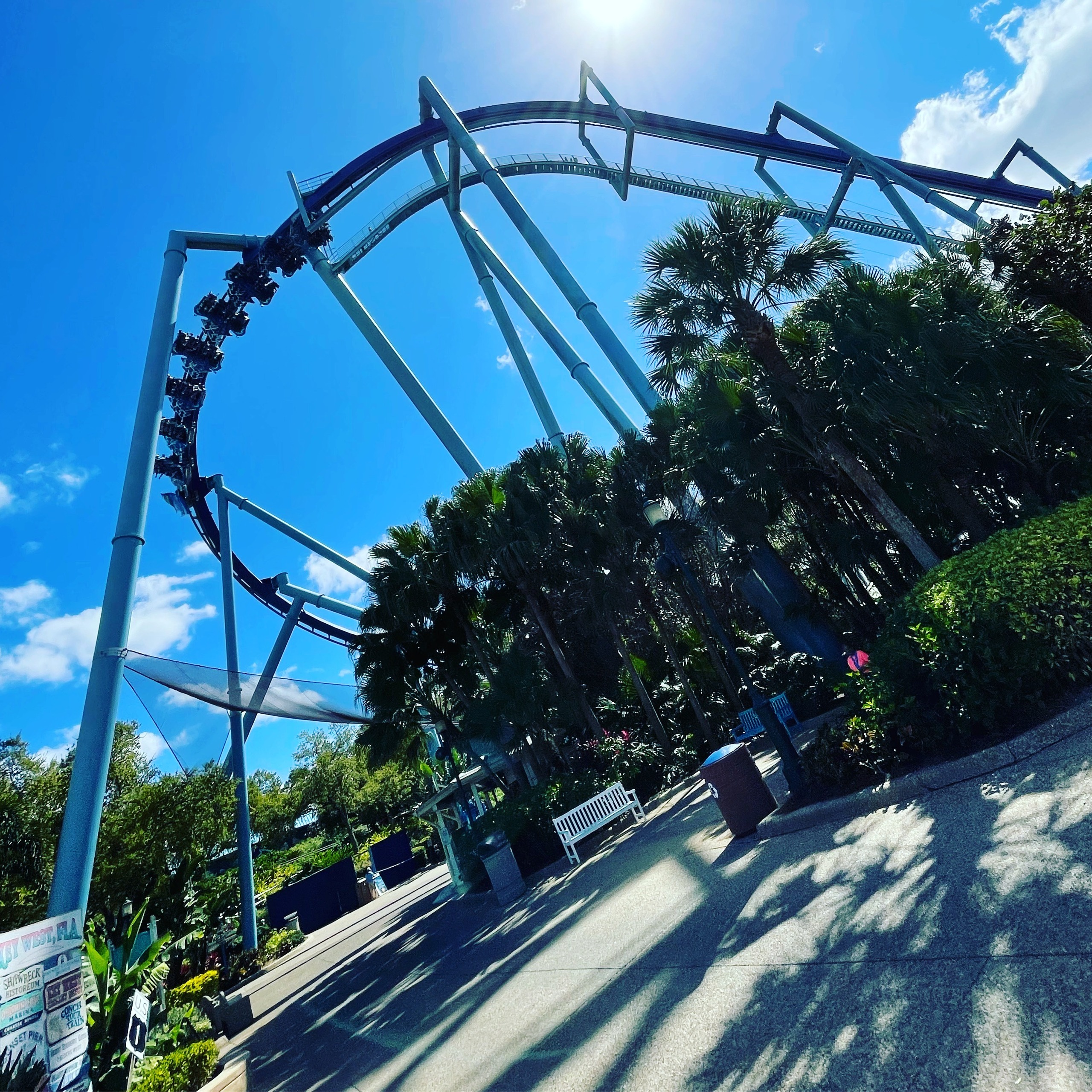
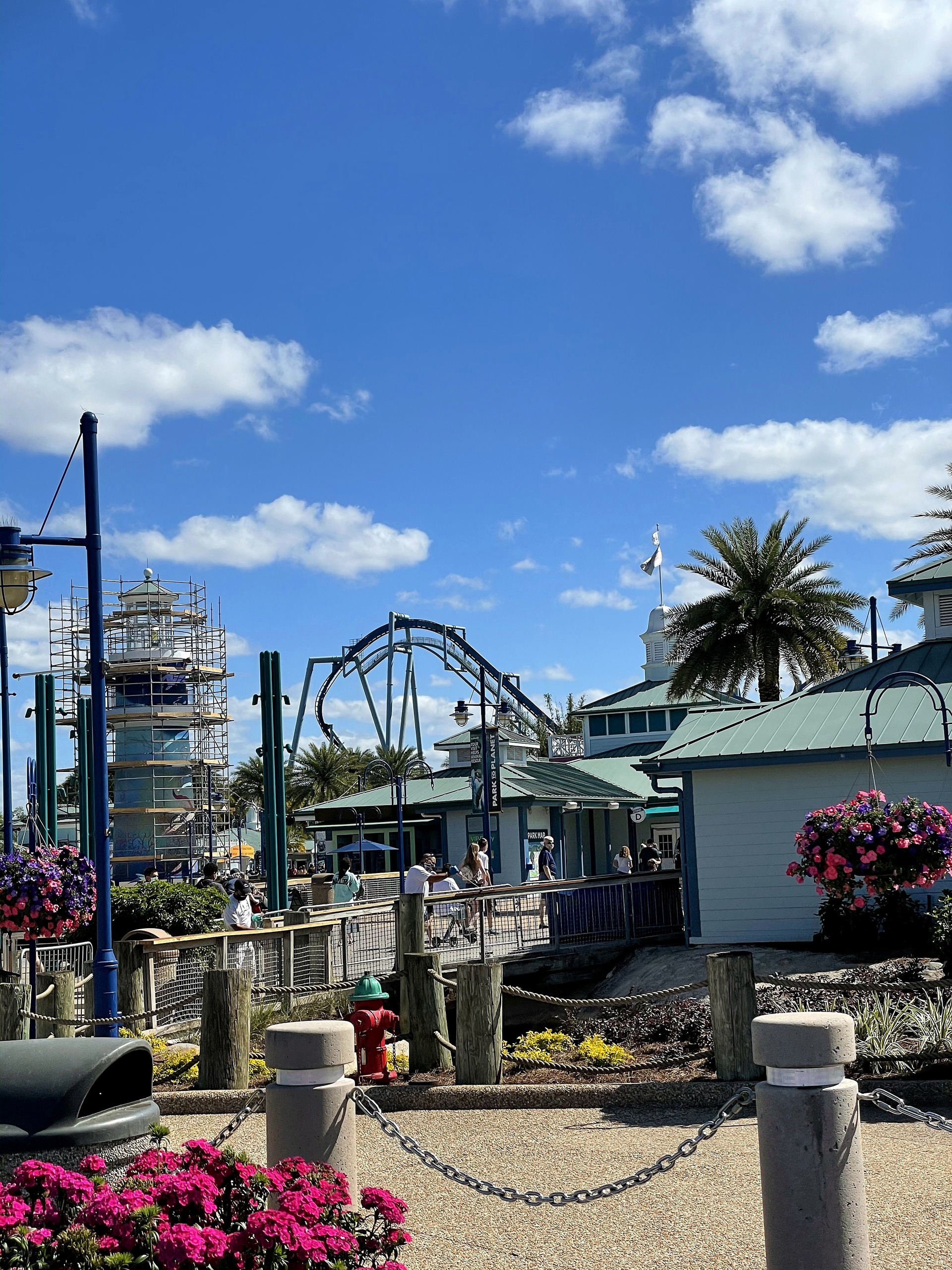
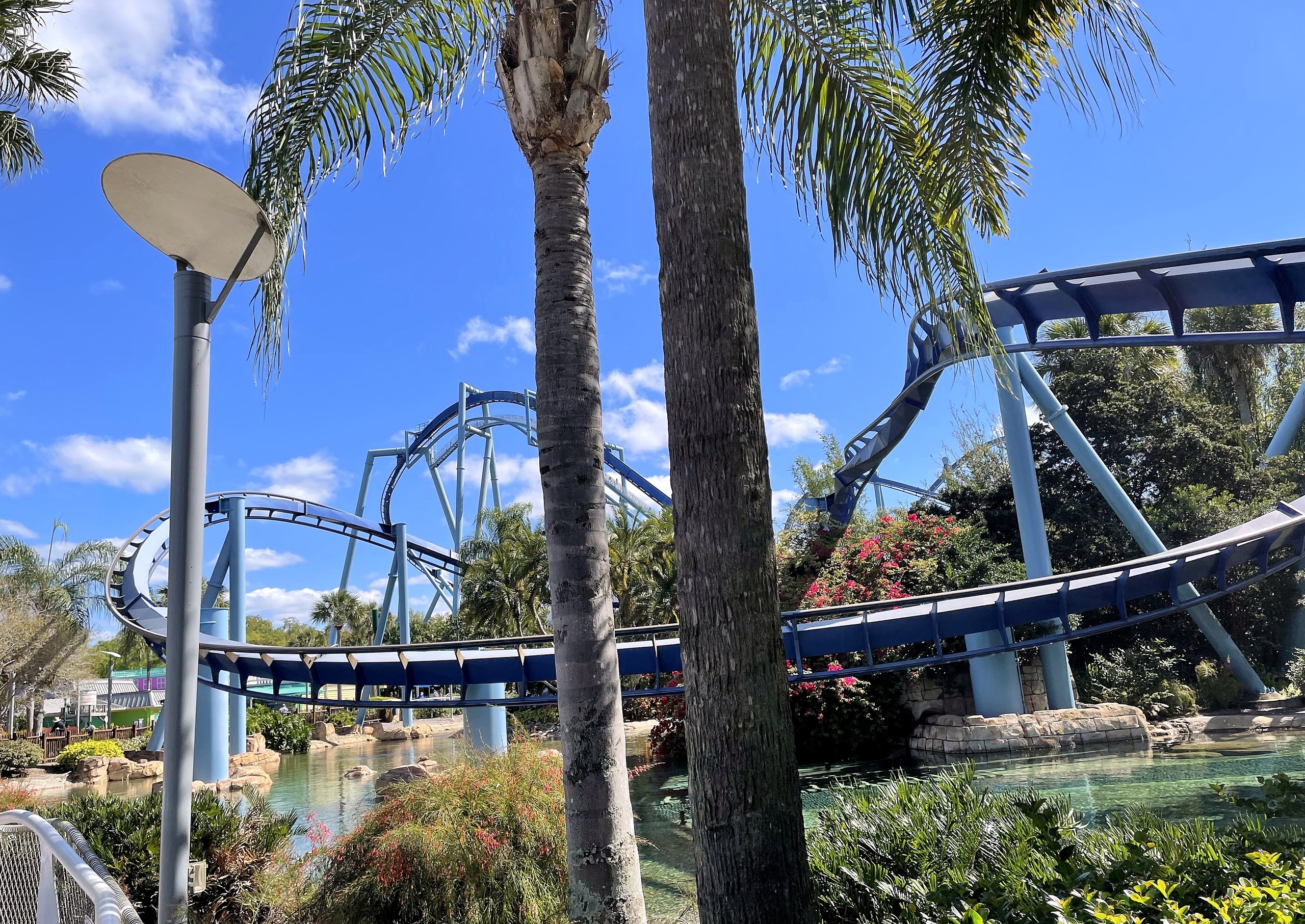
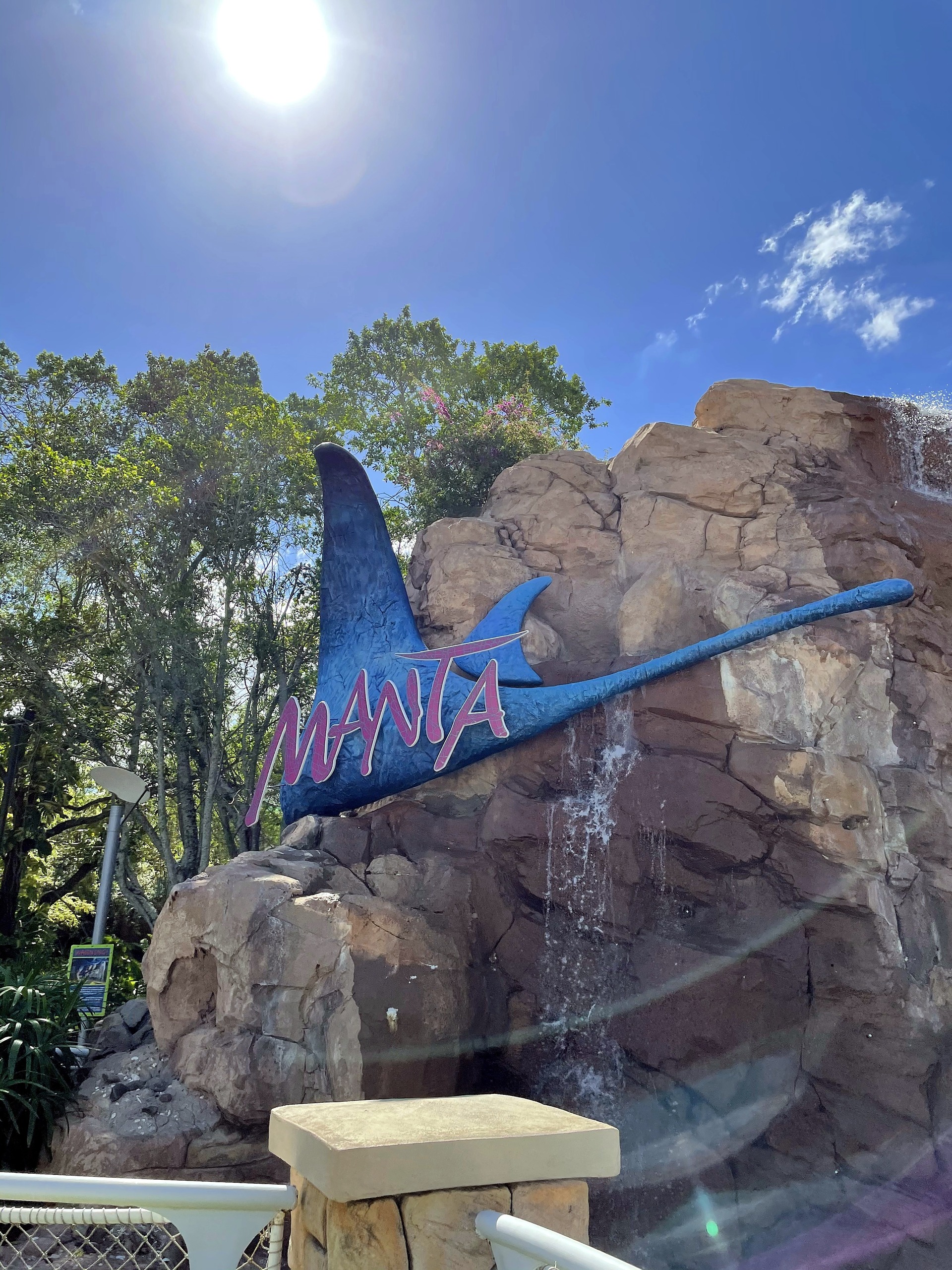
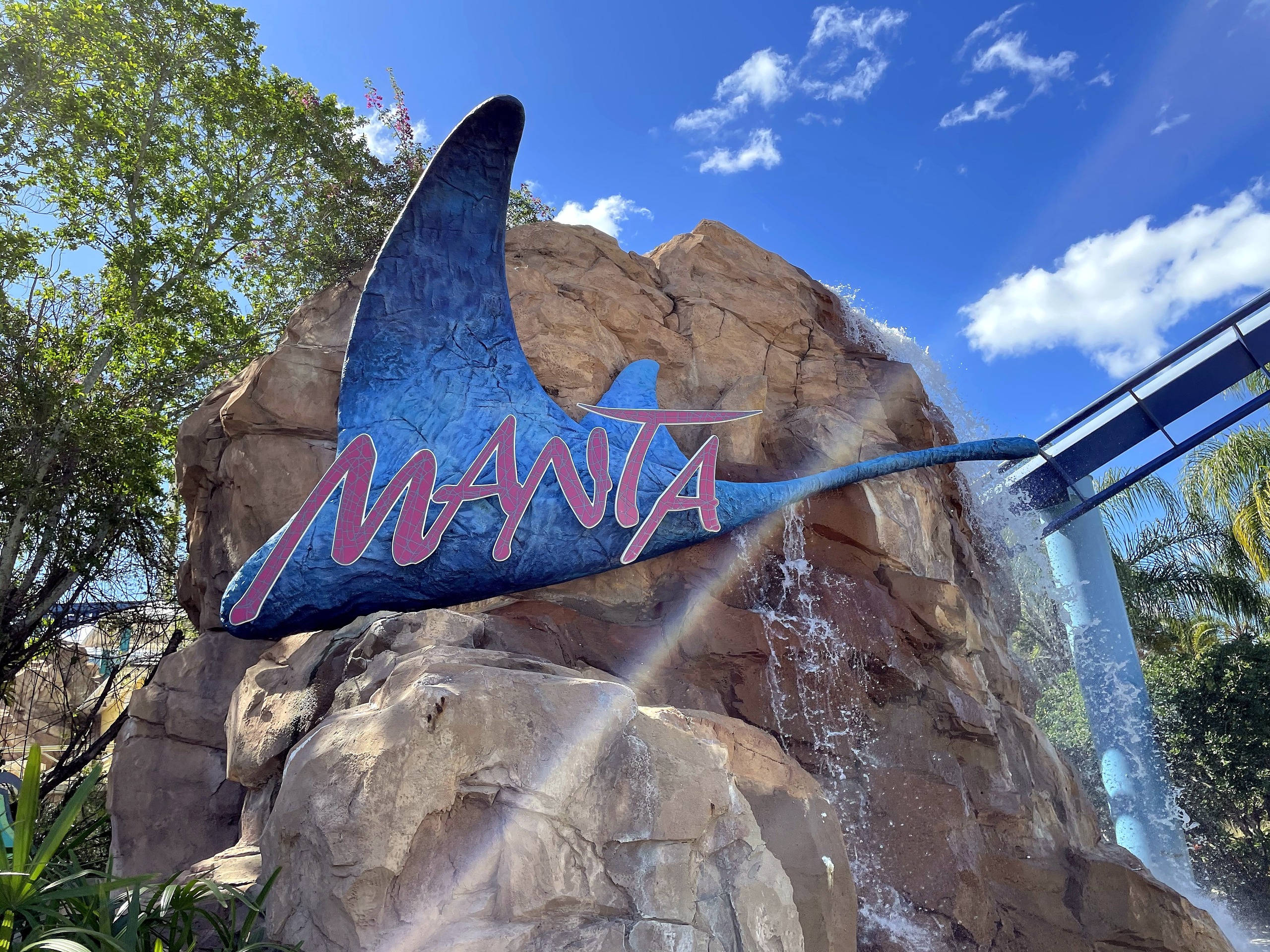
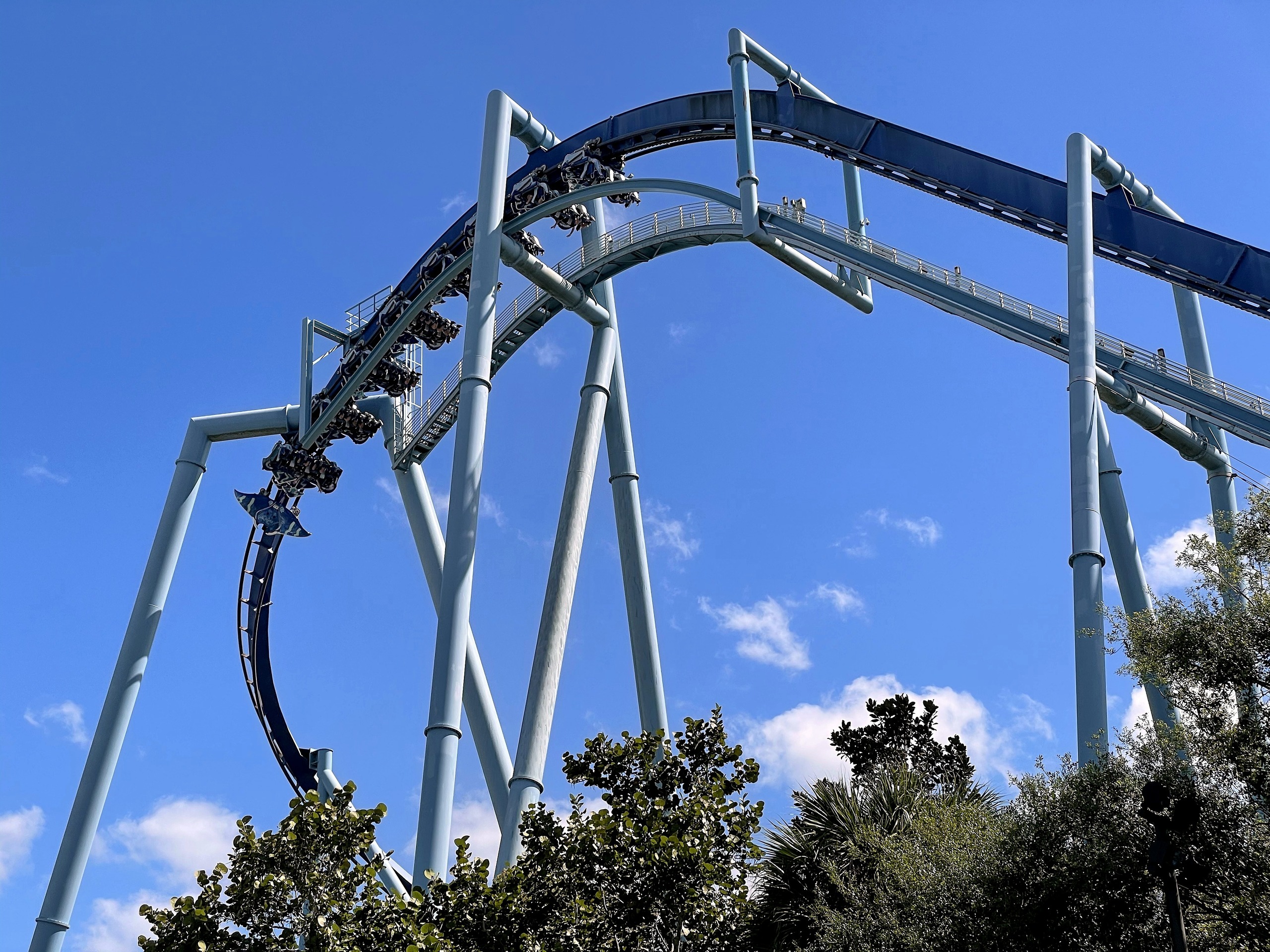
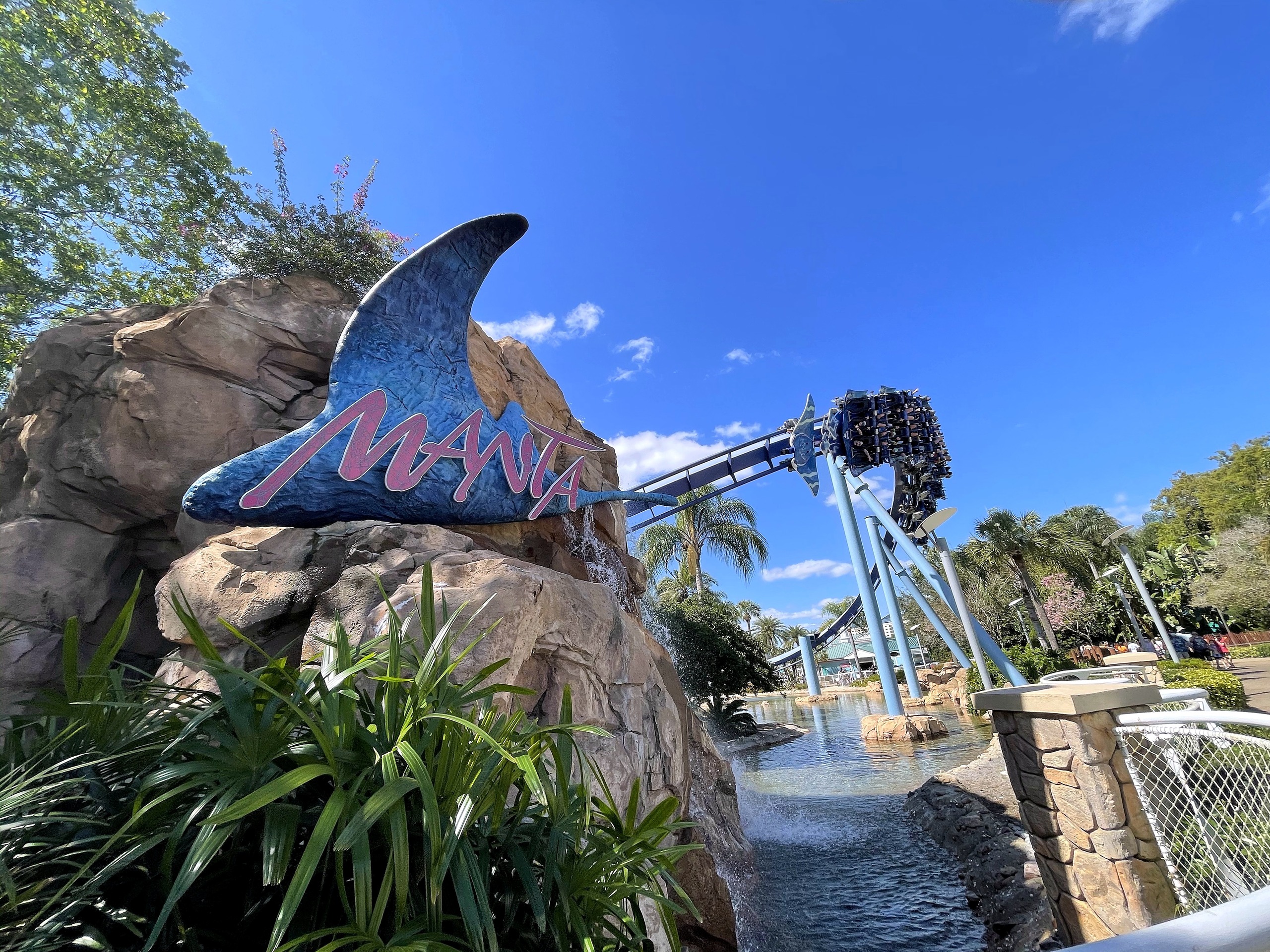
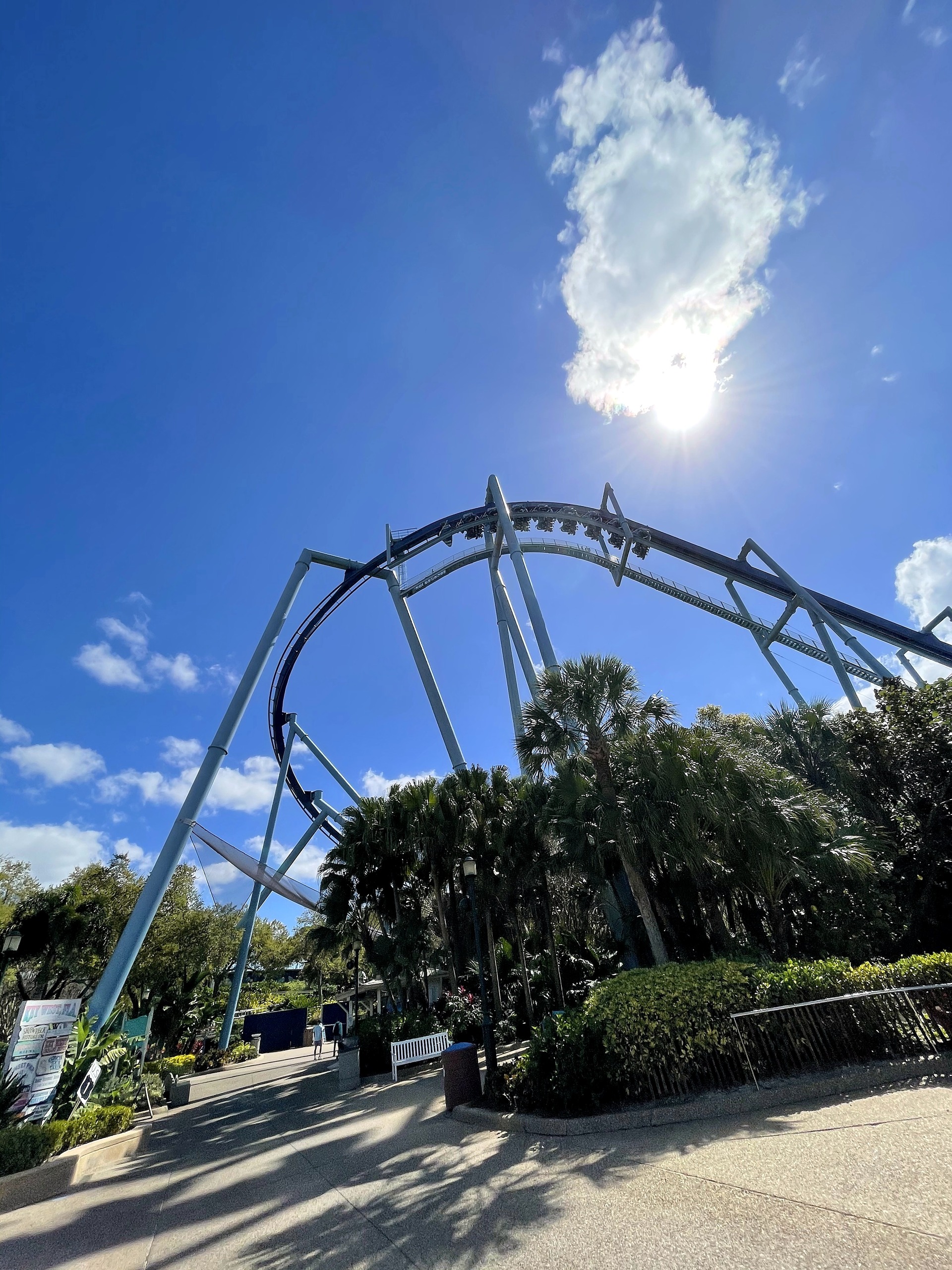
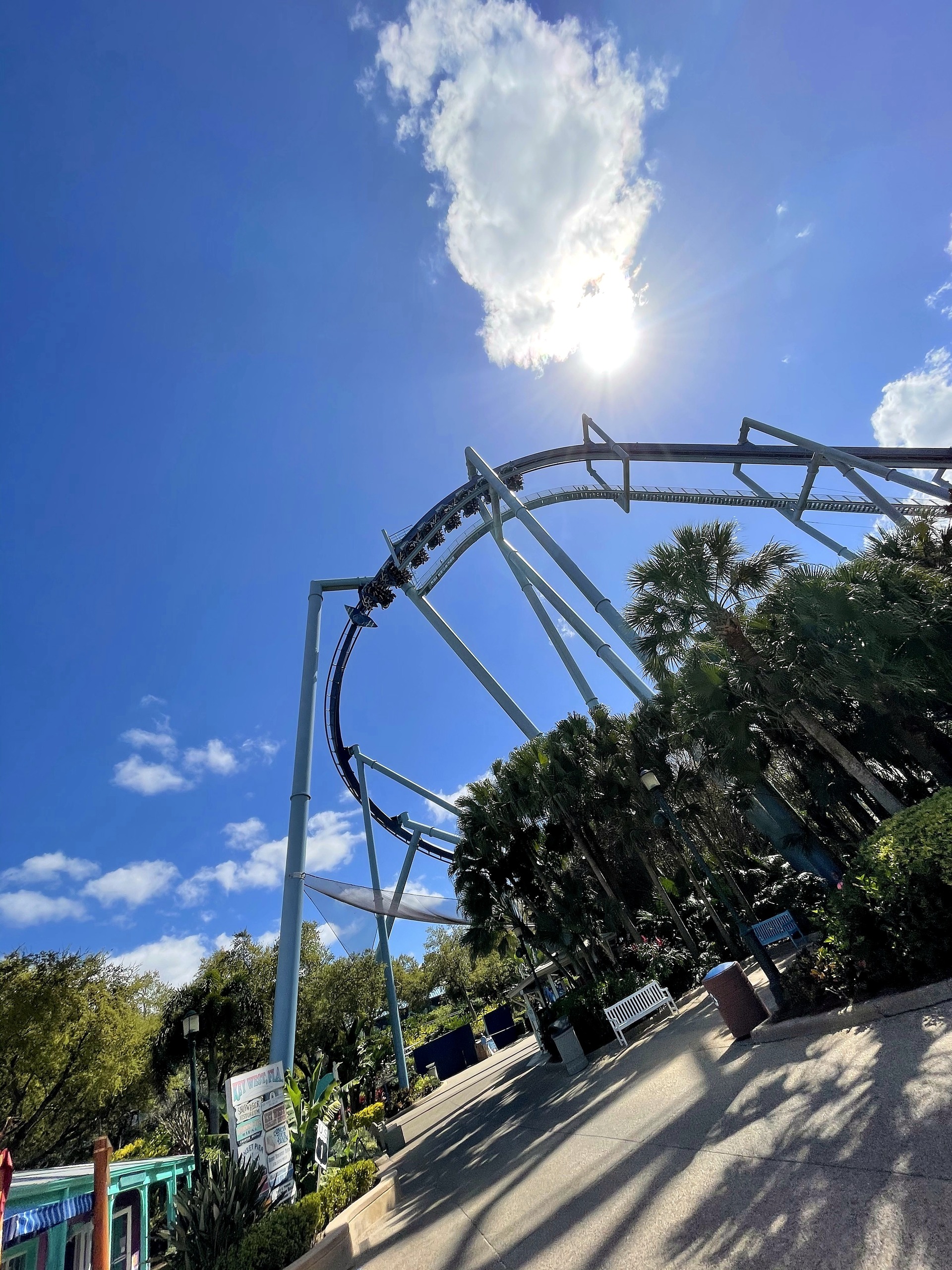
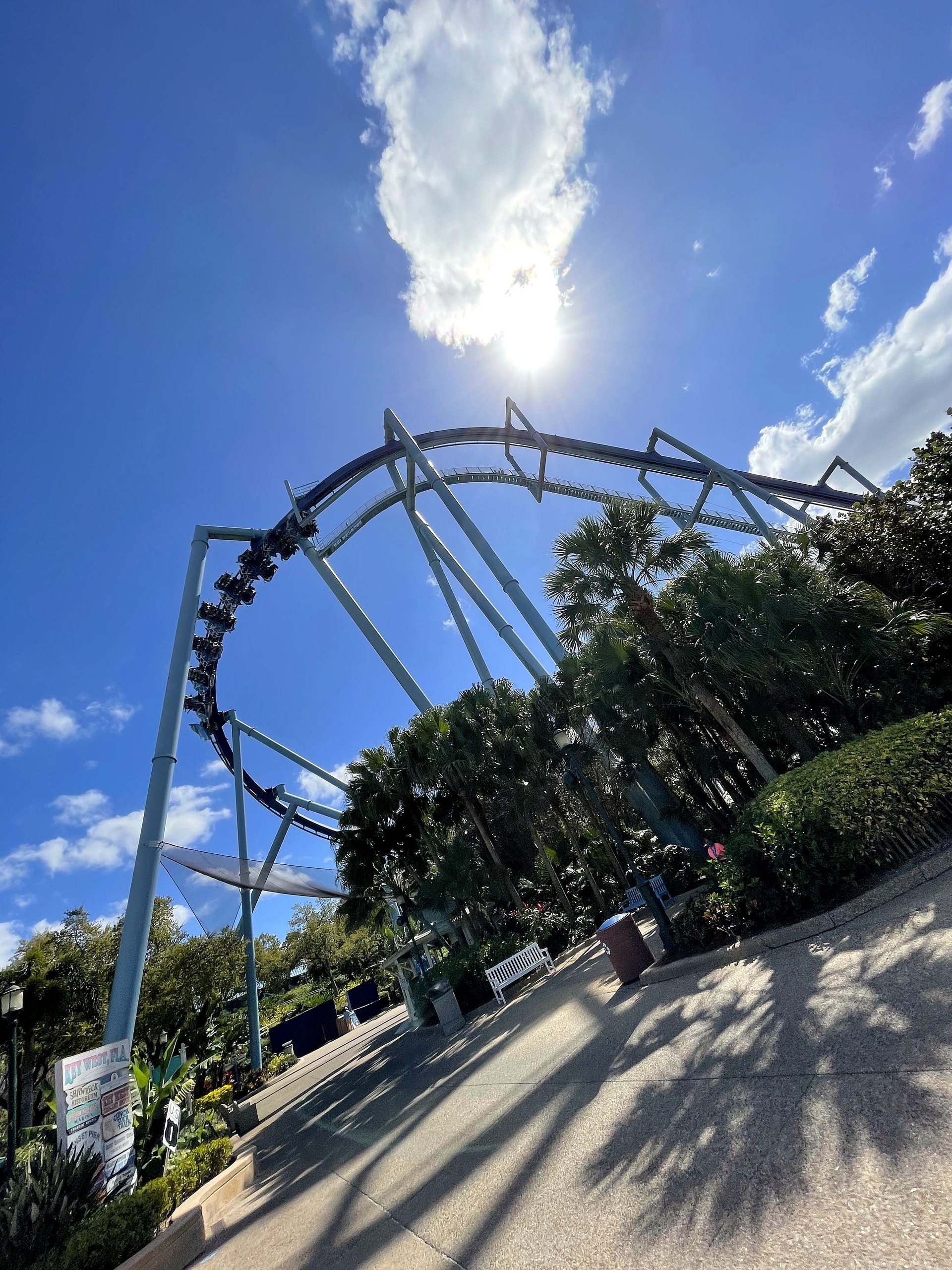
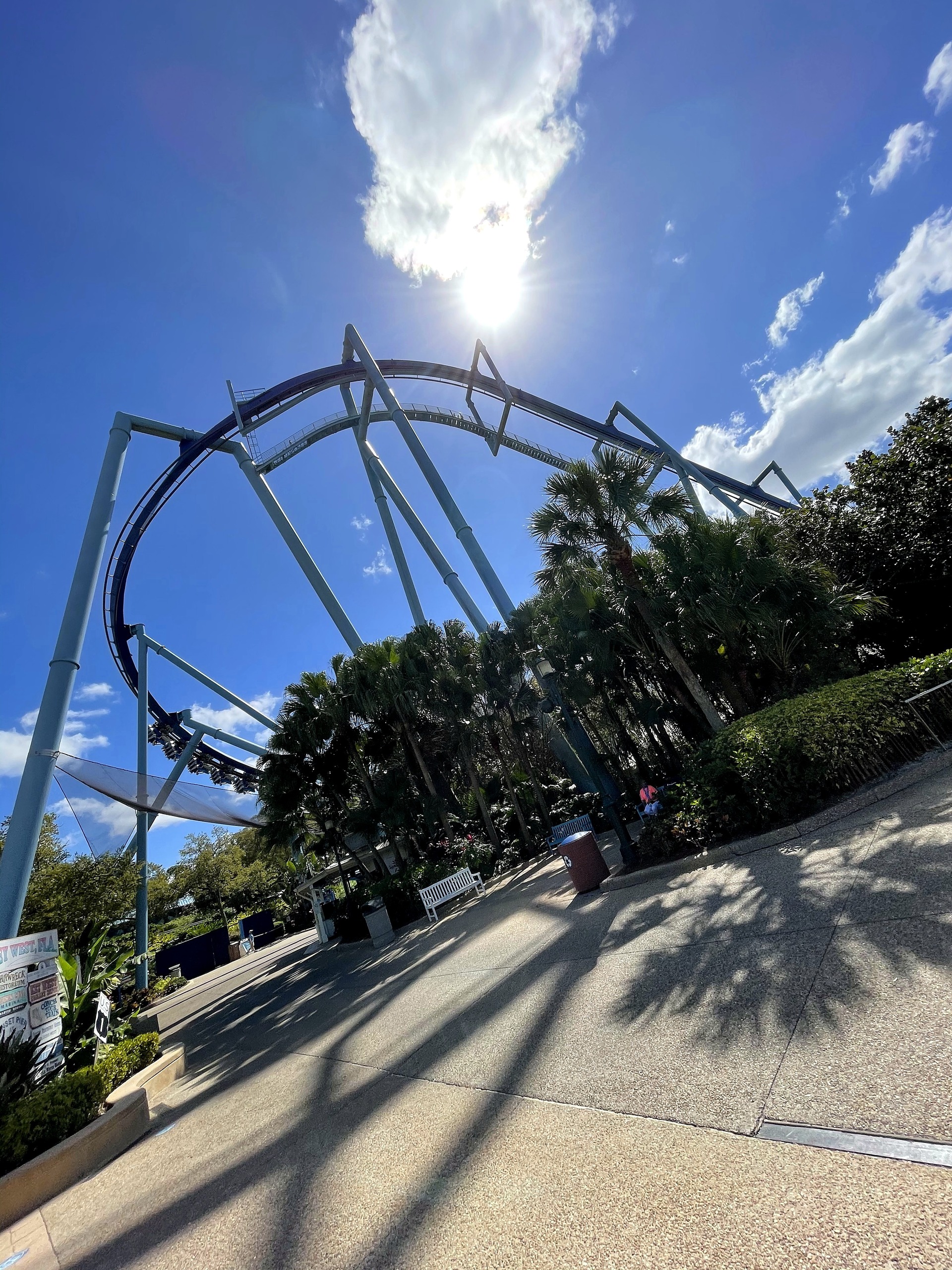
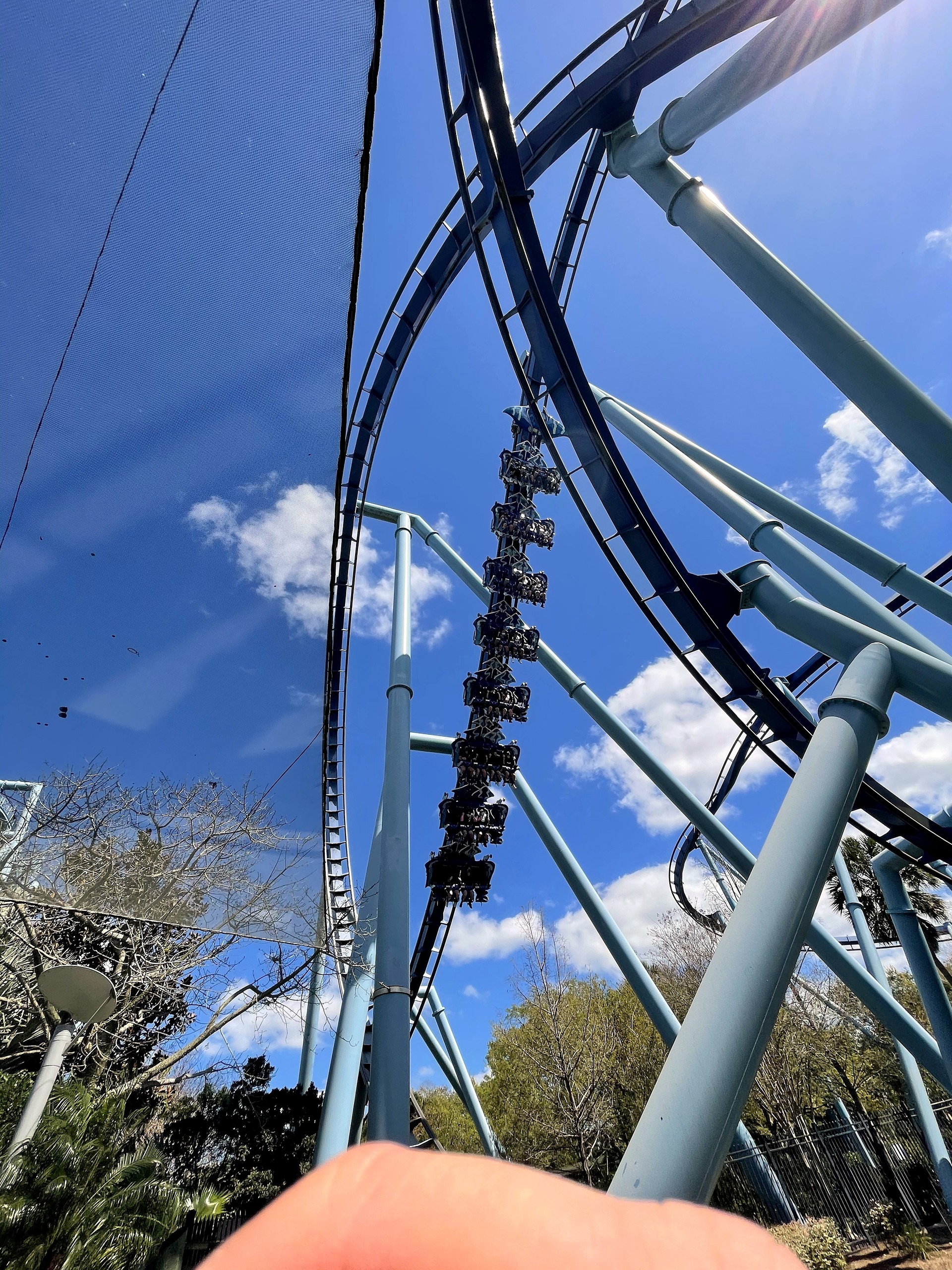
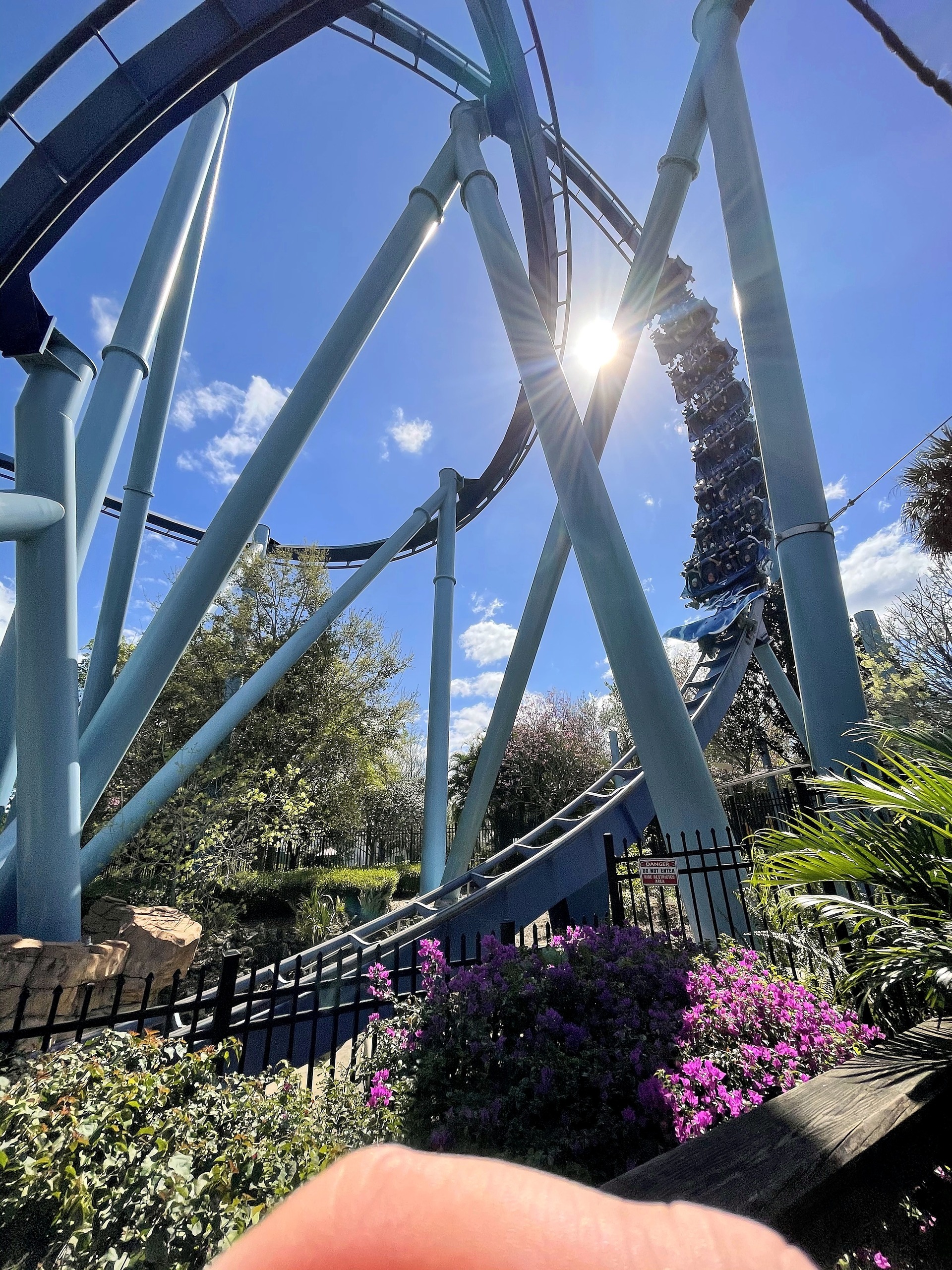
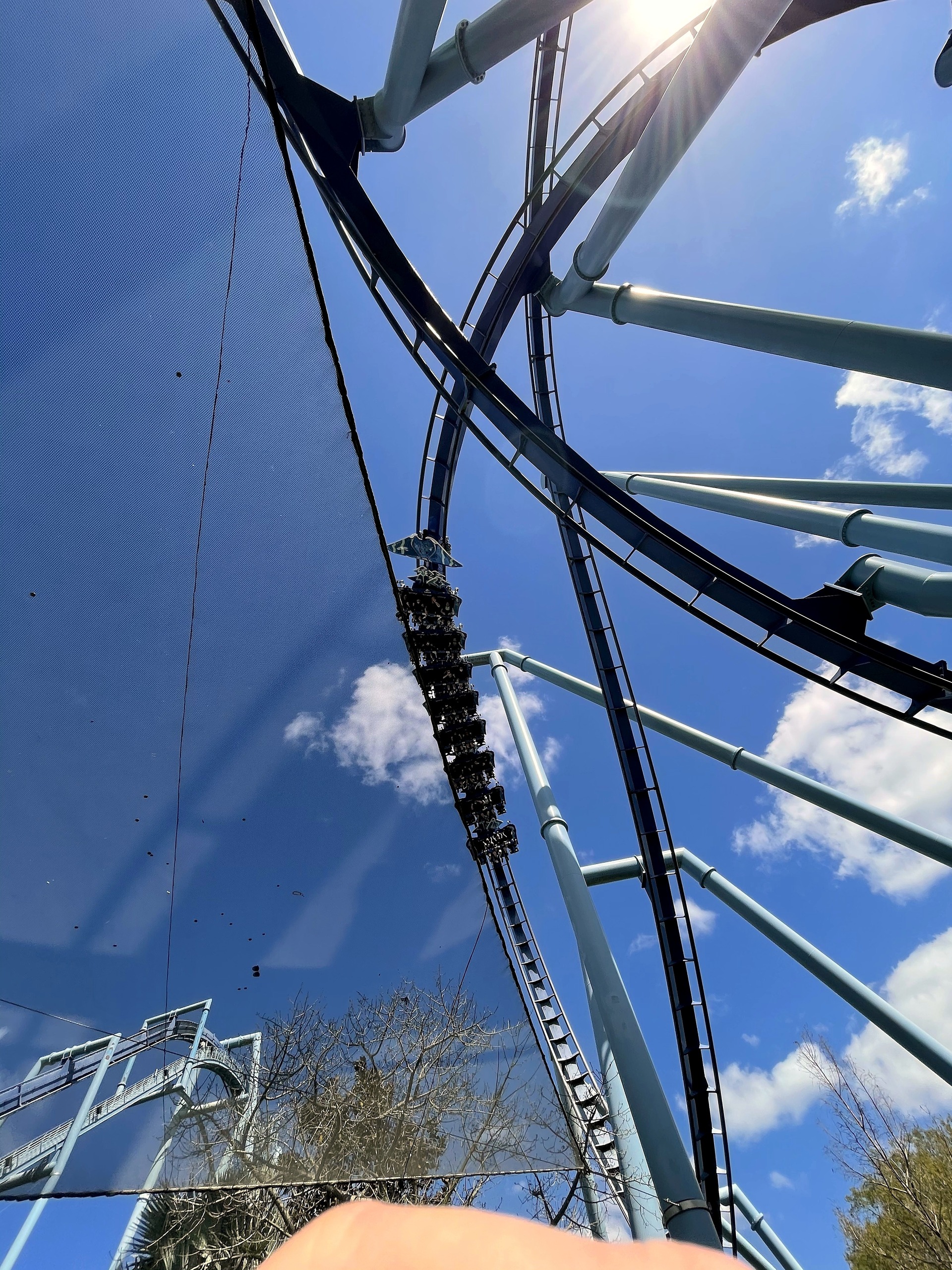
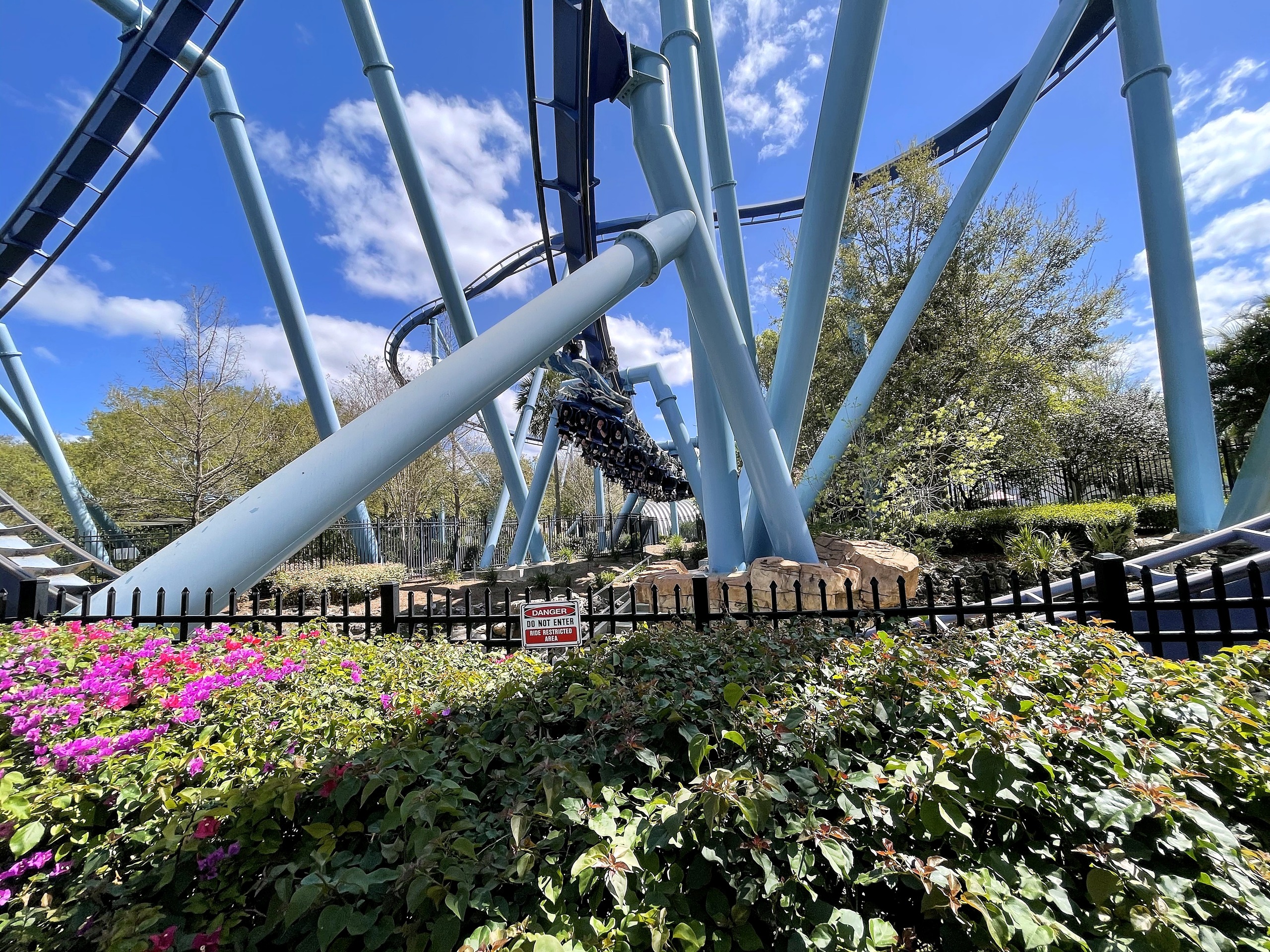
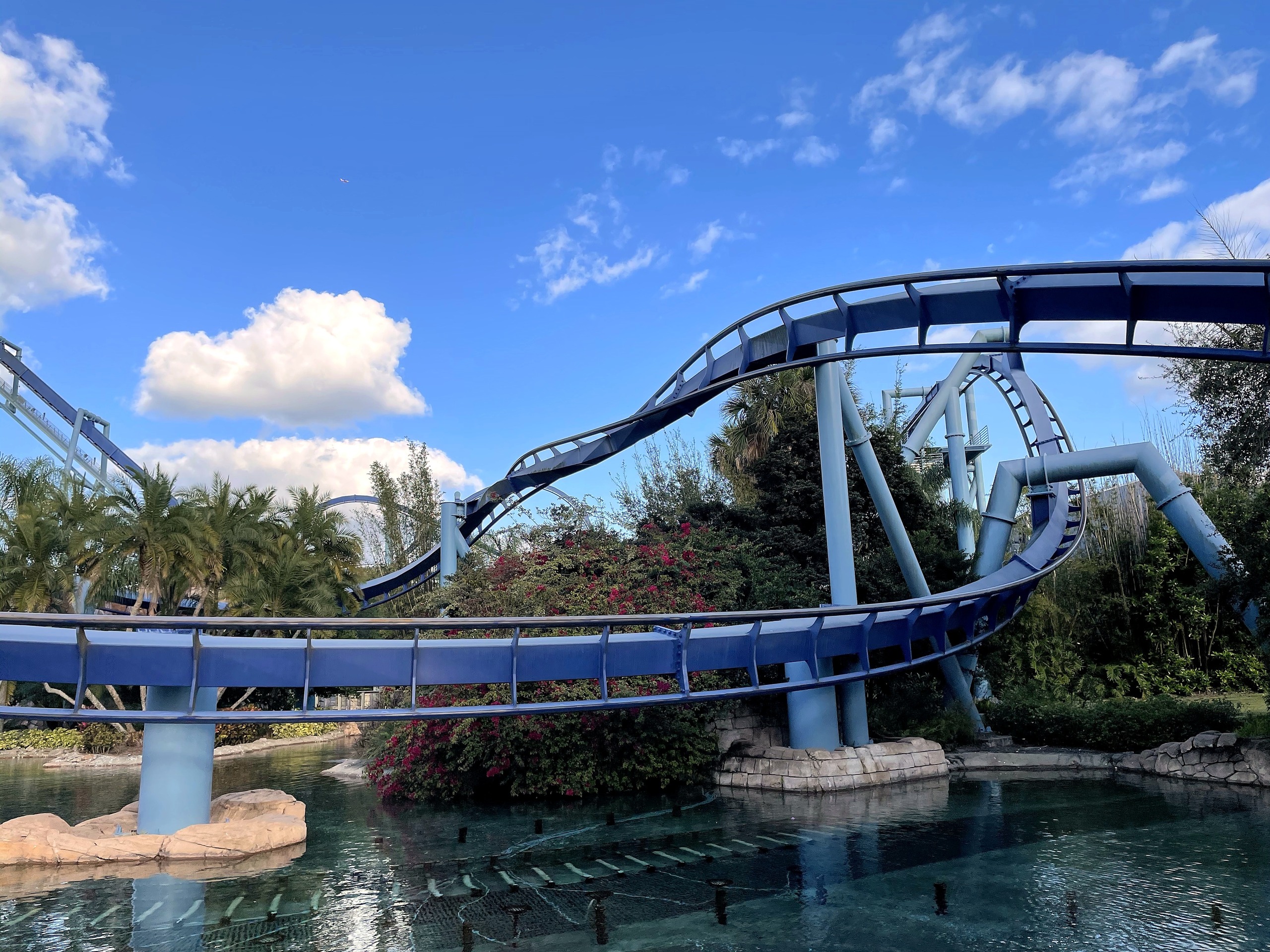
These are original ThrillZing photos of Manta taken at SeaWorld Orlando on March 10, 2021, shot on an iPhone and published as taken, plus 2 square edits from the same day. They show the B&M flying coaster’s manta ray sign on its waterfall rocks, trains riders-down through the pretzel loop and inversions above the walkway, and the track sweeping over the lagoon. All photos are free to reuse under a CC BY 4.0 license with credit to ThrillZing and a link to this page.
2021 · 19 photos
Soak, snap and drape. A cooling towel takes the edge off a 45-minute midday queue in July.
Park apps, mobile ordering and photos kill a battery by 3 p.m. This one snaps on magnetically, so there's no cable to snag on a restraint.
Ride with your glasses on and keep them. Many parks allow glasses on rides if they're strapped, so check the ride rules first.


Manta at SeaWorld Orlando FAQs
How tall do you have to be to ride Manta at SeaWorld Orlando?
You must be at least 54 inches (4 feet 6 inches) tall, with no maximum height limit.
Does Manta have a single rider line?
No dedicated single-rider line exists. Solo riders wait in the regular standby queue, though the paid Quick Queue program offers a guaranteed way to skip most of that wait.
How many inversions does Manta have?
Four: a pretzel loop, two inline twists, and a corkscrew, all experienced in a face-down flying position.
Is Manta at SeaWorld Orlando the same ride as Manta at SeaWorld San Diego?
No. Orlando’s Manta is a B&M flying coaster with inversions and a 56 mph top speed; San Diego’s Manta is a seated Mack launch coaster with no inversions and a 43 mph top speed.
How long does the Manta ride last?
About two minutes and 36 seconds from launch to the final brake run.
Can you wear glasses or bring a phone on Manta?
Glasses with a strap are usually fine, but loose items like phones, sunglasses, and hats must be stored in a locker, handed to a non-rider, or secured in a zipped pocket before boarding.
Get More from Manta at SeaWorld Orlando
Log the coasters, stadiums, and venues you’ve experienced, rate Manta at SeaWorld Orlando, and see what your friends thought. Get the ThrillZing app.
Want the day’s theme park news in your inbox? Subscribe to ThrillZing Daily — free.