
When Magnum XL-200 launched at Cedar Point in Sandusky, Ohio on May 6, 1989, it didn’t just break records — it invented a new category. Standing 205 feet tall and reaching 72 mph, it became the world’s tallest, fastest, and steepest complete-circuit roller coaster at the time, and the very first ride to earn the label ‘hypercoaster’ — any coaster that exceeds 200 feet in height. Designed by Ron Toomer and built by Arrow Dynamics, Magnum touched off what enthusiasts call the ‘coaster wars,’ a decade-long arms race among parks to out-build each other on height and speed.
More than three decades later, Magnum is still running at Cedar Point, still delivering the ejector airtime that made it famous, and still drawing coaster historians as a pilgrimage site. Below: exactly how tall, fast, and intense it is, who can ride, which seat to pick, how long you can expect to wait, how it stacks up against the giants that eventually passed it, and what to know before you go.
Quick Answer
Magnum XL-200 is a 205-foot, 72-mph steel roller coaster at Cedar Point that opened May 6, 1989 as the world’s first hypercoaster. It has zero inversions, a 48-inch height requirement, a roughly two-minute ride time along 5,106 feet of track, and it’s still operating today as one of the park’s signature attractions.
The Ride Experience
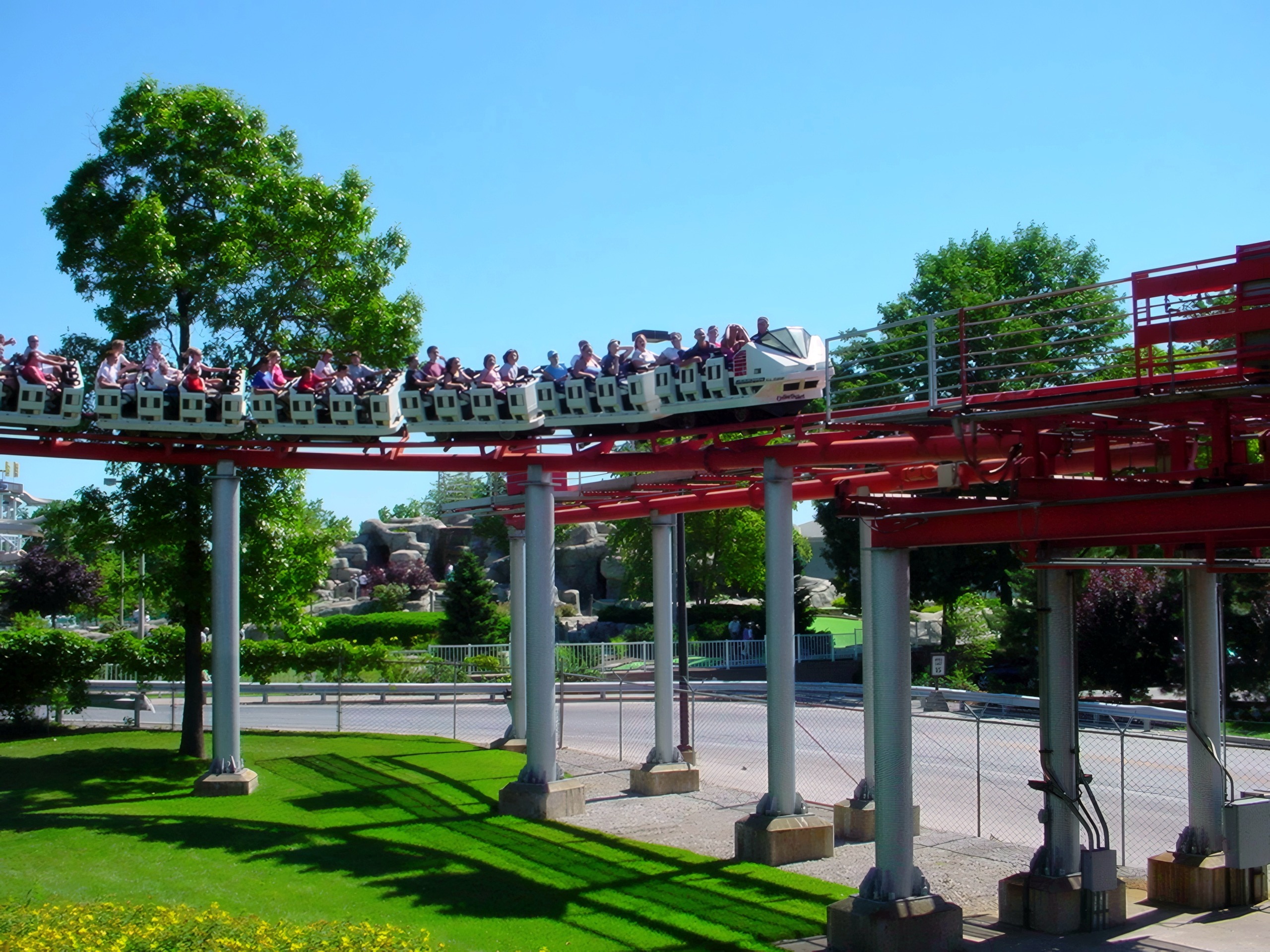
Magnum XL-200 follows a classic out-and-back layout that was groundbreaking at the time of its debut. Riders climb the 205-foot chain-lift hill before plunging 194.7 feet at a 60-degree angle, hitting 72 mph at the bottom. The train — three rows wide with six cars per train for 36 riders, secured with individual ratcheting lap bars and seat belts — then races through a series of airtime hills that have become the ride’s calling card.
The final pretzel-shaped return run is famous for delivering powerful negative-g, ejector airtime, making the closing stretch arguably more thrilling than the signature drop. Three trains cycle through the course, supporting a capacity of around 2,000 riders per hour. The ride lasts approximately two minutes from lift hill to brake run, with no inversions — keeping the focus on raw speed and airtime rather than loops or corkscrews. Part of the course also passes over Cedar Point Shores toward Lake Erie, and on a clear day you can sometimes make out the Canadian shoreline in the distance.
Height Requirement and Who Can Ride
Riders must be at least 48 inches (122 cm) tall to ride Magnum XL-200. Cedar Point rates it a Thrill Level 5, its highest intensity category, driven by the steep first drop and sustained airtime rather than any inverted elements — so riders sensitive to loops but comfortable with speed and stomach-drop moments are often fine here.
Because the drop and turnaround produce strong forces without ever flipping riders upside down, Magnum tends to appeal to guests who want a true hypercoaster experience as a step up from family coasters but aren’t ready for looping rides.
Best Seat, Wait Times and Fast Lane
Seat choice changes the ride noticeably. The very back row (car six, row one) delivers the strongest airtime as it whips over each hill last, and it’s the row most enthusiasts recommend for maximum floating-out-of-your-seat moments. The front row trades some of that airtime for an unobstructed view of the 205-foot drop and is generally considered the smoother, less jarring option. Regulars sometimes nickname the third row as one of the roughest, most forceful spots on the train — worth avoiding on a repeat ride if you want a gentler pass and seeking out if you want the most intense one.
Magnum doesn’t typically run a dedicated single-rider queue, though staffing and lane use can vary by day, so it’s worth checking the queue entrance signage when you arrive. Fast Lane, Cedar Point’s paid line-skipping option, is available on Magnum and is usually the most reliable way to cut wait times during peak summer weekends. Because it’s a legacy attraction near the front of the park, lines can build quickly after opening and during midday in summer; riding first thing in the morning, during a parade or fireworks window, or on Halloweekends evenings tends to mean noticeably shorter waits.
Design, Records and the Coaster Wars
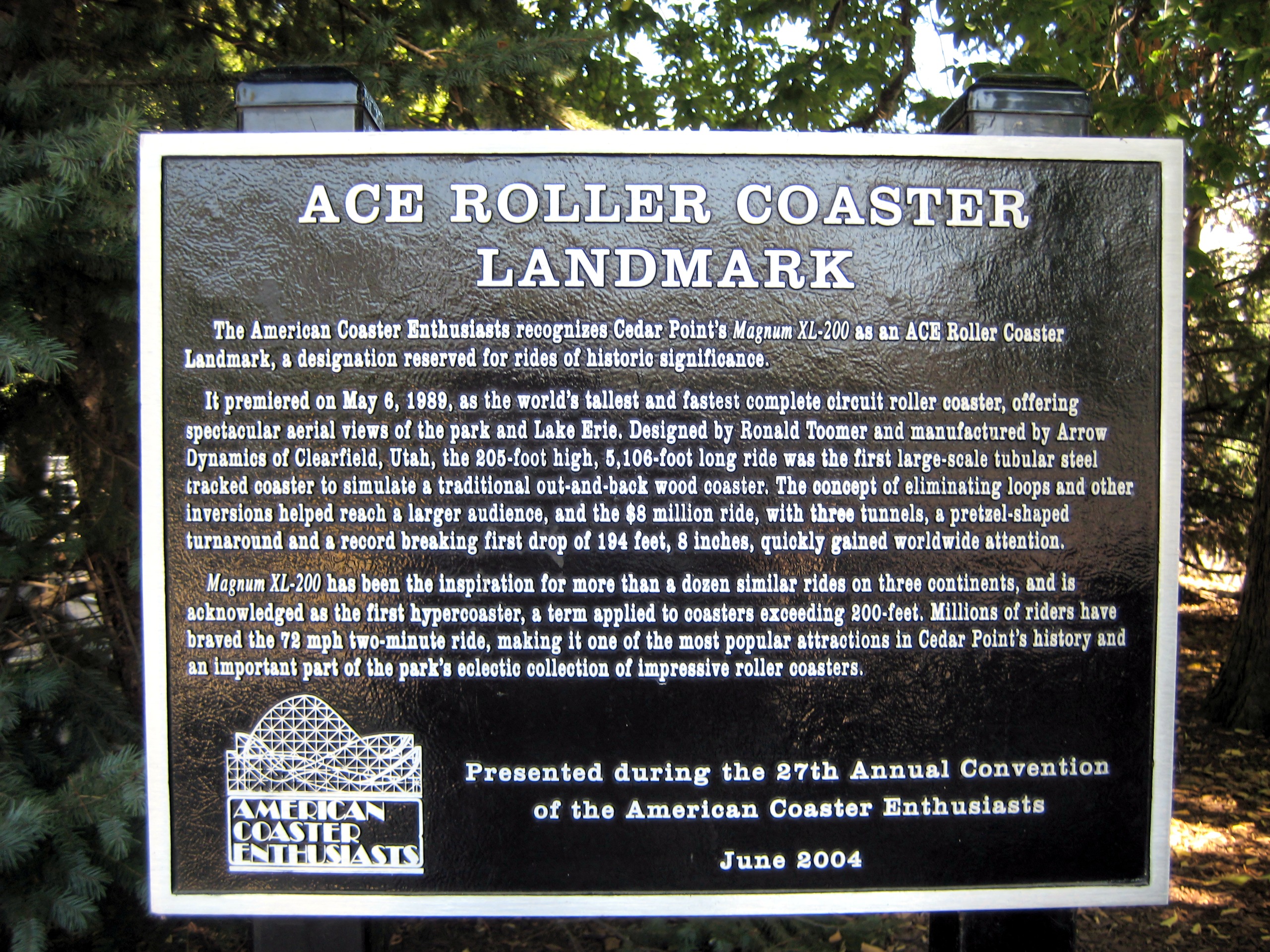
Magnum XL-200 held the world’s tallest roller coaster title from 1989 until 1994, when The Big One at Blackpool Pleasure Beach edged it out, and it held the fastest and longest-drop titles until 1991, when Steel Phantom (now Phantom’s Revenge) at Kennywood surpassed both marks. It won the Golden Ticket Award for best steel coaster three consecutive years from 1998 to 2000, remarkable for a ride already a decade old, and it stayed in Amusement Today’s top-ten steel coaster rankings for years afterward. In 2004, the American Coaster Enthusiasts designated it an ACE Roller Coaster Landmark in recognition of its enduring influence on the industry.
The coaster directly inspired more than a dozen hypercoasters built on three continents throughout the 1990s and 2000s, and it’s widely credited with kicking off the ‘coaster wars’ — the height-and-speed arms race among parks that defined the following decade. A smaller bit of trivia: the ride’s name is a nod to the TV series ‘Magnum, P.I.,’ which was culturally prominent while the coaster was being developed, with ‘XL’ signaling ‘extra-long’ and ‘200’ marking the 200-foot height threshold the ride itself created.
How Magnum XL-200 Compares at Cedar Point Today
Magnum is no longer Cedar Point’s tallest coaster — Millennium Force (310 feet, opened 2000) and Top Thrill 2 (420 feet, relaunched in its current form in 2024) have both since surpassed it. Top Thrill 2’s predecessor, Top Thrill Dragster, was the world’s first ‘strata coaster’ when it opened in 2003 for exceeding 400 feet. But Magnum remains historically distinct as the ride that created the hypercoaster category those later giants belong to.
The coaster got a refresh for its 30th anniversary in 2019, including new paint and updated special effects in one of its tunnels, and it continues to run largely as it did in 1989 — a deliberate contrast to the park’s newer, more elaborate rides.
Planning Your Visit
Cedar Point is now part of Six Flags Entertainment Corporation, formed when Cedar Fair and the former Six Flags completed their merger in July 2024; the park has kept its original name and branding under the combined company. It typically operates seasonally from spring through fall, opening for shorter weekend-only stretches in May and closing weekends before Halloween through the Halloweekends event in September and October, with hours that generally run longer during peak summer weeks.
Ticketing follows the standard theme-park pattern: single-day tickets bought in advance online cost less than buying at the gate, season passes and multi-park passes are available for repeat visitors, and Fast Lane is a separate paid add-on for shorter queues. Parking is purchased separately, usually with a standard lot and a pricier preferred lot closer to the entrance. Because exact hours, ticket prices, and operating calendars change throughout the year, check the official Cedar Point site before you go — it’s the most reliable source for current park hours, ticket pricing, and any temporary ride closures.
Magnum XL-200 Photo Archive: 2002–2026
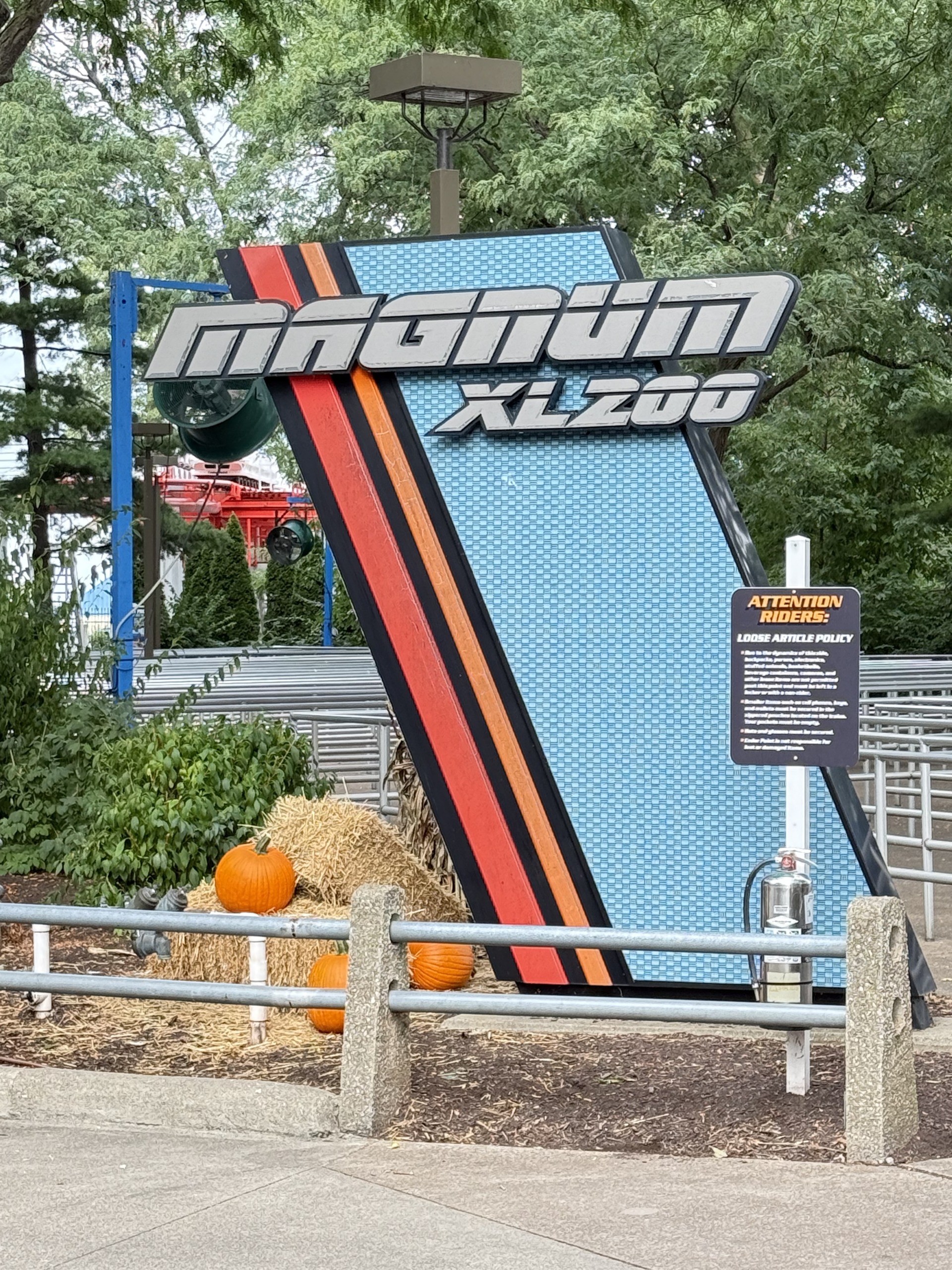
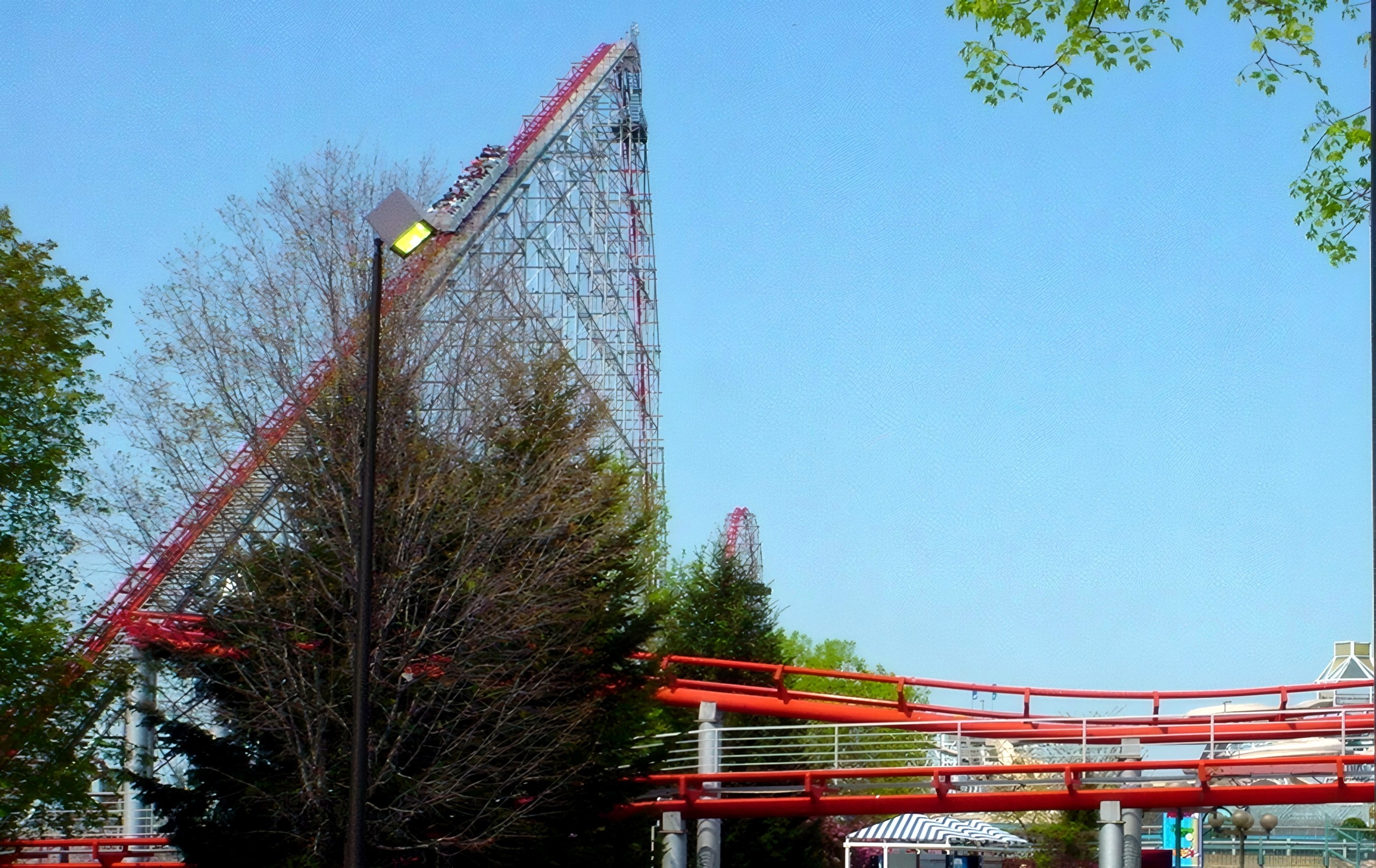
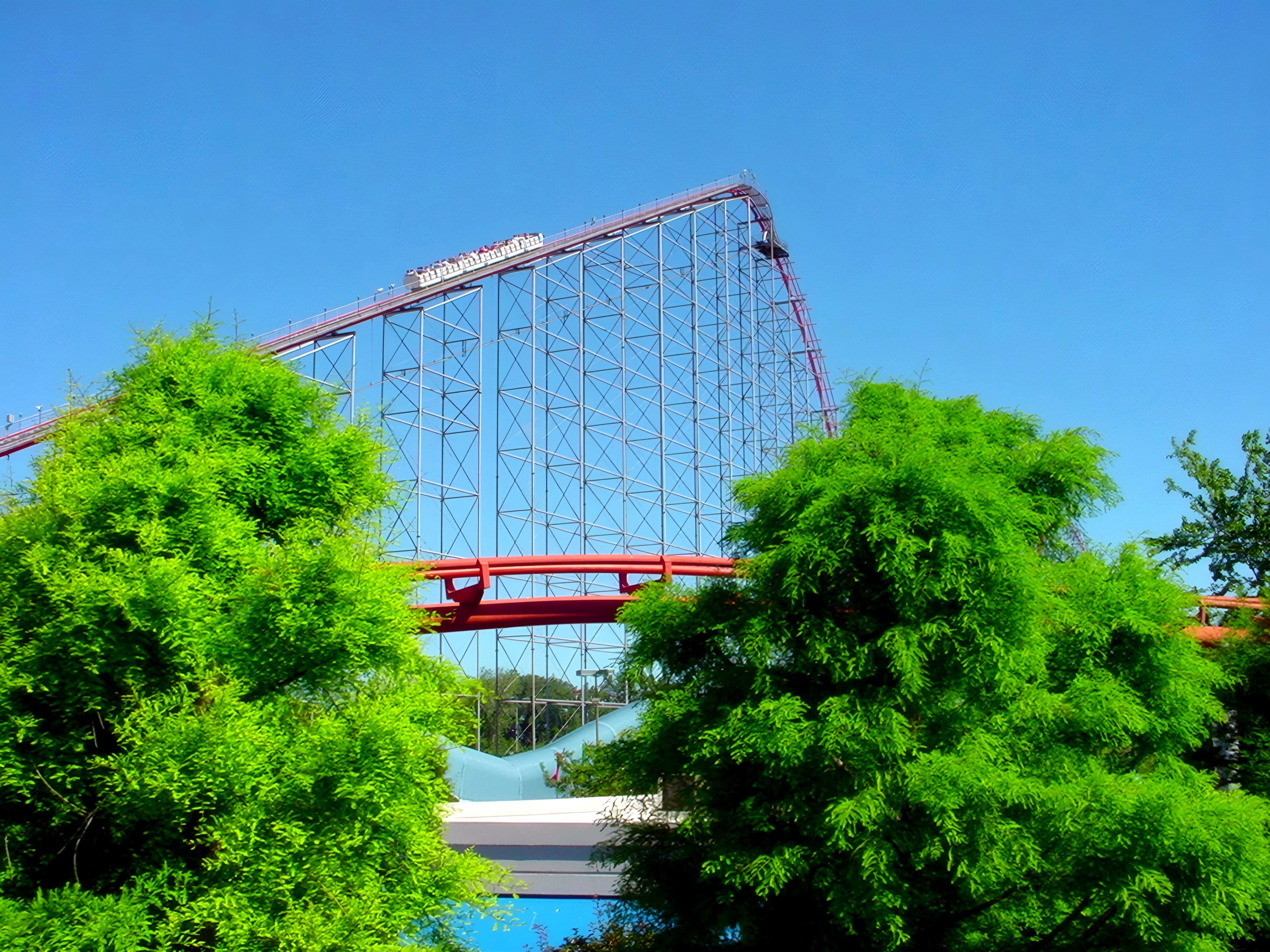
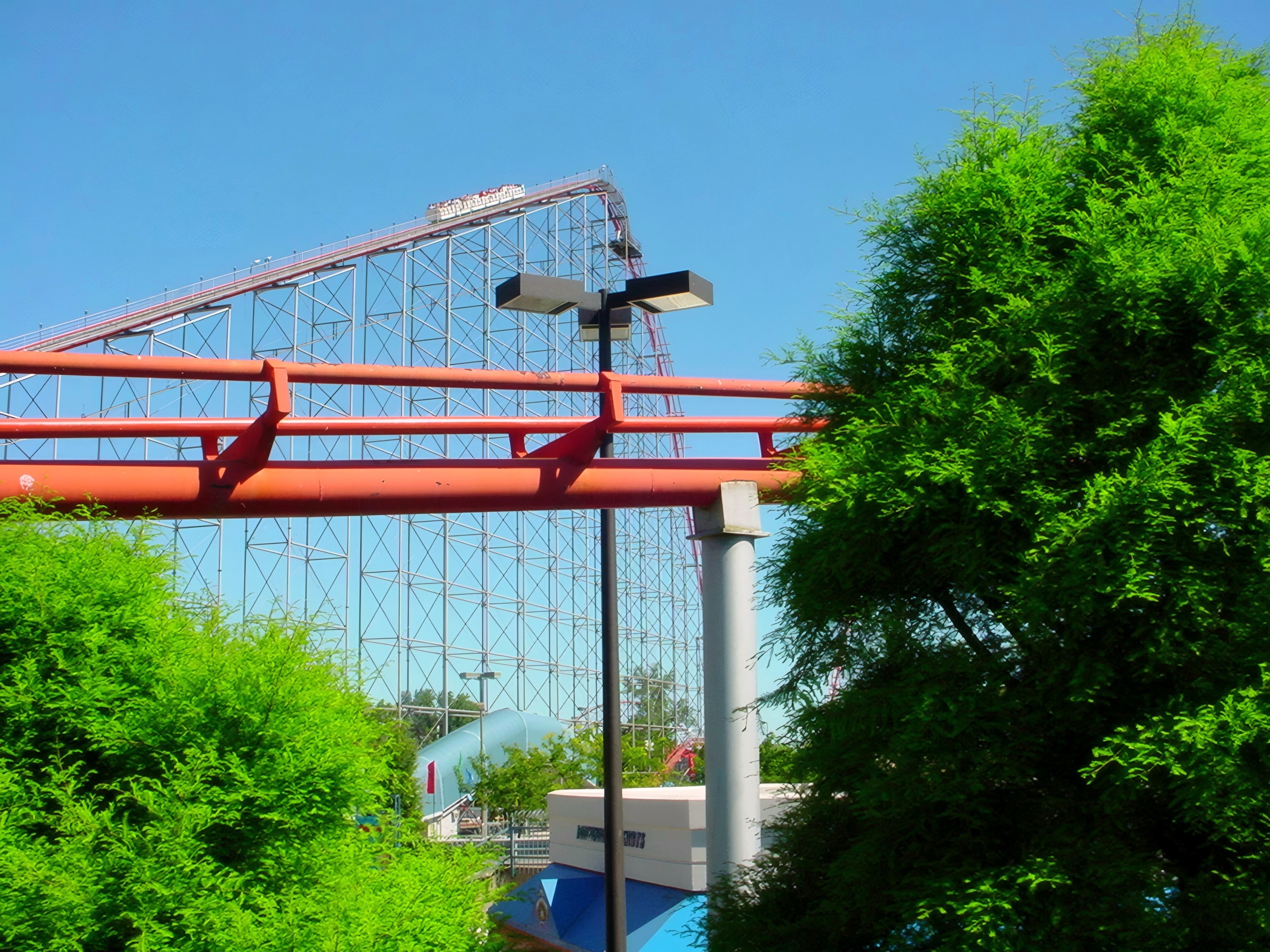
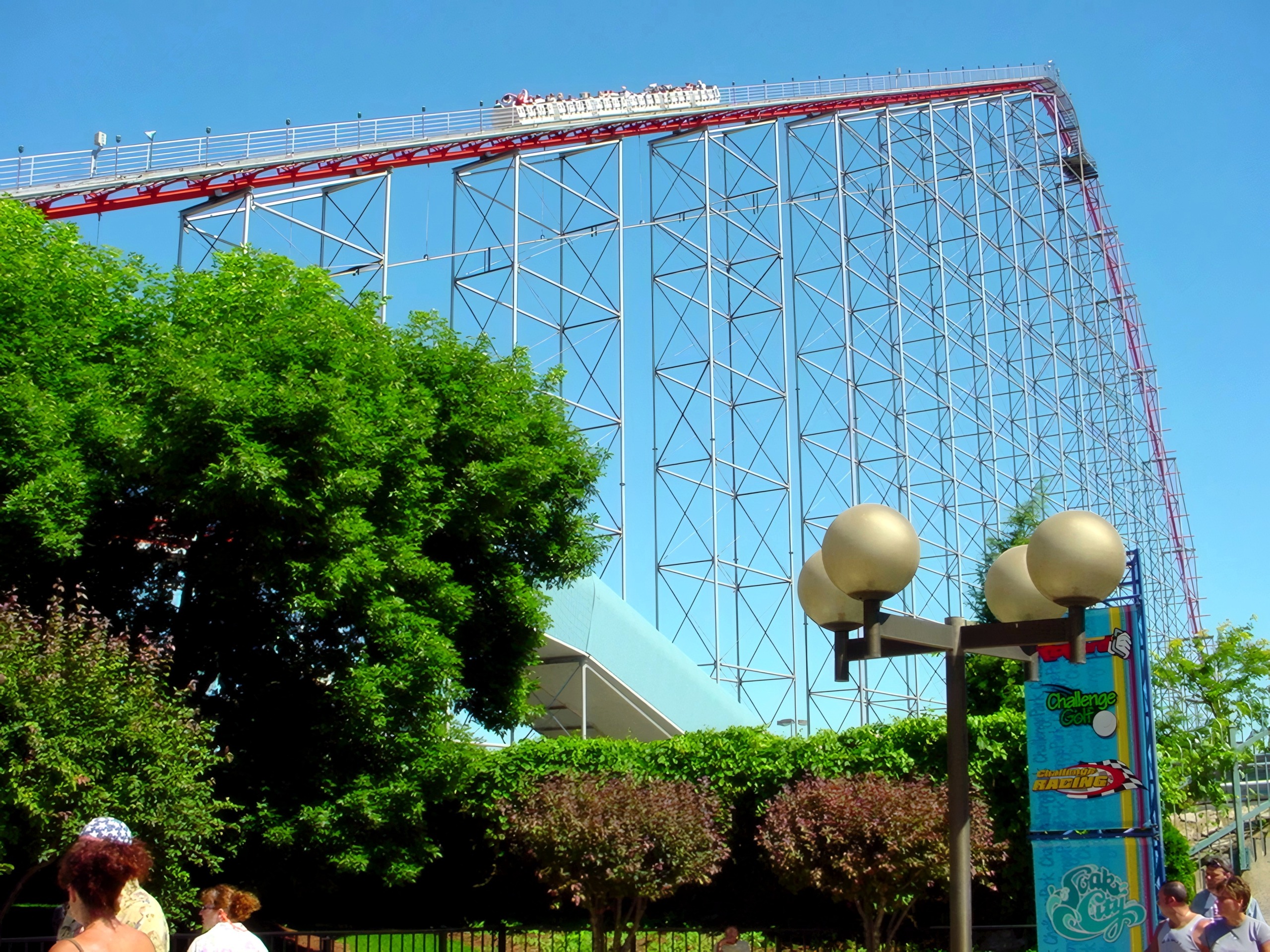
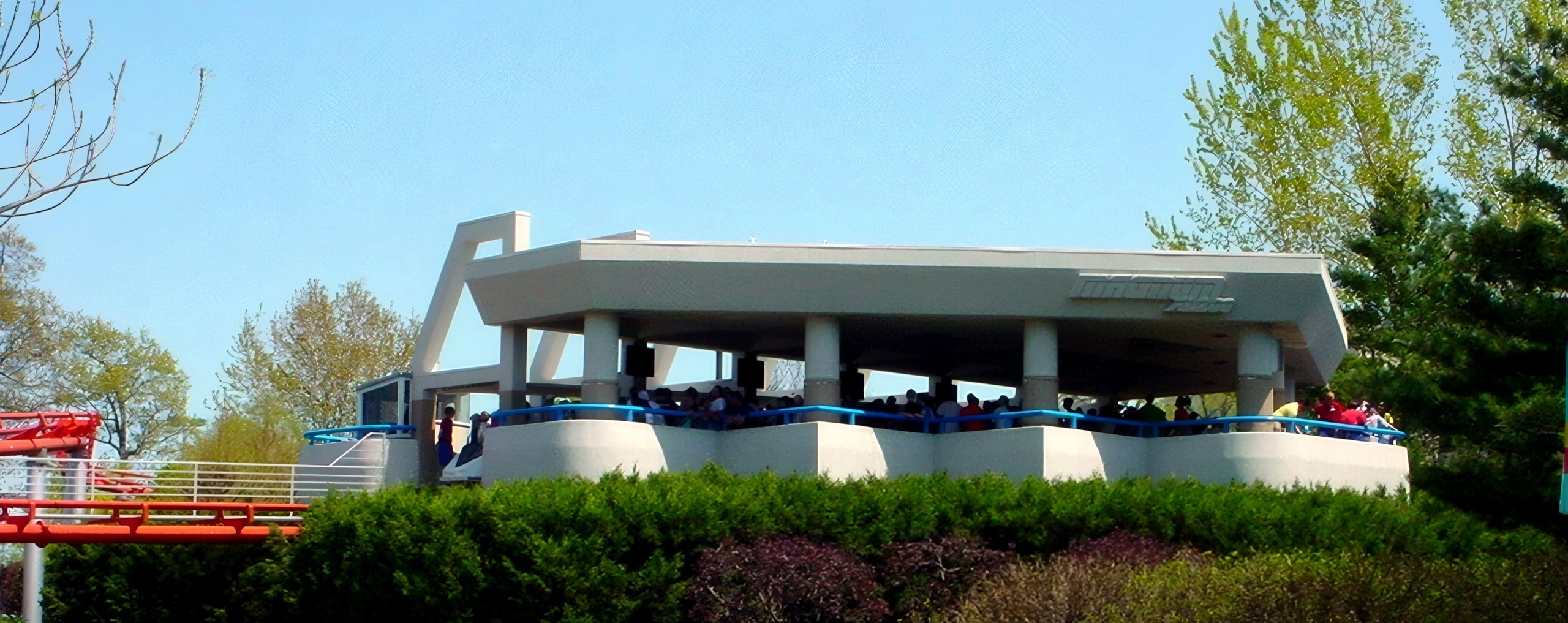
These are original ThrillZing photos of Magnum XL-200 taken at Cedar Point on May 5, 2002, July 16, 2003 and September 29, 2007, restored and upscaled from the original camera files. They show the first hypercoaster’s 205-foot lift hill from the midway, its red track crossing overhead, a train cresting the lift, and the ACE Roller Coaster Landmark plaque presented in 2004. The September 2026 group below was shot on a phone on September 13, 2026, the first HalloWeekends weekend, and is published as taken. All photos are free to reuse under a CC BY 4.0 license with credit to ThrillZing and a link to this page. The entrance sign dressed for HalloWeekends, September 13, 2026. Photo: ThrillZing (CC BY 4.0)
Magnum XL Photos from the ThrillZing Archive
Original photos from the ThrillZing archive. Free to reuse under a CC BY 4.0 license with credit to ThrillZing and a link to this page.
Magnum XL-200 Photo Archive: 2002–2026
These are original ThrillZing photos of Magnum XL-200 taken at Cedar Point on May 5, 2002, July 16, 2003 and September 29, 2007, restored and upscaled from the original camera files. They show the first hypercoaster’s 205-foot lift hill from the midway, its red track crossing overhead, a train cresting the lift, and the ACE Roller Coaster Landmark plaque presented in 2004. The September 2026 group below was shot on a phone on September 13, 2026, the first HalloWeekends weekend, and is published as taken. All photos are free to reuse under a CC BY 4.0 license with credit to ThrillZing and a link to this page.
September 2026
September 2007
July 2003
May 2002
Keeps your phone strapped to you, not in a loose-article bin. Zip it before the lift hill and walk straight off the exit ramp.
Rapids, log flumes and splash zones without the rice-bag aftermath. The touchscreen still works through the window, so you can still take photos.
Cheaper than the $15 poncho at the gift shop and you get a whole bag. Toss one in every backpack for water rides and pop-up storms.


Magnum XL-200 FAQs
How tall is Magnum XL-200?
205 feet, with a first drop of 194.7 feet at a 60-degree angle. It was the world’s first roller coaster to top 200 feet, which is where the term ‘hypercoaster’ comes from.
How fast does Magnum XL-200 go?
It reaches 72 mph at the bottom of its first drop, which made it the world’s fastest complete-circuit roller coaster when it opened in 1989.
Does Magnum XL-200 have any inversions or loops?
No. It has zero inversions — all of its intensity comes from the steep drop and negative-g airtime on the hills, not from loops or corkscrews.
What is the height requirement for Magnum XL-200?
Riders must be at least 48 inches (122 cm) tall.
How long is the Magnum XL-200 ride?
About two minutes from the lift hill to the final brake run, covering roughly 5,106 feet of track.
What is a hypercoaster?
A hypercoaster is any roller coaster taller than 200 feet. Magnum XL-200 was the first ride to earn the label when it opened in 1989, and its success led parks worldwide to build similar 200-plus-foot coasters through the 1990s and 2000s.
Is there a single-rider line for Magnum XL-200?
Not typically as a permanent, dedicated queue — availability can vary by day and staffing, so check the signage at the queue entrance when you arrive. Fast Lane is the more consistent option for reducing wait times.
Why is it called Magnum XL-200?
The name nods to the 1980s TV series ‘Magnum, P.I.,’ which was culturally prominent while the coaster was in development. ‘XL’ stands for ‘extra-long’ and ‘200’ refers to the 200-plus-foot height threshold the ride itself established.
Get More from Magnum XL-200
Log the coasters, stadiums, and venues you’ve experienced, rate Magnum XL-200, and see what your friends thought. Get the ThrillZing app.
Want the day’s theme park news in your inbox? Subscribe to ThrillZing Daily — free.