Great Bear is Hersheypark’s original inverted thrill machine, the coaster that dangles your feet in midair and throws you through four inversions at speeds pushing 60 mph. More than 25 years after it opened in 1998, it’s still one of the fastest, most re-rideable coasters in the park’s lineup.
This guide covers exactly how fast Great Bear goes, its full stats sheet, what the ride actually feels like from the first drop to the final brake run, and the history behind Pennsylvania’s first inverted looping coaster.
Quick Answer
Great Bear’s top speed is about 58 to 61 mph, reached on its 124-foot first drop right out of the station. Hersheypark’s own ride page lists a maximum speed of 61 mph, while other measurements put it closer to 58-60 mph, either way it’s one of the quicker coasters in the park. The ride packs a 90-foot lift hill, four inversions, and 2,800 feet of track into Hersheypark’s Kissing Tower Hill area.
How Fast Does Great Bear Go?
Great Bear’s speed comes almost entirely from its first drop. Because the station sits atop a hill, the visible 90-foot lift hill is misleading, the actual drop that follows plunges about 124 feet, which is where the coaster builds most of its momentum and hits its top speed of roughly 58 to 61 mph.
That speed doesn’t let up right away. Riders carry it straight into a tall vertical loop and then an Immelmann, before the layout tightens up for a zero-g roll and corkscrew closer to the brake run. On paper, newer coasters like Skyrush and Wildcat’s Revenge at Hersheypark are faster, but Great Bear’s low-to-the-ground, terrain-hugging track makes its speed feel more intense than the number alone suggests.
Stats at a Glance
Park: Hersheypark. Manufacturer: Bolliger & Mabillard, with track design by Werner Stengel’s engineering firm. Opened: May 23, 1998. Lift hill height: 90 ft. First drop: about 124 ft. Top speed: about 58-61 mph. Length: 2,800 ft. Inversions: 4 (vertical loop, Immelmann, zero-g roll, corkscrew). Trains: 2 trains, 8 rows of 4 across, feet hanging free.
The Ride Experience
From the station, the inverted trains climb the 90-foot lift before dropping into that deceptive 124-foot first plunge, which is where Great Bear hits its top speed. From there, riders race through a vertical loop, an Immelmann, a zero-g roll, and a corkscrew across roughly 2,800 feet of track, all with legs dangling free below the train.
The layout is famous among enthusiasts for its tight, terrain-hugging footprint, weaving between and over several other park attractions and Spring Creek before returning to the station. A full circuit runs through all four inversions in quick succession, giving Great Bear an intensity that belies its modest height compared to Hersheypark’s tallest coasters.
The First Drop: 90-Foot Lift, 124-Foot Fall
The numbers look contradictory at first: the lift hill is 90 feet tall, but the first drop is 124 feet. The explanation is terrain. Great Bear crests its lift on the upper edge of a hillside, and the ground falls sharply away into The Hollow below, so the train plunges well beyond the height the lift alone would deliver. That 34-foot bonus is a classic trick of terrain coaster design — using the landscape to get more vertical drop than the structure’s height implies.
What makes the approach particularly interesting is the helix between the lift crest and the drop. Rather than sending riders straight into the plunge, the train sweeps through a pronounced left-hand curving arc — the first time B&M used this configuration on an inverted coaster. The helix stacks lateral g-forces before the bottom drops out, so when the 124-foot fall finally arrives, riders are already loaded sideways and the transition hits harder than a straight-line approach would.
Through the Four Inversions
Great Bear runs its inversions in rapid sequence after the drop. First is a vertical loop — at roughly 100 feet, it delivers immediate, strong positive g-forces at the bottom. Next is the Immelmann: the train pulls into a half-loop, rolls 180 degrees at the apex, and exits traveling in the opposite direction, producing a sensation riders describe as being launched and then dropped from height. Third is a zero-g roll, a horizontal twist that briefly floats riders before snapping them back upright. The sequence closes with a corkscrew — a tight, fast flip that ends the inversion string before the final brake run.
The pacing between the first three elements is deliberately compressed. The inversions arrive before riders have fully processed the one before, and even experienced coaster enthusiasts report the stretch through loop, Immelmann, and zero-g roll as genuinely disorienting. Before the circuit ends, the train also sweeps extremely close to SooperDooperLooper’s structure — a classic foot-chopper moment where dangling legs appear to nearly brush the adjacent steel. Riders in the outside right seat toward the back of the train get the most visceral version of this effect.
What the Water Routing Adds to the Experience
Crossing Spring Creek was a construction headache, but it also shapes what the ride feels like. As the train sweeps low over the waterway and neighboring terrain, the reduced clearance between track and ground intensifies the perceived speed in a way that open-air elevation cannot replicate. Close-to-ground passages are one of the most reliable speed amplifiers in coaster design, and Great Bear uses them repeatedly through the middle section where the track banks and dips just above the creek and adjacent walkways.
The inverted seating posture sharpens this further. With nothing in front of the feet, riders can look straight down and watch the water and landscaping pass beneath them — a perspective impossible on a traditional sit-down coaster and one that makes every low clearance feel closer than it actually is.
Where Great Bear Sits in Hersheypark
Great Bear is located in Hersheypark’s Kissing Tower Hill area, the section long associated with the park’s original Minetown grounds. The layout threads past the SooperDooperLooper, over Spring Creek, and around the Coal Cracker log flume, making it one of the more visually layered coasters in the park since so much of the track is visible from nearby paths and rides.
History and Legacy
Great Bear debuted on May 23, 1998, as a $13 million investment, the largest capital project Hersheypark had undertaken up to that point. It became Pennsylvania’s first inverted looping coaster and joined the wave of B&M inverted coasters that defined amusement park thrill rides throughout the 1990s.
The ride’s name pays tribute to the constellation Ursa Major, the Great Bear, whose seven prominent stars are echoed by the coaster’s seven distinct thrill elements. Now in its third decade of operation, Great Bear remains a mainstay of the Hersheypark lineup, valued by enthusiasts for its smooth B&M trains and compact, high-intensity layout even as the park has added taller, faster coasters like Skyrush and Wildcat’s Revenge around it.
Construction: B&M’s Toughest Installation
Hersheypark broke ground on Great Bear in mid-November 1997, and the coaster opened roughly six months later on May 23, 1998 — the sixth coaster at the park and the first inverted looping roller coaster in Pennsylvania. The project cost approximately $13 million and brought in structural design work from Werner Stengel, whose firm has contributed to dozens of celebrated coaster layouts worldwide.
The site made construction unusually difficult. The layout had to cross Spring Creek while park and environmental regulations forbade placing support piers inside the waterway. B&M had to engineer custom spanning structures to bridge the creek without in-water footings — an arrangement the manufacturer had rarely needed before. The finished structure required more than 214 piers, approximately 4,500 cubic yards of concrete, and around 2 million pounds of steel across roughly five acres of sloped terrain. B&M later described Great Bear as one of the most challenging projects the company had undertaken.
The park’s promotional campaign for the ride won a Brass Ring Award for marketing excellence in 1998. Demand was strong from the start: Great Bear averaged approximately 1.2 million riders per year in its first five seasons.
The Name: Stars, Bears, and Hockey
Great Bear is named after Ursa Major, the Great Bear constellation. The ride’s seven major elements correspond to the seven stars that form Ursa Major — a design choice that gave the layout a thematic structure, not just a name. The name also connects to the Hershey Bears, the American Hockey League franchise that has played in Hershey since 1938 and shares its color palette with the coaster’s black track and light grey supports. The trains themselves are painted purple, pink, and yellow.
How Great Bear Compares to Other Hersheypark Coasters
At roughly 58-61 mph, Great Bear is faster than family-friendly options like Trailblazer or Lightning Racer, but it trails Hersheypark’s biggest hypercoasters, Skyrush tops 75 mph and Wildcat’s Revenge and Storm Runner both post higher top speeds. What sets Great Bear apart isn’t raw speed, though; it’s the combination of speed, inversions, and a tight footprint that keeps the pacing relentless from the first drop to the final brake run.
Practical Riding Tips
The minimum height requirement for Great Bear is 54 inches. Hersheypark places the ride in its Twizzlers height category, which covers riders from 54 to 60 inches tall, as well as anyone taller. A test seat is positioned at the ride entrance so guests can check whether the over-the-shoulder harness closes comfortably before joining the queue — a useful stop for larger guests.
For seat selection: front row delivers the most open, unobstructed perspective over the drop and through the inversions. The outside right seat in the rear half of the train maximizes the foot-chopper effect near SooperDooperLooper. Great Bear’s roughly 1,300-riders-per-hour throughput handles volume reasonably well, but the ride draws consistent demand as one of the park’s flagship attractions. Arriving at park opening or riding during the dinner hour (roughly 5–7 p.m.) tends to produce the shortest waits on peak summer days.
Great Bear Photo Archive: 2001 & 2021
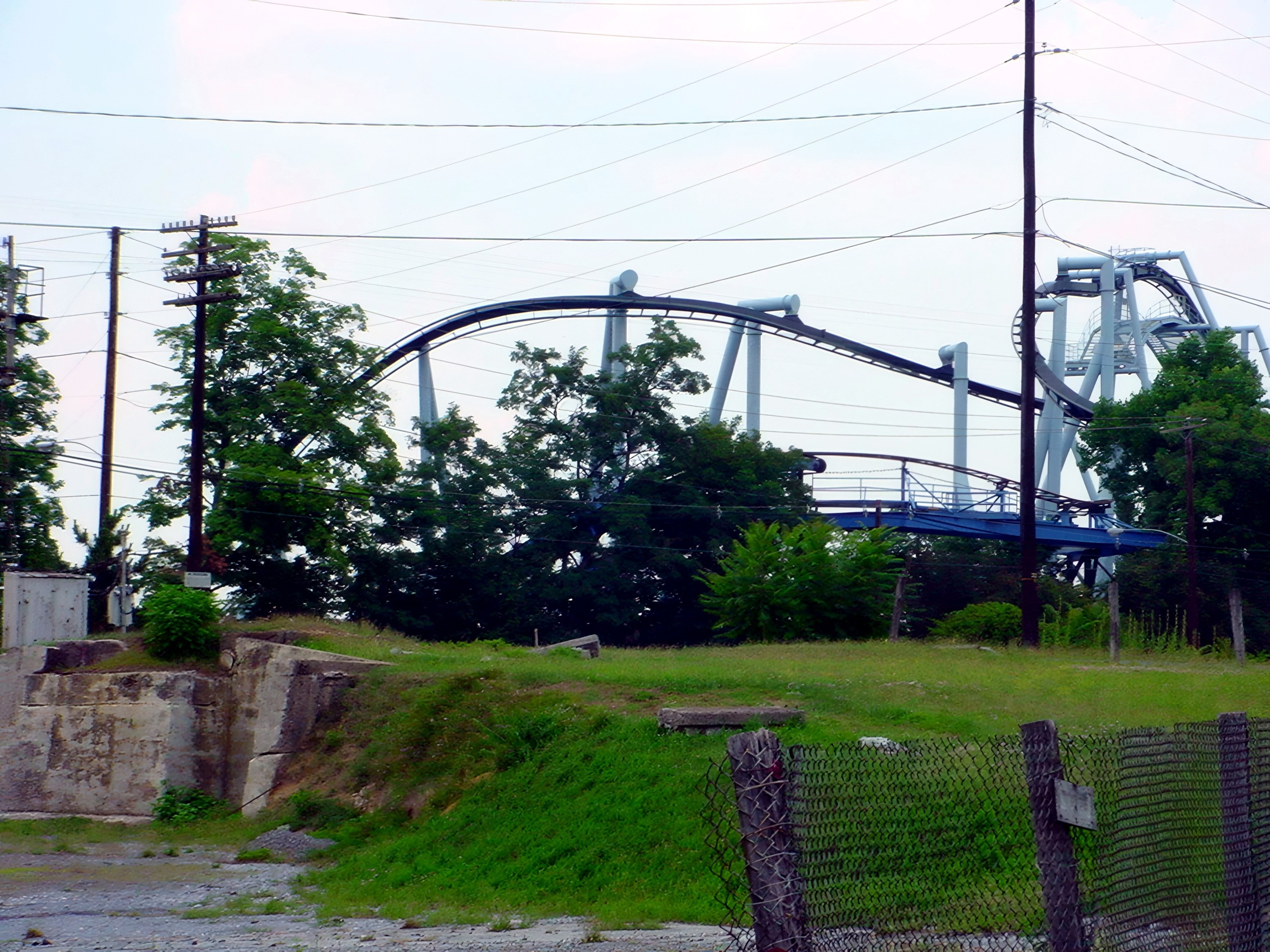
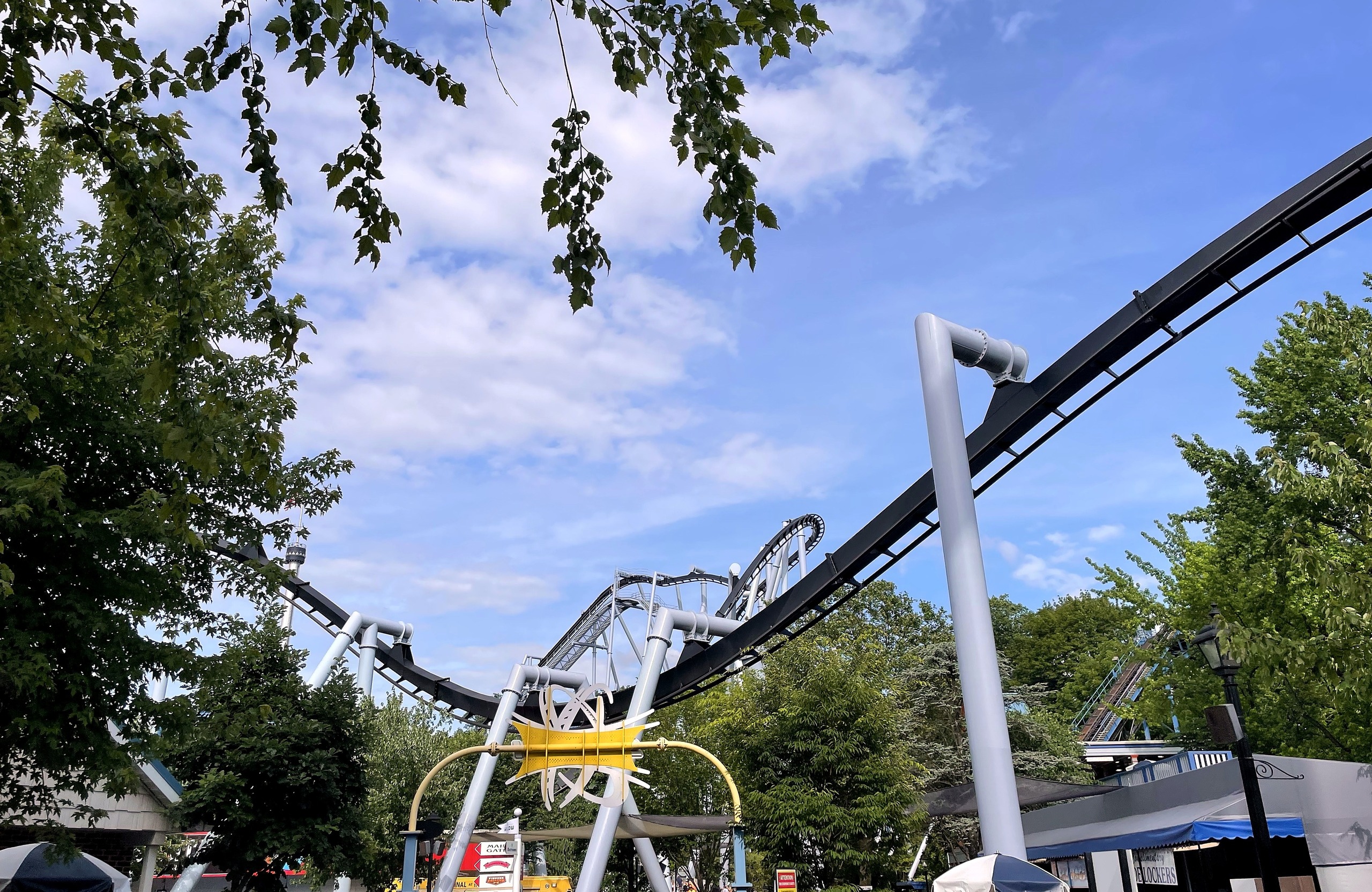
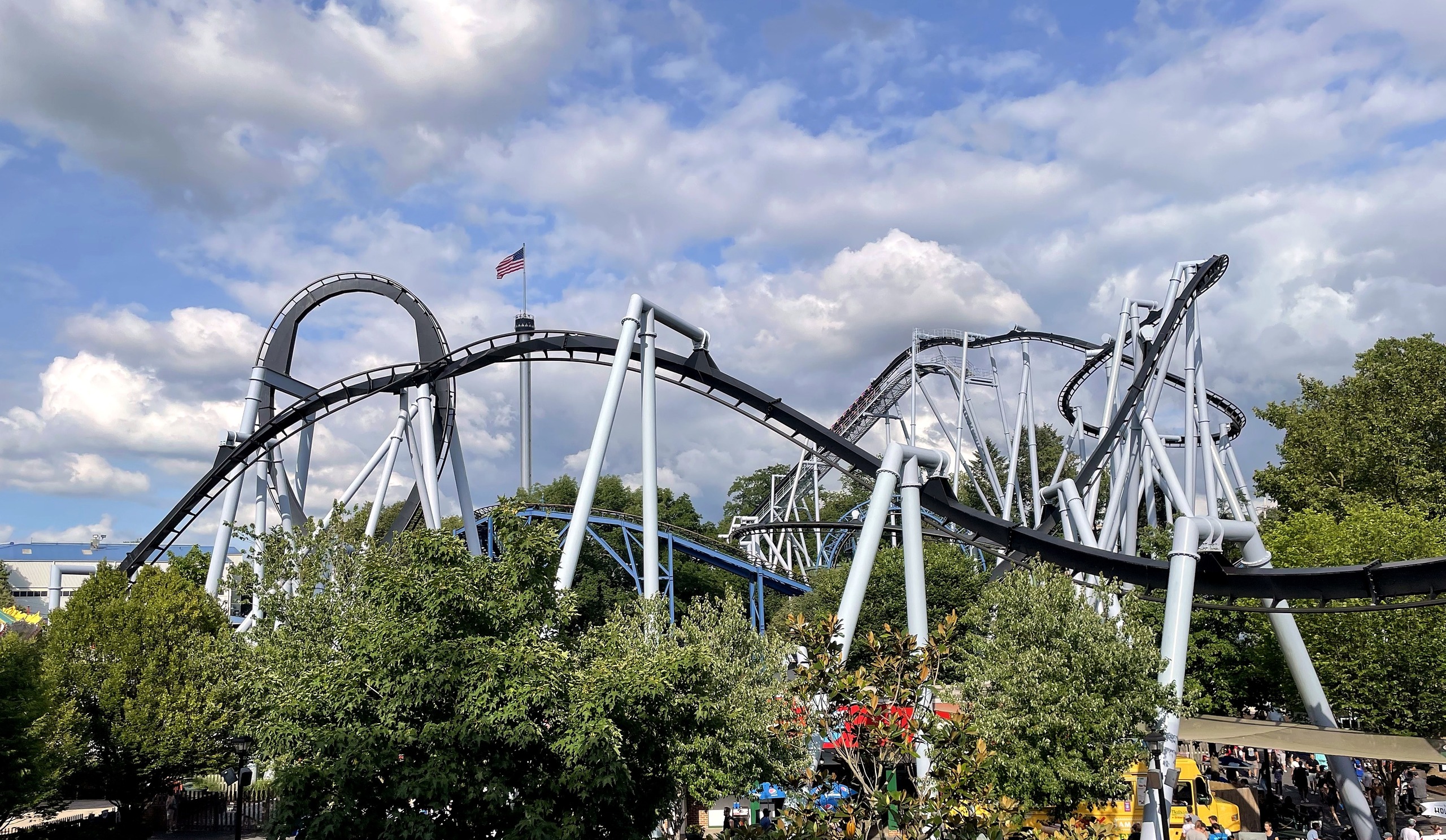
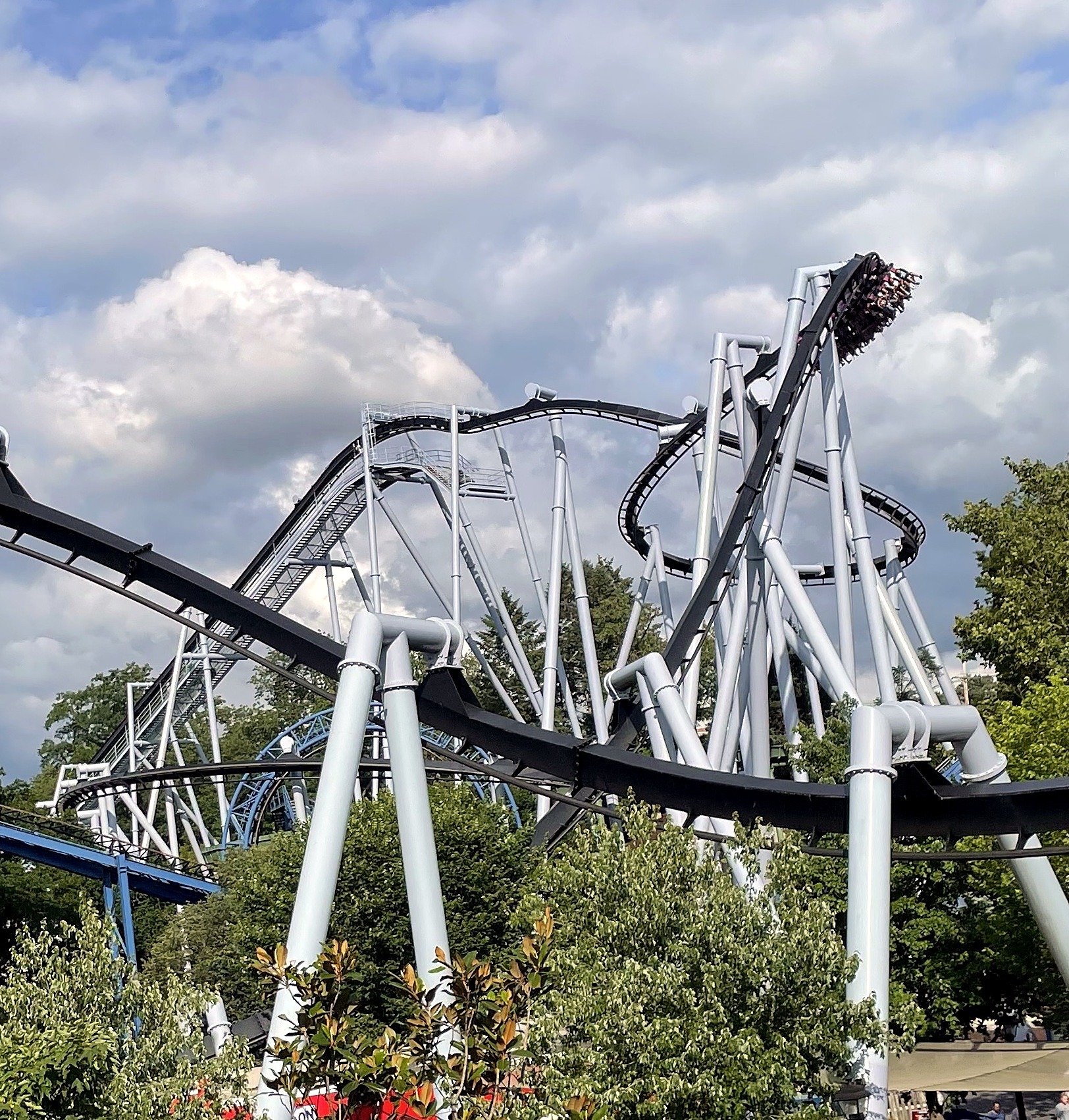
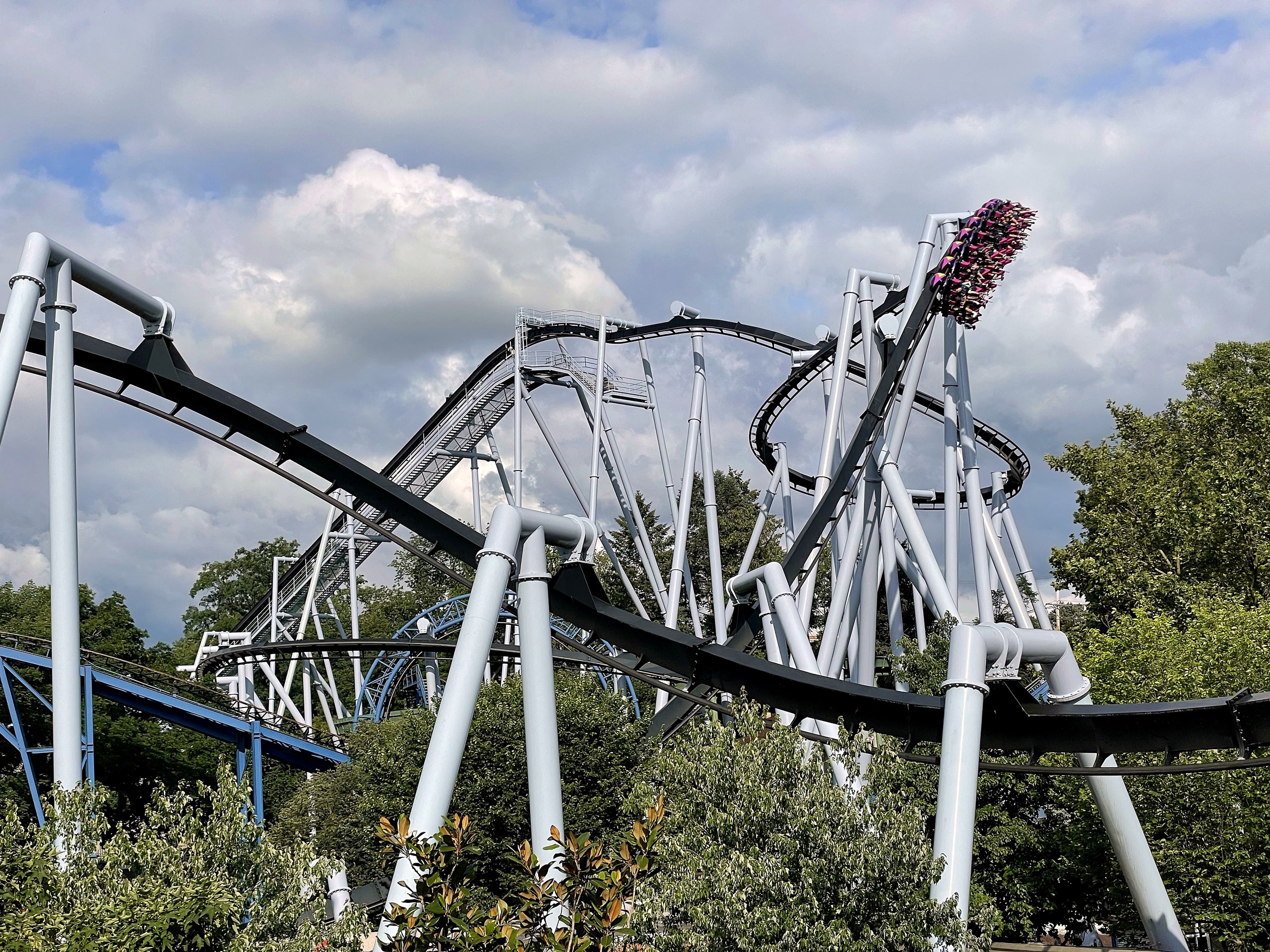
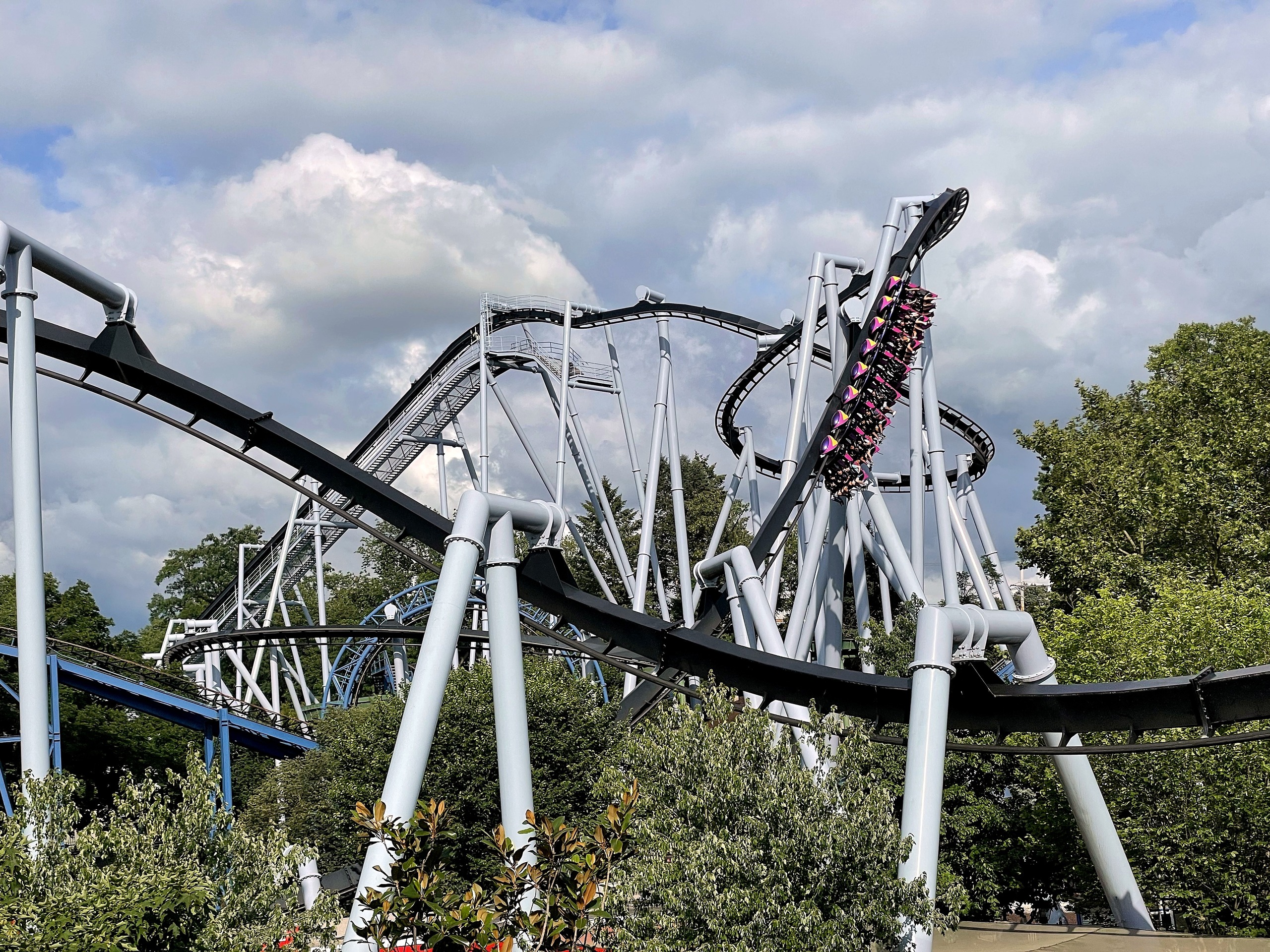
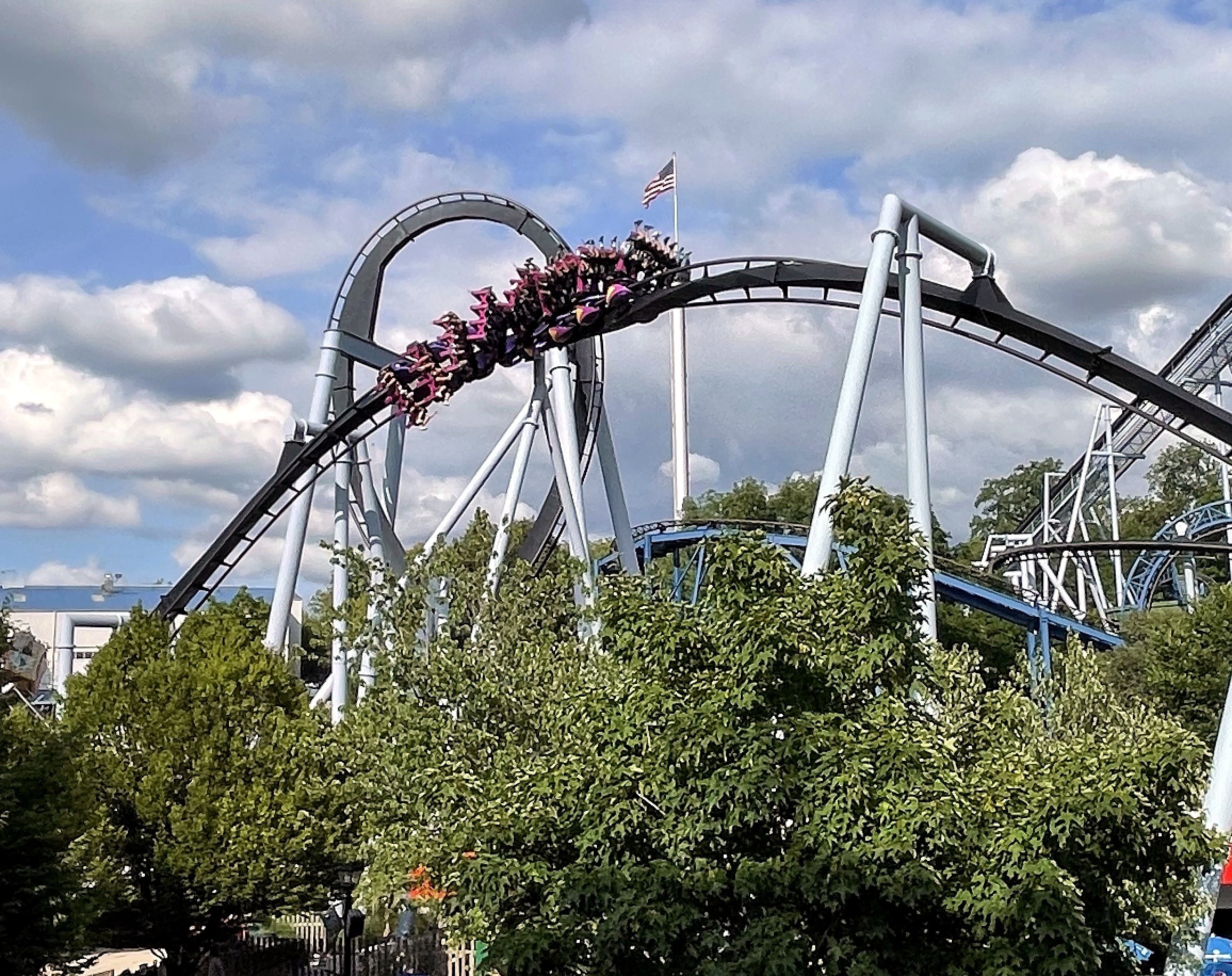
These are original ThrillZing photos of Great Bear at Hersheypark: one from outside the park on July 17, 2001, restored and upscaled from the original camera file, and six from June 26, 2021, shot on an iPhone and published as taken. They show the B&M inverted coaster’s lift above the treeline, the vertical loop and helix above the midway, and trains riders-down through the Immelmann. All photos are free to reuse under a CC BY 4.0 license with credit to ThrillZing and a link to this page.
July 2001
June 2021
Park apps, mobile ordering and photos kill a battery by 3 p.m. This one snaps on magnetically, so there's no cable to snag on a restraint.
Ride with your glasses on and keep them. Many parks allow glasses on rides if they're strapped, so check the ride rules first.
Small enough to ride with on most coasters, big enough for a phone, card and keys. Two zippers mean nothing falls out upside down.


Great Bear at Hersheypark FAQs
How fast does Great Bear go at Hersheypark?
Great Bear reaches a top speed of about 58 to 61 mph, hit during the ride’s 124-foot first drop. Hersheypark’s own ride page cites a maximum of 61 mph.
Where is Great Bear located in Hersheypark?
Great Bear is in the Kissing Tower Hill area of Hersheypark, near the SooperDooperLooper, Spring Creek, and the Coal Cracker log flume.
Who manufactured Great Bear at Hersheypark?
Great Bear was built by Bolliger & Mabillard (B&M), the Swiss firm known for inverted coasters, with additional track design work from Werner Stengel’s engineering office.
How many inversions does Great Bear have?
Great Bear has four inversions: a vertical loop, an Immelmann loop, a zero-g roll, and a corkscrew.
What is the height requirement for Great Bear?
Riders must be at least 54 inches (137 cm) tall to ride Great Bear.
How long is the Great Bear ride?
The ride covers about 2,800 feet of track and runs roughly 2 to 3 minutes from launch out of the station to the final brake run.
Why is the first drop longer than the lift hill?
Great Bear crests its 90-foot lift on the edge of a hillside, and the terrain drops sharply away below into The Hollow. That elevation change gives the ride a 124-foot fall even though the structure itself is only 90 feet tall — a terrain coaster advantage that adds roughly 34 extra feet of drop.
Why is Great Bear’s construction considered unusually difficult?
Environmental and park regulations prohibited placing support piers inside Spring Creek. B&M had to design custom structures to span the waterway without in-creek foundations, while simultaneously routing the layout past SooperDooperLooper and Coal Cracker on a sloped hillside site. The company later described it as one of their most challenging projects, requiring more than 214 piers and around 2 million pounds of steel.
What is the best seat on Great Bear?
Front row gives the most open view over the drop and through the inversions. The outside right seat toward the rear of the train offers the best perspective on the foot-chopper effect as the train sweeps past SooperDooperLooper.
Get More from Great Bear at Hersheypark
Log the coasters, stadiums, and venues you’ve experienced, rate Great Bear roller coaster speed and stats, and see what your friends thought. Get the ThrillZing app.
Want the day’s theme park news in your inbox? Subscribe to ThrillZing Daily — free.