Expedition Everest – Legend of the Forbidden Mountain opened at Disney’s Animal Kingdom on April 7, 2006, as the most expensive roller coaster ever built, costing around $100 million. Designed by Walt Disney Imagineering and manufactured by Vekoma, the ride sends guests 112 feet up into a hand-crafted Himalayan mountain that stands just under 200 feet tall — deliberately kept at 199.5 feet to avoid FAA aviation lighting requirements.
Riders board a vintage tea-train in the fictional village of Serka Zong and race toward Mount Everest, only to find the tracks torn apart by the legendary yeti. The coaster then reverses direction in the dark before plunging forward at up to 50 mph, making it the first Disney coaster designed to travel both forward and backward within a single ride cycle.
Quick Answer
Expedition Everest is a 112-foot-tall Vekoma coaster at Disney’s Animal Kingdom that reaches 50 mph with zero inversions. Its signature moment is a mid-ride switch track that sends the train backward into a dark cavern before it lunges forward again past a 25-foot yeti animatronic. Riders must be at least 44 inches tall, and the ride is covered by Disney’s Lightning Lane Multi Pass system.
Stats at a Glance
Park: Disney’s Animal Kingdom, Walt Disney World. Location: Bay Lake, Florida, USA. Manufacturer: Vekoma. Opened: April 7, 2006. Height: 112 ft (34 m). Drop: 80 ft (24 m). Top Speed: 50 mph (80 km/h). Length: 3,884.5 ft (1,184 m). Inversions: 0. Ride Duration: About 2 min 50 sec. Minimum Height: 44 in (112 cm).
The 2011 edition of Guinness World Records named Expedition Everest the most expensive roller coaster ever built. It held that title until 2019, when Universal’s roughly $300 million Hagrid’s Magical Creatures Motorbike Adventure opened at Islands of Adventure — Expedition Everest remains Disney’s most expensive coaster, just no longer the industry’s most expensive overall.
The Ride Experience
Guests climb aboard a Himalayan railway train at the foot of a massive artificial mountain and set off toward the forbidden peak. After an ascent through richly themed Himalayan scenery, the train reaches a broken section of track — evidence of the yeti’s wrath. The lights cut out and the train reverses at speed into a shadowy cavern where the silhouette of the great beast looms overhead.
A mid-course switch track, a first for a Disney attraction, makes this reversal possible by redirecting the train onto a descending backward section. The coaster then rolls forward and plunges 80 feet at 50 mph through the mountain’s exterior before returning to the station. The entire circuit covers about 3,884.5 feet of steel track with zero inversions, keeping the focus on pacing, storytelling, and that single gut-dropping moment of unexpected reversal.
How Scary Is Expedition Everest?
Among Disney World’s coasters, Expedition Everest is widely considered the most intense — but it’s “thrilling scary” rather than “horror scary.” There’s no upside-down inversion, and most of the fear factor comes from darkness, the sudden backward plunge, loud effects, and the yeti’s jump-scare reveal rather than extreme G-forces.
Nervous first-timers tend to do fine since the drop (80 feet) and top speed (50 mph) are modest by coaster standards; it’s the unpredictability of going backward in the dark that catches people off guard. Guests sensitive to sudden darkness, strobe effects, or jolting direction changes may want to skip it, but it’s generally approachable for most thrill-ride fans above the 44-inch height minimum.
Best Seat: Front Row or Back Row?
Opinions split on where to sit. The front row offers the clearest views of the mountain scenery, the broken-track cliffhanger, and the drop out of the tunnel — it’s generally recommended for first-time riders who want to see the story unfold.
Because the train reverses mid-ride, whichever row starts in front becomes the rear during the backward section, and vice versa — so back-row riders get a more jarring, faster-feeling backward plunge into the dark cavern. There’s no bad seat, but seasoned riders chasing maximum intensity often request the back row specifically for that reversal.
The Yeti: B-Mode and the 2026 Repair Plans
The centerpiece of the attraction is a 25-foot-tall yeti audio-animatronic, one of the most complex figures Disney has ever built. Since shortly after opening, the yeti has operated in a reduced “B-mode” — a strobe-light silhouette rather than full movement — due to structural challenges animating a figure of that scale inside the mountain.
At the August 2026 D23 Expo, Walt Disney Imagineering confirmed plans to repair and reactivate the yeti to full motion. No closure date or completion timeline has been announced, so riders should expect the strobe-effect B-mode to remain in place for the foreseeable future.
Record-Breaking Theming and Cost
Walt Disney Imagineering spent six years planning and building Expedition Everest, commissioning authentic artifacts from Nepal and Tibet to fill the attraction’s queue and surrounding village. The mountain structure — spanning nearly 200 feet — ranks among the tallest artificial peaks at any theme park.
At $100 million all-in, it held the Guinness World Record for most expensive roller coaster as of 2011, a record later surpassed by other attractions but still the most expensive coaster Disney has ever built.
Planning Your Visit: Height Requirement, Lightning Lane & Getting There
Riders must be at least 44 inches (112 cm) tall. Expedition Everest is part of Disney’s Lightning Lane Multi Pass lineup, which lets guests reserve a return time for a separate paid add-on rather than waiting in the standard queue — pricing varies by date and is set through the My Disney Experience app rather than at the gate.
As of September 2026, Disney discontinued the long-running Single Rider line at Expedition Everest as part of a broader change to how the standby and Lightning Lane queues merge, so solo riders should plan on the standby line or a Lightning Lane pass going forward.
Wait times are typically shortest in the first hour after park opening and in the last hour before close, with midday around lunchtime usually the busiest stretch — a pattern common to most headline attractions at Disney’s Animal Kingdom. For current park hours, ticket prices, and parking rates, check the official Expedition Everest page or Disney’s Animal Kingdom park site, since these details change seasonally.
Expedition Everest Photo Archive
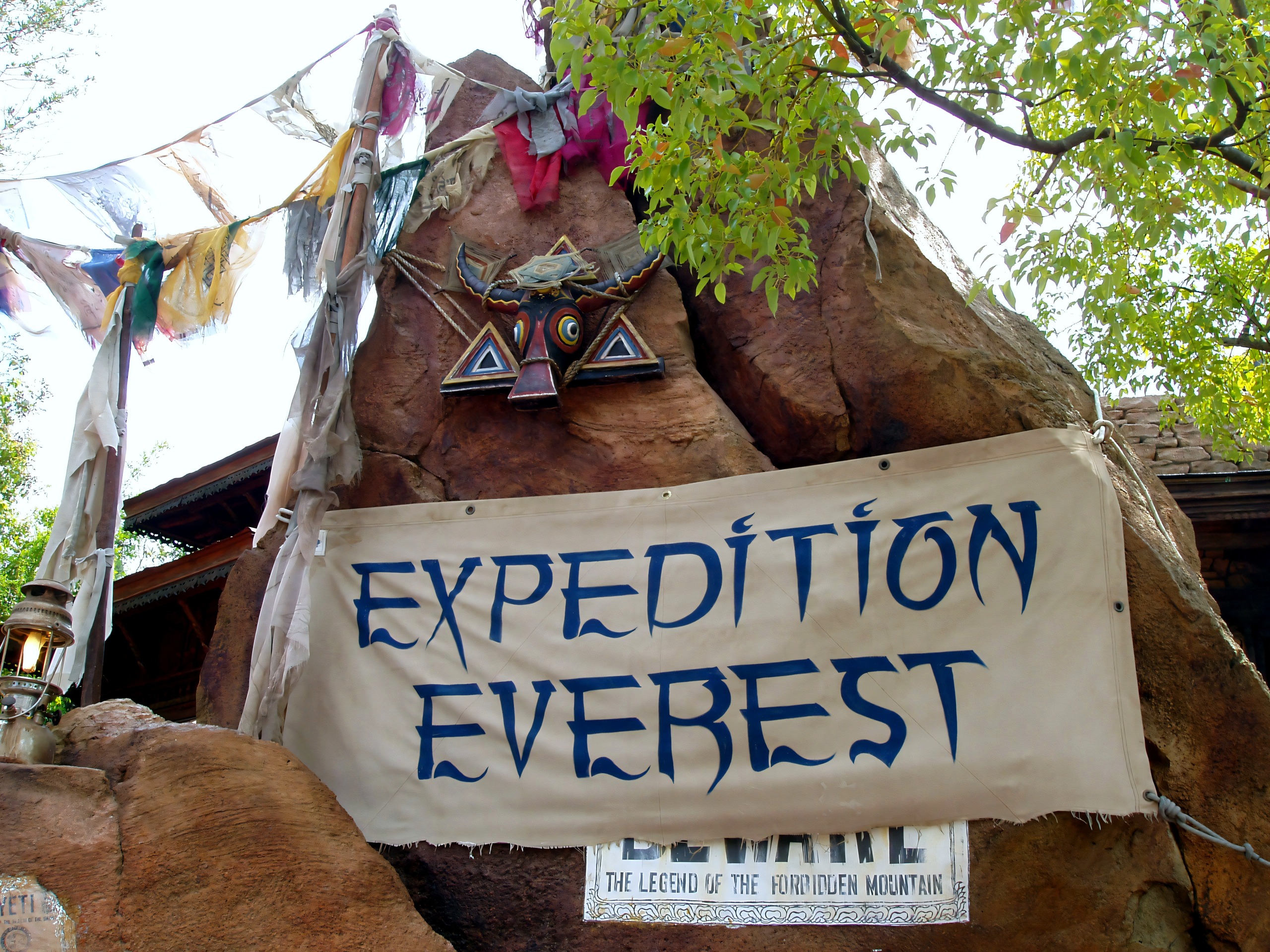
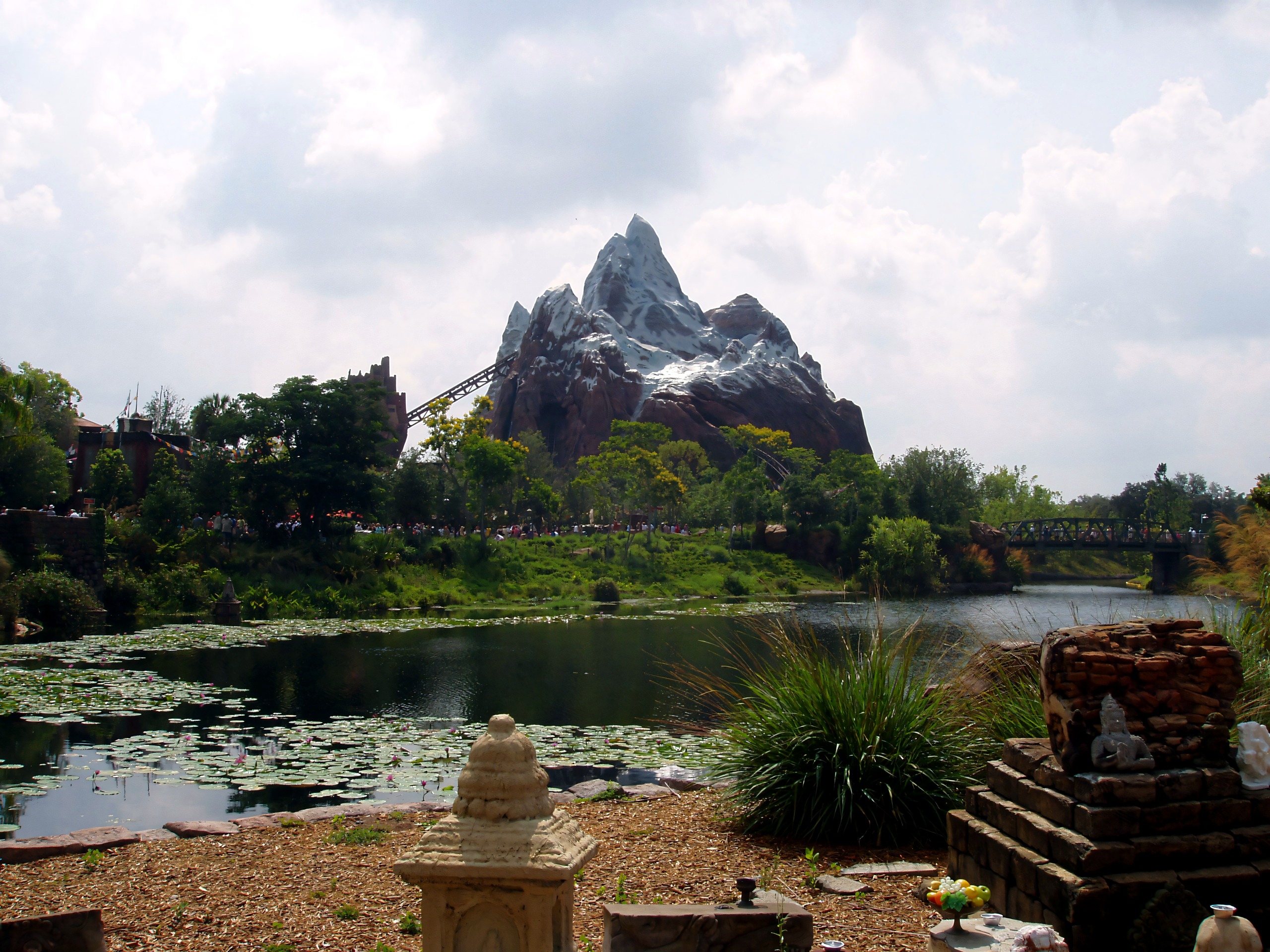
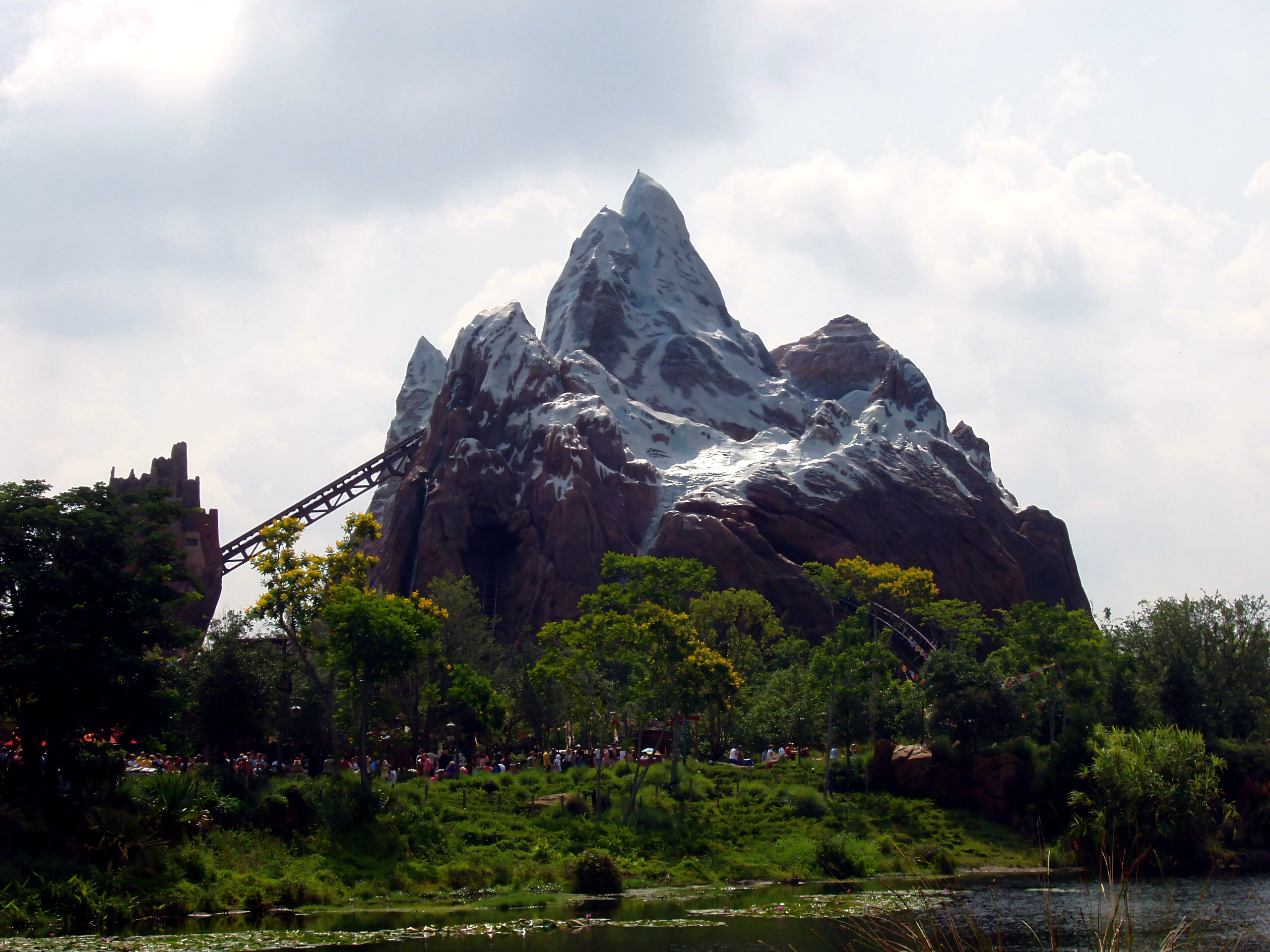
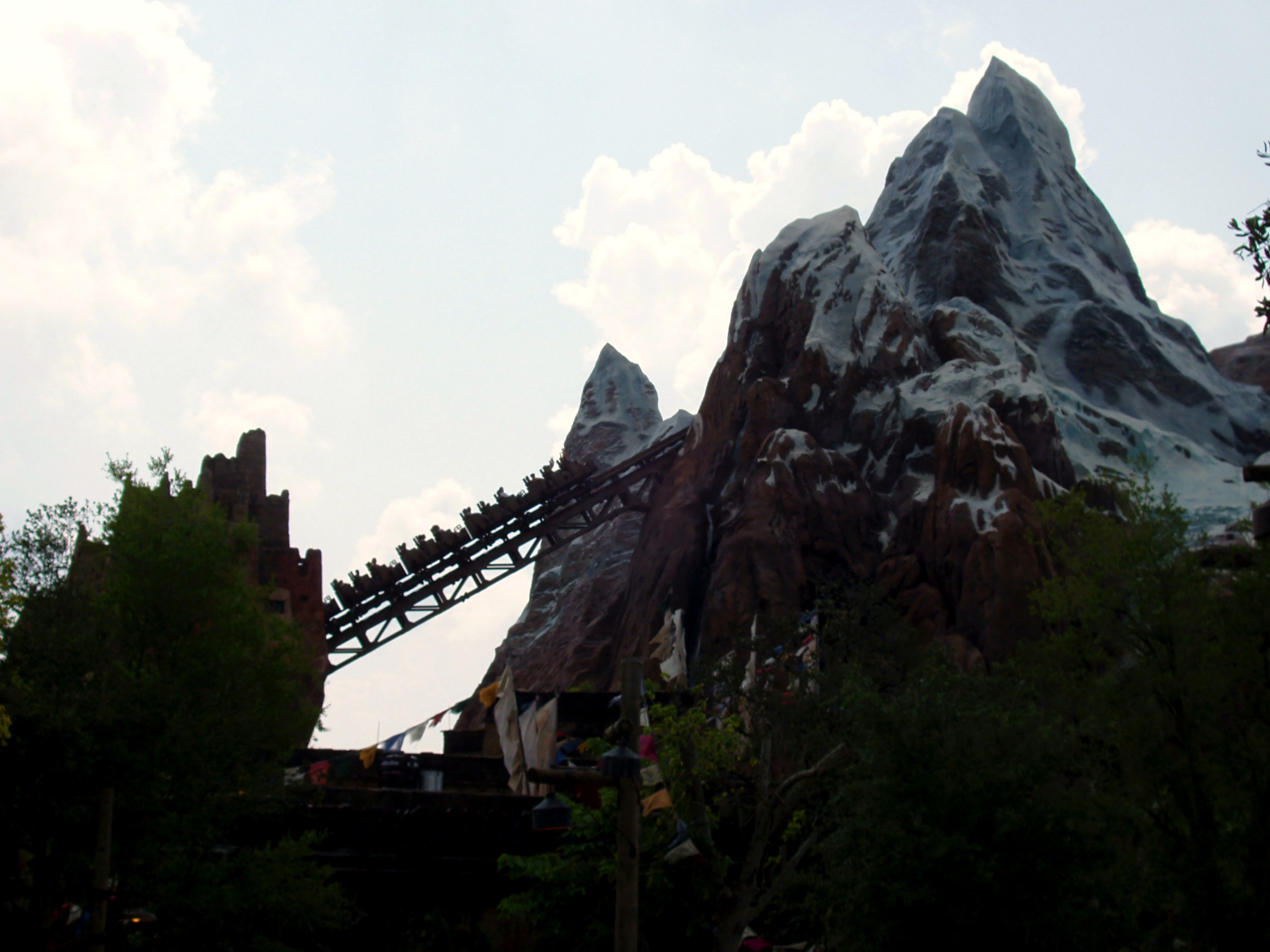
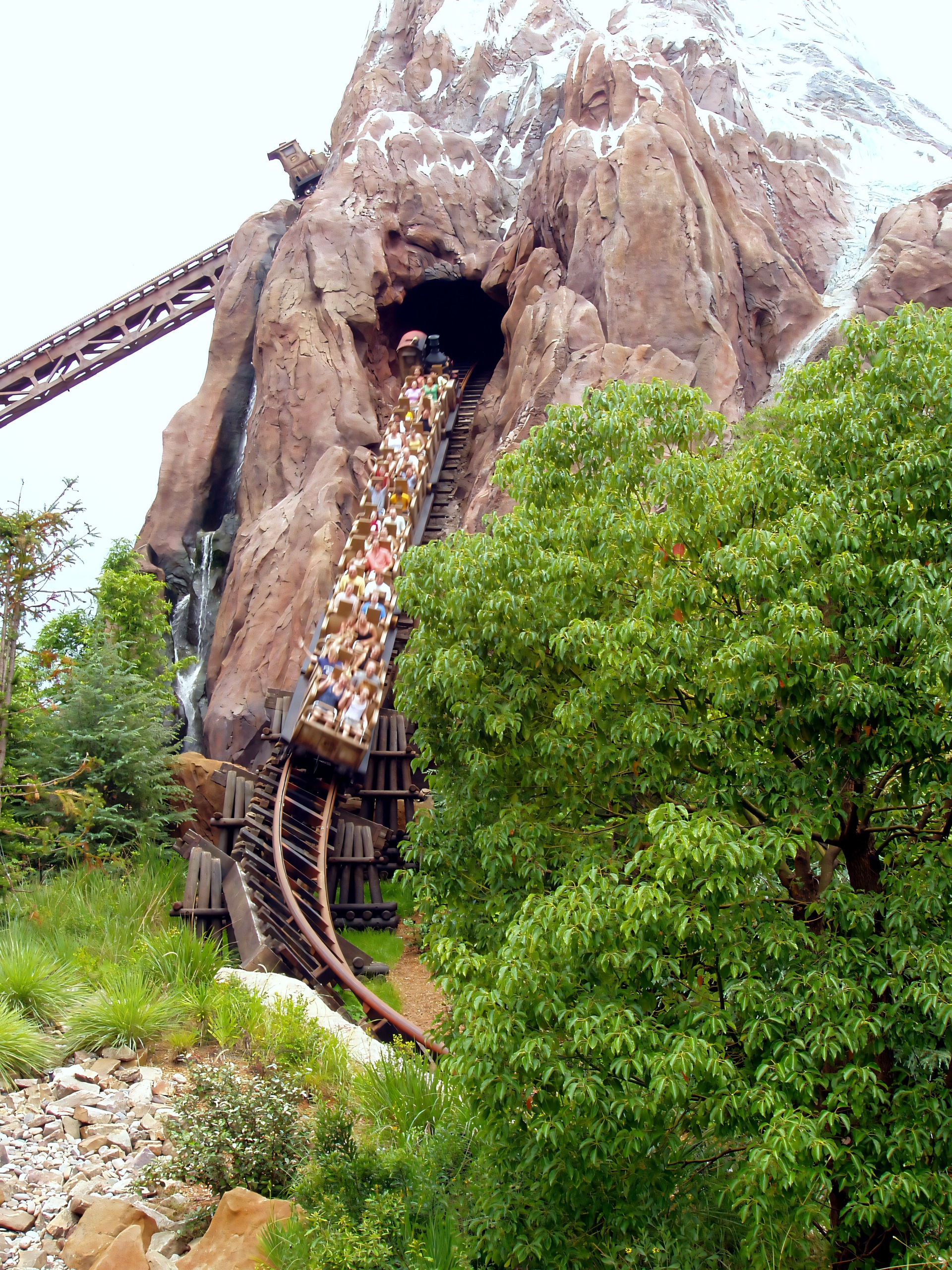
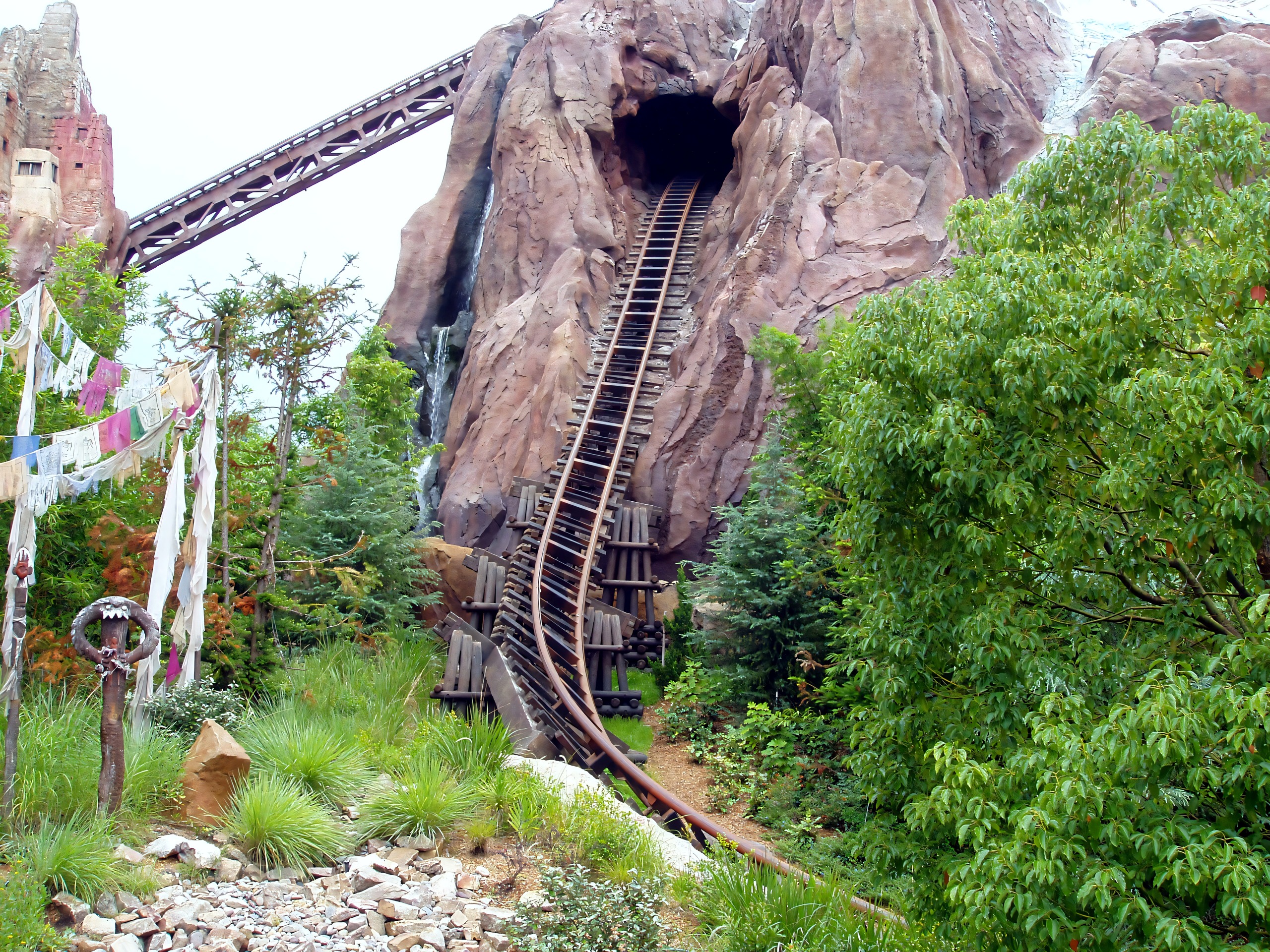
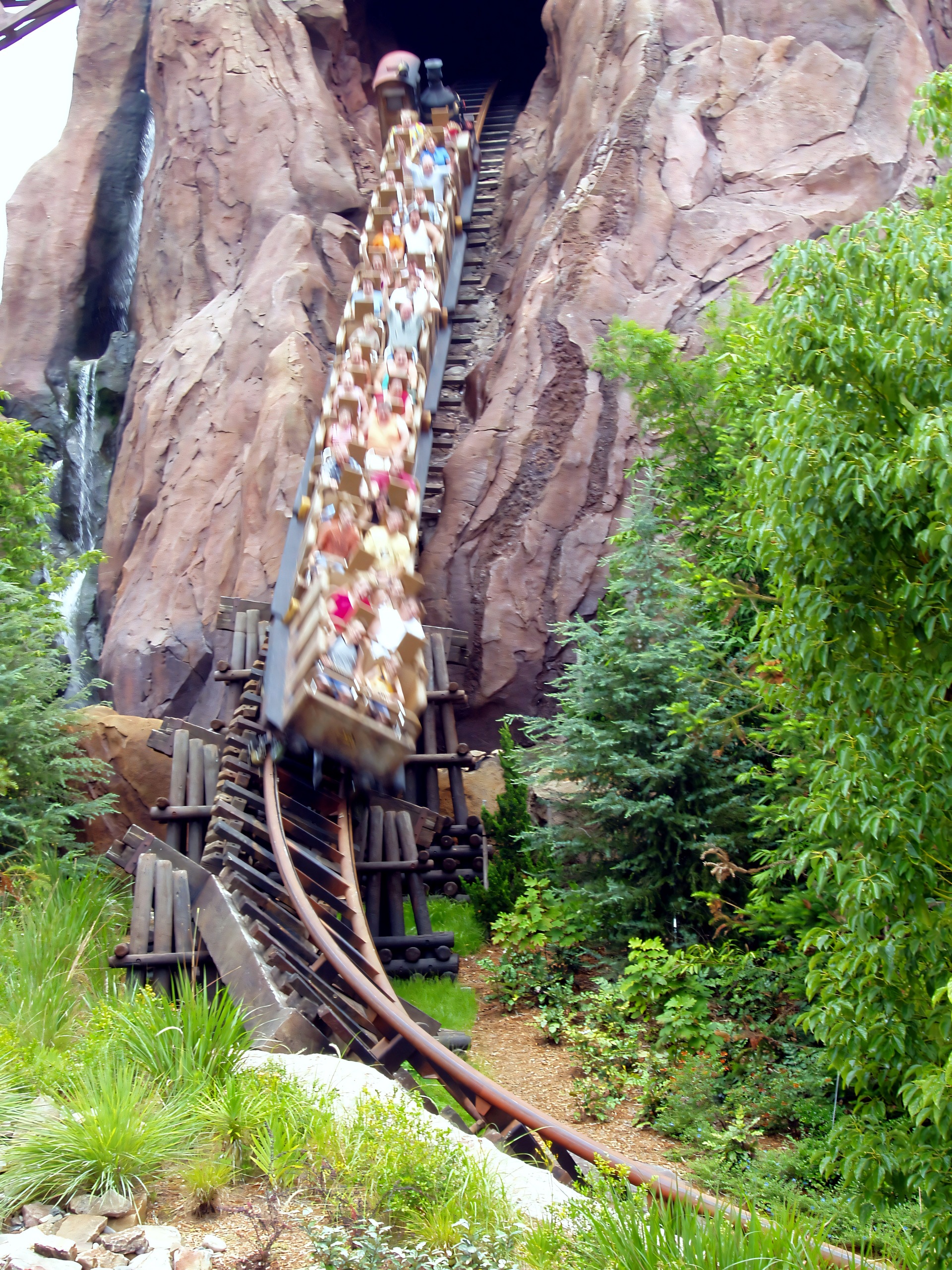
These are original ThrillZing photos of Expedition Everest at Disney’s Animal Kingdom, restored and upscaled from the original camera files. They show the Forbidden Mountain across the lake, the entrance banner, and trains on the lift and dropping out of the mountain. All photos are free to reuse under a CC BY 4.0 license with credit to ThrillZing and a link to this page.
Park apps, mobile ordering and photos kill a battery by 3 p.m. This one snaps on magnetically, so there's no cable to snag on a restraint.
Ride with your glasses on and keep them. Many parks allow glasses on rides if they're strapped, so check the ride rules first.
Small enough to ride with on most coasters, big enough for a phone, card and keys. Two zippers mean nothing falls out upside down.


Expedition Everest FAQs
Who manufactured Expedition Everest?
Expedition Everest was manufactured by Vekoma, a Dutch roller coaster manufacturer, and designed by Walt Disney Imagineering. It opened at Disney’s Animal Kingdom on April 7, 2006.
Does Expedition Everest go upside down?
No — Expedition Everest has zero inversions. The thrill comes from an 80-foot drop, a top speed of 50 mph, and a unique mid-ride reversal where the train travels backward through a dark cavern before lunging forward again.
What is the height requirement for Expedition Everest?
Riders must be at least 44 inches (112 cm) tall to board Expedition Everest, located in the Asia section of Disney’s Animal Kingdom at Walt Disney World in Florida.
How scary is Expedition Everest?
It’s considered Disney World’s most intense coaster, but the fear factor comes mostly from darkness, the surprise backward section, and the yeti’s reveal rather than extreme drops or speed. There are no inversions.
Is the Expedition Everest yeti animatronic working?
The full-motion yeti has run in a reduced strobe-light ‘B-mode’ since shortly after the ride opened due to structural issues. Disney announced repair plans at the August 2026 D23 Expo, but no completion date has been set.
Does Expedition Everest still have a single rider line?
No. Disney discontinued the Single Rider line at Expedition Everest in September 2026 as part of a change to how the standby and Lightning Lane queues merge.
Is the front row or back row better on Expedition Everest?
The front row gives the clearest view of the scenery and the broken-track moment, while the back row feels more intense during the backward reversal since the train’s direction flips mid-ride. Neither seat is considered bad.
Get More from ThrillZing
Log the coasters, stadiums, and venues you’ve experienced, rate expedition everest ride guide, and see what your friends thought. Get the ThrillZing app.
Want the day’s theme park news in your inbox? Subscribe to ThrillZing Daily — free.
See also: the tallest roller coasters · the fastest roller coasters · the highest G-force coasters