
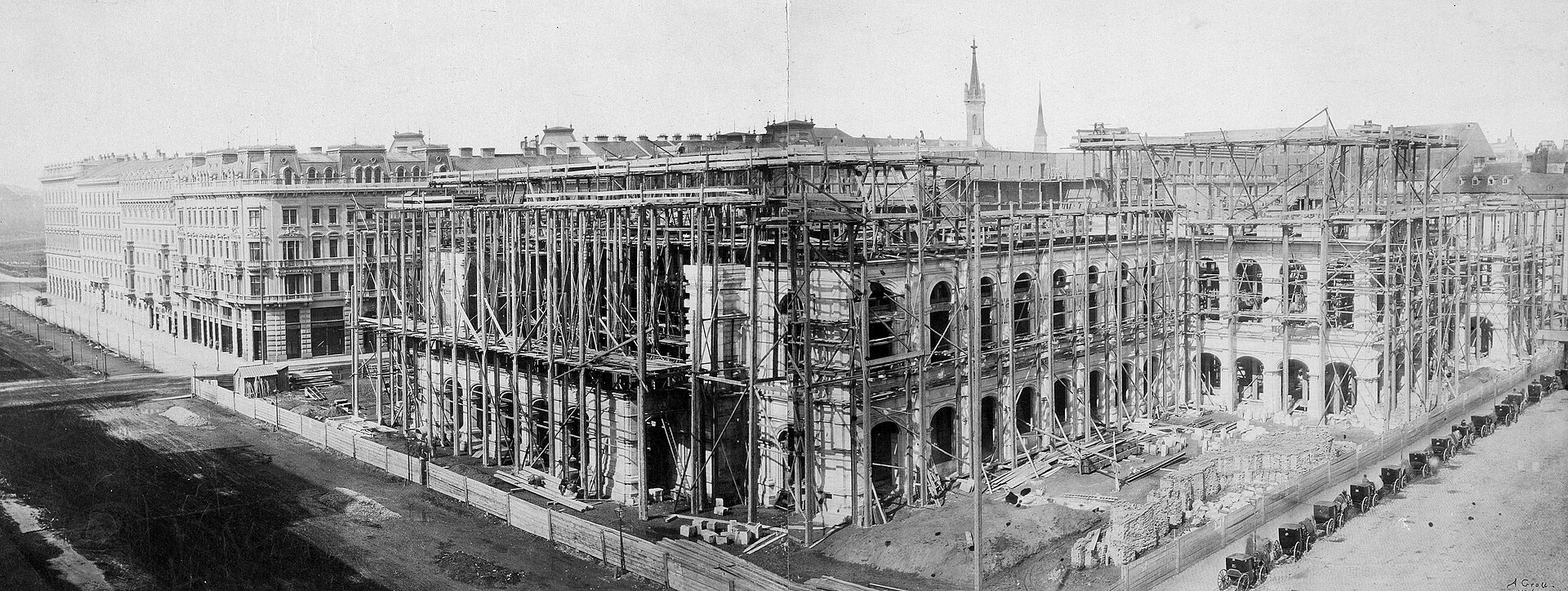
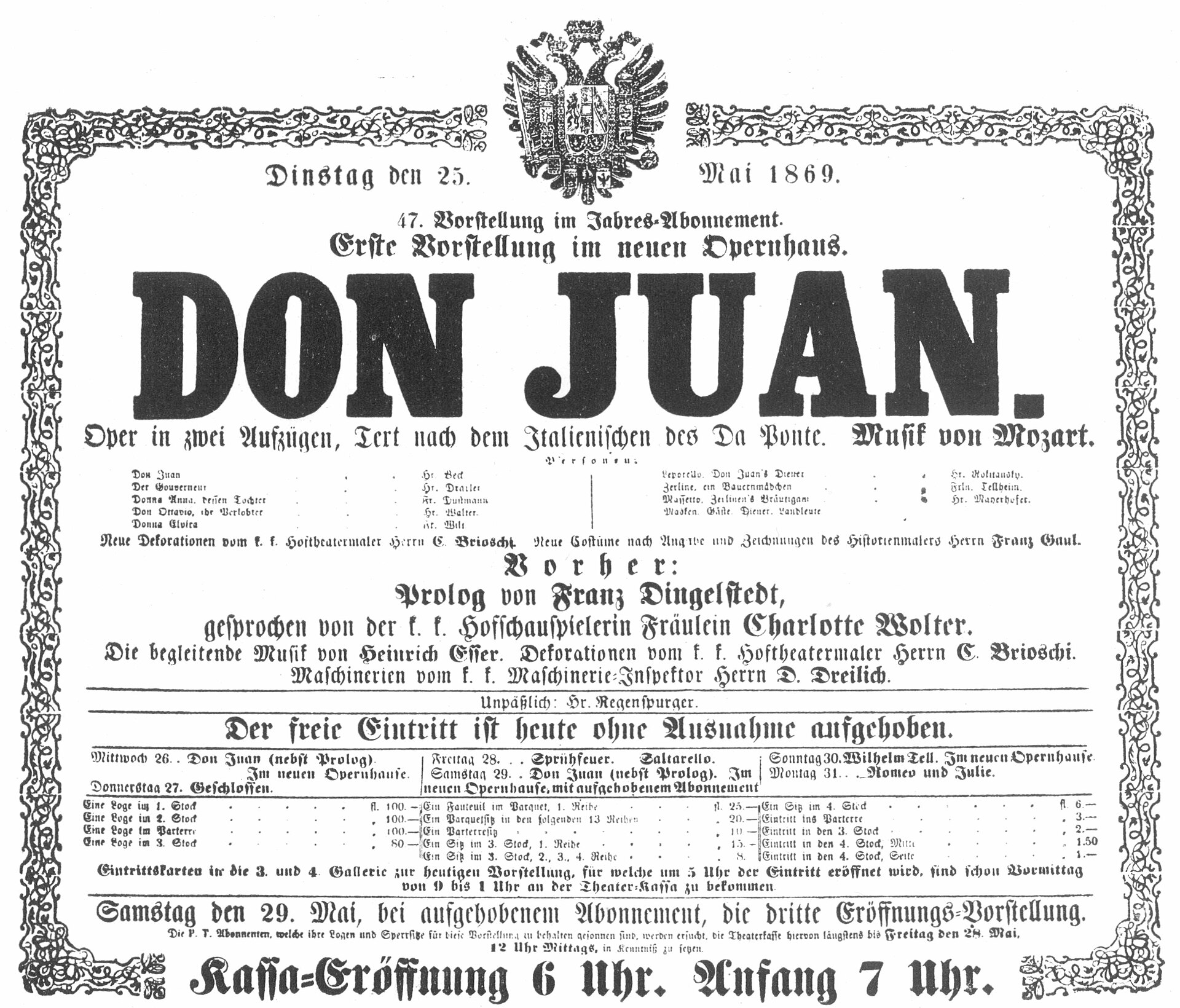
The Vienna State Opera, known in German as the Wiener Staatsoper, opened on May 25, 1869, with a performance of Mozart’s Don Giovanni before Emperor Franz Joseph I. Designed by architects August Sicard von Sicardsburg and Eduard van der Nüll and built by Josef Hlávka, the Neo-Renaissance building became the first major structure completed on Vienna’s Ringstrasse. Neither architect lived to see the opening: van der Nüll died shortly before completion and Sicardsburg passed away weeks later, both worn down by harsh public criticism of the design.
On March 12, 1945, an American bombing raid destroyed the auditorium and stage, wiping out sets and costumes for more than 120 operas while the entrance and facade survived. Rebuilt over a decade with public donations, the opera house reopened on November 5, 1955, with Beethoven’s Fidelio conducted by Karl Böhm. Today it remains one of the world’s busiest opera houses, running a repertory system with a different production nearly every night of the season.
Stats at a Glance
- Location: Vienna, Austria
- Type: Opera house
- Opened: May 25, 1869 (reopened November 5, 1955 after wartime rebuilding)
- Capacity: about 1,709 seats plus 567 standing-room spaces
- Architects: August Sicard von Sicardsburg and Eduard van der Nüll
- Annual performances: more than 350 performances of 50-60 operas per year
- Famous for: nightly repertory opera and the annual Vienna Opera Ball
From Bombed Ruin to Rebuilt Icon
Though the Vienna State Opera looks every bit the imperial relic, most of its interior dates only to the 1950s. The March 1945 air raid gutted the auditorium and stage completely, and the ten-year restoration that followed relied on public fundraising campaigns and building materials supplied during the Soviet occupation of Vienna. The reopening on November 5, 1955, with Fidelio, was treated as a national milestone marking Austria’s postwar cultural recovery.
The facade, grand staircase, and Schwind Foyer are among the few sections that survived the bombing largely intact, giving visitors today a rare direct link to the original 1869 building amid a mostly reconstructed interior.
Standing Room and the Opera Ball
Unlike many opera houses, the Staatsoper keeps opera accessible through same-day standing-room tickets sold at the box office starting at 10 a.m., priced at just a few euros. Regulars tie a scarf to the rail to mark their spot before wandering off until curtain time, a long-running house tradition.
Once a year the opera closes for performances entirely so its auditorium can be converted, in about 51 hours, into a ballroom for the Vienna Opera Ball. First held in the Staatsoper in 1935 and continuing a longer tradition of imperial court balls, the event draws thousands of guests and debutante couples to dance on a floor built over the orchestra stalls and seating rows.
Explore more: Explore more Music Venues.
Meets most arena and amphitheater clear-bag policies. Hands-free in the pit and quick through the gate.
Water on your back and hidden zip pockets against your body. Built for long festival days in crowds.
Charges fast enough to top up your phone between the opener and the headliner.
Vienna State Opera FAQs
When did the Vienna State Opera open?
It opened on May 25, 1869, with a performance of Mozart’s Don Giovanni, and reopened on November 5, 1955, after being rebuilt following WWII bomb damage.
How many people can the Vienna State Opera hold?
The house seats about 1,709 people and offers roughly 567 standing-room spaces, for a total capacity near 2,280.
Can you get cheap tickets to the Vienna State Opera?
Yes. Standing-room tickets are sold on the day of the performance for just a few euros, making it one of the most affordable major opera houses in the world.
Get More from Vienna State Opera
Log the coasters, stadiums, and venues you’ve experienced, rate Vienna State Opera, and see what your friends thought. Get the ThrillZing app.
Photo: Wiener Staatsoper GmbH / CC BY-SA 4.0, via Wikimedia Commons.