
Stade de Colombes — officially Stade olympique Yves-du-Manoir — stood for decades as France’s premier sporting arena, carved out of an old horse-racing track on the northwestern fringe of Paris in Colombes, Hauts-de-Seine. Opened in 1907 by Racing Club de France, it grew from a modest athletics ground into a venue capable of holding around 60,000 spectators, serving as the home of French football and rugby for the better part of the twentieth century.
The stadium earned its permanent place in sporting history by anchoring the 1924 Summer Olympics as the primary athletics and field-sports venue, then staging the 1938 FIFA World Cup Final between Italy and Hungary. For sixty years it ranked among Europe’s most storied grounds, before new arenas and stricter safety rules gradually stripped it of its grandeur. A sweeping €101-million renovation completed in 2023 transformed the site into a modern multi-pitch complex — preserving the name and the memories, but little else of the original colossus.
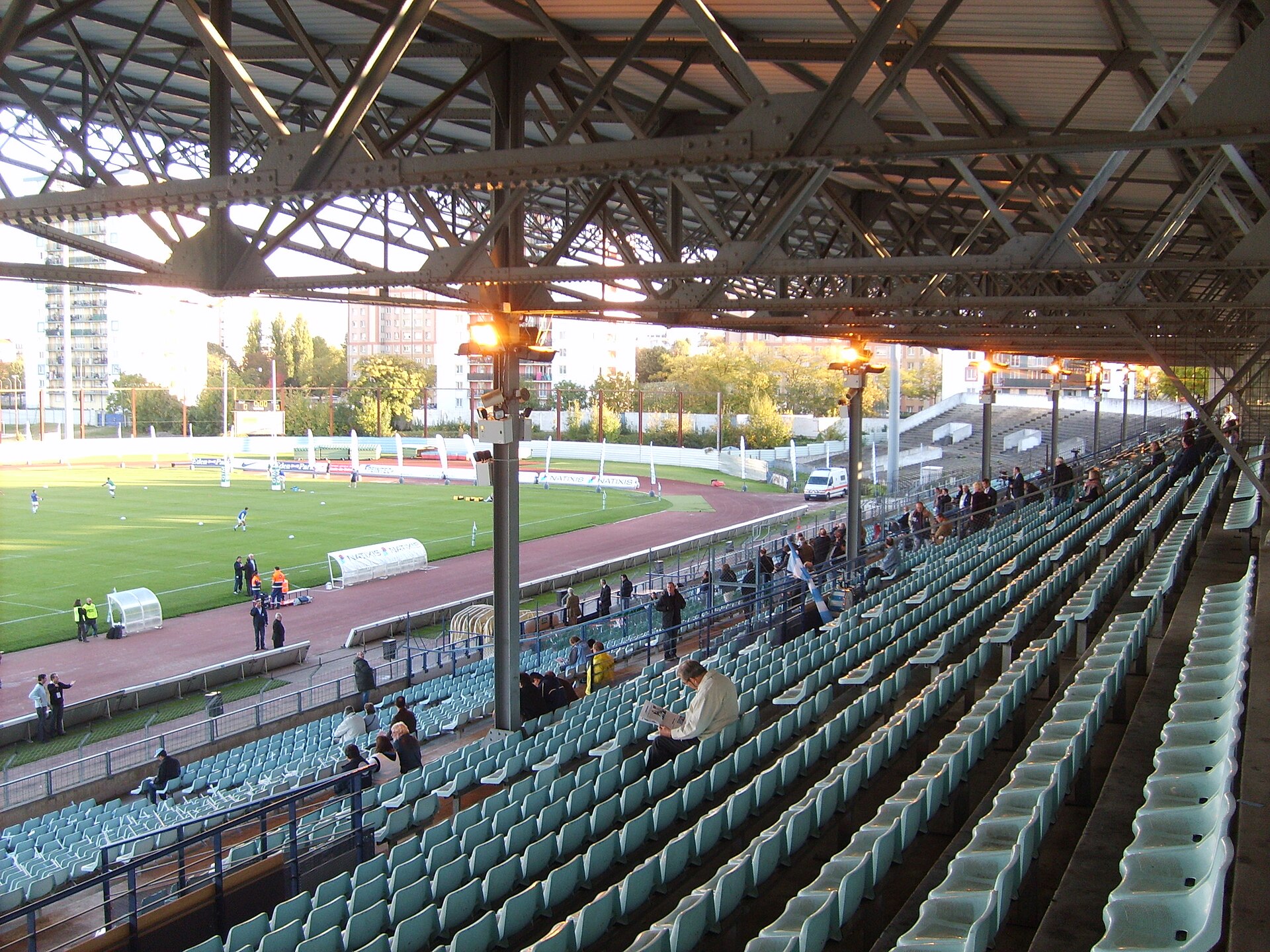
Stats at a Glance
- Location: Colombes, Hauts-de-Seine, France
- Opened: 1907
- Peak Capacity: ~60,000 (1938 World Cup era)
- 1924 Olympics Capacity: 45,000
- Team(s): Racing Club de France (football); Racing 92 (rugby, until 2017)
- 1938 World Cup Final: Italy 4–2 Hungary, 19 June 1938
- Named After: Rugby player Yves du Manoir (renamed 1928)
From Hippodrome to Olympic Stage
The land at Colombes had hosted horse racing since 1883. In 1907, Racing Club de France acquired part of the old hippodrome and fashioned it into a stadium for athletics, football, and rugby. The club’s ambition aligned perfectly with Paris’s bid for the 1924 Summer Olympics: the stadium was expanded to 45,000 seats and became the centrepiece of the Games, staging athletics finals, gymnastics, tennis, the football final, and rugby union. It was the defining moment that transformed a suburban sports ground into a national institution.
The venue was renamed in 1928 in memory of Yves du Manoir, a gifted Racing Club de France rugby three-quarter who died in a plane crash aged just 23. His name became inseparable from the ground, which locals simply called Colombes.
The 1938 Final and a Century of Fading Glory
Colombes reached its physical peak around the 1938 FIFA World Cup, expanded to roughly 60,000 places. On 19 June 1938, it staged the tournament’s final: defending champions Italy overcame Hungary 4–2 in front of around 45,000 supporters. It would be sixty years before France hosted the World Cup again. Through the postwar decades the stadium remained France’s de facto national ground, but tightening safety regulations steadily eroded its permitted capacity, and the 1998 opening of the Stade de France finally ended its reign.
By the 2010s the crumbling terraces held fewer than 15,000 spectators. The €101-million renovation completed in December 2023, led by architects Celnikier et Grabli, stripped the old stands back to a compact 6,000-seat grandstand surrounded by seven new pitches and the French Field Hockey Federation headquarters. The rebuilt venue served as the field hockey arena for the 2024 Paris Olympics — a centennial echo of its 1924 glory — but the soaring stadium that once roared for World Cup finals existed only in photographs.
Explore more: Historic Stadiums hub.
Bleachers for three hours, but with back support. Folds flat and clips to the bench.
For upper-deck seats. Watch line play at the stadium, or the far side of the park from the top of a lift hill.
Sherpa-lined and windproof, with a waterproof back for wet bleachers. Folds into its own pouch.
Stade de Colombes FAQs
What major events were held at Stade de Colombes?
Stade de Colombes hosted the main stadium events of the 1924 Summer Olympics — including athletics, gymnastics, and the football final — as well as three matches of the 1938 FIFA World Cup, notably the final in which Italy defeated Hungary 4–2.
How large was Stade de Colombes at its peak?
At its greatest extent, around the time of the 1938 World Cup, the stadium held approximately 60,000 spectators. Its capacity for the 1924 Olympics was 45,000.
Does Stade de Colombes still exist today?
The original grand stadium no longer stands in its historic form. A €101-million renovation completed in 2023 replaced it with a much smaller modern venue — now called Stade départemental Yves-du-Manoir — with around 6,000 permanent seats, which hosted field hockey at the 2024 Paris Olympics.
Get More from Stade de Colombes
Log the coasters, stadiums, and venues you’ve experienced, rate Stade de Colombes, and see what your friends thought. Get the ThrillZing app.
Photo: Dr.Clint.Beans / CC BY-SA 3.0, via Wikimedia Commons.