
For 102 years, a patch of West Reading off Norfolk Road was as much a part of the town’s identity as the River Kennet or the biscuit factories that once employed half the city. Elm Park wasn’t just Reading Football Club’s ground — it was a working-class cathedral of terraces and timber stands that outlasted two World Wars, welcomed Manchester United twice with 69 years between visits, and only fell to the wrecking ball because a modern safety law made its Victorian bones impossible to save.
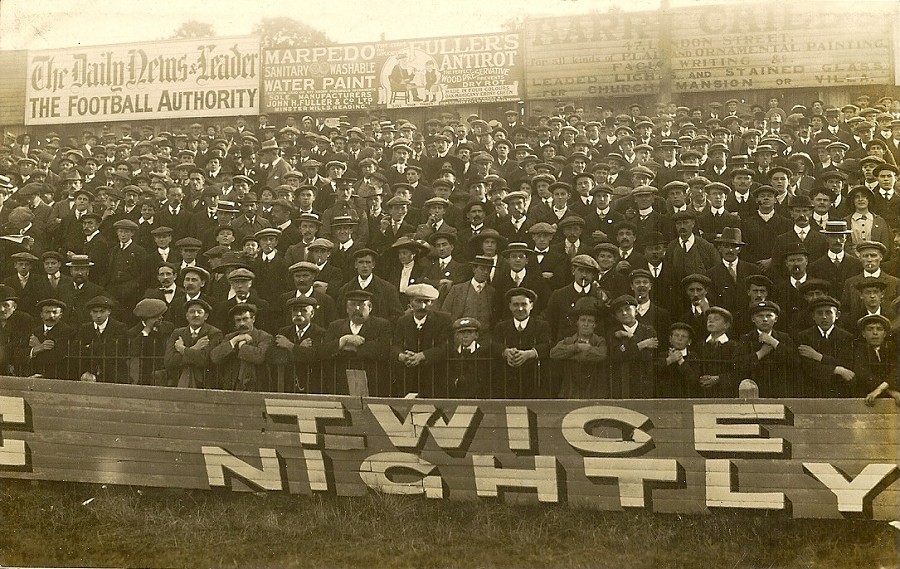
This guide goes beyond the highlight reel. Below you’ll find exactly which stands ringed the pitch and how big each one was, the full story of the chaotic weather-hit match that opened the ground in 1896, the real reason Reading walked away in 1998, and precisely what occupies the site today.
Quick Answer
Elm Park was Reading Football Club’s home stadium in West Reading, Berkshire, from 1896 to 1998. It had four stands — the Norfolk Road Stand, the South Bank (Tilehurst Road) terrace, the Tilehurst End, and the Town End — and drew a record crowd of 33,042 for a 1927 FA Cup tie against Brentford. Reading left because converting the ground to all-seater under the Taylor Report would have cut capacity to roughly 9,000; the club moved to the newly built stadium (now the Select Car Leasing Stadium) for 1998–99, and Elm Park was demolished that October. A housing estate that kept the Elm Park name now covers the site.
Where Elm Park Stood
Elm Park sat in West Reading, just off Norfolk Road, on ground originally worked as a gravel pit before the club leased it in the mid-1890s. The stadium took its name from the adjacent Elm Park Road rather than any grove of trees on site. Reading West railway station was the nearest rail link, a short walk from the turnstiles, and local bus routes along Tilehurst Road served matchdays for decades.
The area still carries the ground’s name today: the postcode district is RG30, and Elm Park Road remains a through-route in the neighbourhood, one of the few physical clues that a 30,000-capacity football ground once stood there.
Elm Park’s Opening Match, 5 September 1896
Elm Park’s first game wasn’t a routine friendly against local opposition — it was against A. Roston Bourke’s XI, a scratch invitational side named for the honorary secretary of the Referees’ Association and largely made up of Holloway College players. Around 2,500 spectators paid a total of £44 at the gate to watch Reading race into a 7–1 lead before a torrential downpour forced the referee to abandon the match.
The aftermath had a sting in the tail: because Roston Bourke’s XI wasn’t registered with the Football Association, Reading were later fined £5 for fielding an unregistered opponent — an odd footnote to the ground’s first afternoon in existence.
The Four Stands That Gave Elm Park Its Character
Elm Park’s layout evolved gradually rather than all at once, which is why it kept its old-fashioned, patchwork feel right up to 1998. The Norfolk Road Stand (North) was the ground’s main structure, rebuilt in 1926 as a single-tier wooden stand seating around 4,000 and housing the club’s offices. Opposite it, the South Bank — also known as the Tilehurst Road side — was a large covered terrace holding roughly 6,000, with roofing added in stages between 1914 and 1956.
Behind the goals sat two uncovered terraces: the Tilehurst End (West), rebuilt in 1957 when concrete steps finally replaced rotting timber railway sleepers, and the Town End (East), which became the designated away end from the 1980s onward. Floodlights arrived in 1954, first switched on for a friendly against Racing Club de Paris on 6 October that year, with the second half broadcast live by the BBC — a genuine novelty for English football at the time.
Record Attendance and Elm Park’s Biggest Nights
Elm Park’s record crowd of 33,042 came on 19 February 1927, when Reading beat Brentford 1–0 in an FA Cup fifth-round tie. It wasn’t a one-off: the ground’s next-highest gates were 30,621 for an FA Cup tie against Arsenal in 1935, 29,248 against Sheffield Wednesday in the 1929 FA Cup, 29,029 for a Division Three South match with Notts County in 1949, and 28,918 for an FA Cup visit from Manchester United in 1927.
Manchester United returned nearly seventy years later for a fourth-round FA Cup tie on 27 January 1996, generating gate receipts of more than £110,000 — proof that even in its final seasons, with capacity reduced by safety rules, Elm Park could still produce one of English football’s biggest matchday atmospheres.
Why Reading Left Elm Park
The decisive factor was the Taylor Report, commissioned after the 1989 Hillsborough disaster, which required top-division English grounds to become all-seater. Elm Park’s tightly packed, landlocked footprint made that conversion impractical: stripping out the terraces and seating the whole ground would have left a capacity of only around 9,000, with no realistic room on site to expand, add parking, or build modern facilities.
Rather than shrink the club’s home to a fraction of its historic size, Reading’s board opted to build an entirely new stadium and relocated for the 1998–99 season. That stadium opened as the Madejski Stadium, named after chairman John Madejski, and has been known as the Select Car Leasing Stadium since a 2021 sponsorship deal.
Elm Park’s Final Match and Demolition
Reading’s last competitive fixture at Elm Park came on 3 May 1998, a 1–0 defeat to Norwich City. A pre-season friendly against Sheffield Wednesday that summer, won 3–0, served as the ground’s true sentimental send-off before the gates closed for good. Supporters later bought pieces of the stadium at auction, from seats to fixtures, as keepsakes of the ground’s 102 years.
Demolition crews moved in during October 1998, tearing down stands that had stood, in some cases, for over seventy years.
What Occupies the Site Today
The former pitch and terraces are now a residential estate of 128 homes in West Reading’s RG30 postcode area. The developers kept the Elm Park name for the estate, and Elm Park Road still runs through the neighbourhood, so the ground’s identity survives in street signs and addresses even though no stand, terrace, or turnstile remains standing.
Elm Park’s Legacy
A 102-year lifespan put Elm Park among the longer-serving grounds of the Football League era, a span that included a near-merger with Oxford United in the 1980s that would have shut the ground years earlier had it gone ahead. Today it lives on through supporter memoirs, Reading Museum’s archive of matchday photographs and programmes, and the wider culture of English football nostalgia that keeps lost grounds like this one from being forgotten entirely.
Explore more: Historic and iconic stadiums.
Sized to the NFL's 12x6x12 clear-bag rule. Fits snacks, a jacket and a rally towel.
A see-through purse that looks like a purse. Works for most stadium, arena and concert bag policies.
Bleachers for three hours, but with back support. Folds flat and clips to the bench.
Elm Park Reading FC stadium FAQs
When did Elm Park open and close?
Elm Park opened on 5 September 1896 and hosted its last competitive match on 3 May 1998, after which Reading FC moved to the newly built stadium (now the Select Car Leasing Stadium). Demolition began in October 1998.
What was the record attendance at Elm Park?
The record was 33,042, set on 19 February 1927 during an FA Cup tie between Reading and Brentford, which Reading won 1–0.
Why did Reading FC leave Elm Park?
The Taylor Report required all-seater stadiums in the top divisions after Hillsborough. Converting Elm Park’s cramped, landlocked layout to all-seating would have left only around 9,000 seats with no room for parking or expansion, so Reading built a new stadium instead.
What stands did Elm Park have?
Four: the Norfolk Road Stand (North, seated, around 4,000), the South Bank or Tilehurst Road terrace (South, covered, around 6,000), the Tilehurst End (West, uncovered), and the Town End (East, uncovered, used by away fans from the 1980s).
What replaced Elm Park after it was demolished?
The site became a housing estate of 128 homes in West Reading’s RG30 area. The estate kept the Elm Park name, and Elm Park Road still runs through the neighbourhood today.
Is anything of the old stadium still there?
No physical remains of the stands or pitch survive. The only trace is the name: the housing estate and Elm Park Road preserve the memory of the ground on the site it once occupied.
Get More from Elm Park Reading FC stadium
Log the coasters, stadiums, and venues you’ve experienced, rate Elm Park Reading FC stadium, and see what your friends thought. Get the ThrillZing app.
Photo: Unknown, presumed deceased / Public domain, via Wikimedia Commons.