
Boothferry Park was a football stadium on Boothferry Road in Kingston upon Hull, East Riding of Yorkshire, England. It served as the home ground of Hull City AFC for 56 years, from the club’s first match there on 31 August 1946 — a goalless draw against Lincoln City watched by 25,586 supporters — until December 2002, when the Tigers relocated to the newly built KC Stadium.
The ground secured its place in football history through an extraordinary record attendance of 55,019, set on 26 February 1949 when Hull City hosted Manchester United in an FA Cup sixth-round tie. That figure remains the highest-ever attendance for a home match in Hull City’s history, and it stood as a lasting testament to the stadium’s capacity and the city’s passion for its club.
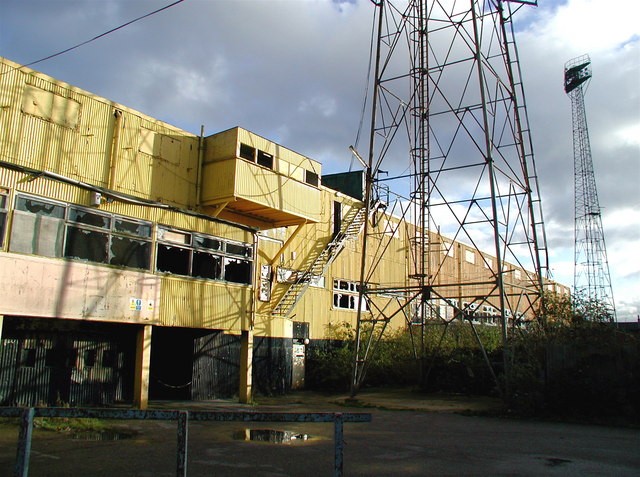
Stats at a Glance
- Team: Hull City AFC
- Location: Kingston upon Hull, East Yorkshire, England
- Opened: 1946
- Closed: 2002
- Demolished: 2008–2011
- Final Capacity: 15,160
- Record Attendance: 55,019 (vs Manchester United, FA Cup, 26 February 1949)
A Ground Built Against the Odds
Hull City first acquired the land — a former golf course — in 1929, but financial difficulties and the Second World War repeatedly halted construction, delaying the opening until August 1946. Once established, the ground steadily grew: a North Stand was added in 1951, and Boothferry Park Halt — a dedicated railway station — opened the same year to carry fans directly from the city centre. Floodlights were installed in 1963, and a cantilevered South Stand with roughly 3,000 seats and 4,000 standing spaces was completed in 1965.
Beyond league football, the stadium hosted international fixtures including an England Under-23 match against Austria in 1967 and a Northern Ireland vs Spain tie in 1972, as well as rugby league internationals between 1980 and 1983. In its later years, facing mounting financial pressures, the club took the unusual step of integrating a supermarket into the stadium’s footprint — a novel arrangement that passed through Grandways, Kwik Save, and Iceland — though it ultimately could not prevent the club’s eventual move.
Decline, Departure, and Demolition
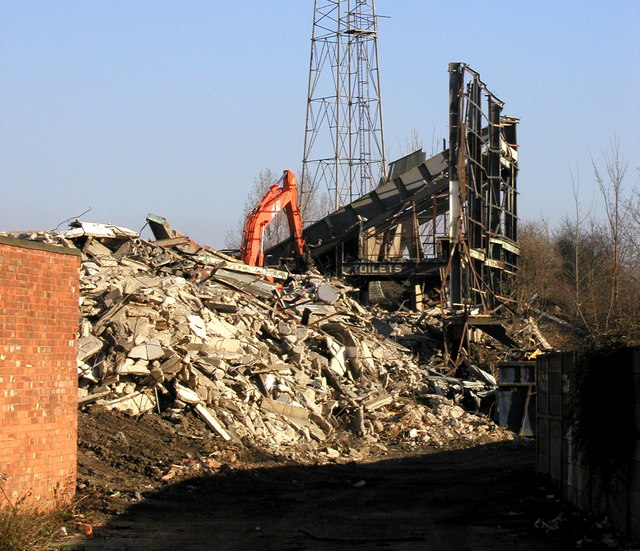
By the time Hull City departed in 2002, Boothferry Park’s final capacity had fallen to just 15,160 — a fraction of the crowds it had once accommodated in its terracing heyday. The last professional match played there was a 0–1 defeat to Darlington on 14 December 2002, with Simon Betts scoring the decisive goal. The stadium then stood derelict for several years before demolition began in early 2008 and was completed in 2011.
Residential housing now occupies the site, though the development pays quiet tribute to the ground’s heritage: street names such as Jensen Mews honour former players like Danish forward Viggo Jensen, who featured for the club from 1949 to 1956. Hull City have gone on to compete at the MKM Stadium (formerly the KC Stadium), but Boothferry Park is still recalled with deep affection by supporters who filled its terraces across more than five decades.
Explore more: Explore more historic stadiums.
USB-charged warmers for cold night games — no disposable packets.
Keeps chili hot from the tailgate to the fourth quarter.
Team-color face paint in a twist-up stick — no brushes, no mess in the car.
Boothferry Park FAQs
When did Hull City leave Boothferry Park?
Hull City played their final match at Boothferry Park on 14 December 2002, losing 0–1 to Darlington, before moving to the newly built KC Stadium — now known as the MKM Stadium — midway through the 2002–03 season.
What was the record attendance at Boothferry Park?
The record attendance was 55,019, set on 26 February 1949 when Hull City faced Manchester United in an FA Cup sixth-round tie. It remains the highest attendance ever recorded for a Hull City home match.
What stands on the site of Boothferry Park today?
Demolition of the ground was completed in 2011, and the site was subsequently redeveloped into residential housing. Several street names in the development, including Jensen Mews, pay homage to former Hull City players and the stadium’s legacy.
Get More from Boothferry Park
Log the coasters, stadiums, and venues you’ve experienced, rate Boothferry Park, and see what your friends thought. Get the ThrillZing app.
Photo: Andy Beecroft / CC BY-SA 2.0, via Wikimedia Commons.