
Heysel Stadium opened on 23 August 1930 in the Laeken district of Brussels, designed by architect Joseph Van Neck and inaugurated as the Stade du Centenaire to mark the centenary of the Belgian Revolution. With an original capacity of around 70,000, it served as Belgium’s national stadium for over six decades, hosting international football, athletics, and some of the biggest European club fixtures of the mid-twentieth century.
Renamed Heysel Stadium in 1946 after the surrounding plateau, the venue accumulated a remarkable European pedigree — four European Cup finals (1958, 1966, 1974, and 1985) and three Cup Winners’ Cup finals (1964, 1976, and 1980). Yet by the 1980s the ageing structure had fallen into serious disrepair, and the catastrophic events of 29 May 1985 sealed its fate. Following the 1985 disaster, the stadium was almost entirely demolished and rebuilt between 1994 and 1995, reopening as the modern King Baudouin Stadium.
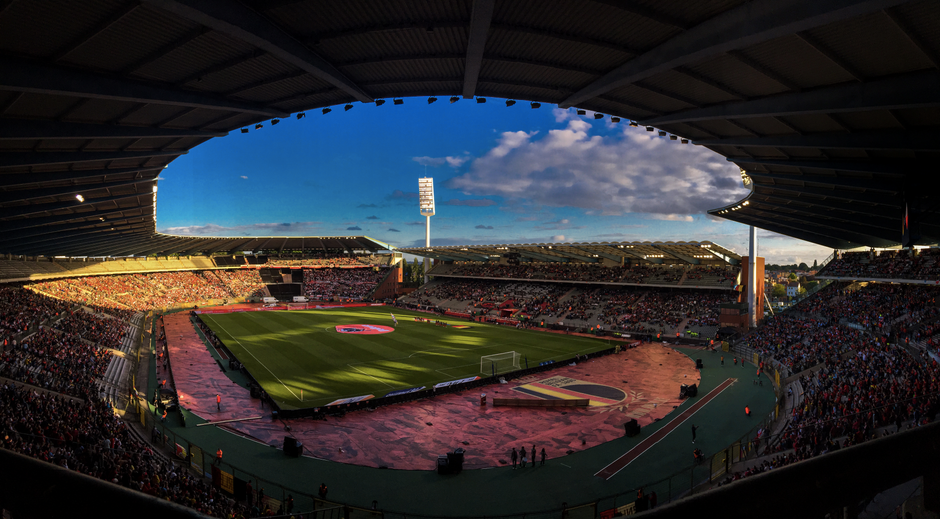
Stats at a Glance
- Location: Heysel/Laeken, Brussels, Belgium
- Teams: Belgium national football team
- Architect: Joseph Van Neck
- Opened: 23 August 1930
- Original Capacity: About 70,000
- Demolished: 1994–1995 (rebuilt as King Baudouin Stadium)
- European Finals Hosted: 7 (4 European Cup, 3 Cup Winners’ Cup)
Six Decades of European Football
From its inauguration as the Stade du Centenaire through to its final years, Heysel Stadium stood as the premier venue for Belgian football and a trusted host for UEFA’s showpiece finals. The stadium welcomed the European Cup final four times, with the 1958 edition drawing over 69,000 supporters — among the highest attendances ever recorded at a European club final. A tartan athletics track was added in 1971 and a new floodlighting system installed in 1974, keeping the ground competitive even as its ageing concrete and cinder-block perimeter walls began to show their age.
By the early 1980s, however, Heysel’s fabric was visibly deteriorating. Sections of the outer walls were described by contemporaries as literally crumbling, with inadequate escape routes and fencing that provided little separation between rival supporter sections. UEFA’s repeated selection of the stadium for major finals in spite of these known deficiencies would later attract fierce criticism in the aftermath of the 1985 disaster.
The 1985 Disaster and the Road to Demolition
On 29 May 1985, Heysel hosted the European Cup Final between Liverpool and Juventus. Before kick-off, crowd disorder in the supposedly neutral Section Z caused panicking Juventus supporters to surge against a deteriorating perimeter wall, which collapsed under the pressure. Thirty-nine people were killed — 32 Italian, 4 Belgian, 2 French, and 1 Northern Irish — and around 600 were injured. The match was played regardless, with Juventus winning 1–0 via a Michel Platini penalty. Fourteen Liverpool supporters were later convicted of involuntary manslaughter.
The disaster triggered an indefinite ban on all English clubs from European competition and prompted a global reckoning with stadium safety. Heysel itself was condemned as unfit for purpose. In 1994 the structure was almost entirely pulled down and rebuilt from the ground up, reopening in 1995 as the 50,000-seat King Baudouin Stadium. Only a renovated gateway near the original main entrance was preserved from the old ground, standing as a quiet memorial to those who died.
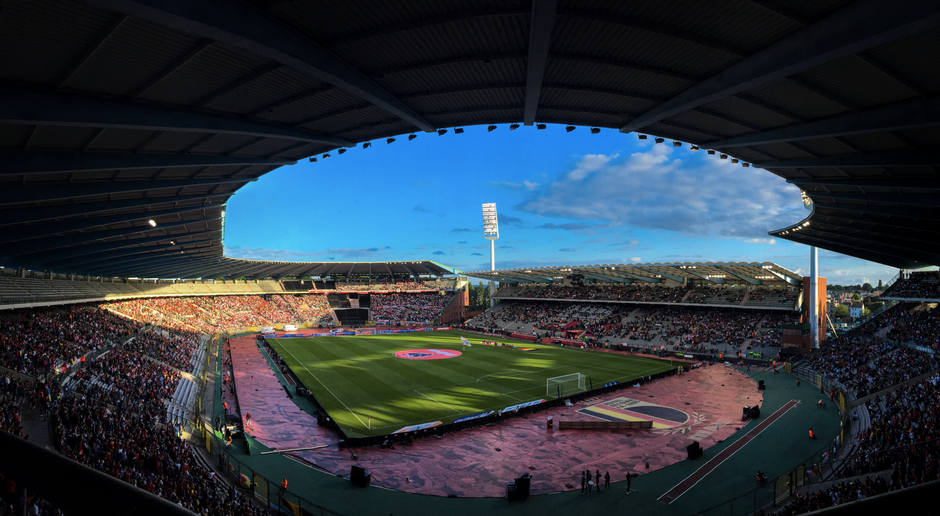
Explore more: Explore more historic and iconic stadiums.
Heysel Stadium FAQs
When was Heysel Stadium opened and what was it originally called?
Heysel Stadium opened on 23 August 1930. It was originally named the Stade du Centenaire (Jubilee Stadium) to mark the centenary of Belgian independence, and was renamed Heysel Stadium in 1946 after the surrounding plateau.
What happened at Heysel Stadium in 1985?
On 29 May 1985, crowd disorder before the European Cup Final between Liverpool and Juventus caused a deteriorating perimeter wall to collapse in Section Z, killing 39 spectators and injuring around 600. The disaster led to an indefinite ban on English clubs from European competition and prompted sweeping changes in stadium safety standards across Europe.
What replaced Heysel Stadium?
Between 1994 and 1995, Heysel Stadium was almost entirely demolished and rebuilt as the King Baudouin Stadium, a modern 50,000-seat venue that continues to serve as Belgium’s national football ground. Only a renovated section of the original entrance gateway was retained from the old structure.
Get More from Heysel Stadium
Log the coasters, stadiums, and venues you’ve experienced, rate Heysel Stadium, and see what your friends thought. Get the ThrillZing app.
Photo: S. Perquin / CC BY-SA 4.0, via Wikimedia Commons.