
Built in 1913–1914 as Ringler’s Cotillion Hall, the Crystal Ballroom at 1332 West Burnside Street in Portland, Oregon has anchored the city’s entertainment scene for over a century. Designed in Romanesque Revival style by architect Robert F. Tegan, the third-floor ballroom opened in early 1914 as a grand dance hall, drawing crowds through the Roaring Twenties and the Great Depression alike.
Beginning in the 1960s, the Crystal Ballroom became a launching pad for rock, R&B, folk, and jazz — with performances by Jimi Hendrix, James Brown, Ike & Tina Turner, the Grateful Dead, and Buffalo Springfield. After decades of decline, McMenamins brothers Mike and Brian restored the space and reopened it in 1997, preserving its iconic floating dance floor and returning it to its place as Portland’s most beloved live music destination.

Stats at a Glance
- Location: 1332 West Burnside Street, Portland, Oregon
- Type: Historic ballroom / live music venue
- Opened: 1914 (as Ringler’s Cotillion Hall)
- Reopened: 1997 (after McMenamins restoration)
- Capacity: 1,500 standing; 850 seated
- Famous for: Floating mechanical dance floor
- National Register: Listed March 9, 1979
The Legendary Floating Dance Floor
The Crystal Ballroom’s most celebrated feature is its floating mechanical dance floor, supported by ball bearings and rockers beneath the floorboards. Engineered in the early 20th century to absorb and amplify the energy of dancers, the floor visibly bounces and sways during heavy use — a sensation that has delighted generations of Portland revelers. It is one of the only floors of its kind still in operation in the United States, and the McMenamins restoration in the 1990s took great care to preserve this engineering marvel intact.
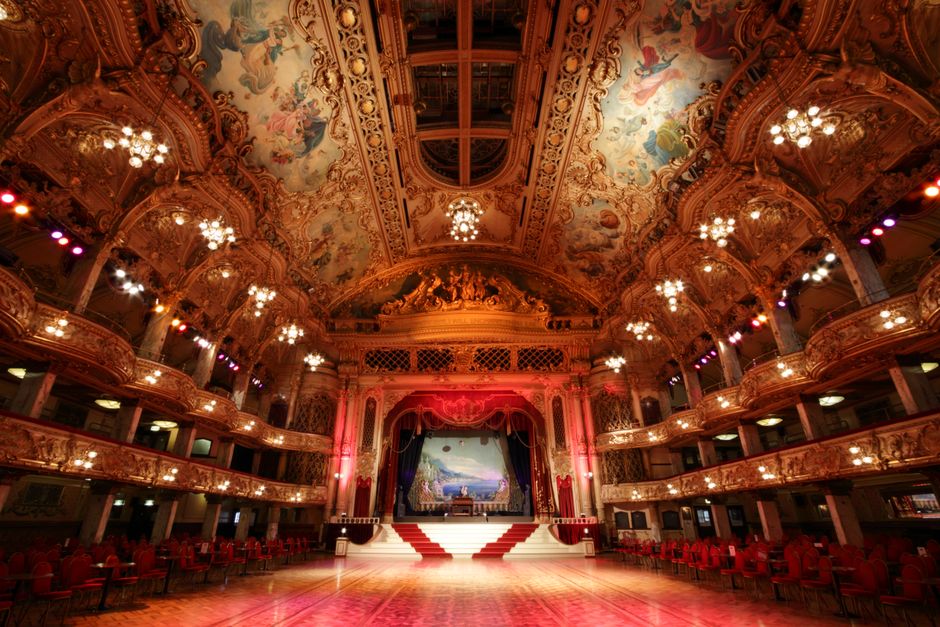
The third-floor main hall pairs the famous floor with soaring ceilings, grand chandeliers, wide arched windows, and interior murals — together creating an atmosphere that feels simultaneously historic and electrifying on a packed show night.
A Stage for Musical Legends
The Crystal Ballroom’s performance history reads like a greatest-hits list of American music. James Brown first performed here around 1958 and returned repeatedly throughout the early 1960s, part of a golden era when the venue was Portland’s top destination for R&B and soul. The Grateful Dead, Buffalo Springfield (featuring Neil Young and Stephen Stills), Jimi Hendrix, Little Richard, and Ike & Tina Turner all played the Crystal during the psychedelic rock boom of the late 1960s.
Added to the National Register of Historic Places on March 9, 1979, the ballroom was recognized for its cultural significance even before its restoration. Today, under McMenamins ownership, it continues to host world-class touring acts across every genre, while the adjacent Crystal Hotel — whose 51 rooms are named after songs and performances from the venue’s history — ensures the legacy stays very much alive.
Explore more: Explore more Music Venues on ThrillZing.
Crystal Ballroom FAQs
Where is the Crystal Ballroom located?
The Crystal Ballroom is located at 1332 West Burnside Street in Portland, Oregon.
What makes the Crystal Ballroom’s dance floor unique?
The venue features a rare floating mechanical dance floor supported by ball bearings and rockers, engineered to move with dancers. It is one of the very few floors of this type still in operation in the United States.
Who owns the Crystal Ballroom today?
The Crystal Ballroom is owned and operated by McMenamins, a Pacific Northwest hospitality company. Brothers Mike and Brian McMenamin acquired the dilapidated property in the mid-1990s, restored it, and reopened it in 1997.
Get More from Crystal Ballroom
log the coasters, stadiums, and venues you’ve experienced, rate Crystal Ballroom, and see what your friends thought. Get the ThrillZing app.
Photo: Steve Morgan / CC BY-SA 4.0, via Wikimedia Commons.