
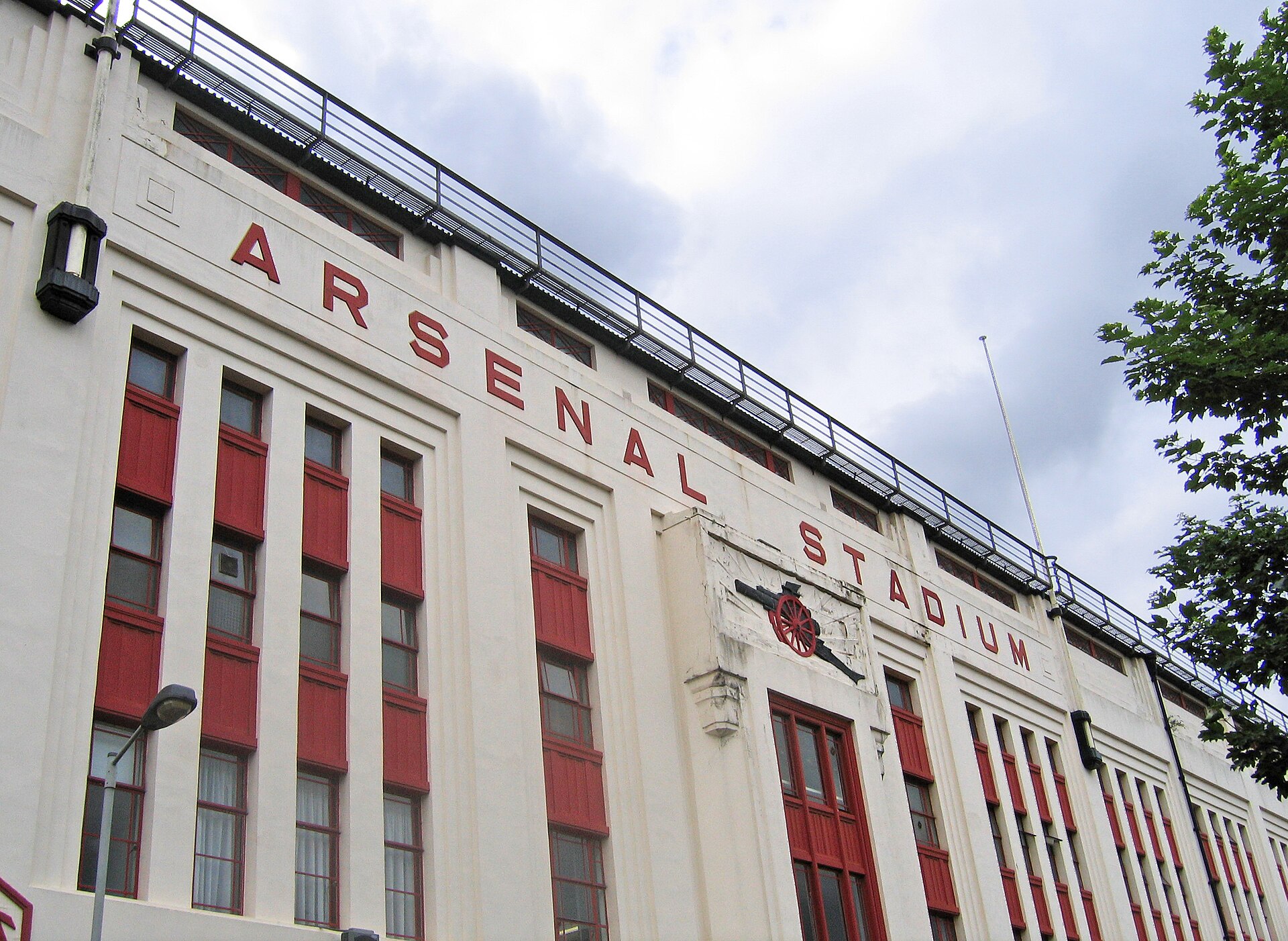
Highbury — officially Arsenal Stadium — was the home of Arsenal Football Club for 93 years, from its opening on 6 September 1913 until the club’s final match there on 7 May 2006. Designed originally by Archibald Leitch and set in the North London district that gave it its famous name, Highbury became one of English football’s most storied and intimate grounds.
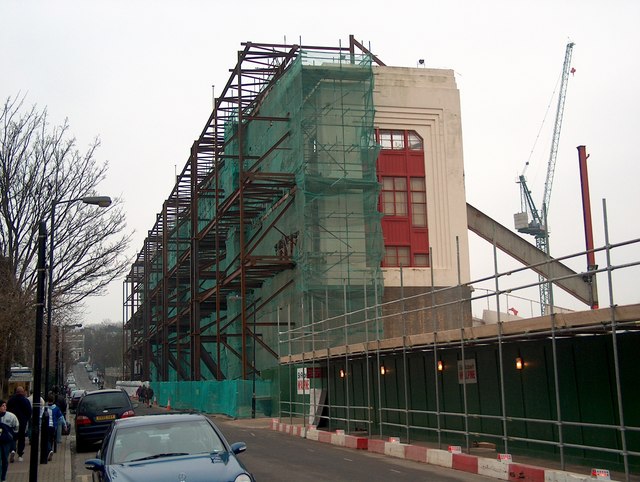
The stadium was celebrated for its Art Deco East and West Stands, built in the 1930s by architects Claude Ferrier and William Binnie. The East Stand was awarded Grade II listed building status, recognising its architectural significance. When Arsenal relocated to the nearby Emirates Stadium, Highbury was redeveloped into a residential complex called Highbury Square, preserving the listed facades while creating around 711 homes.
Stats at a Glance
- Team: Arsenal F.C.
- Location: Highbury, North London, England
- Opened: 6 September 1913
- Closed: 7 May 2006
- Peak Capacity: 73,295 (9 March 1935)
- Final Capacity: 38,419
- Notable Fact: Art Deco East Stand — Grade II listed building
A Stadium Steeped in History
Highbury opened in 1913 on land leased from St John’s College of Divinity, with the first competitive match — a 2–1 win over Leicester Fosse — played on 6 September 1913. The ground was substantially redeveloped in the 1930s, when the iconic Art Deco stands transformed it into one of football’s most architecturally distinctive venues. The all-time attendance record of 73,295 was set on 9 March 1935 during a First Division clash with Sunderland, a figure never surpassed.
Following the Taylor Report in the early 1990s, Highbury was converted to an all-seater ground with a final capacity of 38,419. Despite the reduction in size, the stadium’s atmosphere remained legendary. Arsenal’s competitive record across 2,010 matches at the ground stood at 1,196 wins, 475 draws, and 339 losses — a 60% win rate that underscored just how formidable Highbury was as a fortress.
From Football Ground to Highbury Square
Arsenal played their last match at Highbury on 7 May 2006, a 4–2 victory over Wigan Athletic, before moving to the new Emirates Stadium nearby. Rather than full demolition, the site was redeveloped into Highbury Square. The Clock End and North Bank stands were torn down, but the Grade II listed East and West Stand facades were retained and integrated into the new residential development, which comprised around 711 properties.
Today, Highbury Square stands as a testament to the ground’s enduring legacy. Residents live in apartments built within the shell of the old stands, and the former pitch area has been transformed into a communal garden. The Art Deco frontage on Avenell Road remains a recognisable landmark for supporters who pass by on their way to the Emirates Stadium.
Explore more: Explore more iconic stadiums.
Highbury FAQs
When did Arsenal leave Highbury?
Arsenal played their final match at Highbury on 7 May 2006 — a 4–2 win over Wigan Athletic — before moving to the new Emirates Stadium for the 2006–07 season.
What was the record attendance at Highbury?
The highest recorded attendance at Highbury was 73,295, set on 9 March 1935 during a First Division match between Arsenal and Sunderland, which ended 0–0.
What happened to Highbury after Arsenal moved out?
Highbury was converted into a residential development called Highbury Square, comprising around 711 homes. The Grade II listed Art Deco East and West Stand facades were preserved and incorporated into the scheme, while the former pitch became a communal garden.
Get More from Highbury
log the coasters, stadiums, and venues you’ve experienced, rate Highbury, and see what your friends thought. Get the ThrillZing app.
Photo: No machine-readable author provided. Qwghlm~commonswiki assumed (based on copyright claims). / CC BY-SA 3.0, via Wikimedia Commons.