
Roller coaster g-forces are one of the main reasons people either love or dread these machines. That stomach-dropping sensation on a 200-foot plunge, the face-squishing pressure through a high-speed loop, the weightless float over an airtime hill — these aren’t just feelings. They’re measurable physical forces acting on every organ, muscle, and blood vessel in your body. Understanding how roller coaster g-forces work transforms a scary unknown into a fascinating science lesson that might even make your next ride more enjoyable.
What Exactly Are G-Forces?
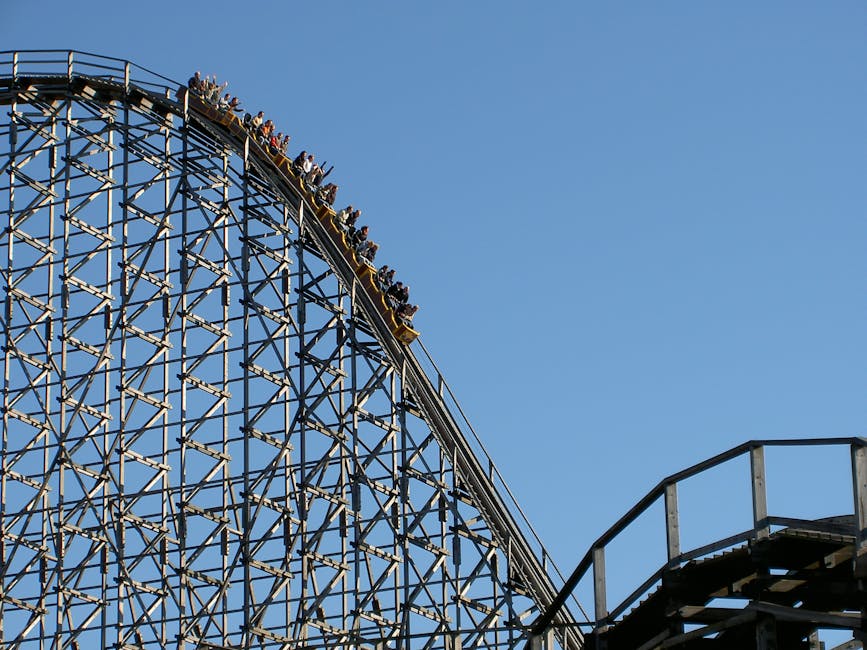
A g-force isn’t technically a force at all. It’s a measurement of acceleration relative to freefall. When you’re standing still on Earth, you experience 1G — the normal pull of gravity. When a roller coaster accelerates, decelerates, or changes direction, that number changes. A typical roller coaster generates between 3G and 6G at peak moments, meaning your body feels three to six times heavier than normal.
For context, NASA trains astronauts to handle sustained forces up to 3G during launch simulations. Fighter pilots regularly experience 7-9G during combat maneuvers. Your roller coaster ride falls somewhere between a sharp turn in a sports car (about 1.5G) and an astronaut strapped to a rocket.
The 5 Ways Roller Coaster G-Forces Affect Your Body
1. Positive G-Forces Push Blood Away from Your Brain
When a coaster enters a loop or pulls out of a dive, you experience positive g-forces that push you down into your seat. Your body feels heavier. More importantly, blood pools in your lower extremities because your heart has to work harder to pump it upward against the increased gravitational load.
At 4-5G sustained for more than a few seconds, blood flow to your brain decreases enough to cause tunnel vision — your peripheral vision narrows until you’re looking through a shrinking circle. Fighter pilots call this “graying out.” At 6G+, full blackout (G-LOC, or G-induced Loss of Consciousness) becomes possible.
Roller coasters rarely sustain these forces long enough to cause problems. The highest g-force moments on consumer coasters last 1-3 seconds, well within safe limits. The Tower of Terror at Gold Reef City) briefly hits 6.3G, one of the highest on any commercial ride, but for less than a second.
2. Negative G-Forces Create That Floating Sensation
The opposite phenomenon — negative g-forces or “airtime” — happens when the coaster crests a hill faster than gravity would naturally pull you over it. Your body wants to keep going up while the track pulls the car down. Restraints hold you in place while your internal organs briefly shift upward.
This is the famous “butterflies in your stomach” feeling. Your stomach, intestines, and other abdominal organs are loosely suspended inside your body cavity. Under negative g-forces (typically -0.5G to -1.5G on coasters), they float upward slightly, triggering nerve endings that your brain interprets as falling. It’s the same sensation skydivers experience during the first seconds of freefall.
Enthusiasts specifically seek out rides with sustained negative g-forces. Coasters like El Toro at Six Flags Great Adventure and Steel Vengeance at Cedar Point are celebrated for delivering what riders call “ejector airtime” — moments where you’re forcefully lifted out of your seat.
3. Lateral G-Forces Stress Your Neck and Spine
When a coaster whips through a flat turn or an unbanked curve, lateral g-forces push your body sideways. Your neck muscles strain to keep your head centered, and your spine absorbs asymmetric loading it doesn’t experience during normal daily activity.
Most modern coasters bank their turns specifically to convert lateral forces into vertical ones, keeping riders pressed into their seats rather than thrown sideways. Older coasters — particularly wooden ones with worn track profiles — sometimes deliver unexpected lateral forces that cause the rough, jerky ride some people associate with wooden coasters.
Riders with pre-existing neck or back conditions should pay attention to lateral forces. The jolt of roller coaster g-forces applied sideways to the cervical spine can aggravate herniated discs, whiplash injuries, and chronic neck pain. This is why ride warnings specifically mention neck and back problems.
4. Your Inner Ear Gets Confused
Your vestibular system — the fluid-filled canals in your inner ear — detects rotation and acceleration to maintain your sense of balance. Roller coaster g-forces send conflicting signals when the forces you feel don’t match what your eyes see.
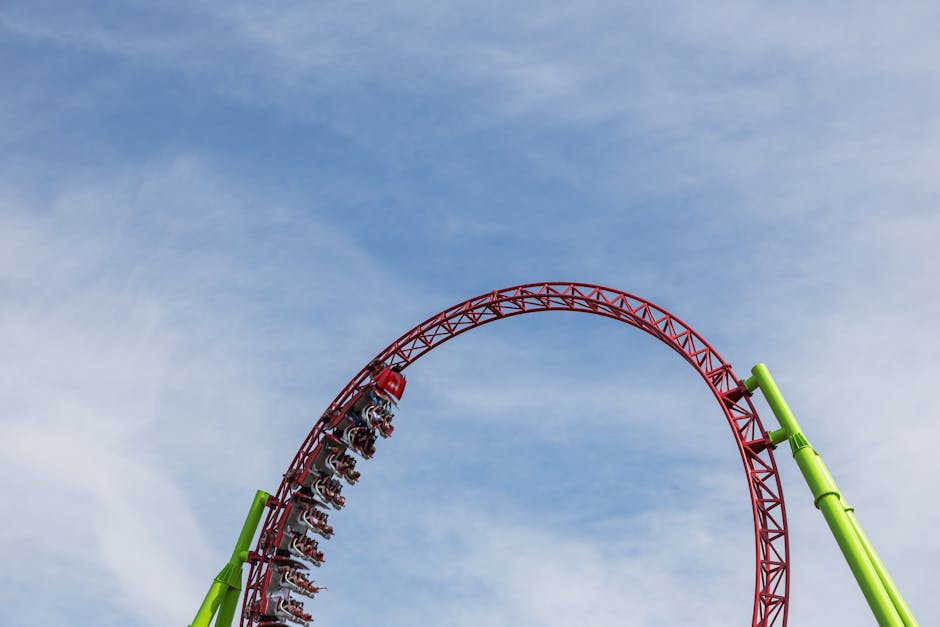
During inversions, your vestibular system detects that you’re upside down, but the positive g-forces pressing you into your seat tell your body you’re right-side up. This sensory conflict is the primary trigger for motion sickness on roller coasters. People prone to motion sickness can reduce symptoms by keeping their eyes open and focused on a fixed point ahead, which gives the brain visual data that helps resolve the vestibular confusion.
Interestingly, repeat exposure builds tolerance. Studies published in aviation medicine journals show that pilots and astronauts develop significantly improved g-force tolerance through regular exposure. The same principle applies to roller coaster enthusiasts — your 50th ride on a looping coaster feels notably less disorienting than your first.
5. Adrenaline Response Amplifies Everything
The moment a roller coaster launches or drops, your adrenal glands release epinephrine (adrenaline) and cortisol. Your heart rate spikes by 30-60 beats per minute. Blood pressure rises. Pupils dilate. Pain sensitivity decreases. Time perception distorts — a 3-second drop feels much longer.
This sympathetic nervous system activation — the “fight or flight” response — is the real reason roller coasters feel so intense. The roller coaster g-forces provide the physical stimulus, but your body’s chemical response amplifies the experience far beyond what the forces alone would produce. A 3G pull through a loop is physically noticeable but not dramatic. Combined with adrenaline, darkness, wind noise, and 200 feet of altitude? It feels extraordinary.
This is also why roller coasters are genuinely mood-boosting. The endorphin release that follows an adrenaline spike creates a measurable improvement in mood that can last hours. It’s the same neurochemistry behind runner’s high and thrill-seeking behavior in general.
Are Roller Coaster G-Forces Dangerous?
For healthy individuals, no. Roller coaster g-forces are carefully engineered to stay within safe limits. The rides are designed so that peak forces last fractions of a second, and sustained forces remain well below thresholds that could cause injury. Regulatory bodies in every state and country set maximum g-force limits for amusement rides based on ASTM International standards.
However, certain medical conditions increase risk. People with heart conditions, brain aneurysms, recent surgeries, pregnancy, or severe spinal problems should heed ride warnings. The issue isn’t the g-force itself — it’s how compromised body systems respond to rapid blood pressure changes and mechanical stress.
Explore more about the science and excitement behind your favorite rides at the ThrillZing blog, where we cover everything from coaster physics to park planning tips.
Making the Most of G-Forces on Your Next Ride
Now that you understand how roller coaster g-forces affect your body, you can actually enhance your experience. Sitting in the back row maximizes airtime over hills because the front of the train is already descending while the back crests. Front row maximizes the visual experience and wind exposure. Keeping your head pressed firmly against the headrest during inversions reduces neck strain and dizziness.
Knowledge turns anxiety into anticipation. The next time you feel those roller coaster g-forces pressing you into your seat at 4G through a vertical loop, you’ll know exactly what your body is doing — and why it feels so spectacularly alive. Find your next coaster adventure with ThrillZing.
Frequently Asked Questions
What is the highest g-force on a roller coaster?
The highest g-force on a consumer roller coaster is approximately 6.3G on the Tower of Terror at Gold Reef City in South Africa, sustained for less than one second. In the United States, rides like Titan at Six Flags Over Texas reach about 4.5G. For comparison, Space Shuttle astronauts experienced roughly 3G during launch over a sustained period.
Can roller coaster g-forces cause you to pass out?
It’s extremely rare but technically possible. G-induced Loss of Consciousness (G-LOC) requires sustained positive g-forces above 4-5G for several seconds. Roller coasters are engineered so peak forces last fractions of a second, well below the duration needed to cause blackout. Dehydration, low blood pressure, or standing up quickly before riding can increase susceptibility.
Do roller coaster g-forces get easier to handle with experience?
Yes. Research in aviation medicine confirms that repeated exposure to g-forces improves tolerance. Your cardiovascular system adapts to handle the rapid blood pressure changes, and your vestibular system calibrates to reduce motion sickness. Regular coaster riders typically report less dizziness and nausea over time compared to their first experiences.